

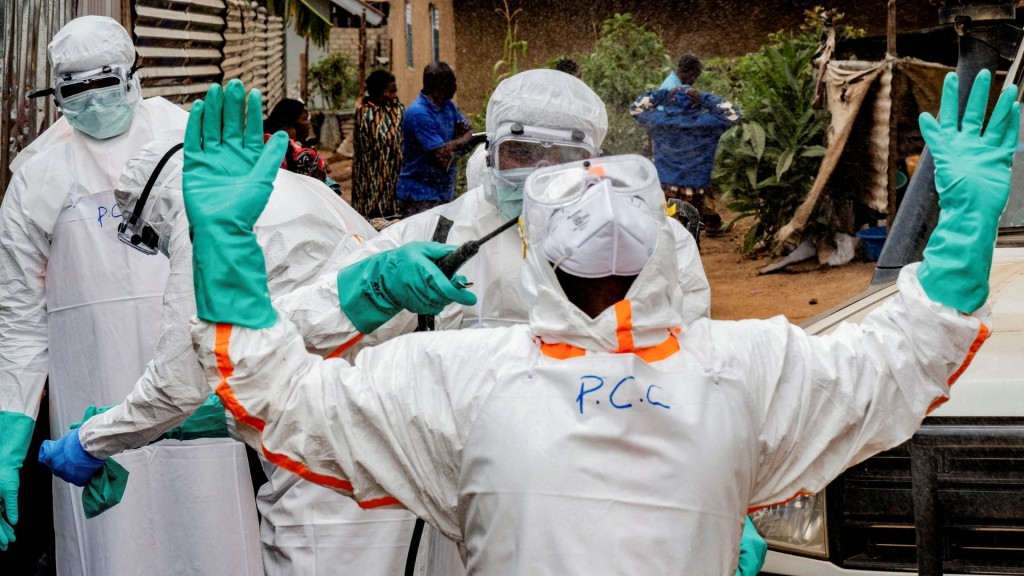
The World Health Organization has called for a major expansion of the Ebola response in the Democratic Republic of Congo after the country’s death toll passed 3,000, with health officials still struggling to identify every chain of transmission.
WHO Director General Tedros Adhanom Ghebreyesus said on Wednesday that the outbreak would continue to threaten Congo and neighbouring countries unless health teams could find and break every remaining link through which the virus is spreading.
“Until every chain is found and broken, the epidemic will continue and will continue to pose a threat to DRC, its neighbours and the region as a whole,” Tedros told reporters in Geneva.
Government figures released on Wednesday showed that deaths from the outbreak had exceeded 3,000. The epidemic has spread across northeastern parts of Congo and has become the largest and deadliest Ebola outbreak recorded in the country.
The outbreak is being caused by the Bundibugyo species of Ebola, a strain for which health authorities face a different set of challenges from those associated with the Zaire Ebola virus. The scale of the current emergency has now surpassed Congo’s previous record outbreak, which ran from 2018 to 2020.
Only the Ebola epidemic that struck West Africa between 2014 and 2016 was larger. That crisis infected more than 28,600 people and killed over 11,000 across Guinea, Liberia and Sierra Leone.
Unknown transmission chains concern health officials
Tedros said one of the biggest problems facing the response is that many people who have died from Ebola were not identified as contacts of known patients.
That finding suggests the virus is moving through communities in ways that health workers have not yet detected.
“Many deaths are among people who are not on a list of known contacts,” Tedros said.
For disease control teams, identifying contacts is one of the basic tools used to contain Ebola. When someone tests positive, health workers try to establish who that person has been in contact with and monitor those people for signs of infection. If contacts cannot be identified or followed, infected people can continue interacting with others before authorities realise they have contracted the virus.
The situation becomes even harder when families carry out traditional burial practices without the necessary precautions.
Tedros said a number of people who have died were still being buried unsafely, increasing the risk of further infections. Ebola can spread through direct contact with the blood or other bodily fluids of an infected person, including after death.
Unsafe burials have played a major role in previous Ebola outbreaks, making safe and controlled funeral practices a key part of efforts to stop transmission.
The WHO chief said the response therefore needs more money, more treatment capacity and faster action from international donors.

Congo seeks $1.3 billion for response
The Congolese government led response plan is seeking $1.3 billion in funding as authorities attempt to contain the outbreak and expand medical services in affected areas.
Tedros acknowledged that the appeal comes at a difficult time for humanitarian organisations, with international funding for emergency assistance shrinking.
“We know that we are making this request at a time when financing for humanitarian assistance has contracted,” he said.
He argued that previous Ebola outbreaks had demonstrated that the disease could be controlled when governments and international organisations had sufficient resources and acted quickly.
“But as we know from previous Ebola outbreaks, we can control this epidemic if we choose to,” Tedros said.
The WHO has already delivered 320 tons of supplies to support the response. It has also expanded testing capacity to as many as 3,000 tests each day.
However, the organisation says additional funding is needed to expand treatment facilities and provide enough beds for patients.
Luca Fontana, a WHO technical officer responsible for health and technical logistics, said operating a treatment centre with 1,500 beds costs about $15 million each month.
That figure illustrates the scale of the resources required as infections continue to place pressure on hospitals and treatment centres. More beds are needed not only for patients already diagnosed with Ebola but also to ensure suspected cases can be safely isolated while they undergo testing.
Treatment trials offer a possible new line of defence
Despite the growing death toll, health officials are also seeing signs of progress in the search for treatments that could improve survival and reduce the spread of the virus.
Tedros said more than 300 Ebola patients have been enrolled in a clinical trial involving two treatments.
Researchers are also testing the antiviral drug obeldesivir among people considered to be high risk contacts of Ebola patients. The study is examining whether the medicine can prevent people from developing Ebola after they have been exposed to the virus.
Such research could provide another tool for dealing with future outbreaks, particularly when people have been exposed to an infected person but have not yet developed symptoms.
The treatment trials are taking place as scientists also work to find vaccines that can protect people against the Bundibugyo virus.

Vaccine research moves forward
Two new vaccines designed to target Bundibugyo virus are currently undergoing safety trials in Britain and Canada.
The need for vaccines specifically aimed at this strain has become more pressing because it is not known whether an approved vaccine designed to protect against the Zaire Ebola virus would provide sufficient protection against Bundibugyo virus.
The WHO therefore wants to move vaccine research beyond early safety testing and into clinical efficacy trials in Congo.
Tedros said the organisation was working with partners to advance three vaccine candidates into efficacy trials in the country, with the aim of starting in October or November.
The trials could provide important evidence about whether the vaccines can protect people exposed to the Bundibugyo virus. They would also allow researchers to gather information under the conditions of an active outbreak, where transmission patterns and exposure risks can be studied among affected communities.
A race against further spread
For health workers in Congo, however, the immediate challenge remains stopping infections that have not yet been detected.
Testing capacity has increased, supplies are being delivered and treatment trials are under way, but those measures cannot fully contain the outbreak if infected people remain outside the health system.
The problem is particularly serious when deaths occur among people who were never identified as contacts. Each missed case can create new opportunities for the virus to move into another household, neighbourhood or community.
Safe burials are another immediate priority. Families need access to trained teams capable of handling bodies without exposing relatives, mourners and health workers to infection.
The scale of the response also depends heavily on funding. Without additional money, treatment centres may struggle to add beds, testing operations may face pressure and teams working to trace contacts may lack the staff and equipment needed to reach affected communities.
Tedros said the international response must therefore move faster.
The WHO has already increased testing and transported hundreds of tons of supplies, while researchers are conducting trials of treatments and vaccines. But the organisation says those efforts need to grow alongside the outbreak.
Congo now faces an Ebola emergency that has exceeded the scale of its previous record outbreak, with more than 3,000 deaths recorded and transmission chains still unidentified.
The next phase of the response will depend on finding those missing chains, protecting health workers and communities, expanding treatment capacity and securing the funding needed to keep those operations running. The WHO’s warning is direct: every unidentified transmission chain gives Ebola another opportunity to spread.