

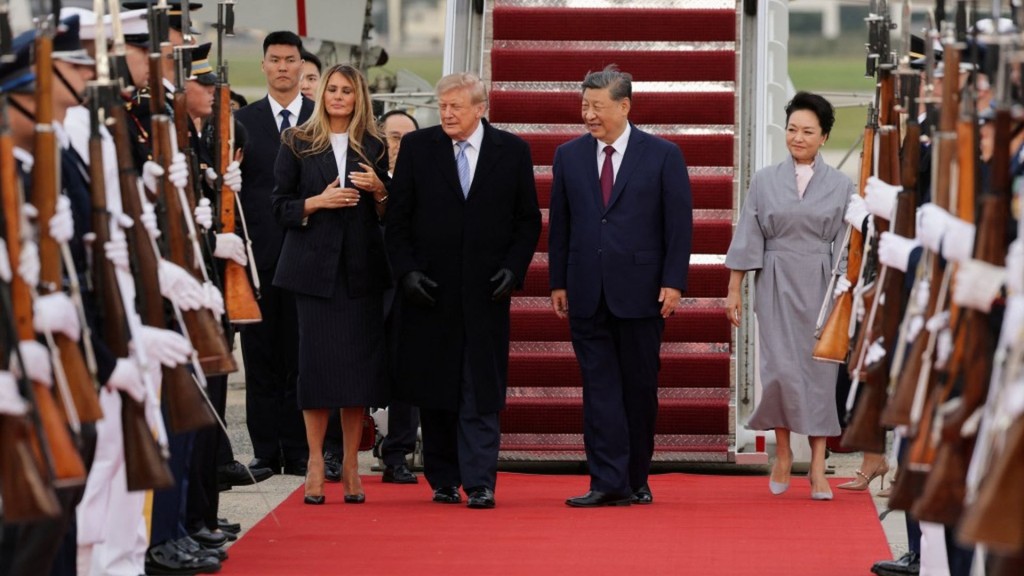
US President Donald Trump personally welcomed Chinese President Xi Jinping at Joint Base Andrews on Wednesday, opening a three day state visit built around ceremony, trade negotiations and efforts to prevent tensions between Washington and Beijing from escalating. The meeting comes as both governments seek to extend a fragile trade truce while confronting disagreements over artificial intelligence, Iran and the wider strategic rivalry between the world’s two largest economies.
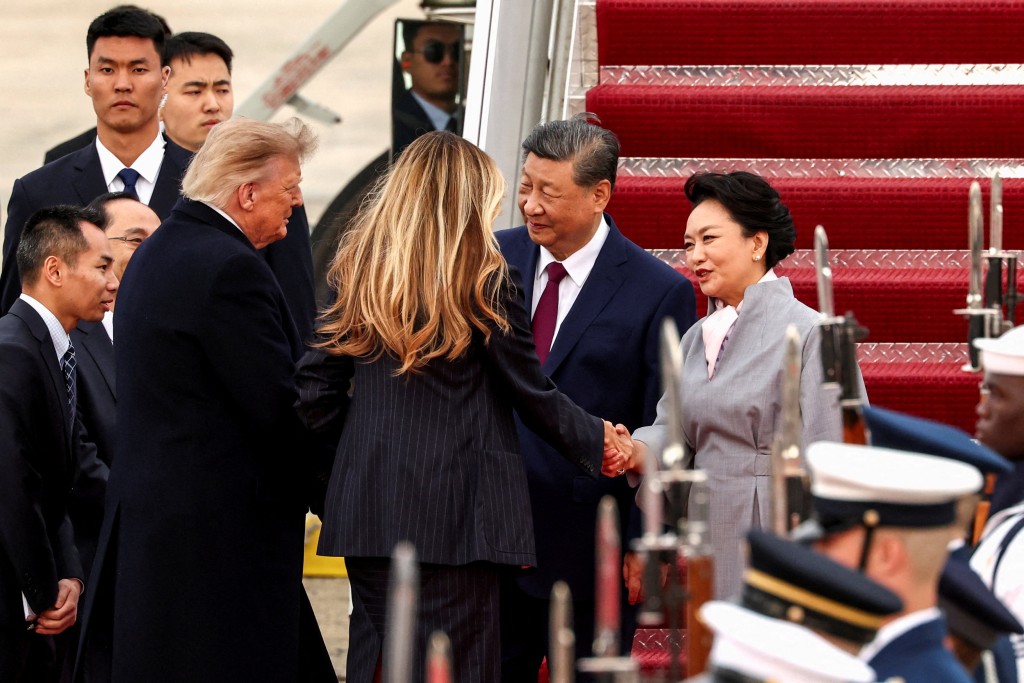
Trump and First Lady Melania Trump stood on the military airfield outside Washington to greet Xi and his wife, Peng Liyuan, after the Chinese president stepped from his aircraft. Trump wore a long coat and gloves as the two leaders shook hands before standing together for the arrival ceremony.
A military band played the national anthems while US officials staged a highly formal welcome. Six F 22 fighter jets and six F 16s were positioned on the tarmac, while two B 1 bombers later passed overhead.
The ceremony was notable not simply for its scale but for Trump's decision to meet Xi personally at the airport. Such greetings are uncommon for US presidents. Trump did, however, personally welcome Russian President Vladimir Putin when Putin arrived in Alaska last year. The last comparable welcomes at Andrews, excluding papal visits, are believed to have involved President John F. Kennedy receiving British Prime Minister Harold Macmillan in 1962 and President Dwight Eisenhower greeting Soviet leader Nikita Khrushchev in 1959.
Xi's arrival also carried a diplomatic message. Trump did not receive the same treatment when he travelled to Beijing in May, making the decision to greet Xi on the tarmac a visible gesture of respect as the two governments attempt to keep their relationship from slipping back into an open confrontation.
Trade truce extended before leaders meet
The first tangible development came before Trump and Xi began their formal talks.
US Treasury Secretary Scott Bessent announced Wednesday that Washington and Beijing had agreed to extend their existing economic truce beyond its November 10 deadline. The arrangement will now run until January 10, giving both sides additional time to work through unresolved trade disputes.
Bessent described the arrangement as an extension of the economic detente between the two countries. The announcement followed talks with Chinese Vice Premier He Lifeng, who has played a central role in economic negotiations with Washington.
The extension does not amount to a permanent settlement of the trade dispute. Both countries continue to face disagreements over tariffs, market access, Chinese exports and the implementation of commitments reached during earlier negotiations.
The timing of the announcement was significant. It came just as Xi arrived in Washington, giving the summit an early economic result without requiring either president to make a major concession at the opening of their meeting.
Analysts have cautioned against expecting a sweeping agreement from the summit. Jonathan Czin of the Brookings Institution said expectations for concrete results were low, while suggesting that the two governments were likely to continue their existing understanding.
AI becomes another point of tension
Artificial intelligence will form another major part of the discussions.
Washington and Beijing are competing for leadership in advanced AI, while officials and technology executives are increasingly focused on the risks created by increasingly powerful systems. Both countries have strong incentives to protect their technological advantages, making broad regulatory cooperation difficult.
Preliminary talks between Bessent and He on Sunday included discussion of establishing a communication channel for AI related concerns. Such a mechanism could give officials a way to discuss risks associated with rapidly advancing technology without requiring either side to immediately agree on common regulations.
The summit is also expected to bring American technology executives into close contact with Chinese officials. Major US technology and AI company leaders are due to attend Thursday's White House state banquet.
Xi's delegation, however, does not include Chinese chief executives, according to two sources cited by AFP. His delegation instead includes senior political and diplomatic figures, including Cai Qi and Chinese Foreign Minister Wang Yi.
That difference could limit opportunities for direct business negotiations during the visit, although commercial issues remain closely connected to the broader US China relationship.
Iran adds another difficult issue
Iran will also feature in the discussions.
Reports that China supplied Tehran with intelligence connected to attacks on US troops have created tensions inside Trump's Republican Party. Senator Roger Wicker, the Republican chairman of the Senate Armed Services Committee, criticised the decision to give Xi such a high profile welcome and said the US president should consider China's reported actions toward Iran.
Trump has taken a less confrontational approach to the allegations. He has argued that Washington and Beijing conduct intelligence operations against one another, and he has indicated that the issue will not necessarily dominate his talks with Xi.
Asked whether he would raise Iran with the Chinese president, Trump said he would discuss the issue along with other subjects.
The issue places another complicated foreign policy question on an already crowded agenda. Washington wants to protect US personnel and interests in the Middle East, while Beijing has maintained its own diplomatic and economic relationships across the region.
A carefully staged state visit
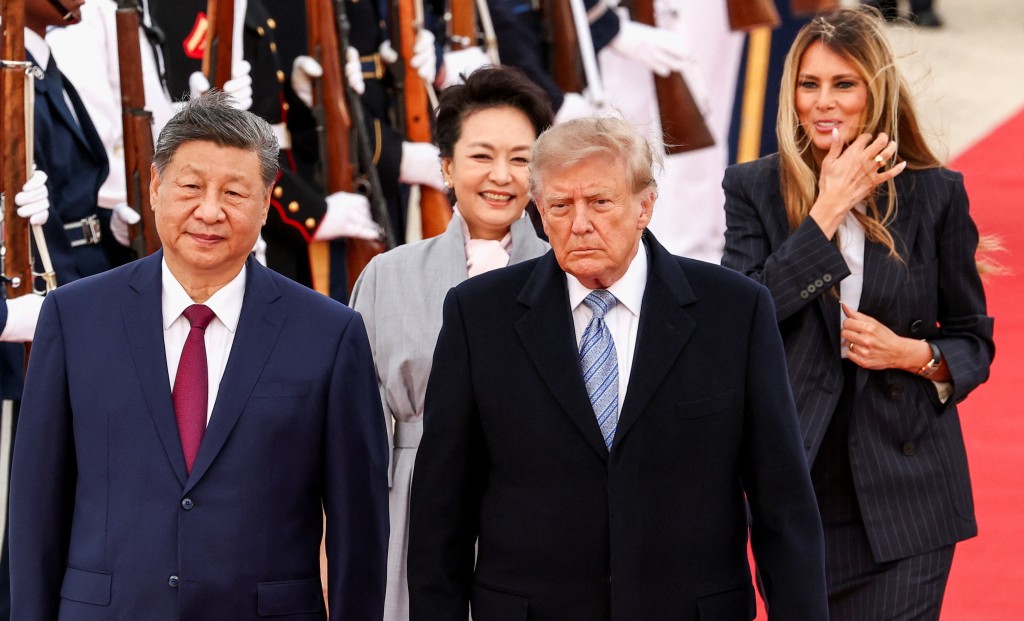
Xi's visit has been organised around a series of highly visible ceremonies.
After the arrival at Andrews, the two leaders are scheduled to continue their meetings in Washington, including a state banquet at the White House on Thursday. The programme is expected to include another flyover before Xi's departure on Friday morning.
Xi and Peng are scheduled to have tea with Trump and Melania at the White House before visiting the National Archives, where the US Declaration of Independence is preserved.
The ceremony offers Trump an opportunity to project an image of direct engagement with Xi at a moment when the relationship between Washington and Beijing remains unsettled.
For Xi, the visit provides a chance to maintain direct contact with the US president while protecting China's economic interests and avoiding a return to the tariff escalation that disrupted bilateral trade during Trump's earlier term.
Analysts have also pointed to a longer term calculation in Beijing. Trump is in the second half of his second term, which ends in early 2029, and Chinese officials may be seeking to preserve stability while preparing for changes in the US political environment.
Pageantry masks a difficult agenda
The carefully choreographed arrival cannot hide the number of disagreements facing the two governments.
Trade remains unresolved despite the new extension. AI cooperation faces major strategic and regulatory obstacles. Iran introduces another source of mistrust, while the broader US China competition extends across technology, security and global influence.
At the same time, both governments have an interest in avoiding a sudden deterioration in relations.
For Trump, the summit comes as domestic political pressure has grown over the economic effects of the Iran war, particularly higher fuel prices, ahead of the November midterm elections. For Xi, maintaining access to US markets while protecting China's technological and economic interests remains an important part of the relationship.
The immediate measure of the summit may therefore be less about a historic agreement than whether the two governments can preserve the fragile arrangements already in place.
Xi's visit ends Friday after three days of ceremonies and talks. By then, the central question will be whether Washington and Beijing have merely extended their temporary truce or created enough practical cooperation to prevent their next dispute from becoming another confrontation.
Will the Trump Xi meeting produce lasting agreements, or will the two sides settle for keeping tensions under control?