

Trump’s Chip Supply Push Puts Tennessee Polysilicon Plant at Risk of Closure
A Tennessee polysilicon plant that Washington sought to protect as part of its effort to secure the US semiconductor supply chain could instead face closure after new Trump administration trade measures drove away its last two customers, according to people familiar with the situation.
Wacker Chemie, the German chemicals company that operates the facility in Charleston, Tennessee, is expected to decide within weeks whether to shut the plant, which employs about 600 people. The facility produces polysilicon used in solar panels as well as the more highly refined material required for semiconductor manufacturing.
The potential closure exposes a problem at the heart of President Donald Trump’s effort to rebuild strategic manufacturing in the United States. Policies designed to reduce dependence on foreign suppliers can also raise costs for American producers if the rules do not give domestic manufacturers an advantage over imported products.
Two people familiar with Wacker’s situation said the company lost its remaining customers following a White House proclamation issued last month that was intended to encourage companies to purchase polysilicon produced in the United States. Reuters was unable to independently establish the identities of the two customers.
Wacker declined to comment on the loss of the customers or on whether the Charleston operation could close. The company said it was too early to determine how the new policy would affect its business, but argued that the proclamation, as currently written, does not provide an effective incentive to buy US produced polysilicon.
The company said it was discussing the issue with the Trump administration and looking for ways to help achieve the government’s stated goal of strengthening domestic polysilicon production.
Trade Policy Creates an Unexpected Problem
The dispute reflects a broader challenge confronting the Trump administration as it tries to bring strategically important manufacturing back to the United States.
The White House has made reducing reliance on overseas supply chains a central part of its trade and industrial policy. Semiconductors sit near the top of that agenda because advanced chips underpin everything from artificial intelligence systems and telecommunications equipment to military technology and consumer electronics.
Polysilicon is an early stage material in several of those supply chains. Solar grade polysilicon is used to manufacture solar cells, while semiconductor grade polysilicon undergoes additional processing to meet the demanding purity standards required by chipmakers.
For years, Chinese companies have dominated the global solar grade polysilicon industry. Chinese producers have also expanded into higher purity semiconductor grade material, increasing pressure on companies such as Wacker that manufacture in the United States.
The administration's latest measures were intended to address that dependence. Instead, according to people familiar with the Charleston operation, the policy has left Wacker facing the possibility of losing enough business to make the Tennessee plant unsustainable.
The episode is not the first time Trump's tariff policies have produced unintended consequences for industries they were designed to support.
US steel and aluminum producers benefited from protection against foreign competition, but tariffs also increased material costs for American manufacturers. Automakers, among others, faced higher production expenses and greater difficulty competing against imported vehicles and components. The government later introduced additional measures aimed at addressing some of those problems.
The Wacker dispute raises a similar question: whether protection aimed at one part of a supply chain can weaken another part if the rules do not account for differences in production costs.

US Polysilicon Faces a Cost Disadvantage
The trade measures announced on August 6 include a price floor and tariffs covering imported polysilicon ingots, wafers, solar cells and solar panels.
But the rules do not distinguish between foreign products manufactured with American polysilicon and those made using polysilicon produced overseas.
That distinction matters because US made polysilicon can cost substantially more than material produced in China and other overseas markets. Bernreuter Research, a market research firm that tracks the polysilicon industry, estimates that American polysilicon can cost as much as four times more than competing material.
As currently structured, the policy therefore does not necessarily force buyers to choose US produced polysilicon. A foreign manufacturer can use polysilicon from another country and still face the same treatment as a company importing a product made with US material.
Elissa Pierce, a research analyst at Wood Mackenzie, said the current structure of the Section 232 tariffs was unlikely to generate enough additional demand for American polysilicon.
That leaves domestic producers caught between two competing realities. Washington wants more US manufacturing capacity, but customers remain under pressure to control costs. If American polysilicon remains substantially more expensive and trade rules do not compensate buyers for using it, customers have little financial reason to switch.
Only Two US Producers
The United States has only two producers of polysilicon, according to the Coalition for a Prosperous America, a group that supports tariffs and industrial policies.
One is Wacker’s Charleston operation. The other is Hemlock Semiconductor.
The coalition is calling for the rules that take effect in December to provide a clear financial incentive for companies to purchase polysilicon made in the United States.
Nick Iacovella, a spokesperson for the organization, said domestic polysilicon needs to serve as the basis for both the American solar and semiconductor industries if Washington wants to prevent those supply chains from becoming dependent on foreign producers.
He argued that allowing domestic production to weaken while overseas competitors expand would create a national security risk, particularly because China has already established a dominant position in parts of the polysilicon market.
The administration has not closed the door on further assistance.
The proclamation gives the Commerce Department authority to offer incentives to companies willing to invest in US polysilicon manufacturing. Those incentives, however, would be negotiated separately with individual companies rather than automatically applying across the industry.
A Trump administration official said the government continues to consult industry representatives as it develops its strategy for bringing polysilicon manufacturing back to the United States.
The Commerce Department did not respond to requests for comment.
Wacker Has Already Cut Jobs
The potential closure would come after years of pressure on Wacker’s US operations.
The Munich based company has been dealing with intense competition from Chinese producers and has already reduced its workforce at the Charleston facility.
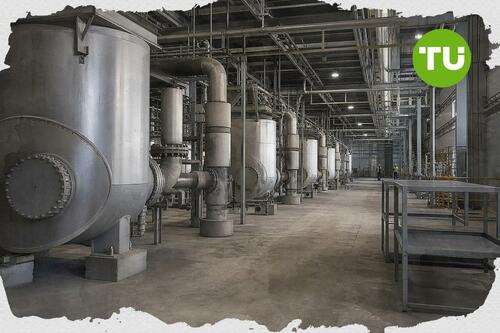
The Tennessee plant cost about $2.5 billion to build and represents one of the largest investments in the US polysilicon industry. Its future has therefore become a test of whether government policy can support the domestic production Washington says it wants to preserve.
Wacker Chief Executive Christian Hartel warned investors shortly before the latest trade proclamation that the company could find itself with "one plant too many" if the expected government action did not provide meaningful support.
That warning has taken on greater significance as the company weighs the future of Charleston.
The uncertainty also affects the workers and surrounding communities that depend on the facility. A plant employing about 600 people represents a substantial industrial employer in the region, while the investment behind it reflects years of efforts to establish a US based alternative to Asian polysilicon suppliers.
Foreign Competitors Could Benefit
One unexpected beneficiary of the new trade policy could be United Solar Polysilicon, an Oman based competitor with ties to China.
The company welcomed the measures, illustrating how tariffs intended to strengthen American manufacturing can sometimes create opportunities for foreign producers when the rules do not give US manufacturers a sufficient cost advantage.
Hemlock Semiconductor is in a somewhat different position.
Its owner, Corning, purchases the company’s solar grade polysilicon and uses it to produce wafers domestically. That arrangement gives Hemlock some protection from the immediate effects of the new policy because its material already feeds into a US based manufacturing chain.
Wacker does not have the same degree of insulation.
The Charleston facility’s future will depend in large part on whether customers return, whether the government changes how the trade measures treat American polysilicon, or whether the administration negotiates direct incentives with Wacker.
The December implementation deadline could become an important point for the company and the wider US polysilicon industry.
For Washington, the issue goes beyond one factory. If the administration wants to build a domestic semiconductor supply chain, it needs reliable suppliers at every stage, including the specialized materials that chip manufacturing depends on. Protecting the finished product while leaving a key upstream supplier at a severe cost disadvantage risks producing the opposite result.
The immediate question for Wacker is whether the Charleston plant can survive long enough for the rules to change or new customers to emerge. A decision expected within weeks could determine whether a $2.5 billion US manufacturing investment remains part of America’s industrial strategy or becomes another casualty of a trade policy intended to protect it.