

Pope Leo XIV has been diagnosed with lung cancer after surgeons removed the lower lobe of his right lung during an operation at Rome’s Gemelli Hospital on Tuesday. The Vatican confirmed that the 71 year old pontiff has lung adenocarcinoma, a common form of the disease, after tissue tests during surgery confirmed doctors’ earlier suspicions.
The operation lasted approximately 90 minutes and was completed without complications, according to the Vatican’s medical bulletin. The pope regained consciousness normally and returned to his hospital room to recover. However, doctors will need further information about the extent of the cancer before his long term prognosis can be established.
The diagnosis marks a significant health challenge for Leo, who became head of the Roman Catholic Church in May 2025. His hospitalisation has forced the cancellation of public engagements through October 20, while questions remain about whether he will be able to undertake a planned visit to South America next month. Reuters
Surgeons Remove Lower Lobe of Pope’s Right Lung
Leo was admitted to Gemelli Hospital on Tuesday after doctors discovered a growth in his lung during a recent routine medical examination. The pope had announced before the operation that doctors had identified a small, localised nodule and recommended surgery to remove it.
During the procedure, surgeons removed the lower lobe of his right lung using a video assisted surgical technique. The Vatican said the operation was intended to eliminate the cancerous tissue.
The medical team included Professor Stefano Margaritora, the pope’s lead surgeon, and Dr Luigi Carbone, his personal physician. They reported that the procedure went well and that the pontiff experienced no complications during the operation.
The diagnosis became clear when doctors examined tissue taken during surgery. According to the Vatican, the results confirmed suspicions raised by preliminary examinations.
The human lungs contain five lobes. The right lung has three, while the left has two. Removing one lobe is known as a lobectomy, a procedure doctors may recommend when a cancer is localised and surgery offers a suitable treatment option.
Although the operation was successful, the removal of the growth does not by itself establish whether the cancer was confined to the tissue taken out. Doctors must examine the findings and determine whether cancer cells have reached nearby lymph nodes or other parts of the body.

What Is Lung Adenocarcinoma?
Lung adenocarcinoma is a type of non small cell lung cancer and is among the most common forms of lung cancer. It develops in glandular cells, often in the outer areas of the lungs.
The condition can occur in people who have never smoked, although smoking remains an important risk factor for lung cancer generally. Leo is not known to be a smoker, according to reports about his health.
Treatment depends on several factors, including the size and location of the tumour, the stage of the cancer, the patient's overall health and whether the disease has spread. Surgery may offer a chance of a cure when doctors can remove the cancer completely and there is no evidence of spread beyond the affected area.
However, a confirmed diagnosis alone cannot determine the likely outcome.
Dr Stephen Liu, a lung cancer specialist at Georgetown University in Washington and division chief of haematology and oncology at MedStar Georgetown University Hospital, said further details were needed to assess the pope's condition.
He explained that the tumour's size and the involvement of lymph nodes would help doctors establish the stage of the disease. If the cancer is small and no lymph nodes are affected, surgery may be sufficient to cure it. More extensive involvement would indicate a less favourable prognosis.
The Vatican's initial announcement did not provide all the information required to determine the stage of Leo's cancer. Further examination of the surgical findings will therefore be important in understanding what treatment, if any, he may need after recovering.
Pope Recovering at Gemelli Hospital
The Vatican said Leo regained consciousness normally after surgery and was resting in his hospital room. Officials had previously indicated that he would probably remain at the hospital for approximately one week.
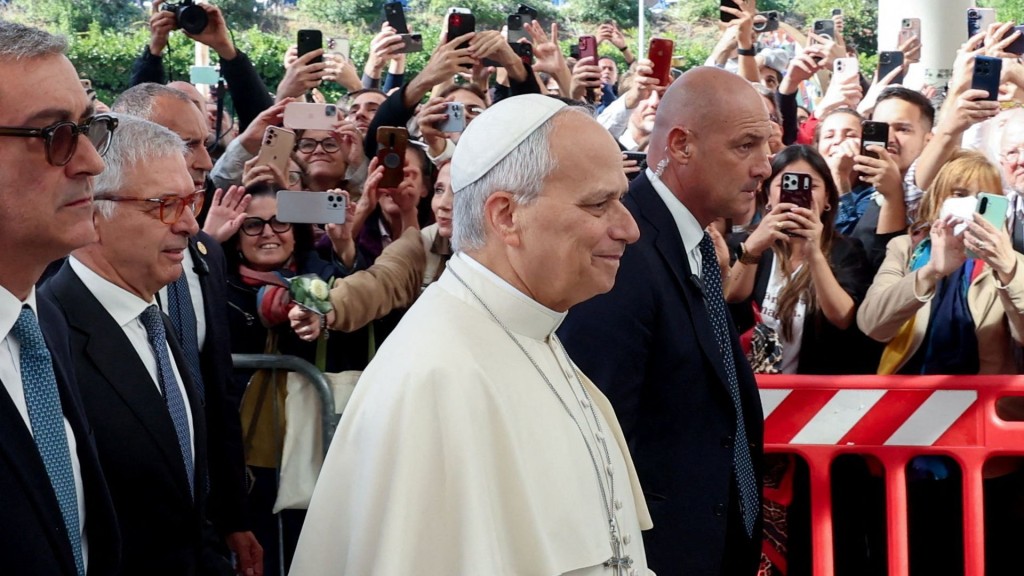
Before the operation, the pope left the Vatican shortly before 1pm local time and travelled about nine kilometres to Gemelli Hospital in a black sports utility vehicle. He waved to people as he passed.
Upon arriving at the hospital, Leo greeted several officials and walked past a waiting crowd of well wishers. Some called out “Auguri”, an Italian expression meaning best wishes, as he entered the building.
The Vatican has cancelled his public engagements through October 20 to allow him time to recover. The announcement temporarily removes the pope from his usual schedule of audiences and public appearances, although the Church's administrative operations continue.
Leo had maintained a busy routine in the days before his admission. At his public appearance on Monday, he spoke in a firm, clear voice, and there had been no widely reported major health problems during his papacy before this episode.
November South America Tour Faces Questions
Leo is scheduled to visit Uruguay, Argentina and Peru during an 11 day trip planned to begin on November 6. At the time of the initial medical announcement, it was unclear whether the tour would proceed as scheduled.
The trip carries particular significance because of the pope's longstanding connection to Peru, where he spent decades serving as a missionary and bishop. His experience in the country helped shape his life before his election as pontiff.
The Vatican will need to consider his recovery, medical advice and ability to manage a demanding travel schedule before making decisions about future engagements. International visits require lengthy journeys, public ceremonies, meetings and sustained periods of activity, all of which can place physical demands on a person recovering from major surgery.
No assumption should be made that the planned tour will either proceed or be cancelled until the Vatican provides an update.
Leo's Earlier Illness in Peru
Born Robert Prevost in Chicago in 1955, Leo spent much of his religious career working in Peru before becoming pope. His earlier health history includes a serious episode of typhoid fever in 1985, when he was a young priest serving in Chulucanas.
In a major interview published in a book by Penguin Peru, Leo recalled how severe the illness became. He said the pain was so intense that he asked God to let him die rather than continue suffering.
His recovery changed how he viewed his survival. Leo said he interpreted it as a sign that he still had work to do, recalling the thought that “We need you here” on Earth.
“I never looked back,” he said when describing the experience.
That episode occurred decades before his current diagnosis. His present condition must be assessed on its own medical evidence, and his earlier recovery from typhoid does not establish how he will respond to cancer treatment.
What the Diagnosis Means for the Catholic Church
Leo was elected by the world's cardinals in May 2025 and leads a global Catholic community of approximately 1.4 billion people. His health has implications for the Church's public schedule, although a period of hospitalisation does not automatically transfer his authority to another person.
The Vatican's administrative offices can continue handling routine business while the pope recovers. Decisions requiring his personal approval may need to wait if he is temporarily unable to address them.
Leo's predecessor, Pope Francis, experienced several hospitalisations during his later years and died at the age of 88 in April 2025. Francis's health had become an increasingly prominent concern as his physical condition weakened.
Leo, at 71, is relatively young compared with many recent popes and has maintained an active schedule that includes public appearances and recreational interests such as tennis. Nevertheless, age and activity alone cannot determine how a person will recover from cancer surgery.
For now, the immediate focus remains on his recovery at Gemelli Hospital and the medical assessments needed to establish the extent of the disease. The Vatican's next updates should clarify whether further treatment is required and when the pontiff can safely resume his duties.
What further medical information should the Vatican provide to help Catholics understand Pope Leo's recovery and the outlook for his November visit to South America?