

Kyoto plans to introduce separate bus fares for residents and visitors as the Japanese city tries to ease pressure caused by record tourism. Under the proposed system, people living in Kyoto would pay less while tourists and other non residents would face a higher fare.
The proposal, announced by Kyoto Mayor Koji Matsui on February 25, would reduce the standard city bus fare for Kyoto residents from 230 yen to 200 yen. Non residents would pay substantially more under the proposed arrangement, with the fare expected to reach between 350 and 400 yen depending on the final system approved by authorities.
One version of the plan would set the non resident fare at 360 yen, meaning visitors would pay 80 percent more than Kyoto residents. At current approximate exchange rates cited in the source material, 200 yen is about HK$10, while 360 yen is close to HK$18.
The city says the proposal is designed to address two pressures at the same time: the growing cost of operating public transport and the disruption caused by large numbers of visitors using the same bus network as local residents.
Tourism Has Put Heavy Pressure on Kyoto Buses
Kyoto is home to about 1.43 million people, but the city received roughly 56 million visitors in 2024. Almost 11 million of those visitors came from overseas.
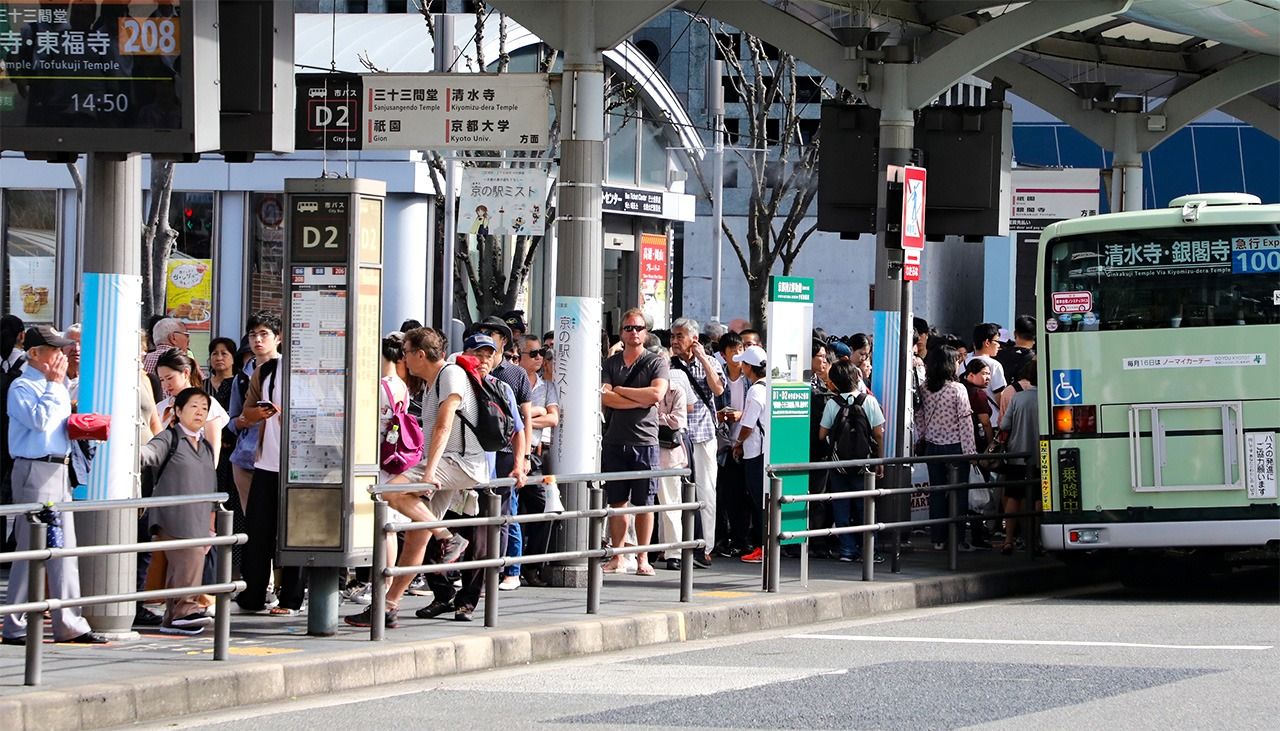
That huge difference between the resident population and annual visitor numbers has created particular pressure on public transport. Buses serving popular areas can become crowded, making it harder for residents to board vehicles and contributing to delays.
For many tourists, buses remain one of the simplest ways to reach temples, shopping districts, historic neighborhoods and other attractions. For residents, however, the same services are part of their daily transportation system.
The city has faced growing complaints about packed buses and visitor behavior. A Kyoto municipal survey conducted in 2024 found that almost 80 percent of respondents had experienced problems related to crowded buses or tourists' poor manners.
The concerns range from passengers carrying large luggage onto crowded vehicles to visitors blocking boarding areas and failing to follow local rules. The city has therefore been looking for ways to manage tourism while ensuring that residents also benefit from the economic activity generated by visitors.
Residents Would Receive a Discount
Mayor Matsui said the city expects higher fares to become necessary because of rising prices and labor costs. Rather than applying the same increase to everyone, Kyoto wants to use the additional revenue from visitors to offer residents a lower fare.
Matsui said fares could otherwise rise to between 350 and 400 yen as the city responds to higher operating expenses and its efforts to address excessive tourism. The proposed resident discount would allow people who live in Kyoto to continue using buses at a lower price.
The approach would represent a significant change from the current system, under which passengers generally pay the same fare regardless of whether they live in the city or are visiting.
Kyoto officials see the two price levels as a way of allowing local people to experience a direct financial benefit from the millions of visitors who come to the city each year.
The proposal would also make Kyoto the first city in Japan to introduce different public bus fares based on whether a passenger is a resident.
That distinction makes the plan particularly significant because public transport fares in Japan have traditionally been structured around the service being provided rather than the passenger's place of residence.
National Approval Is Required
Kyoto cannot introduce the new system on its own. The city needs approval from Japan's national government because existing regulations require public transport fares to meet standards of fairness.
Officials will therefore need to explain why charging different fares to residents and non residents is justified.
The city is expected to present the measure as part of its broader response to excessive tourism and rising transport costs. The authorities will also have to demonstrate that the proposed pricing structure can operate within Japan's rules governing bus fares.
The approval process could determine the final price difference between residents and visitors. While the city has discussed a non resident fare of around 350 to 400 yen, the precise amount and structure will depend on the system eventually approved.
Kyoto is also considering other measures to address the financial impact of tourism.
Hotel Taxes Could Also Rise
The city plans to raise hotel taxes as another way of generating revenue from tourism.
The proposed changes come as Kyoto attempts to deal with the cost of hosting millions of visitors while maintaining services for people who live there throughout the year.
Tourism brings substantial economic activity to Kyoto. Visitors spend money on hotels, restaurants, shops, attractions and transportation. But the city must also deal with the public costs associated with large visitor numbers, including pressure on roads, buses, public spaces and other municipal services.
The proposed bus pricing system would shift part of that burden toward visitors who use the city's transport network.
For residents, the change could provide a small but direct financial benefit. A reduction from 230 yen to 200 yen would save 30 yen on each qualifying journey.
The difference becomes more noticeable for people who regularly use buses. A resident making two qualifying bus journeys every weekday, for example, would save around 1,200 yen over a 20 day working month compared with the existing 230 yen fare.
For tourists making occasional journeys, the proposed increase would have a different effect. A fare of 360 yen would add 130 yen to each journey compared with the current 230 yen price.

Kyoto Faces a Difficult Tourism Balance
Kyoto's challenge reflects a wider issue facing popular destinations across Japan. International tourism has returned strongly, while domestic travel continues to bring large numbers of people to major cultural and historic sites.
The city is one of Japan's best known tourism destinations, with attractions including ancient temples, shrines, traditional streets and historic districts. Its popularity has also made managing visitor numbers increasingly important for municipal authorities.
The bus system sits at the center of that challenge because tourists and residents often depend on the same routes.
A visitor heading toward a famous temple may see a crowded bus as an inconvenience during a holiday. For a resident trying to get to work, school or an appointment, repeated overcrowding can affect everyday life.
Kyoto's proposed fare structure is therefore not simply about collecting more money from tourists. It is also an attempt to distinguish between the people who live in the city and those who use its public services temporarily.
The policy could become a closely watched example of how major tourism destinations try to share the financial costs of mass tourism.
At the same time, the plan raises practical questions about how residency would be verified, how tourists would be charged and whether different fares would create delays when passengers board buses.
Those details will need to be addressed before the system can begin.
A New Model for Kyoto's Public Transport
The city wants to introduce the new fare system in the next fiscal year, but the proposal still requires approval from the national government.
If approved, Kyoto would become the first city in Japan to operate a public bus fare system that charges different prices based on residency.
The measure would mark a significant change for both residents and visitors. Local passengers would receive a lower fare, while tourists would contribute more toward the cost of using a transport system under heavy pressure from visitor numbers.
Kyoto's authorities are also pursuing higher hotel taxes, giving the city another potential source of tourism related revenue.
With 56 million visitors recorded in 2024, the pressure on Kyoto's transport network is unlikely to disappear simply through one fare adjustment. The city will need to monitor whether the new prices actually improve bus access for residents, reduce congestion and provide enough revenue to cover rising operating costs.
Would a separate tourist fare make Kyoto's buses easier for residents to use, or could it create new problems for passengers and transport operators?