

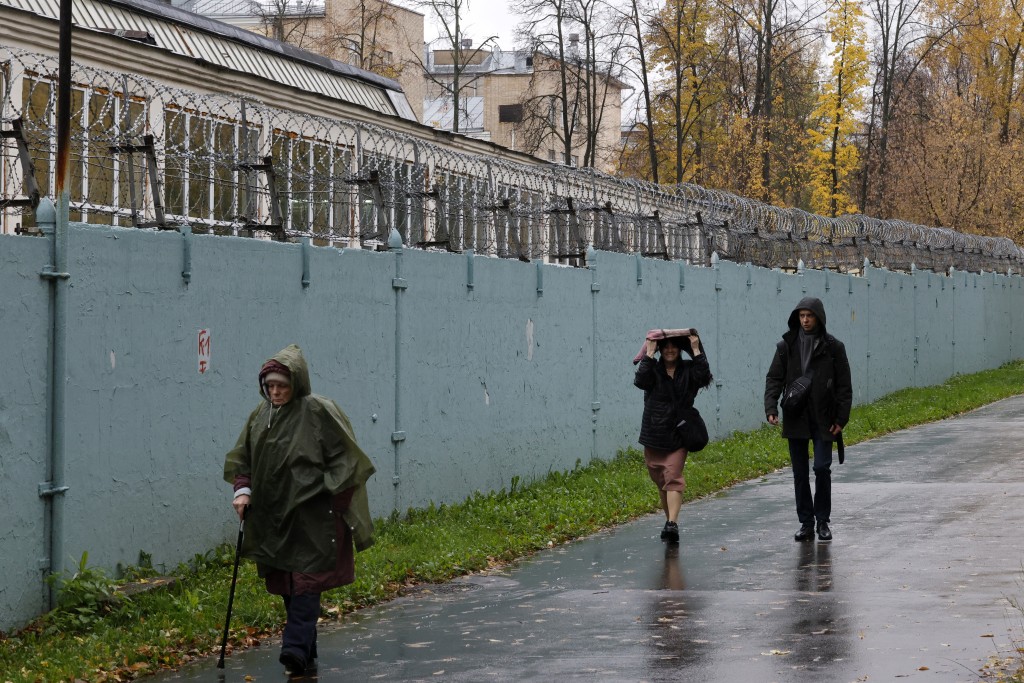
Japan has lodged a strong diplomatic protest with Russia following the arrest of Japanese journalist Yuki Imai on suspicion of espionage, as Tokyo says it has received no explanation from Moscow and has been unable to contact him.
The Japanese Foreign Ministry summoned Russian Ambassador Nikolay Nozdrev on Wednesday, demanding information about the detention and calling for the journalist to receive fair and impartial treatment. Russian authorities accuse the reporter, identified by Moscow as working for the Hokkaido Shimbun newspaper, of gathering intelligence about the country's defences.
The arrest took place on Sakhalin, a Russian island in the country's Far East near territory disputed by Japan and Russia. Moscow's Federal Security Service, known as the FSB, said the Japanese national had allegedly worked for Japanese intelligence. The allegations have not been independently established in the information provided.
The case has added to tensions between the two countries, whose relations remain strained by a longstanding territorial dispute and broader disagreements over security. It has also raised concerns about the treatment of foreign journalists operating in Russia, where authorities have previously detained reporters on national security charges.
Tokyo demands answers from Moscow
Japan's Foreign Ministry said Kimitake Nakamura, an official in its European Affairs Bureau, summoned Nozdrev on Wednesday to formally communicate Tokyo's objections.
Nakamura lodged a strong protest over the detention of a Japanese national and what the ministry described as unilateral statements issued about the case. Japanese officials said Moscow had not provided an explanation for the arrest.
The ministry's response reflects Tokyo's concern that Russian authorities publicly announced serious allegations before providing Japan with the information it had requested through diplomatic channels.
Chief Cabinet Secretary Minoru Kihara said Japan had been unable to contact the individual and learned about the arrest only after Moscow issued its official announcement.
Foreign Minister Toshimitsu Motegi said Japanese diplomats in Russia had requested the prompt provision of information, along with humanitarian consideration and fair and impartial treatment for the detained journalist.
These requests are intended to establish the circumstances of the detention and clarify how Russian authorities are handling the case. The information available does not indicate whether Moscow has subsequently provided Tokyo with a detailed explanation.
The Japanese government has not publicly confirmed the espionage allegations described by Russian officials. Its immediate demands have centred on obtaining information about the journalist and ensuring that his treatment meets appropriate standards.
For Tokyo, access to the detained national and reliable information about his legal status are immediate concerns. The arrest also presents a diplomatic challenge because the allegations involve national security, an area in which Russian authorities have taken a particularly hard line in recent years.

Russia accuses reporter of gathering intelligence
Russia's Foreign Ministry identified the journalist on Tuesday as Yuki Imai of the Hokkaido Shimbun newspaper. A ministry spokeswoman accused him of conducting espionage activities on Russian territory.
The FSB separately said a Japanese national had been arrested on Sakhalin, although its initial announcement did not identify the individual by name.
According to the security service, the suspect had worked for Japanese intelligence to collect information about Russian defence capabilities. The FSB said it had opened a criminal case against the Japanese national and placed him in pretrial detention.
Russian state news agencies TASS and RIA Novosti reported the detention, citing the security service. Russian media said the journalist would remain in custody until December 12.
The available account does not specify the date on which the arrest took place or when the court ordered the detention. Russian authorities also have not publicly provided enough detail in the reported statements to independently establish the nature of the alleged intelligence gathering.
Russian Foreign Ministry spokeswoman Maria Zakharova criticised what she described as attempts by Tokyo to use its correspondents in Russia to collect information intended to undermine Russian national security.
Zakharova called the alleged conduct regrettable and said the case was not an isolated incident.
Her comments suggest Moscow views the arrest within a broader security context rather than as a matter involving only one journalist. However, the allegations remain claims by Russian authorities, and the available information does not independently establish that Imai engaged in espionage.
The charges reportedly carry a maximum prison sentence of 20 years, exposing the journalist to potentially lengthy imprisonment if convicted.
Kremlin defends security service
The Kremlin defended the FSB following the arrest, with spokesperson Dmitri Peskov saying the security service was carrying out its duties.
"If there are spies, they get caught," Peskov said during a briefing.
The comment reflected the Russian government's position that the detention falls within the security service's responsibility to investigate suspected intelligence operations.
The FSB released a video showing masked officers entering a hotel room, forcing a man to the floor and handcuffing him. According to the reported account, the detained individual was subsequently flown to Moscow, where a court ordered that he remain in pretrial detention.
The video did not establish independently whether the man had committed the alleged offence. Nor did the footage, as described in the available information, provide a detailed account of the evidence underpinning the espionage accusation.
The timing of the arrest and the court hearing was not disclosed in the reported announcement.
Japan's request for information is therefore significant to understanding what happened, including the legal basis for the detention and the evidence Russian authorities intend to rely on.
Until more information becomes available, the espionage allegation should be distinguished from a finding of guilt. The case remains a criminal matter in which Russian authorities have accused the journalist of conduct that could result in a lengthy prison sentence.
Hokkaido Shimbun prioritises journalist's safety
The Hokkaido Shimbun said it was aware of the Russian announcement but was still confirming the details of the case.
"Ensuring the safety of the journalist is our top priority, and we are responding accordingly," the newspaper said in a statement.
The publication's response indicates that it was seeking to establish the circumstances of Imai's detention while addressing concerns about his welfare.
The newspaper did not provide further details in the statement described in the report. The available information also does not establish whether the journalist had been reporting on a particular subject when he was detained.
For a media organisation with a reporter held abroad, confirming the journalist's location, legal status and access to appropriate assistance becomes an immediate concern. Those issues can be difficult to resolve when the detaining government has not provided a full explanation through diplomatic channels.
Media freedom organisation Reporters Without Borders, known as RSF, called for Imai's rights to be respected and for his release.
In a statement posted on X, the organisation argued that gathering information is part of journalism. Its intervention placed the case within wider concerns about the distinction between legitimate reporting and activities that authorities classify as espionage.
Journalists routinely seek information about governments, military policy and national security. Governments, in turn, may restrict access to certain information under domestic laws. Disputes arise when authorities accuse reporters of crossing the line between gathering news and conducting intelligence operations.
The evidence available in Imai's case has not been independently established in the reported material, leaving questions about the specific conduct behind the charge.
Arrest recalls detention of US journalist Evan Gershkovich
The case has drawn attention to previous arrests of foreign journalists in Russia on espionage allegations.
In 2023, US journalist Evan Gershkovich was arrested on charges of espionage. He was later sentenced to 16 years in prison before being released in a prisoner exchange in 2024.
Gershkovich's case became a major diplomatic issue between Washington and Moscow. His detention and eventual release demonstrated how accusations involving foreign nationals can become part of wider negotiations between governments.
Imai's case now raises similar concerns about the treatment of a foreign reporter accused of gathering intelligence. However, the circumstances and evidence in the two cases should not be assumed to be identical.
Russia has detained several citizens of countries it describes as "unfriendly" in recent years, accusing some of working for Western intelligence services. Such cases have taken place against a background of worsening relations between Moscow and several Western governments.
The detention of a Japanese journalist carries an additional diplomatic dimension because Japan is not only seeking information about one of its nationals but is also dealing with Russia over unresolved territorial claims.
The outcome could affect discussions between the two countries, although the available information does not establish whether the arrest will directly change their wider diplomatic relations.
Longstanding territorial dispute adds to tensions
Japan and Russia have been in a territorial dispute for decades over a group of islands in the Pacific, located northeast of Japan and southwest of Russia's Sakhalin region.
The islands are known as the Kuril Islands in Russia and the Northern Territories in Japan. They came under Soviet control at the end of the Second World War and remain under Russian administration.
Japan continues to claim the disputed islands, making their status a persistent source of disagreement between Tokyo and Moscow.
The dispute has complicated relations between the countries and has remained unresolved despite diplomatic efforts over many years. Questions of sovereignty, security and regional influence continue to shape their dealings.
On Wednesday, Japan also protested a visit by a Chinese delegation to one of the Northern Territories islands controlled by Russia and claimed by Tokyo. The Japanese government described the visit as "absolutely unacceptable".
China's Foreign Ministry offered a different account of the delegation's activities. Spokeswoman Mao Ning said the delegation had visited Yuzhno-Sakhalinsk, the capital of Sakhalin Oblast, and conducted friendly exchanges with local officials.
Yuzhno-Sakhalinsk is on Sakhalin itself, not on the disputed islands. The distinction matters because the location of the visit determines whether it directly involved the territory claimed by Japan.
The separate disagreement illustrates the sensitivity surrounding the region, where diplomatic visits and official statements can carry implications for competing territorial claims.
The journalist's arrest and the dispute over the islands are separate issues, but both sit within a broader relationship marked by mistrust and competing security interests.
Diplomatic pressure focuses on access and fair treatment
Japan's immediate priority is to obtain information about Imai's detention, establish contact with him and ensure that Russian authorities treat him fairly.
The one-month or longer course of legal proceedings has not been detailed, and the reported information does not establish whether Russia will provide additional evidence to support its allegations.
The maximum sentence of 20 years makes the case particularly serious. A conviction could have lasting consequences for the journalist and further strain relations between Tokyo and Moscow.
For now, the key questions concern the basis of the espionage charge, the evidence held by Russian investigators and whether Japanese diplomats will gain access to the detained reporter.
Japan has formally protested, its diplomats have requested information and RSF has called for the journalist's release. The Hokkaido Shimbun has also said his safety is its top priority.
Will Moscow provide Japan with the evidence behind the espionage allegations, and will Tokyo's diplomatic protest secure the journalist's release?