

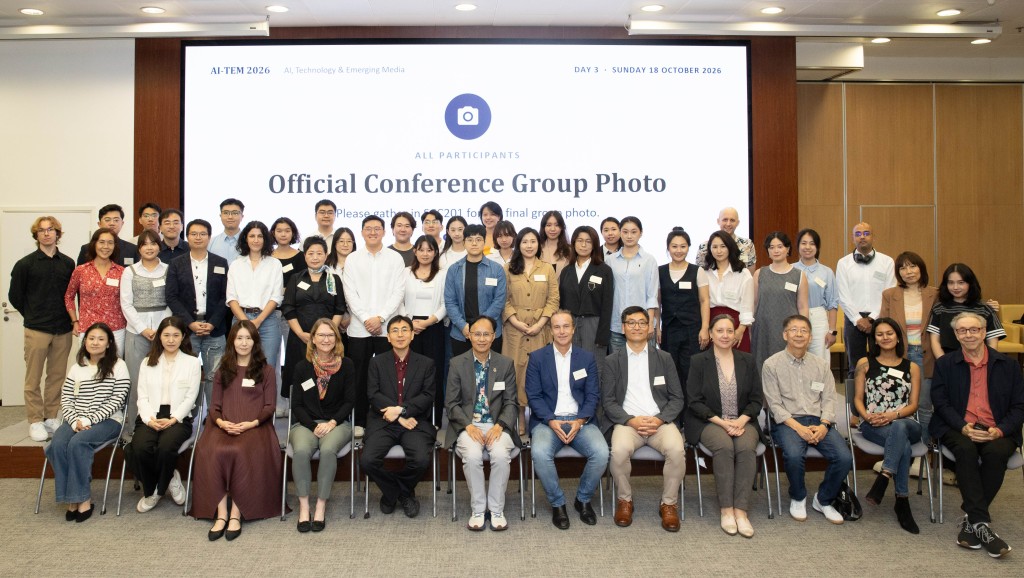
Hong Kong Baptist University (HKBU) brought together more than 200 international scholars, faculty members and graduate students for its first AI, Technology and Emerging Media (AI-TEM 2026) conference, held from October 16 to 18. The event examined how artificial intelligence is changing communication and why researchers must address the social inequalities, ethical risks and barriers to access that accompany its adoption.
Organised in partnership with Boston University, Korea University and the University of Vienna, the three day international conference adopted the theme “Extending Responsible AI Communication.” Discussions examined how communication research can help ensure that AI technologies serve society more fairly, particularly as their influence grows across workplaces, education and everyday life.
The conference also gave secondary school students in Hong Kong an opportunity to speak directly with international academics about AI ethics, its practical applications and the possible effects of automation on future employment.
The programme combined keynote presentations, research paper sessions and three specialised panel discussions. Together, these activities examined the relationship between emerging technologies and the people who use them, with particular attention to hidden inequalities, uneven adoption and new forms of exclusion.
HKBU dean calls for a human centred approach to AI
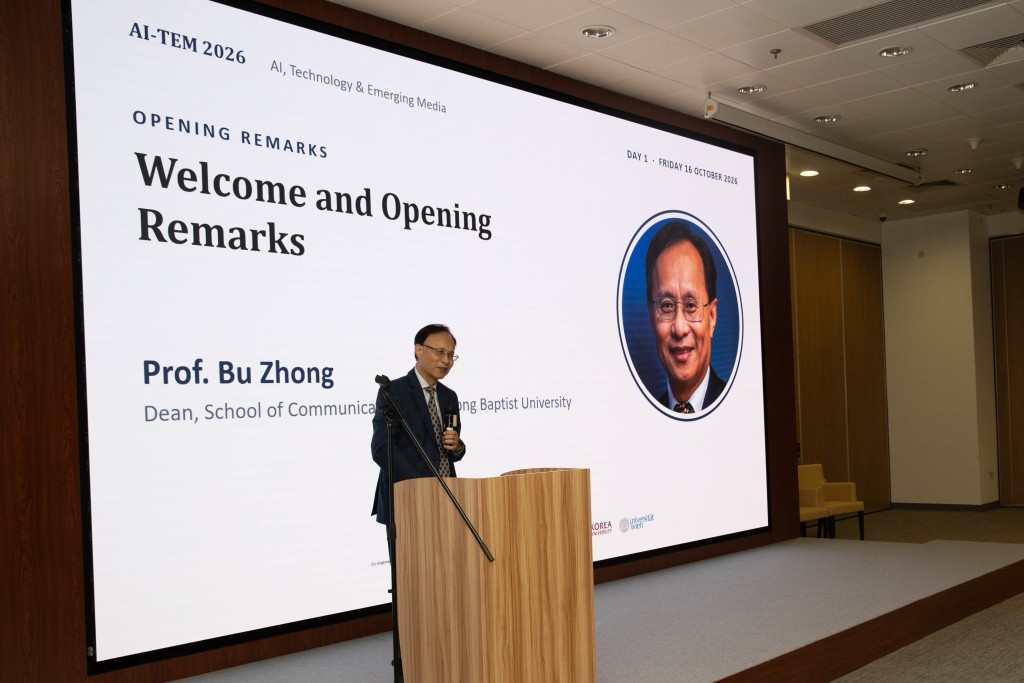
Zhong Bu, dean of HKBU's School of Communication, opened the conference by arguing that the future of artificial intelligence cannot be understood through technological performance alone.
“The future of AI isn’t just about technology, it is a human question,” Bu said, emphasising the role of the humanities and social sciences in understanding AI's growing influence.
He distinguished between the technical questions engineers can answer and the broader social questions that require communication research.
“Engineers can tell us how efficient an algorithm can be, but only communication scholars can explain why society exists as it does,” he said.
His remarks placed human behaviour, social relationships and public understanding at the centre of discussions about AI. While engineers develop systems and improve their capabilities, researchers in communication and the social sciences can investigate how people respond to these technologies, how information circulates and whether automated systems reinforce existing inequalities.
These questions have become increasingly relevant as AI tools enter newsrooms, classrooms, businesses and public services. Their effects depend not only on how the technology operates but also on how organisations introduce it, who can access it and how people understand its decisions.
The conference's focus on responsible AI communication encouraged participants to consider these broader consequences alongside technical progress.
Four universities strengthen international research ties
James E. Katz of Boston University highlighted the importance of international academic cooperation as researchers respond to rapid changes in AI and emerging media.
He said the four partner universities shared a commitment to freedom of inquiry and independent thought, principles that can help researchers examine new technologies from different academic and cultural perspectives.
The collaboration brought together institutions from Hong Kong, the United States, South Korea and Austria. Their participation created opportunities to compare research approaches and discuss how the social effects of AI may differ across countries and communities.
International cooperation also allows academics to examine questions that extend beyond national borders. AI systems and digital media platforms often operate across multiple markets, while debates over privacy, misinformation, access and accountability involve different legal frameworks and cultural expectations.
By bringing researchers together, AI-TEM 2026 provided a forum for examining these issues through communication studies and related disciplines.
The partnership also established a basis for continued academic engagement. At the end of the conference, HKBU, Boston University, Korea University and the University of Vienna pledged to continue working together and support research into human centred and socially responsible AI communication.
International academics share perspectives on AI and media
The conference featured keynote presentations from academics representing several universities and research traditions.
Speakers included Michael Chau Chiu-lung from the University of Hong Kong, Yang Sung-Un from Boston University, Jörg Matthes from the University of Vienna, Ingrid Bachmann from the Pontifical Catholic University of Chile and Jennifer Ihm from Korea University.
Their participation brought together perspectives on the relationship between artificial intelligence, communication and emerging media.
The conference programme also included research paper presentations, allowing scholars and graduate students to share their work and engage with questions raised by the wider academic community.
Three specialised panel sessions provided additional opportunities to discuss particular aspects of responsible AI communication. Alongside the keynote presentations, these sessions formed part of a programme designed to examine the ethical and social implications of technological change.
The discussions addressed concerns such as unequal access to AI, differences in how communities adopt new technologies and the possibility that emerging systems could create new barriers for already disadvantaged groups.
These issues extend beyond whether individuals can use AI tools. Access also involves the ability to understand their outputs, identify errors and make informed decisions about when to rely on automated systems.
Communication research can help explain how people receive and interpret AI generated information, how trust develops and how the presentation of information affects public understanding.
The conference's interdisciplinary approach placed these questions within a wider discussion about how technology can contribute to social well being without overlooking the needs of different communities.
Secondary school students join the debate on AI ethics
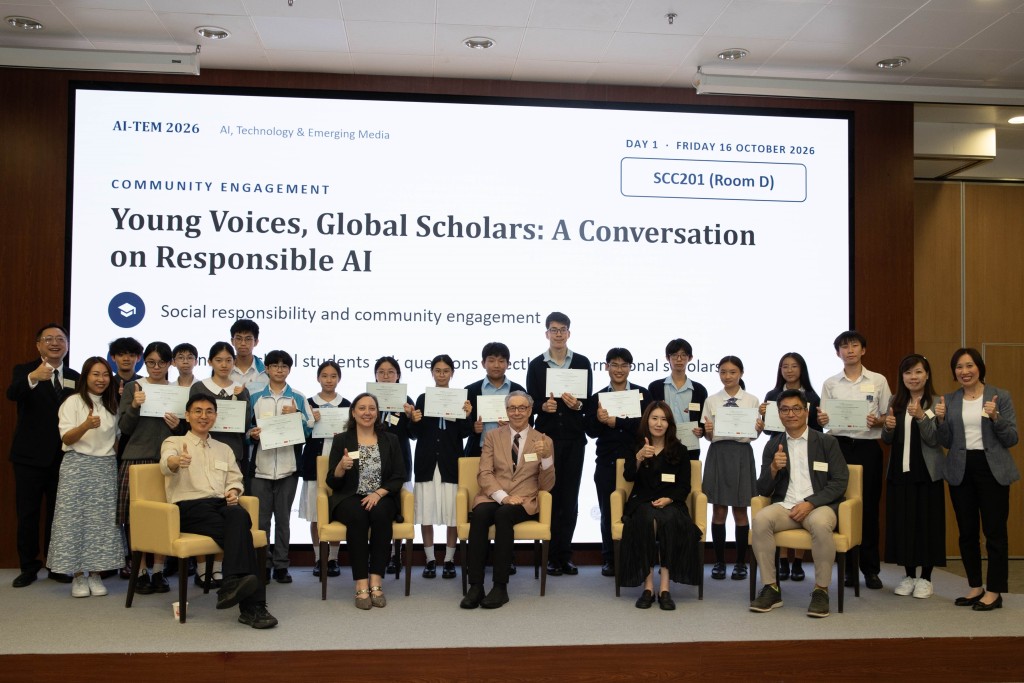
One of the conference's featured activities brought international scholars together with students from three Hong Kong secondary schools: CCC Rotary Secondary School, Tai Kwong Hilary College and Tseung Kwan O Government Secondary School.
The interactive session gave students an opportunity to discuss the opportunities and risks associated with AI directly with academics working in the field.
Their conversations covered ethical questions, the role of AI in everyday life and the possible consequences for employment as technology changes the skills required in the workplace.
Including secondary school students broadened the discussion beyond universities and research institutions. Young people are already encountering AI through educational tools, online platforms and digital communication, making their experiences relevant to debates about how these systems should be developed and used.
Questions about future employment are particularly important for students preparing to enter a changing labour market. AI may assist workers with research, writing, analysis and routine tasks, but its adoption can also alter job responsibilities and create demand for new skills.
Understanding these changes requires more than predicting what technology will be able to do. Students also need opportunities to consider how employers, educational institutions and policymakers might respond.
The session gave participants a chance to raise these concerns with international scholars and hear perspectives from researchers examining the social implications of emerging media.
It also reflected the conference's broader emphasis on responsible communication, in which public understanding and participation form part of the discussion about technological development.
Why responsible AI communication matters
As artificial intelligence becomes more widely used, researchers face questions about who benefits from these systems and who risks being left behind.
Unequal adoption can occur when communities have different levels of access to technology, digital skills or reliable information. AI systems may also produce different outcomes for different groups, depending on the data used to train them and the circumstances in which organisations deploy them.
Communication plays a role in how these systems are explained to the public, how users assess their reliability and how concerns about their effects reach decision makers.
Researchers can examine whether people understand the limitations of AI generated content, how digital platforms influence the circulation of information and what organisations should communicate when automated tools affect important decisions.
These questions are particularly relevant to education, journalism and employment, where the use of AI can influence learning, public understanding and professional practices.
The discussions at AI-TEM 2026 brought these concerns into an international academic setting, encouraging scholars to consider the social consequences of AI alongside its technical development.
Rather than treating responsible AI as an issue for engineers alone, the conference emphasised the contribution of communication scholars, social scientists and the wider public.
Partner universities commit to continued collaboration
The conference concluded with HKBU, Boston University, Korea University and the University of Vienna reaffirming their intention to continue their partnership and promote research into human centred, socially responsible AI communication.
The commitment builds on the collaboration established for the inaugural AI-TEM event, which brought together established academics, early career researchers and students to discuss the relationship between technology and society.
Its programme combined international research, specialist discussions and direct engagement with young people, giving participants several ways to examine the effects of AI on communication and daily life.
The universities' continued cooperation will provide a platform for further academic exchange as researchers investigate the ethical questions, social inequalities and communication challenges associated with emerging technologies.
For educators, researchers and policymakers, the conference raised a practical question that extends beyond the academic community: how can AI be developed and adopted in ways that give people fair access, clear information and a meaningful voice in decisions affecting their lives?
As AI continues to reshape communication and employment, what steps should universities, technology companies and governments take to ensure its benefits reach everyone?