

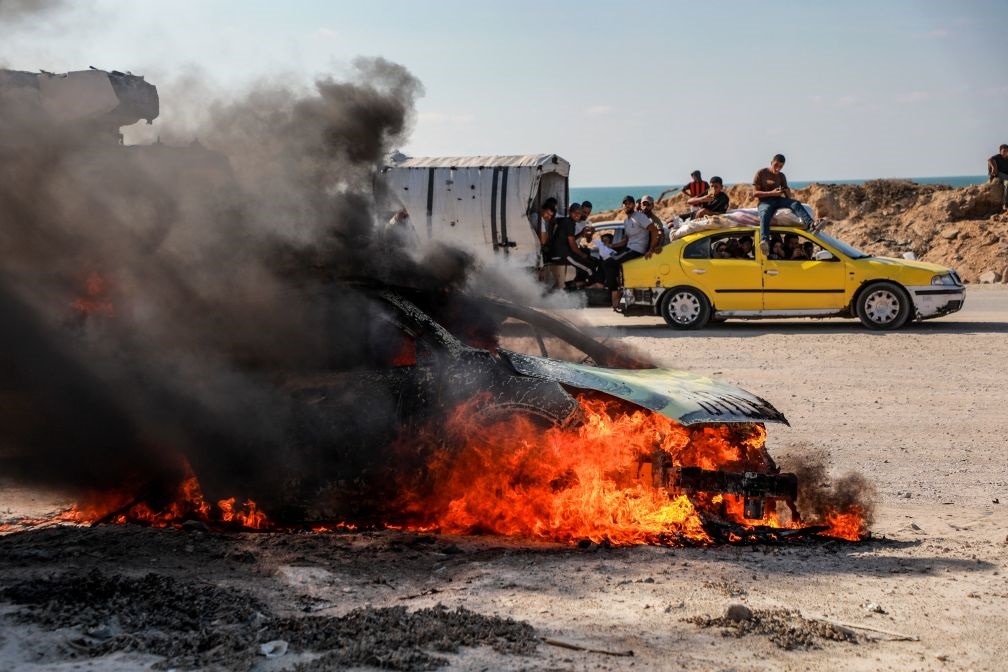
Gaza remains devastated three years after the October 7, 2023, attacks triggered a war that has killed more than 74,000 Palestinians, according to Gaza health authorities. A ceasefire has offered a pause in the fighting, but the central questions remain unanswered: Will Israeli forces fully withdraw? Will Hamas disarm? And what future awaits the millions of Palestinians whose homes and communities have been shattered?
The consequences reach far beyond Gaza. Rising tensions involving Israel, Iran, Lebanon and Yemen have increased regional insecurity, while attacks on commercial vessels in the Red Sea have brought the conflict into the sphere of international trade. Despite US led diplomatic efforts, disagreements over security, governance and Palestinian statehood continue to stand in the way of a comprehensive settlement.
For Palestinians, the war has meant devastating loss, repeated displacement and an uncertain future. For the wider Middle East, it has exposed the limits of ceasefire diplomacy and intensified questions about whether international powers can secure a political agreement that lasts.
Gaza war leaves thousands dead and communities in ruins
The conflict began on October 7, 2023, when Hamas launched its Al Aqsa Flood operation against Israel. Thousands of rockets were fired from Gaza as armed fighters entered southern Israel, killing around 1,200 people and taking approximately 250 hostages.
Israel responded by declaring war and launching Operation Iron Swords. Airstrikes and a ground offensive devastated large parts of Gaza, turning a military confrontation into a prolonged humanitarian catastrophe.
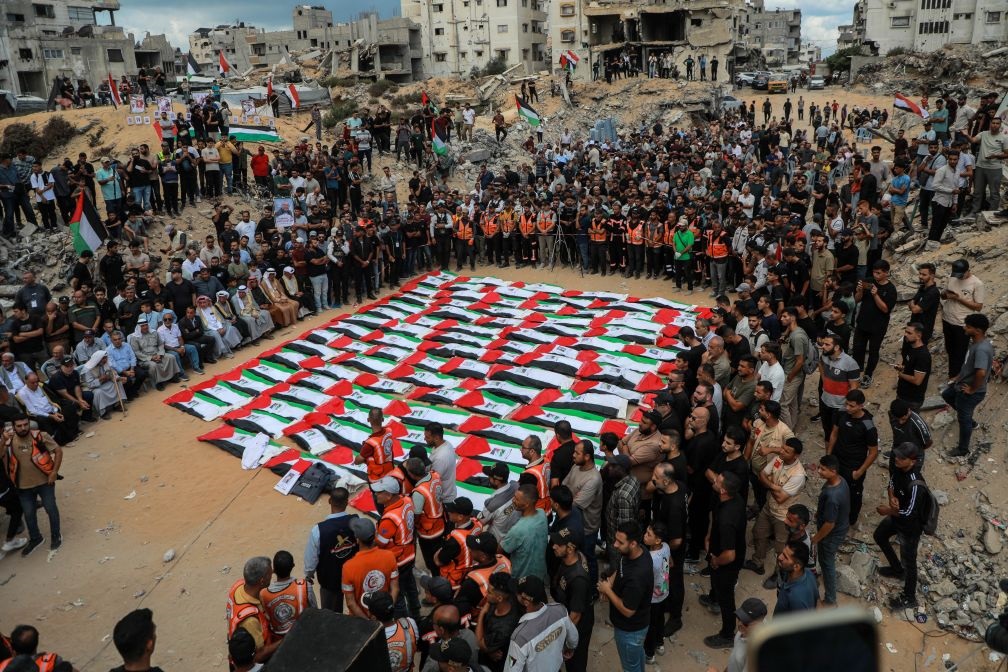
More than 74,000 people had been killed in Gaza since October 7, 2023, according to figures cited from local health authorities. The scale of the reported death toll reflects the enormous human cost of the conflict, although the circumstances surrounding individual deaths and the full breakdown of casualties require careful verification.
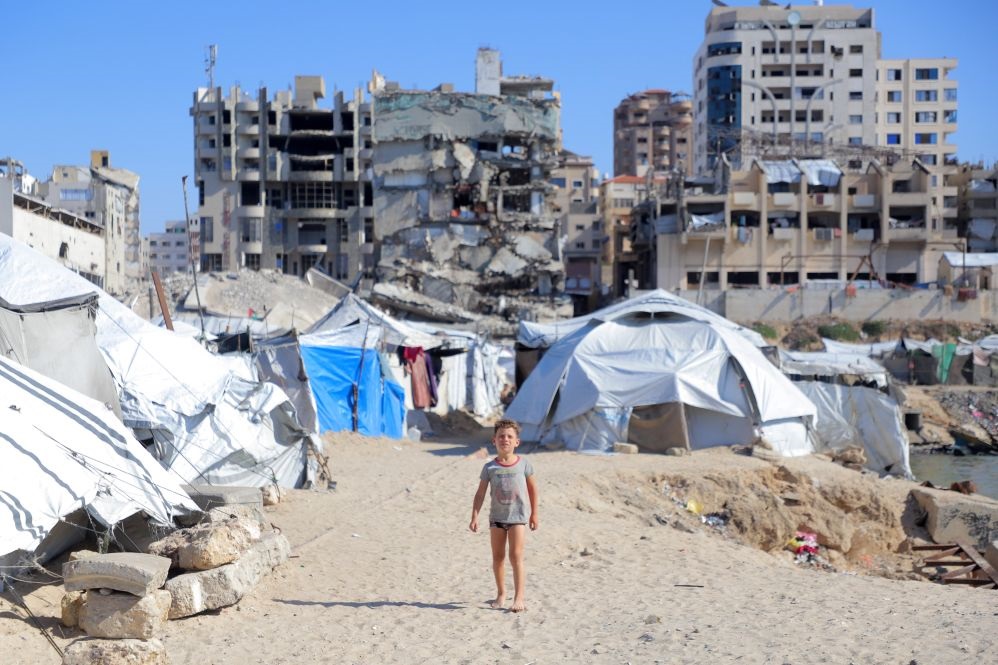
The destruction has extended across residential neighbourhoods and essential infrastructure. Families have lost homes, communities have been uprooted, and millions of people have experienced displacement during the war.
Bahraini political analyst Abdullah Al Huwaihi said Israel's military campaign had caused extensive civilian casualties, particularly among women and children, while destroying homes and infrastructure.
The damage is not limited to buildings. When residential areas and essential services are destroyed, families face greater difficulty finding shelter, maintaining their livelihoods and returning to normal life. Even a sustained halt in fighting would not immediately reverse these consequences.
Reconstruction also raises difficult questions about funding, access to building materials, security and the authority responsible for rebuilding Gaza. Without agreement on these issues, the path from a ceasefire to recovery remains uncertain.
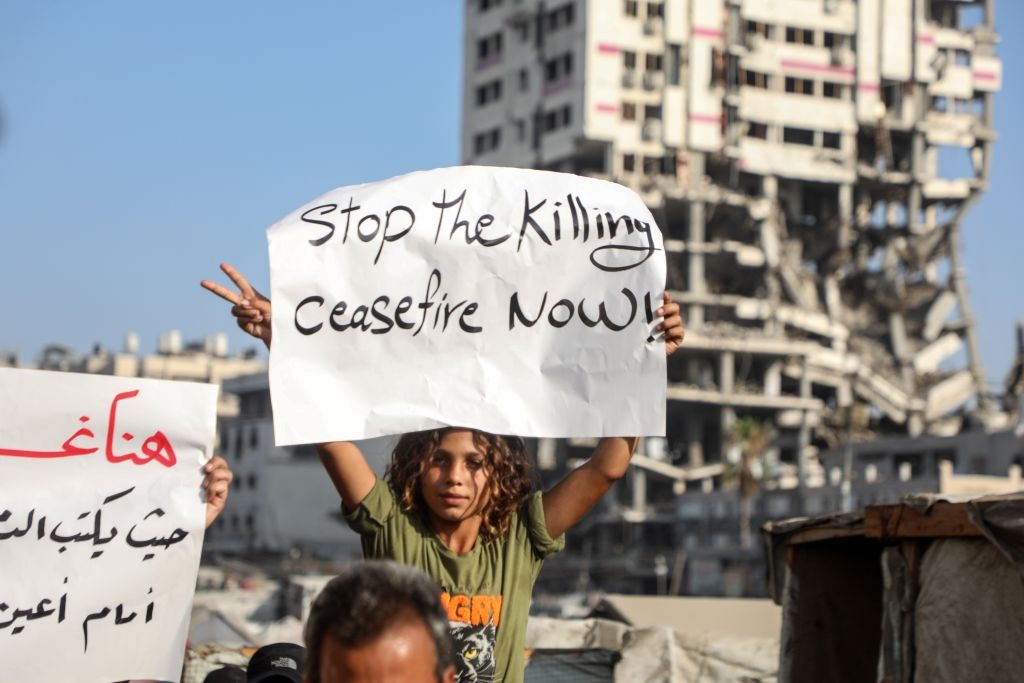
Gaza ceasefire fails to resolve the biggest disputes
A ceasefire reached in October 2025 raised hopes that the war could move towards a negotiated settlement. However, the agreement has not resolved the disagreements that continue to obstruct progress.
Under the first phase of the US proposed ceasefire plan, Israeli forces were required to retreat to a designated position known as the Yellow Line, while arrangements were made for exchanges involving hostages and prisoners.
The second phase, launched in mid January, focused on demilitarising Gaza and establishing a technocratic administration to oversee its transition.
By the end of July, Hamas had agreed to include the handover of heavy weapons in demilitarisation arrangements, according to the supplied report. The group made that commitment conditional on a complete Israeli withdrawal and an end to what it described as Israeli aggression.
These conditions reveal why the ceasefire has struggled to become a lasting peace agreement. Israel wants guarantees that Hamas will no longer pose a military threat, while Hamas wants Israeli forces to leave Gaza before it makes further concessions on weapons.
Both sides are seeking commitments from the other before accepting measures that could weaken their own position.
Khaled Al Hroub, a professor of international conflicts at Northwestern University in Qatar, said repeated diplomatic frameworks had failed to address the political roots of the conflict.
His assessment points to a fundamental problem. A ceasefire can reduce immediate violence, but it cannot settle disputes over sovereignty, security, political representation and the future of Palestinian territories on its own.
Until negotiators reach agreement on those questions, arrangements designed to manage the conflict may remain vulnerable to further breakdowns.
West Bank violence intensifies Palestinian displacement
The humanitarian crisis is not confined to Gaza. Palestinians in the occupied West Bank have also faced settler violence, home demolitions and evictions, adding to concerns about the future of Palestinian communities.
United Nations data cited in the supplied report showed that approximately 3,800 Palestinians had been displaced by August 10, 2026, because of settler violence, demolitions and evictions. The UN had also recorded more than 1,430 settler related incidents during the year, affecting around 260 Palestinian communities.
The figures indicate the scale of the pressures facing residents across the territory. Displacement can separate families from their homes, livelihoods and local support networks, making it harder to rebuild their lives even when immediate violence subsides.
Ramiz Alakbarov, the UN humanitarian coordinator for the occupied Palestinian territory, warned that the West Bank was approaching a breaking point.
The situation also complicates efforts to establish an independent Palestinian state. Continued displacement and violence raise questions about whether Palestinian communities can retain secure access to their land and whether a viable territorial basis for statehood can be preserved.
A settlement focused exclusively on Gaza would therefore leave a significant part of the wider Israeli Palestinian conflict unresolved.
Why Israel and Hamas cannot agree on disarmament
The main obstacle to implementing the ceasefire is the opposing vision Israel and Hamas have for Gaza's future.
Akram Attaallah, a political analyst from Gaza, said Israel insists on Hamas's complete disarmament before a full military withdrawal. Hamas, meanwhile, demands an end to Israeli military operations and a complete Israeli retreat before discussing the weapons issue.
The disagreement concerns more than the timing of individual steps. It raises the question of whether Hamas will retain any military or political presence in Gaza and what arrangements Israel would accept to ensure its security after withdrawing.
Attaallah described the positions as a zero sum equation. Hamas wants to remain in Gaza, while Israel seeks to eliminate the group's presence in the territory.
This leaves negotiators facing a difficult choice. If either side considers the other side's preferred outcome unacceptable, compromise becomes harder to achieve.
The proposed international arrangements have not yet provided a clear solution. Adel al Ghurairi, a professor at Baghdad University, said the US backed framework, including a proposed Board of Peace, a stabilisation force and a transitional committee, remained largely unimplemented.
Disarmament, Israeli withdrawal and the identity of Gaza's future governing authority are still among the biggest unresolved questions.
Without clear answers, the proposed transition risks remaining a diplomatic framework rather than a functioning system capable of providing security and civilian administration.
US role in Gaza peace talks faces growing questions
The United States remains central to ceasefire diplomacy, but its close relationship with Israel has raised questions about its ability to act as an acceptable mediator for all parties.
Washington has supported diplomatic efforts to end the war while continuing its strategic relationship with Israel, including military assistance and diplomatic backing.
Ali Al Hail, a professor of political science at Qatar University, said this dual role complicated perceptions of American impartiality.
The United States has considerable influence because of its relationship with Israel. However, critics argue that its continued support for the Israeli government weakens confidence in its ability to pressure both sides towards a balanced settlement.
Al Ghurairi said Washington appeared to want the war to end but had not demonstrated sufficient willingness to compel the parties to fulfil the necessary commitments.
The concern is that a ceasefire agreement cannot succeed through diplomatic declarations alone. It requires clear obligations, monitoring arrangements and credible consequences when commitments are not fulfilled.
A broader international mechanism could help strengthen accountability and reduce dependence on a single mediator. However, international participation would not automatically overcome the fundamental disagreements between Israel and Hamas.
For any peace plan to succeed, its provisions must translate into measurable changes on the ground, including progress on troop withdrawals, security arrangements and civilian governance.
Gaza war spreads tensions across the Middle East
The war has also contributed to a wider regional crisis, linking events in Gaza to tensions involving Iran, Lebanon, Yemen and the Red Sea.
Yemen's Houthis have attacked commercial vessels in actions they describe as support for the Palestinians. These attacks have raised concerns about maritime security and the movement of goods through one of the world's important shipping corridors.
Sudanese political analyst Mohamed Amin said the repercussions of the Gaza conflict had turned part of the crisis into an international shipping and trade issue.
Threats to commercial vessels can force shipping companies to reconsider routes and security arrangements. Disruptions can also increase transport costs and expose businesses to additional risks.
The regional consequences extend beyond maritime trade. The conflict has influenced the relationship between Israel and Iran, as well as the activities of armed groups aligned with Tehran, including Hamas, the Houthis and Lebanon's Hezbollah.
Al Huwaihi said Israel increasingly viewed Iran as the principal state supporting these groups and sought to shift the confrontation towards Tehran after what Israeli officials regarded as gains in Gaza.
The supplied report also states that the US president launched a war against Iran on February 28, 2026, following Israeli efforts to secure American involvement. That specific account requires independent verification before publication.
The wider concern is that tensions in one part of the region can trigger further confrontation elsewhere. Developments involving Iran may affect security in the Gulf, while fighting involving Hezbollah can increase risks along the Israeli Lebanese border. Attacks in the Red Sea can also draw international military forces into the crisis.
These interconnected tensions make a durable settlement in Gaza more difficult to achieve without wider regional diplomatic efforts.
Can a two state solution bring lasting peace?
Three years into the conflict, the future of Palestinian statehood remains one of the most important questions facing international diplomacy.
The two state solution envisages an independent Palestinian state alongside Israel. Supporters argue that a negotiated political settlement addressing Palestinian rights and Israeli security offers a route away from recurring violence.
However, major disagreements remain over territory, security, governance and the practical implementation of Palestinian sovereignty.
Lebanese political analyst Youssef Diab said the Palestinian issue would continue to shape regional stability. He argued that lasting peace requires a sovereign Palestinian state with genuine authority.
The argument reflects a broader concern that military arrangements alone cannot resolve a conflict rooted in competing national claims and decades of political confrontation.
Disarmament and Israeli withdrawal may form part of a settlement, but they do not independently answer questions about Palestinian self determination, political representation or the future administration of Gaza.
Mohamed Amin also stressed that regional and international powers must work to contain tensions involving Iran, Yemen, the Red Sea and the Gulf while developing wider political and security arrangements.
That challenge extends beyond negotiating another temporary pause in fighting. It requires a process that can protect civilians, establish credible security guarantees and address the political demands that have repeatedly undermined previous agreements.
What happens next for Gaza and the Palestinian people?
Three years after the October 7 attacks, Gaza faces the combined consequences of mass casualties, widespread destruction and an uncertain political future. The ceasefire has created a framework for negotiations, but the main disputes over disarmament, Israeli withdrawal and governance remain unresolved.
The situation in the West Bank and the wider regional tensions add further obstacles. A settlement that ignores Palestinian displacement or leaves the question of statehood unanswered would struggle to address the broader causes of instability.
The immediate challenge is to turn ceasefire commitments into practical steps that protect civilians and establish clear arrangements for Gaza's security and administration. The longer term challenge is to create a credible political process that recognises Palestinian rights while addressing legitimate security concerns.
Can international leaders turn the Gaza ceasefire into a lasting peace agreement, or will unresolved disputes continue to fuel conflict across the Middle East? Share your perspective.