

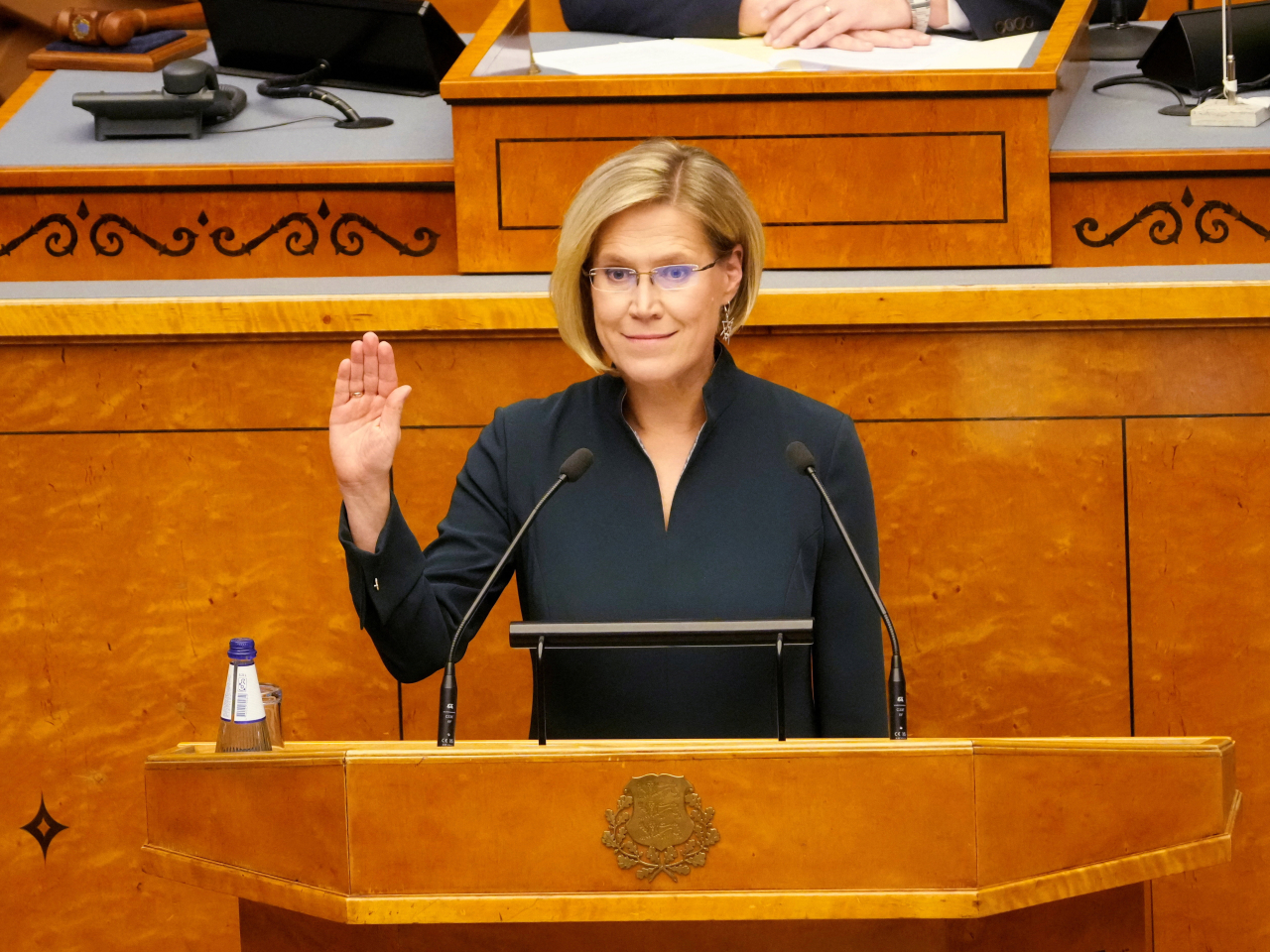
Estonia's new president, Ülle Madise, took the oath of office in Tallinn on October 12, calling for stronger public trust, greater confidence in the country's future and closer cooperation with European allies as international security concerns continue to shape the region. Chinese President Xi Jinping congratulated Madise on her inauguration, expressing interest in expanding cooperation with Estonia as the two countries mark 35 years of diplomatic relations.
Madise's inauguration took place at the Riigikogu, Estonia's parliament, where she formally assumed the presidency from outgoing President Alar Karis. The ceremony marked a change in the country's leadership and placed national security, social cohesion and international partnerships at the centre of her first address.
The new president, 51, said Estonia's ability to preserve its national character and continue developing would depend on trust among its people, hope for the future and the courage to address challenges. Her remarks linked the country's domestic priorities with the need to maintain strong relationships with neighbouring states and NATO allies.
Ülle Madise Becomes Estonia's New President
Madise took the presidential oath before the Riigikogu at the beginning of its sitting on October 12. During the ceremony, she pledged to defend Estonia's constitution and laws, exercise her authority fairly and impartially, and carry out her responsibilities in the interests of the country and its people.
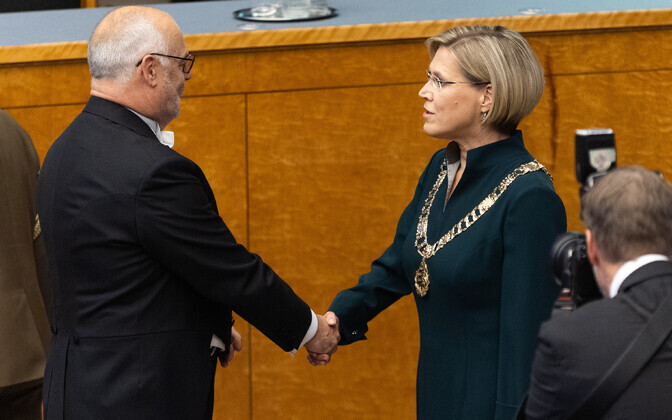
Outgoing President Alar Karis placed the presidential chain of office, bearing Estonia's national coat of arms, around Madise's neck following the oath. The formal handover marked the end of Karis's five year presidency.
According to the Riigikogu, Madise won the presidential election on September 2, securing 71 votes in the first round. Her inauguration followed the constitutional process for transferring the head of state's responsibilities.
In her address to parliament, Madise focused on the kind of society she wants Estonia to remain. She described the country's people as its greatest asset and spoke about creating conditions in which families could raise children, older people could live with dignity, and individuals could pursue education, science, business and creative work.
She also stressed that people with different interests, opinions, lifestyles and mother tongues should feel welcome in Estonia.
"Can we keep and continue building this kind of Estonia? That depends on trust, hopes for the future, and courage," Madise said in remarks published by the Riigikogu.
Her comments placed social trust at the heart of her presidency. They also suggested that national progress depends not only on government decisions but on whether people believe they have a place in the country's future.
National Defence and European Alliances Take Priority
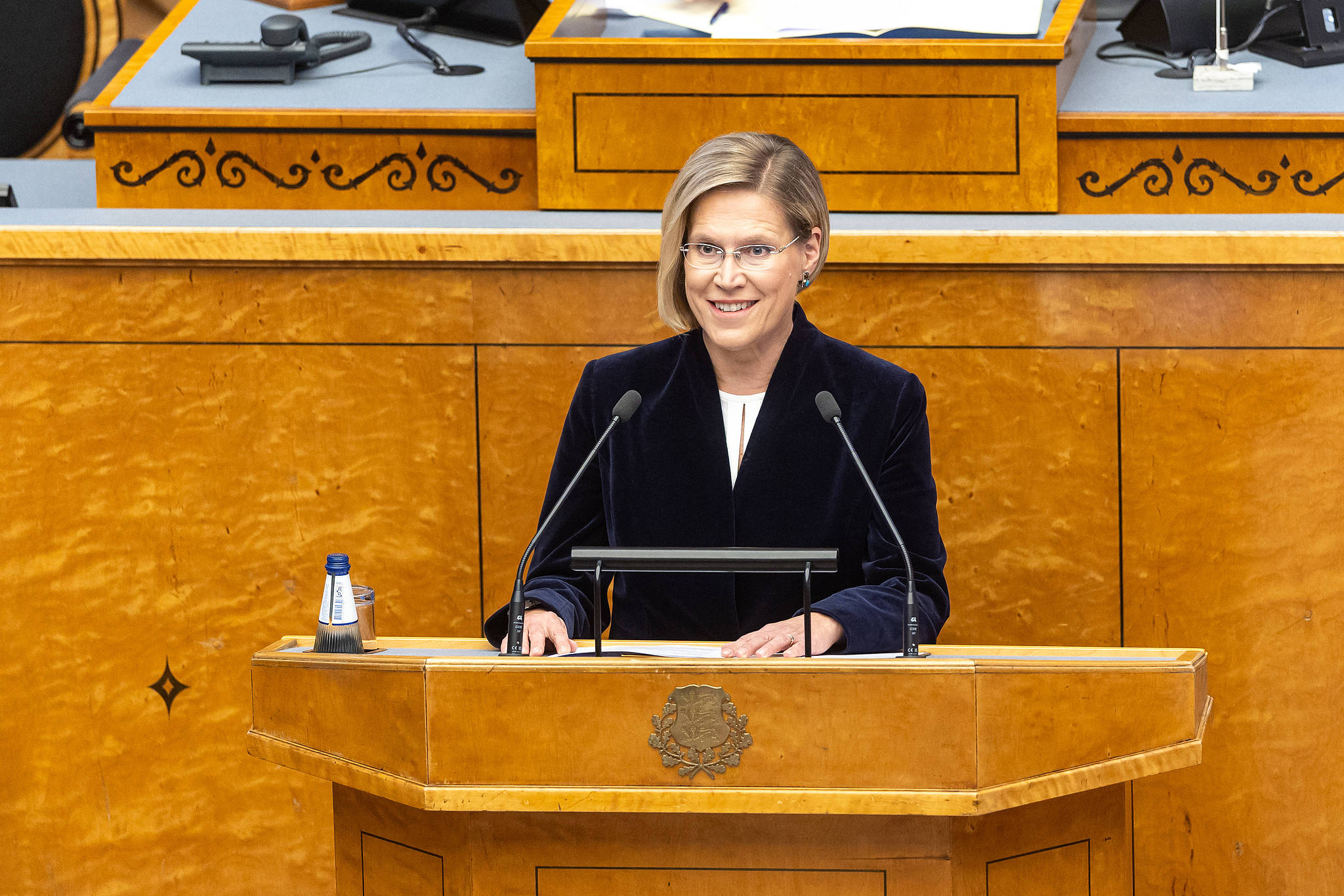
Security featured prominently in Madise's inaugural speech, reflecting Estonia's position in northeastern Europe and its cooperation with neighbouring countries and NATO partners.
The president called attention to the work of Estonia's Defence Forces, Defence League and Women's Voluntary Defence Organisation, as well as the country's wider national defence arrangements.
She also identified the Baltic states, Nordic countries and Poland as important partners in maintaining regional security. Her remarks referred more broadly to Estonia's European and NATO allies.
Madise argued that preparation and deterrence were important to preserving peace. She adapted a familiar saying about military training, suggesting that sufficiently demanding preparation could help prevent conflict rather than simply prepare a country to fight one.
"After all, our goal is peace," she said.
The emphasis on defence came alongside a reminder that the president's authority operates within Estonia's constitutional system. Madise said the head of state must not replace parliament, the government or the courts, stressing the importance of separating and balancing the powers of the state.
Her comments set out two connected priorities: maintaining the country's security while respecting the institutions responsible for democratic government.
Estonia's cooperation with the Baltic states, Nordic countries, Poland and NATO members remains part of its broader approach to national defence. Madise's speech indicated that she intends to maintain those partnerships while encouraging the country to strengthen its own preparedness.
Xi Jinping Congratulates Estonia's New President
Chinese President Xi Jinping sent a message of congratulations to Madise on October 12, according to China's Ministry of Foreign Affairs.
Xi said China and Estonia had a tradition of friendly relations and that cooperation and exchanges between the two countries had continued to develop in recent years.
He expressed his willingness to work with Madise to advance bilateral relations, using the 35th anniversary of diplomatic ties as an opportunity to strengthen political trust, expand mutually beneficial cooperation and increase cultural and people to people exchanges.
The anniversary provides a diplomatic occasion for both countries to review their relationship and consider opportunities for further engagement. Xi's message placed particular emphasis on political communication, practical cooperation and closer links between their peoples.
China and Estonia established diplomatic relations in 1991. The anniversary year gives the two governments an opportunity to mark that history while discussing the direction of future ties.
Xi's congratulations followed Madise's formal assumption of office and introduced a foreign policy dimension to the day's events. While her inaugural speech concentrated on Estonia's national priorities and security partnerships, the Chinese message focused on maintaining bilateral engagement and broadening cooperation.
The two statements addressed different aspects of the new president's responsibilities. Madise emphasised security, public trust and Estonia's relationships with its European neighbours, while Xi called for continued political dialogue and expanded cooperation between Beijing and Tallinn.
Neither statement, on its own, announced a new agreement or specific project between the two countries.
China and Estonia Mark 35 Years of Diplomatic Relations
The 35th anniversary of diplomatic relations gives the two countries a framework for discussing their existing cooperation and potential areas for further exchange.
Xi said he attached importance to China Estonia relations and wanted to work with Madise to give the partnership greater contemporary relevance. His message identified political trust, mutually beneficial cooperation and cultural exchanges as areas for continued attention.
People to people exchanges can include educational, cultural and other forms of contact that help citizens learn about one another's societies. Such exchanges can complement government discussions and commercial links, although Xi's message did not specify particular initiatives or funding commitments.
The reference to mutually beneficial cooperation was similarly broad. It expressed an intention to expand engagement but did not identify particular sectors, investment plans or trade targets.
For Estonia, the new presidency begins with a stated emphasis on national security, constitutional responsibilities and the social conditions needed for the country to develop. Its relationships with neighbouring states and European allies featured prominently in Madise's address.
For China, the congratulatory message signalled a desire to continue working with Estonia despite the change in its leadership. The anniversary offers a diplomatic setting for both sides to maintain communication and explore areas of shared interest.
Any future expansion of bilateral relations will depend on the decisions made by the two governments and the specific initiatives they choose to pursue.
Madise Sets Out Domestic Priorities for Her Presidency
Beyond defence and diplomacy, Madise addressed family policy, education, innovation and the conditions people need to build their lives in Estonia.
She said the president could recognise and support people working to ensure that families had homes, raising children did not create financial hardship, and people seeking to settle in rural areas could access housing loans.
She also called for child and family issues to receive attention during elections, arguing that political debate should demonstrate how policies could improve people's lives rather than push opposing groups into defensive positions.
Madise referred to the role of ideas and diversity in helping Estonia address its challenges. She pointed to the president's Academic Advisory Board as one place where people from different backgrounds, including academics and schoolchildren, could exchange views and develop new ideas.
These priorities broadened the focus of her inaugural address beyond national defence. They connected the country's future with the wellbeing of families, opportunities for younger generations and the ability of people to contribute to society.
Her comments also echoed her emphasis on trust. A country, she suggested, needs people to feel valued and able to participate in public life if it is to maintain confidence in its future.
Leadership Transition Marks a New Chapter for Estonia
Madise assumed office after Karis completed his five year term. During the handover, Karis thanked the country for the trust placed in him and reflected on Estonia's ability to respond to difficulties and crises.
He also urged political leaders to show greater courage in making decisions and called for new approaches to the challenges facing an ageing and shrinking population.
The transition therefore brought both continuity and a new emphasis. Karis spoke about resilience and the need for bold decisions, while Madise outlined her own priorities around public trust, national defence, family wellbeing and cooperation.
Her first address made clear that security and domestic development would remain closely connected in her approach to the presidency. Her comments on regional alliances placed Estonia's defence within a wider European framework, while her focus on families and public participation addressed the country's internal challenges.
Xi's congratulatory message added an international dimension to the transition, with China seeking to maintain dialogue as the diplomatic relationship reaches its 35th anniversary.
As Estonia's new president begins her term, the priorities set out in Tallinn and the message from Beijing provide an early indication of the issues likely to shape discussions at home and abroad.
What should be the main priority for Estonia's new president: strengthening national security, improving family wellbeing or expanding international cooperation?