

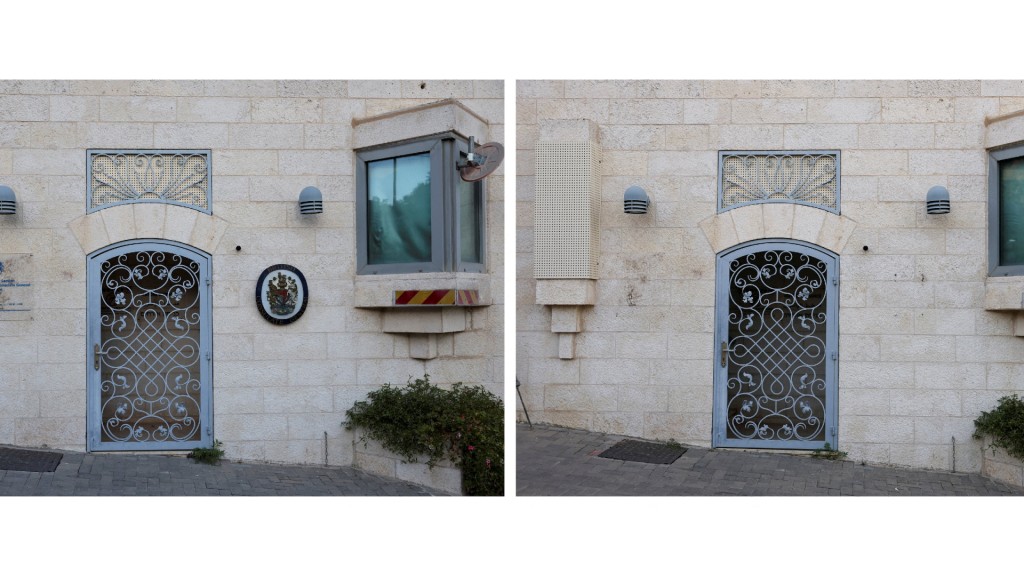
Britain has removed official signs from its consulate in East Jerusalem after Israel’s deadline for closing the mission expired, deepening a diplomatic dispute between the two countries over Israeli settlements in the occupied West Bank.
Workers removed a plaque reading “British Consulate General” and another identifying the consular section overnight, according to Reuters journalists who saw the work. The British flag remained above the building on Thursday, October 8, raising questions about whether diplomatic and consular operations had fully ended.
The move follows an Israeli order issued last month requiring Britain to close the consulate within 30 days and withdraw its diplomats from the city. Israel took the action after Britain announced sanctions against Israeli settlements in the occupied West Bank, including a planned ban on goods produced in the settlements.
Why Did Israel Order Britain’s Consulate to Close?
The dispute centres on Britain’s decision to impose measures against Israeli settlements in the West Bank.
The United Nations and most countries consider Israeli settlements in the occupied West Bank illegal under international law. Israel rejects that position and continues to defend its settlement policy.
Britain’s sanctions announcement marked a significant shift in its approach to Israel and drew a strong response from Prime Minister Benjamin Netanyahu’s government.
Israel subsequently ordered the British consulate in East Jerusalem to shut within 30 days. The Israeli government has remained firm on the closure despite British efforts to keep the mission open.
Britain sent its national security adviser to Israel last week for talks, but the discussions did not prevent the deadline from expiring.
The British Foreign Office declined to say on Wednesday whether the consulate was still operating or whether British diplomats stationed there had returned to the United Kingdom.
Sources said the Israeli order could affect about 30 British diplomats and their family members.
British Flag Remains Over Consulate
The removal of the signs has created an unusual scene outside the British diplomatic compound.
The plaque identifying the building as the “British Consulate General” was removed, as was the sign marking its consular section. Yet the British flag remained flying above the property.
That combination reflects the uncertainty surrounding the future of the mission.
Britain has not closed its embassy in Israel. Its embassy in Tel Aviv will continue handling formal diplomatic relations with the Israeli government.
The East Jerusalem consulate has a different function. It has traditionally dealt with Britain’s relations with Palestinians in Jerusalem, the West Bank and Gaza. It also provides consular services to Palestinians.
The mission’s history stretches back almost 200 years, well before the establishment of the State of Israel in 1948.
Its potential closure therefore represents more than the loss of a diplomatic office. It would end a long standing British presence in East Jerusalem at a time when the city remains one of the most sensitive issues in the Israeli Palestinian conflict.
What Does the Consulate Do?
The British consulate is located in the Sheikh Jarrah neighbourhood of East Jerusalem.
Unlike the British embassy in Tel Aviv, which focuses on relations with Israel’s government, the consulate has historically provided Britain with a diplomatic presence focused on Palestinian affairs.
Its responsibilities include engagement with Palestinians in East Jerusalem, the West Bank and Gaza, as well as consular assistance.
That role has made the mission particularly significant because Britain does not recognise Israeli sovereignty over East Jerusalem in the same way that Israel does.
The city remains at the centre of competing Israeli and Palestinian claims. Any change to the diplomatic status or operations of a foreign mission there can therefore carry political significance beyond the physical closure of an office.
Britain and Israel Face Growing Tensions
The consulate dispute is the latest development in a relationship that has become increasingly strained.
Britain has repeatedly criticised Israel over its military actions during the war in Gaza and has also condemned attacks by Israeli settlers against Palestinians in the West Bank.
The British government’s decision to target Israeli settlements has added another source of friction.
Netanyahu’s government has accused Britain’s governing Labour Party of taking an increasingly hostile approach toward Israel.
The disagreement has developed despite continued cooperation between the two countries in security, intelligence and economic affairs.
Britain and Israel remain close partners in several areas, making the dispute over the consulate particularly significant.
Could Britain Expel Israeli Diplomats?
The diplomatic confrontation could become more serious if Britain retaliates against Israel.
Reuters reported on Tuesday, citing sources, that Britain is considering expelling Israeli diplomats from Israel’s embassy in the United Kingdom if Israel proceeds with the closure of the East Jerusalem consulate.
Such a move would be highly unusual between two countries that continue to maintain close security and intelligence relationships.
Diplomatic expulsions can severely affect communication between governments. If Britain removes Israeli diplomats, Israel could respond with similar measures, potentially creating a cycle of retaliatory actions.
Neither government has publicly confirmed that such expulsions will take place.
For now, Britain faces a difficult choice. It can accept the closure of the consulate while preserving wider diplomatic ties with Israel, or it can respond with measures that could push the relationship into a more serious confrontation.
A New Low in British Israeli Relations
The dispute over the East Jerusalem consulate reflects a much broader deterioration in British Israeli relations.
Britain has become increasingly critical of Israel’s policies toward Palestinians, particularly during the Gaza war and amid continued settlement expansion and settler violence in the West Bank.
Israel, meanwhile, has objected strongly to Britain’s sanctions and other measures directed at its settlement policy.
The removal of the consulate signs now provides a visible indication of how far the disagreement has progressed.
The closure will not end Britain’s diplomatic relationship with Israel because the embassy in Tel Aviv will remain open. But it could significantly reduce Britain’s direct diplomatic presence in East Jerusalem and alter how it conducts its engagement with Palestinians in the city and surrounding territories.
For British diplomats, the immediate issue is what happens to the staff and their families affected by the Israeli order. For both governments, the bigger question is whether the dispute will remain limited to the consulate or lead to further diplomatic retaliation.
The removal of the signs may be only the first visible step in a much wider confrontation. Should Britain respond by expelling Israeli diplomats, or should London and Jerusalem work to prevent the dispute from escalating further?