

NEW DELHI -- For years, the official narrative broadcast from New Delhi has been carefully curated for international summits and glossy geopolitical forums: India is presented as an unstoppable techno-democracy, an economic powerhouse, and a natural global leader of the 21st century.
Yet, beneath the glittering veneer of high-tech corridors lies a starkly different reality, one defined by systemic corruption, state-sponsored suppression, and a crumbling civic infrastructure. This week, that fragile illusion shattered entirely.
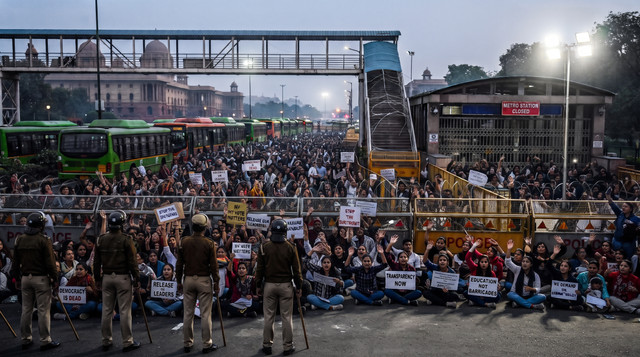
Across the national capital and key regions, India ground to a virtual halt. Faced with massive, Gen-Z-led student uprisings demanding accountability and sweeping electoral reforms, the state responded with the tools it knows best: total infrastructural paralysis.
A Nation on Lockdown: Public Transit and Networks Cut Off
In an effort to suffocate the protests, the government enforced a severe domestic shutdown that crippled everyday life. Commuters and travellers found themselves trapped in a logistical nightmare:
Mass Transit and Travel Paralysed: Authorities severely restricted access to 57 Delhi Metro stations, shutting down key transit nodes to prevent students from reaching mobilisation points. Across state lines, dozens of long-distance, Delhi-bound trains were cancelled at their origins, throwing interstate travel into chaos.
The Digital Iron Curtain: The Ministry of Home Affairs approved a targeted 24-hour mobile internet blackout across central transit hubs and protest zones. By choking off digital connectivity, the state sought to blind citizens and suppress real-time documentation of the crackdown.
Militarised Streets: Over 23,000 security personnel, backed by facial-recognition surveillance towers and barricades, turned parts of the capital into an armed garrison. Universities and schools near core zones faced emergency closures, locking students out of classrooms and onto the streets.
Mass Arrests and the Cost of Dissent
The demonstrations, sparked by widespread outrage over institutional corruption and alleged electoral roll manipulation, have targeted the leadership of the Election Commission. Rather than engaging with the grievances of a frustrated young population, the state unleashed an aggressive wave of detentions.
In a single weekend wave, over 7,000 protesters were detained across Delhi, with student leaders, activists, and transparency advocates bundled into buses by riot police. Reports of excessive force, unlawful house arrests, and physical intimidation have poured in from human rights monitors, alongside alarming accusations of misconduct by law enforcement personnel against journalists covering the unrest.
This heavy-handed response is not an isolated incident, but part of a broader systemic pattern. From jailed community organisers in Uttar Pradesh to intellectuals silenced under draconian security laws, dissent has been criminalised.
The Myth of the World Leader Versus The Reality on the Ground
How can a nation that aspires to lead the Global South justify shutting down its own capital city out of fear of its youth?
Critics and political analysts argue that India's governance model has hollowed out its democratic institutions. High-level corruption, coupled with the erosion of independent oversight bodies, has left millions of citizens disenfranchised. When students and civil society groups demand transparency, they are met not with reform, but with razor wire, internet blackouts, and mass arrests.
A country cannot project stability abroad while descending into institutional paranoia at home. The image of a self-assured global teacher dissolves the moment internet lines are severed, and public transit is suspended to block domestic critics.
As the dust settles over a paralysed New Delhi, the stark contradiction at the heart of the modern Indian state stands exposed: a superpower on paper, governed by a regime terrified of its own people.