


Forty-seven countries signed the Geneva Convention on Artificial Intelligence Accountability at a ceremony at the Palace of Nations on Thursday, establishing the world's first legally binding multilateral framework for the governance of artificial intelligence systems operating across national borders. The treaty, three years in negotiation under the auspices of the United Nations Educational, Scientific and Cultural Organisation and the International Telecommunication Union, enters into force 90 days after ratification by 30 signatory states.
Core Treaty Provisions
The convention establishes binding obligations in five principal areas. First, all signatory states must maintain regulatory frameworks requiring transparency disclosures for AI systems used in consequential decisions affecting individuals, including public services, employment, credit and law enforcement. Second, the treaty creates a mutual recognition framework for national AI certification schemes, allowing systems certified under an equivalent national standard to operate across signatory jurisdictions without redundant re-certification.
Third, the convention establishes a cross-border incident notification protocol requiring signatory governments to alert the treaty's secretariat within 72 hours of any AI system failure causing, or with the potential to cause, significant harm to individuals or critical infrastructure. Fourth, a prohibited applications list bans the use of AI for social scoring systems used as the primary basis for denial of public services, subliminal manipulation of individuals without their knowledge, and mass biometric surveillance in public spaces for purposes other than defined national security applications subject to judicial oversight.

Representatives of 47 nations signed the Geneva Convention on AI Accountability, creating the world's first legally binding multilateral AI governance framework.
Who Signed and Who Did Not
The European Union's 27 member states, along with the United Kingdom, Japan, South Korea, Canada, Australia, New Zealand and 13 others, signed the treaty. The United States signed as an observer without yet being a full signatory, citing the need for Senate ratification and concerns about specific provisions governing AI in military applications. China and Russia declined to sign, both governments stating that the convention's requirements for cross-border data disclosure in incident notification exceeded acceptable limits on national sovereignty over AI governance.
Several Southeast Asian nations, including Singapore, Thailand and Vietnam, signed, positioning the region as broadly aligned with the multilateral governance framework despite significant bilateral trade and technology relationships with non-signatory China. India also declined to sign at this stage, with New Delhi seeking modification of provisions it argued would constrain legitimate national AI development programmes.
Enforcement and the International AI Safety Agency
A new International AI Safety Agency, to be headquartered in Geneva, will serve as the convention's secretariat and principal technical body. The agency will coordinate the cross-border incident notification system, maintain the register of prohibited AI applications, publish annual assessments of signatories' compliance with their treaty obligations, and operate a technical assistance programme for smaller and developing nations seeking to build domestic AI regulatory capacity.
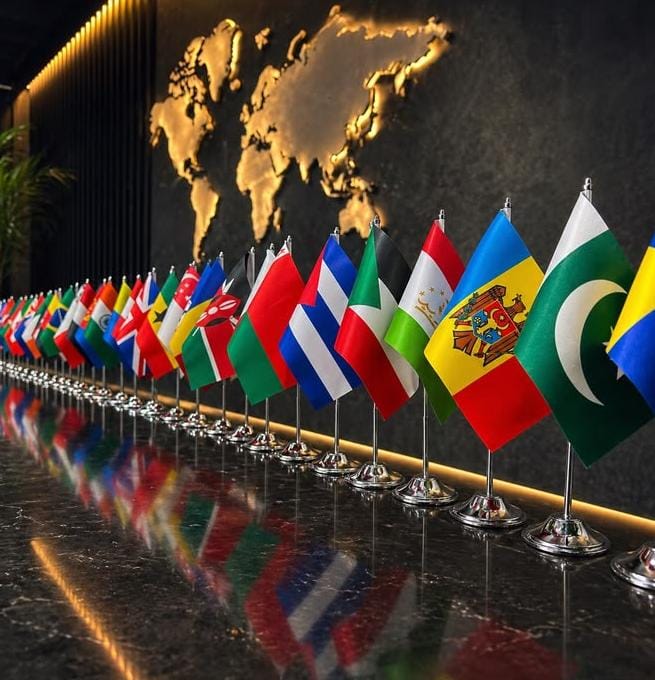
The International AI Safety Agency, headquartered in Geneva, will oversee compliance with the convention and coordinate cross-border incident response.
Industry and Civil Society Reactions
Technology industry responses to the convention have been mixed. Several major AI developers, including Anthropic, DeepMind and Mistral AI, issued statements welcoming the framework as providing regulatory certainty and a level playing field. Others, particularly US-based companies, expressed concern about the jurisdictional scope of treaty obligations and the potential for divergent national implementations to create compliance complexity.
Digital rights organisations broadly welcomed the convention while expressing reservations about the breadth of exceptions for national security applications and the absence of mandatory redress mechanisms for individuals harmed by prohibited AI uses. Amnesty International called for a review conference within two years to strengthen the individual rights provisions.
The Road to Universal Participation
Treaty architects are focusing diplomatic energy on expanding participation toward universal acceptance. The key priorities are bringing the United States, China, India and Russia into the framework, which accounts for the majority of global AI research output and deployment. Informal discussions are already underway with US officials about the conditions under which Senate ratification might be achievable, with military AI provisions identified as the primary sticking point requiring creative drafting solutions.