

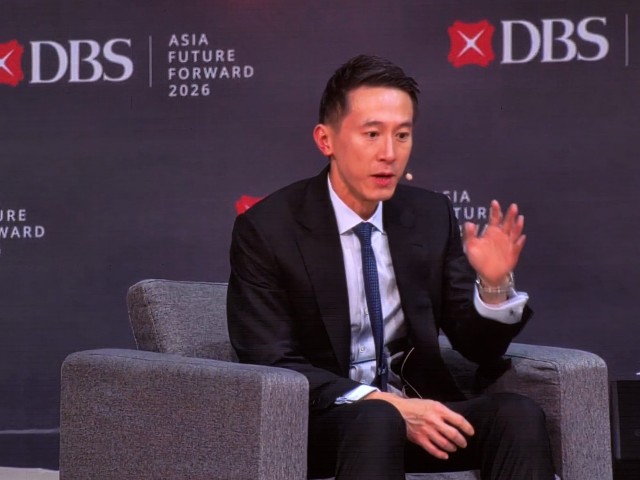
TikTok chief executive Chew Shou Zi believes the world may be expecting too much from artificial intelligence in the short term while failing to appreciate how profoundly it could change society in the years ahead. Speaking at a banking industry conference in Asia, he argued that businesses should adopt AI tools without surrendering human judgment, particularly when decisions carry serious consequences.
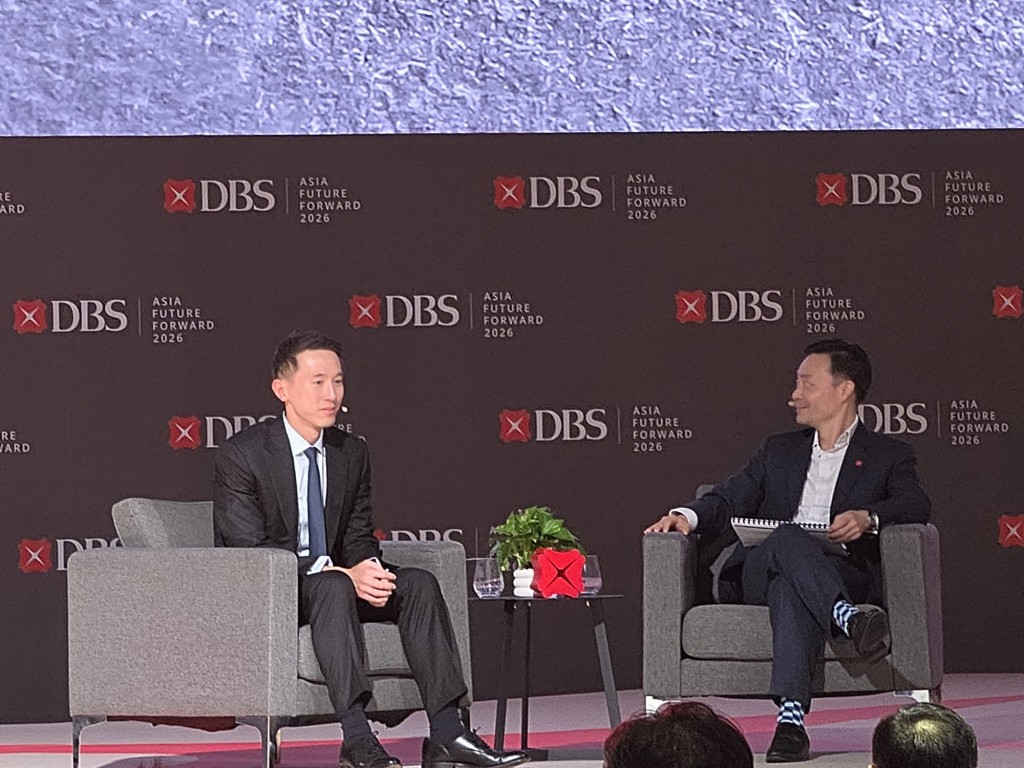
Chew shared his views during a discussion with Shee Tse Koon, DBS group head of consumer banking and wealth management, at the bank’s Asia Future Forward 2026 Conference. He said artificial intelligence was still at the beginning of its development, despite already transforming how companies produce content, moderate online activity, develop software and serve customers.
His message to businesses was straightforward: learn to use AI now, understand where it falls short and expand its responsibilities carefully. Treating the technology as either a short lived trend or a replacement for human decision making could leave organisations unprepared for what comes next.
TikTok CEO Calls for a Balance Between Humans and AI
Chew said he increasingly believes that artificial intelligence should not take complete control of decision making. Instead, he favours a model in which people and AI systems work together, with the level of automation depending on the task and its potential consequences.
He encouraged employees in engineering, legal departments and other professional functions to experiment with AI tools themselves. Direct experience, he suggested, helps workers understand what the technology can do, where it produces unreliable results and when human intervention remains necessary.
That experience will become increasingly important as AI agents gain the ability to carry out more complicated tasks. Companies may eventually allow these systems to handle larger workloads as their reliability improves and organisations establish stronger safeguards.
However, Chew cautioned against applying the same level of automation to every activity. A system that performs well on repetitive administrative work may not be suitable for decisions involving legal exposure, sensitive information or complex commercial judgment.
His approach reflects a distinction between automating tasks and handing over responsibility. AI can assist employees, speed up processes and handle large volumes of information, but organisations still need people who can assess the results and take responsibility for important decisions.
TikTok Uses AI Across Advertising, Search and Coding
Artificial intelligence is already integrated into several parts of TikTok’s operations, according to Chew. Advertising is one area where the technology is changing production costs.
He said AI video generation tools can reduce the cost of producing a video advertisement from thousands of US dollars to as little as US$1 to US$10, equivalent to approximately HK$7.80 to HK$78.
For businesses that previously needed substantial budgets to produce promotional videos, the reduction could make video advertising accessible to more companies. Smaller businesses may be able to test creative ideas, develop multiple versions of an advertisement and adjust their campaigns without paying for an entirely new production each time.
The change also has implications for the advertising industry. When producing video becomes cheaper, businesses can create more material with fewer resources. That could increase competition for audience attention, making the quality, relevance and credibility of an advertisement more important than the production budget alone.
Chew also discussed the use of AI in micro dramas, short fictional productions designed for mobile audiences. He said the overwhelming majority of these productions now use AI models, reflecting how quickly generative technology has entered digital entertainment.
TikTok’s recommendation systems are also benefiting from large language model capabilities. These systems help the platform understand content and user interests, while search is becoming more conversational.
Rather than relying exclusively on short keyword searches, users increasingly expect digital services to understand questions expressed in ordinary language and return relevant answers.
Software development is another area of adoption. Chew said engineers are using AI to help write code, giving them additional tools to support development work. The technology can assist with routine programming tasks, although developers still need to review the output and ensure that the resulting software works as intended.
Together, these applications show that AI is not confined to experimental projects. It is already being used in commercial activities that affect how companies produce, distribute and manage digital services.
How AI Is Changing TikTok Content Moderation
Content moderation presents a different challenge because social media platforms must review enormous quantities of material while responding to potentially dangerous behaviour.
Chew said AI has significantly improved TikTok’s ability to handle tens of millions of live streams. One application involves converting video into text descriptions and comparing those descriptions with the platform’s community guidelines.
For example, an AI system may identify a live stream showing someone driving at dangerous speeds. By interpreting the visual activity and assessing it against established rules, the system can help moderators identify potentially harmful behaviour at scale.
Without automated assistance, reviewing such large volumes of live content would place considerable demands on human moderation teams. AI can help identify cases that require attention and allow platforms to respond more efficiently.
However, the process also raises questions about accuracy. Video interpretation can be difficult when context is missing, visual evidence is unclear or a system misinterprets what is happening. A reliable moderation process therefore needs clear rules, appropriate safeguards and ways to address mistakes.
Chew’s comments suggest that AI can strengthen trust and safety operations, but its effectiveness depends on how companies design and supervise the systems they deploy.
Why AI Generated Videos Are Not Winning Every View
Despite the rapid adoption of AI production tools, Chew identified a gap between the number of people creating AI generated videos and the attention those videos receive.
Many users are experimenting with generative tools, making it easier to produce videos without conventional filming equipment or extensive production experience. Yet the share of views attracted by AI generated content has not kept pace with the growth in experimentation, he said.
The difference points to a basic challenge for digital creators. Making content is becoming easier, but producing something audiences genuinely want to watch remains difficult.
Chew said viewers continue to value content that feels real and authentic. Some react negatively when a video looks obviously artificial, suggesting that technical polish alone does not guarantee audience interest.
For creators and marketers, this could shape how AI tools are used. Generative technology may help with editing, scripting, visual effects and production costs, but audiences still respond to storytelling, originality and a credible human perspective.
Brands also face a potential credibility problem if they rely too heavily on artificial imagery without considering how viewers will interpret it. Content that appears misleading or disconnected from real experiences could damage audience trust rather than strengthen engagement.
The challenge for platforms is to support new forms of creativity while recognising that people do not judge content solely by how efficiently it was produced.
Cybersecurity Risks Grow as AI Agents Gain Access
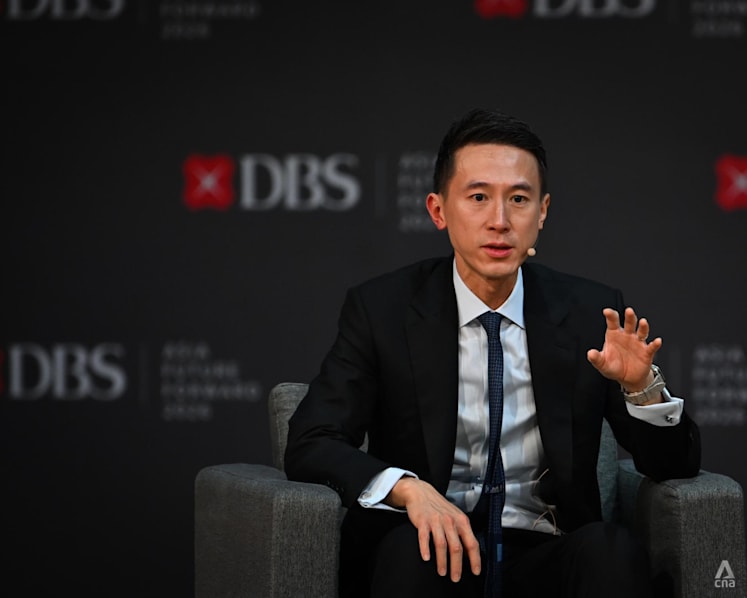
Chew warned that AI adoption introduces security risks that businesses cannot afford to ignore. One concern is the permissions users may grant to AI agents without fully understanding what those systems can access or do.
An agent given access to a credit card, for example, could create financial exposure if the user fails to understand the scope of its authority. The risk becomes more complicated when automated systems can perform actions rather than simply generate suggestions.
Companies must also train employees to protect confidential information. Chew specifically warned against placing trade secrets or privileged legal information into public chatbots, where sensitive material could be handled outside the organisation’s intended security controls.
The problem is not limited to accidental disclosure. Chew said AI can lower the cost of malicious behaviour, potentially making it easier for attackers to carry out harmful activities.
Businesses will therefore need stronger security measures, employee training and clear policies governing acceptable AI use. They must decide which tools employees can access, what information they may share and which activities require additional approval.
Chew acknowledged that eliminating cyber risk entirely is not realistic. Instead, he said, the goal should be to make attacks more expensive and difficult to carry out.
That approach requires organisations to treat AI security as an ongoing responsibility. Technical safeguards matter, but so do access controls, staff awareness and a clear understanding of what automated systems are permitted to do.
AI Could Transform Science, but Ethical Questions Remain
Looking further ahead, Chew identified scientific research as one of the most promising areas for artificial intelligence. He pointed to physics, biotechnology, chemistry and materials science as fields where AI could help researchers explore problems and develop new discoveries.
Scientific work often involves analysing complex information, identifying patterns and testing possible explanations. AI systems may help researchers process data more efficiently and investigate possibilities that would otherwise require considerable time and computing resources.
The potential applications extend beyond commercial productivity. Better tools for scientific research could support advances in materials, biological research and other disciplines, although the pace and scale of such progress will depend on the reliability of the systems and the quality of the evidence they produce.
Chew also acknowledged that ensuring AI systems remain aligned with human moral and ethical boundaries is an unresolved problem.
As machines take on more responsibilities, developers and businesses must consider how their systems make decisions, what limits should apply and who is accountable when something goes wrong. These questions become harder when AI agents operate across multiple tasks or have access to sensitive resources.
For now, Chew’s advice is to adopt the technology, remain curious and keep people involved in judgment. Businesses should give employees opportunities to learn AI tools while establishing safeguards around sensitive decisions, confidential information and automated actions.
The immediate challenge is not simply to use more AI. It is to understand where the technology adds value, where human oversight is necessary and how to prepare for capabilities that may develop far beyond what current systems can achieve.
As AI transforms advertising, entertainment, cybersecurity and scientific research, how much decision making should companies entrust to machines? Follow the latest technology news for further developments in artificial intelligence.