


S&P 500 Falls as AI Fears Hammer Software Stocks and Middle East Tensions Push Oil Higher
The S&P 500 fell on Tuesday as renewed concerns over artificial intelligence weighed heavily on software companies, while rising oil prices added another source of uncertainty for investors already focused on inflation and the Federal Reserve's next interest rate decision.
Salesforce and Intuit each lost about 4%, while ServiceNow dropped 5%, extending a selloff that has spread through parts of the software industry. The decline followed the launch of OpenAI's latest model, GPT 6 Astra, which has revived questions about whether increasingly capable artificial intelligence systems could eventually replace some of the services traditionally provided by specialised software companies.
The pressure was broad enough to drag the S&P 500 software and services index down 1.4%. It was the index's second consecutive daily decline.
"Astra has kind of reignited the software disruption fears and it's resumed that old trend that we got used to for a while, where semiconductor stocks and data center capex beneficiaries do well, while software stocks do poorly," said Jed Ellerbroek, a portfolio manager at Argent Capital Management.
The latest move reflects a growing divide within the technology sector. Companies supplying chips, computing infrastructure and data centre equipment have benefited from expectations of continued spending on artificial intelligence, while software companies face questions about how quickly AI could change their business models.
Chip Stocks Move Higher on Amazon Deal
Intel moved sharply in the opposite direction, gaining 9%, while Qualcomm rose 3.2%. The gains came after the companies struck a deal with Amazon to develop custom artificial intelligence chips.
The agreement gave investors another reason to favour companies tied directly to the infrastructure needed to run increasingly sophisticated AI systems. The contrast with the software sector was pronounced. While software shares faced renewed concerns about disruption, semiconductor stocks benefited from expectations of continued investment in computing capacity.
The split illustrates how investors are reassessing the technology sector as artificial intelligence becomes more capable. Businesses that provide the hardware needed to train and operate AI models remain attractive to investors, while companies whose products could face competition from those models are being examined more closely.
The shift in sentiment came as investors also prepared for a week of potentially important economic data.
Rate Decision Remains in Focus
Markets have been adjusting their expectations for the Federal Reserve's September policy meeting after stronger than expected employment figures.
Traders increased their bets on an interest rate hike at the Federal Reserve's September 15 and 16 meeting after the US Labor Department reported last week that employers added significantly more jobs than economists had expected in August.
The latest employment figures have added to uncertainty over the path of monetary policy. Investors are now waiting for producer price and consumer price reports, both of which could influence how Federal Reserve officials assess inflation before their next meeting.
According to the CME FedWatch tool, traders were pricing in a 60% probability of an interest rate increase at next week's meeting.
Inflation remains one of the main concerns for policymakers. A continued slowdown in price pressures could give the Federal Reserve more room to maintain or adjust rates, while evidence of renewed inflation could strengthen the case for tighter monetary policy.
Higher interest rates can weigh on stock valuations because they increase the return available from relatively safe assets such as US government bonds. They can also raise borrowing costs for companies and households, potentially reducing spending and investment.
Major Indexes Finish Lower
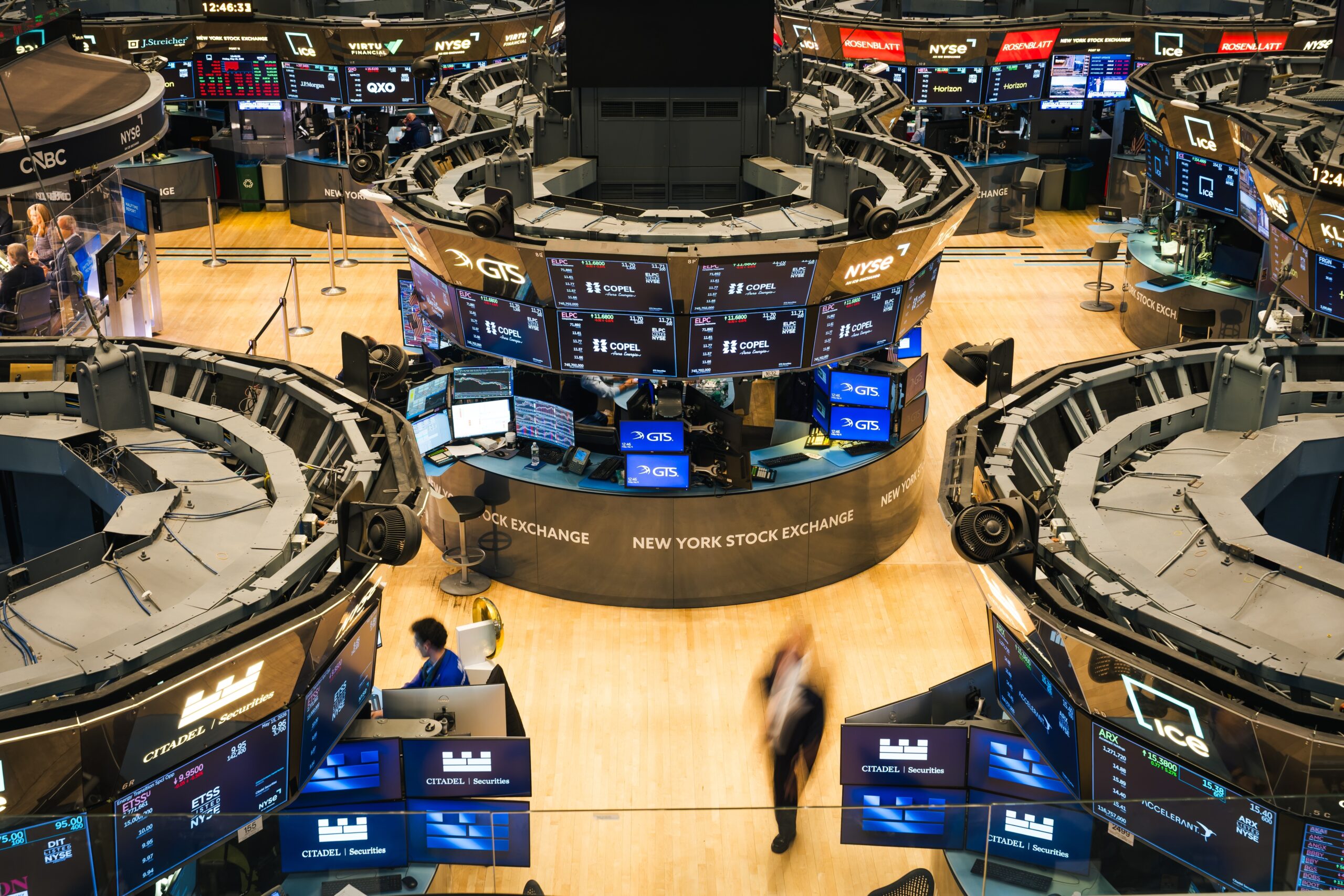
The broader market ended Tuesday in negative territory.
The S&P 500 declined 0.58% to finish at 7,673.52 points. The Nasdaq fell 0.32% to 26,421.41, while the Dow Jones Industrial Average dropped 1.18% to close at 52,786.07.
Trading activity was heavier than usual. About 15.7 billion shares changed hands on US exchanges, compared with an average of 14.9 billion shares during the previous 20 trading sessions.
The breadth of the decline also showed that weakness was not limited to a handful of large technology companies. Within the S&P 500, declining stocks outnumbered advancing shares by a ratio of 2.4 to 1.
The index recorded five new highs and 10 new lows. On the Nasdaq, 55 stocks reached new highs while 136 touched new lows.
S&P 500 Valuation Has Eased
Despite Tuesday's decline, the S&P 500 remains substantially higher for the year.
The index has gained about 12% in 2026, although it is now roughly 1% below its record closing level reached on August 13.
The benchmark's valuation has also come down from earlier levels. According to LSEG data, the S&P 500 is trading at about 19 times expected earnings, compared with 21 times expected earnings in early June.
The decline in the valuation multiple comes alongside stronger earnings expectations following a solid second quarter reporting season. Investors have become more optimistic about corporate profits, but that optimism has been balanced against concerns about interest rates, geopolitical tensions and the ability of companies to maintain strong earnings growth.
The result is a market that remains sensitive to both economic data and developments outside the United States.

Middle East Conflict Pushes Oil Prices Higher
Geopolitical tensions added another source of pressure on Tuesday.
Oil prices reached a six week high after Iran backed Houthi forces in Yemen attacked Saudi energy facilities, setting oil installations on fire and raising fears that the conflict in the Middle East could expand.
The developments came as shipping traffic through the Strait of Hormuz slowed. Iran had also warned on Monday that it could retaliate against any further US attacks.
The Strait of Hormuz is one of the world's most important energy shipping routes, making any disruption particularly sensitive for global markets. Higher oil prices can feed into broader inflation by increasing transportation and production costs across the economy.
"The conflict between the United States and Iran is beginning to look less like a temporary disruption and more like a longer term backdrop for markets," said Jeff DeGurahian, chief investment officer at loanDepot.
Energy stocks benefited from the rise in crude prices. The S&P 500 energy index gained 1%, while Marathon Petroleum climbed 2.4% and Occidental Petroleum added 1%.
For investors, the combination of higher energy prices and uncertainty over interest rates presents a difficult calculation. Oil prices can support energy company earnings, but sustained increases in fuel costs can also put pressure on consumers and businesses while complicating efforts to bring inflation under control.
Apple Shares Fall Before Product Event
Apple shares declined 1.2% on Tuesday, one day before an event where the company is expected to introduce its latest smartphone under new Chief Executive John Ternus.
The decline came despite the attention surrounding the company's product event, as investors continued to weigh expectations for Apple's next generation devices against broader concerns affecting technology stocks.
Apple's performance is closely watched because of its enormous influence on major US stock indexes. Weakness in the company's shares can therefore affect the broader market, particularly when other large technology companies are also under pressure.
Cryptocurrency Stocks Retreat
The risk reduction extended beyond traditional equities.
Cryptocurrency related stocks fell as bitcoin retreated from the $80,000 level. Coinbase declined 3.1%, while Strategy dropped 4.4%.
The move added to evidence that investors were becoming more cautious across several riskier areas of the market. Rising Treasury yields have made relatively safe US government debt more attractive in recent weeks, reducing the incentive for investors to take additional risks in equities and cryptocurrencies.
Tuesday's trading session brought several competing forces together. Artificial intelligence concerns pushed software shares lower, semiconductor companies benefited from fresh investment expectations, geopolitical tensions lifted oil prices and stronger employment data increased uncertainty about the Federal Reserve's next move.
The immediate focus now shifts to the upcoming producer price and consumer price reports. For investors, those figures could provide the clearest indication yet of whether inflation is cooling enough to influence the Federal Reserve's September decision.
Will the next inflation reports calm markets, or will higher energy prices and stronger employment keep pressure on the Federal Reserve and US stocks?