

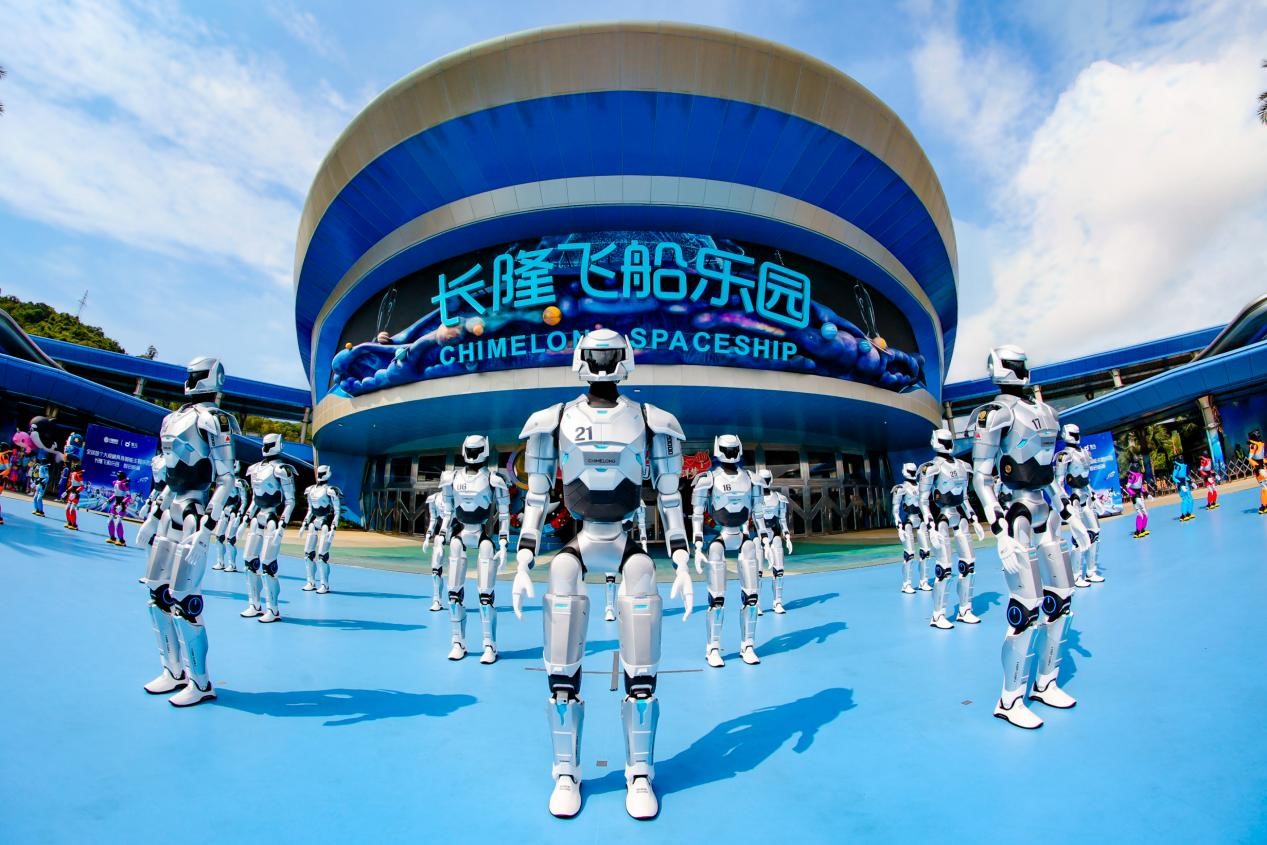
More than 300 robots are now working alongside human staff at Chimelong Spaceship in Zhuhai, turning one of China’s largest indoor theme parks into a testing ground for humanoid technology in tourism, entertainment and education.
The robots began appearing across the 397,000 square metre attraction on Sept 24, with more than 100 interactive experience booths now operating throughout the park. Their roles range from guiding visitors and answering questions to providing educational activities, assisting with shopping and welcoming guests at hotels.
The development is being presented as the world’s first and largest theme park project centred on embodied intelligence, a field focused on machines that can perceive their surroundings, interact with people and perform tasks in physical environments.
The robotic workforce has been supplied by AgiBot, a Shanghai based robotics company that is among the leading Chinese firms in embodied intelligence by shipment volume and revenue. Its involvement gives the project a commercial dimension beyond entertainment, as the theme park provides a large public setting where visitors can directly interact with robots performing practical tasks.
Chimelong Spaceship opened in mid 2024 on Hengqin Island, with marine culture at the centre of its attractions. The latest expansion adds a technological layer to the experience, allowing visitors to encounter robots not simply as exhibits but as part of their journey through the park.
Robots become guides and companions
Visitors can use the robots for destination searches, route planning and self guided navigation. The machines can also provide repeated commentary about attractions, using scenario maps and information about visitor needs to determine what assistance to offer.
That could be particularly useful in a large indoor park, where visitors may need directions between attractions, entertainment areas, restaurants and retail outlets. Instead of relying entirely on static signs or staff members, guests can interact directly with robotic assistants.
The machines also have a role in science education. Rather than delivering information through conventional displays, the science education robots can explain marine and ocean related subjects through question and answer sessions, games and other interactive activities.
That approach places the technology between an educational tool and an entertainment feature. Children and families can ask questions, respond to challenges and learn about the ocean while moving through the attraction.
Robots have also been introduced into retail and hotel operations. Their duties include greeting visitors, reception services, product consultations and responding to general enquiries.
For Chimelong, the project offers an opportunity to integrate robotics into several parts of the visitor experience rather than limiting the technology to a single attraction.
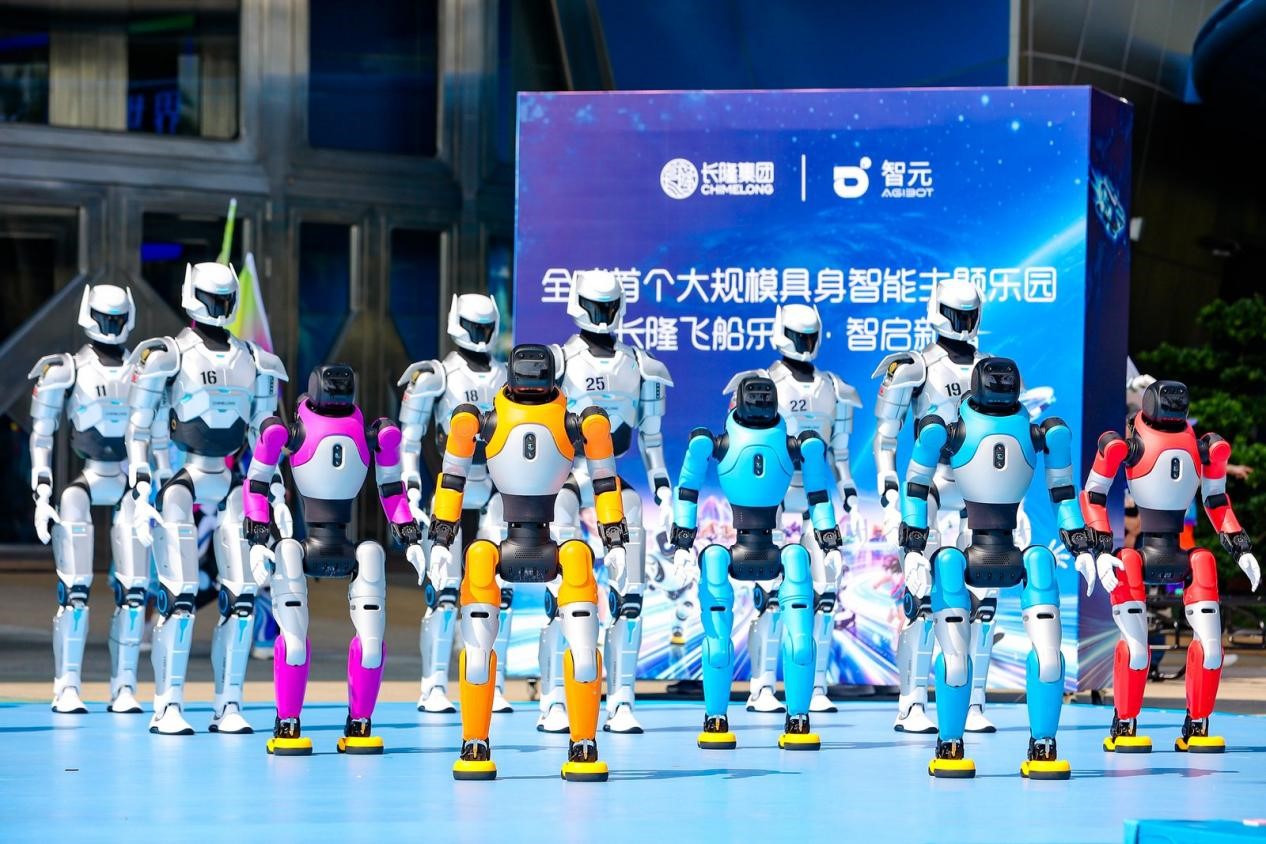
A broader push into tourism
The introduction of robots comes as Chinese companies continue to develop practical applications for humanoid and embodied intelligence systems.
Theme parks provide a particularly visible environment for such technology because they bring together large numbers of visitors, repetitive service tasks and entertainment requirements. A robot that can provide directions, answer routine questions or explain an attraction can perform functions that would otherwise require staff members.
The scale of Chimelong Spaceship also gives the project significance. Covering 397,000 square metres, the attraction is large enough to support a range of real world applications at the same site.
Chimelong Group operates three international tourism resorts in Guangzhou, Qingyuan and Hengqin in Guangdong province. The group has become closely associated with China's cultural and tourism industry, and its latest robotics project seeks to combine that existing tourism infrastructure with newer technologies.
The company said the initiative is intended to bring new life to its own intellectual property while giving visitors more immersive experiences.
The emphasis on visitor interaction is important. Many robotics demonstrations take place in controlled exhibitions or technology showcases, where machines perform predetermined tasks for a limited audience. At Chimelong Spaceship, robots are being placed directly into a busy commercial environment where visitors can interact with them as part of a normal day at the theme park.
That creates a different test for the technology. A robot guiding a visitor must respond to questions and changing needs, while an educational robot needs to keep interactions understandable and engaging. Service robots also have to operate around crowds, staff and other machines.
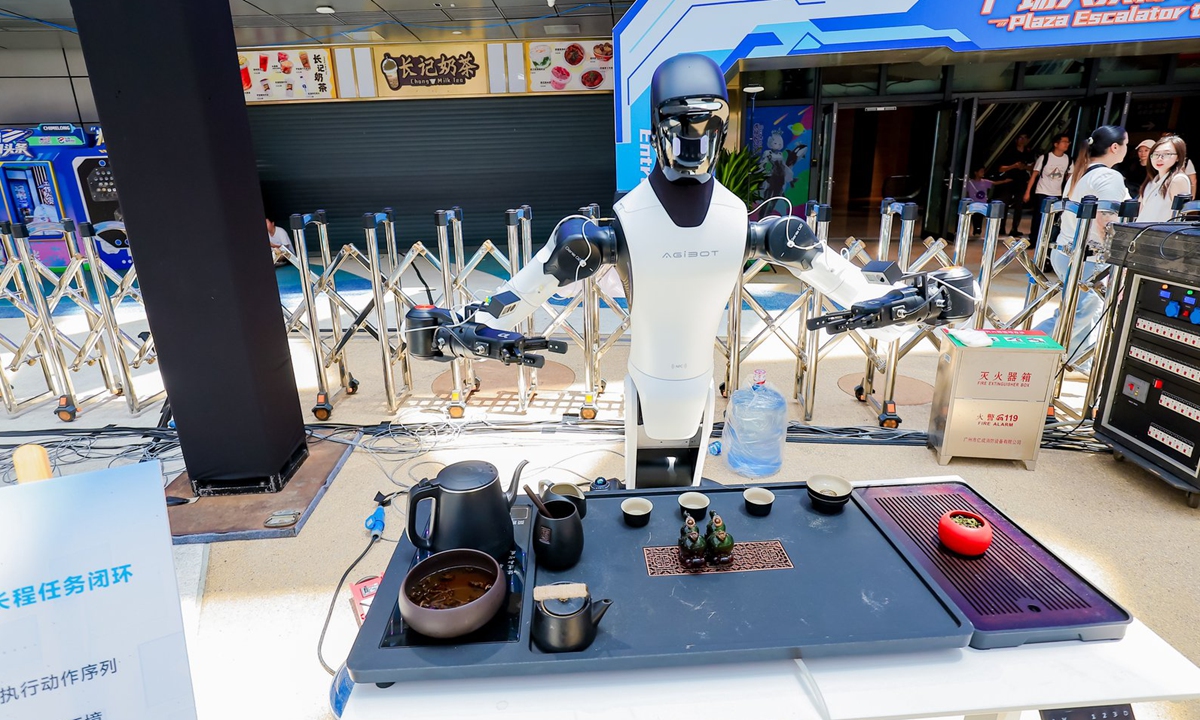
Asia’s theme parks expand their use of robots
Chimelong's project is part of a wider movement across East Asia, where major entertainment operators are exploring ways to bring robotics into visitor experiences.
South Korea and Japan are also developing robotic applications for large theme parks and public entertainment venues. In South Korea, a major robot themed park in Incheon is expected to open in 2028, further expanding the use of robotics as an attraction in its own right.
Disney has also experimented with robotic characters. This year, a robot modelled on Olaf, the popular snowman character from the animated film Frozen, was introduced at Disney parks in Paris and Hong Kong.
The use of recognisable characters adds another dimension to the technology. Visitors are not necessarily approaching the machines simply because they are robots. Familiar characters, interactive performances and practical services can make robotic systems feel like part of the entertainment experience.
For Chinese robotics companies, meanwhile, large tourism projects offer a chance to put their machines in front of millions of potential users. Public interaction can also provide companies with information about how people respond to robotic assistants in everyday settings.
The Chimelong project therefore sits at the intersection of entertainment, tourism, education and robotics. Its importance will depend not only on how impressive the machines appear, but also on whether visitors find them useful enough to become a regular part of the park experience.
As more theme parks across Asia explore similar technology, the role of robots could extend well beyond demonstrations and novelty attractions. At Chimelong Spaceship, the experiment has already moved into everyday visitor services.
Would you want a robot to guide you, teach you or assist you during your next visit to a theme park?