


The new feature is being introduced across MAYFEYR's catalogue of more than 20,000 products from over 200 luxury brands. It allows users to explore selected fashion pieces as part of complete looks, giving shoppers another way to consider styling combinations before reaching checkout.
For online luxury retailers, one of the persistent challenges is the gap between seeing an item on a screen and imagining how it could fit into a person's wardrobe. A photograph can show the design, colour and details of a garment or accessory, but shoppers often make decisions based on questions that extend beyond the individual product.
Will the piece work with other items? Does it suit a particular occasion? Which accessories could complement it? And how might several designer items come together as a complete look?
MAYFEYR Mirror has been developed around those questions.
Moving beyond the single product image
MAYFEYR Mirror uses artificial intelligence to create an interactive styling experience for shoppers browsing the platform.
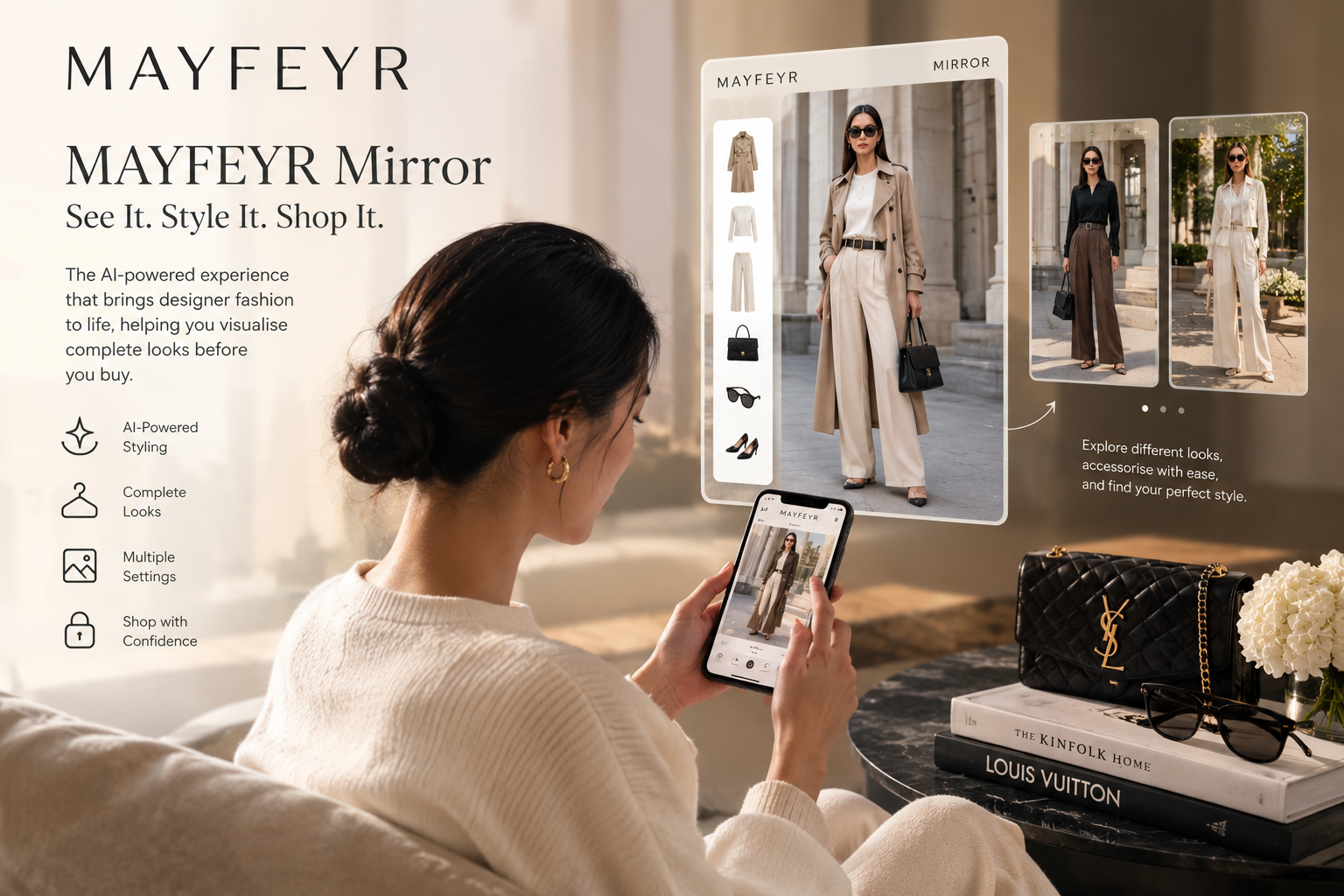
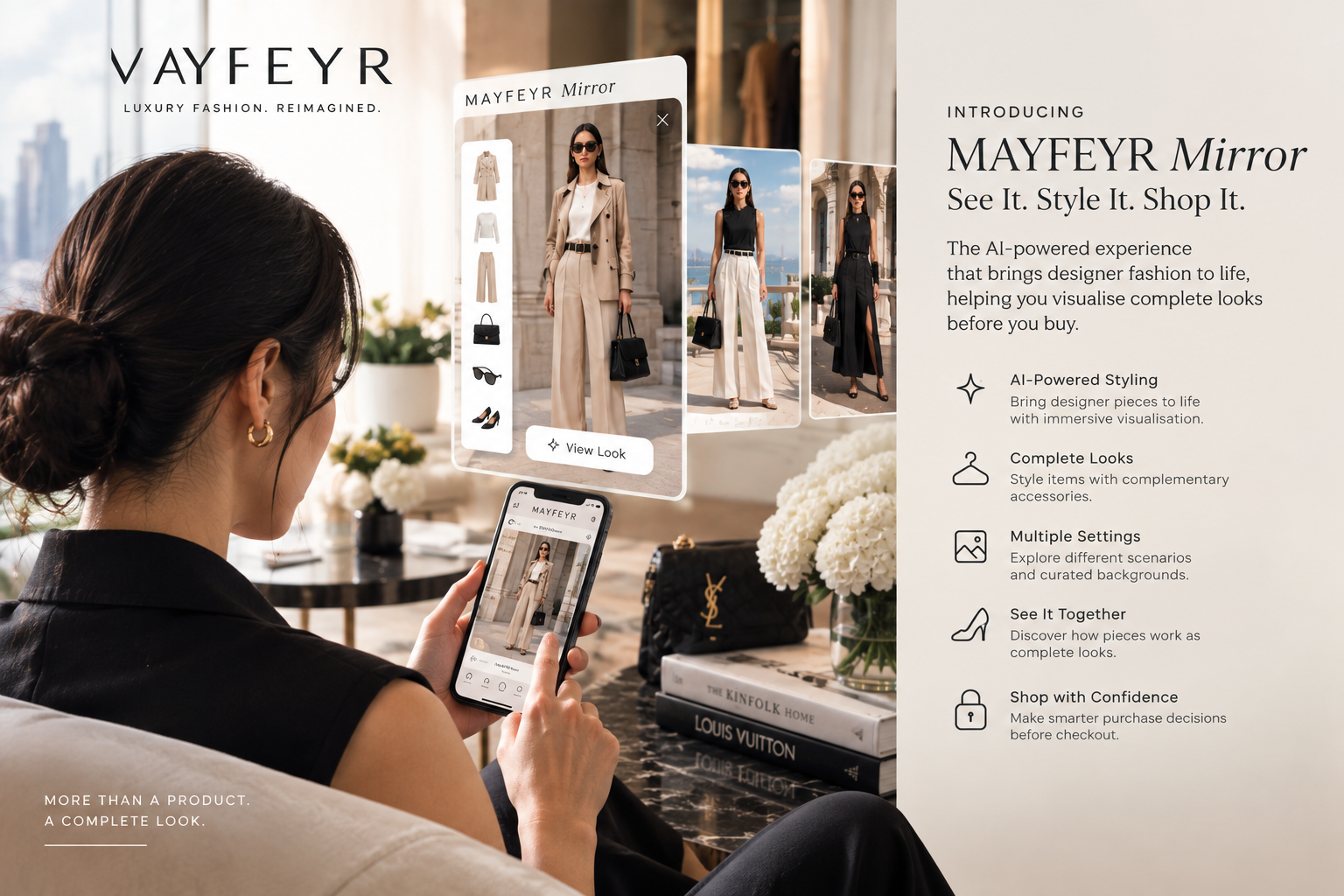
Rather than limiting customers to conventional product photographs, the feature enables them to visualise selected designer pieces in complete styling combinations. Users can explore how products work with complementary accessories and view different styling scenarios through curated backgrounds and settings.
The aim is to make the process of considering a luxury purchase more intuitive before a customer commits to an order.
At launch, the feature works across every item currently available on MAYFEYR. The platform offers access to brand new, in season fashion from more than 200 European luxury brands.
The company said the new experience is intended to help customers make more confident purchasing decisions by giving them a clearer visual impression of how individual pieces could be styled.
MAYFEYR Mirror allows shoppers to bring designer pieces to life through immersive visualisation, build complete looks with complementary accessories, explore styling scenarios in different settings and consider how multiple products work together.
For a customer browsing online, this means the shopping experience can move beyond the question of whether they like a single product.
The focus instead shifts towards how that product may fit into a wider personal style.
Addressing uncertainty in online luxury shopping
Luxury fashion purchases often involve more consideration than routine online shopping.
A designer garment or accessory may represent a significant purchase, and customers may spend time comparing pieces, considering their existing wardrobes and deciding whether an item is suitable for a particular event or lifestyle.
The experience of uncertainty is familiar to many online shoppers.
A product may look appealing in a carefully staged image, but customers still need to imagine how it could work outside that photograph. They may be deciding whether to pair a handbag with a particular outfit, whether an accessory fits their personal style or whether a designer piece can be worn on more than one occasion.
MAYFEYR says its new AI experience is intended to make that process easier.
By showing selected items as part of complete looks, the platform gives customers more visual information to consider before making a purchase.
The company is positioning the feature as part of a broader effort to make online luxury shopping feel closer to the process of imagining and styling an outfit in person.
Founder says fashion shopping is about imagination
Kelvin Teo, Founder and Chief Executive Officer of MAYFEYR, said the company developed MAYFEYR Mirror around a common experience shared by online fashion shoppers.
"Luxury shopping has always been about more than simply choosing a product. It's about imagining how a piece fits into your personal style and your wardrobe and the occasions you'll wear it. That moment of uncertainty is something every online shopper experiences," Teo said.
He said MAYFEYR Mirror was designed to move the experience beyond conventional product images and give shoppers more confidence when deciding whether to buy.
"With MAYFEYR Mirror, we're moving beyond static product images by bringing designer pieces to life. Our goal is simple: to make shopping for luxury online feel more intuitive, more immersive and ultimately help shoppers make purchase decisions with greater confidence."
The launch reflects the growing role of technology in how fashion platforms present products to customers.
Digital shopping has changed the way consumers discover designer brands, compare collections and purchase luxury products. However, the inability to physically try on or style an item remains one of the defining differences between shopping online and visiting a physical store.
Features that help customers visualise products may therefore play an increasingly important role in helping retailers reduce uncertainty during the purchase process.
Available first to MAYFEYR's Insider Circle
MAYFEYR Mirror is initially being made available to members of the MAYFEYR Insider Circle, the company's community of existing customers.
The company said broader availability is planned as the experience develops further.
Starting with existing customers allows MAYFEYR to introduce the feature to a defined group while continuing to develop the product.
The company has not announced a specific date for wider public access.
For Insider Circle members, the feature adds another layer to the platform's existing shopping experience. Customers can explore the available catalogue while using AI based visualisation to consider styling possibilities across designer products.
The move also gives MAYFEYR a new technology focused feature within a competitive luxury ecommerce market where platforms are increasingly seeking ways to make online browsing more engaging and useful.
More than 20,000 luxury fashion items
MAYFEYR is based in Singapore and operates as an online luxury fashion platform.
The company offers access to more than 20,000 items from over 200 European luxury brands, with a focus on brand new, in season designer fashion.
Its catalogue gives shoppers access to a broad selection of products through a digital platform rather than requiring them to visit multiple physical stores.
MAYFEYR says it aims to help customers discover and purchase authentic luxury fashion with greater convenience and confidence.
The introduction of MAYFEYR Mirror expands on that strategy by adding a visual styling tool to the shopping process.
Instead of treating technology as something separate from fashion discovery, the company is using AI to help customers consider the relationship between individual products and complete outfits.
That distinction matters because shoppers rarely build a wardrobe around isolated purchases. A jacket may be considered alongside shoes. A handbag may need to work with several outfits. Jewellery and accessories are often chosen according to both the clothing and the occasion.
MAYFEYR Mirror is designed to bring those considerations into the digital shopping experience.
Technology and the future of fashion shopping
The launch represents another step in MAYFEYR's effort to develop digital tools around the online luxury fashion experience.
The company says its broader ambition is to combine access to current designer fashion with technology that helps customers discover, style and purchase products with greater confidence.
AI based visualisation is becoming an increasingly relevant area for fashion platforms because it addresses one of the limitations of online retail: shoppers cannot always picture how separate products may look together before placing an order.
MAYFEYR's approach focuses on visualising complete looks rather than simply presenting another static view of a product.
For customers, that could mean spending less time trying to imagine possible combinations and more time exploring them directly through the platform.
The success of the feature will ultimately depend on how useful shoppers find those visualisations and whether they provide enough practical value to influence purchasing decisions.
For MAYFEYR, however, the immediate goal is clear. The company wants luxury shoppers to have more than a product image in front of them when deciding whether to buy.
As AI becomes more closely integrated into fashion retail, will visualising a complete outfit become as important to online shoppers as seeing the product itself?