
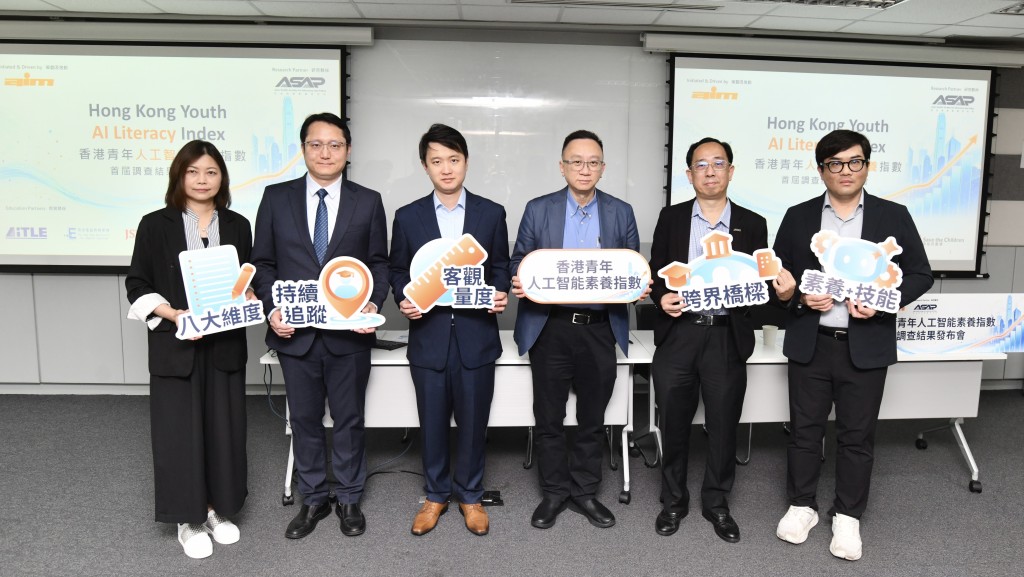
Hong Kong secondary school students believe they understand artificial intelligence ethics and can use everyday AI tools, but they are far less confident when it comes to applying the technology creatively, according to a new survey on youth AI literacy.
The study, jointly conducted by the Hong Kong Association of Interactive Marketing and the Asia Pacific Society for Advocacy and Policy, surveyed 1,166 students between June and August. Researchers assessed their responses across eight dimensions of AI literacy, drawing on international and mainland Chinese frameworks as well as established academic measurement scales.
The findings point to a gap between using AI and understanding what students can do with it. Students rated themselves relatively highly in areas involving responsible use, practical applications and cooperation between humans and AI, while creative AI application received the lowest score.
Students score highest on AI ethics and practical use
Ethical awareness, practical application and human AI collaboration produced the strongest results in the survey.
Students gave themselves an average score of 3.81 out of 5 across those areas. The result suggests that many respondents feel comfortable identifying basic ethical boundaries and using AI in situations they encounter in everyday life.
The score also indicates that students are not approaching AI solely as a technical tool. They appear to have developed an understanding that human judgment remains part of the process, particularly when AI is used to produce or support work.
For schools, that distinction matters because AI literacy involves more than knowing which buttons to press. Students also need to understand when a tool should be used, how its output should be assessed and where human judgment remains necessary.
Technical knowledge falls behind everyday use
The survey found a noticeable drop when students assessed their technical understanding.
Technical knowledge received an average score of 3.62 out of 5. AI data literacy, self efficacy and attitude recorded a lower average of 3.58.
The results suggest that regular exposure to AI tools does not automatically give students a detailed understanding of the technology behind them.
A student may know how to enter a prompt, refine a request or use an AI generated answer without understanding how models process information, why outputs can contain errors or how data affects the results.
That distinction is becoming increasingly relevant as AI tools become more common in education, content creation and everyday digital services.
The survey therefore identifies a gap between functional familiarity and deeper technological understanding.
Creative AI application ranks lowest
Creative AI application received the weakest score among the eight areas assessed, with students giving themselves an average of 3.22 out of 5.
Researchers identified creativity as the main area of weakness in the students' overall AI literacy profile.
The finding does not necessarily mean that students lack creativity. Instead, it suggests that many may not yet feel confident using AI as a tool for generating ideas, developing original work or exploring creative possibilities.
That could become an important issue as AI moves beyond basic information retrieval and routine digital tasks.
Students increasingly encounter tools capable of generating text, images, audio, video and other forms of content. Knowing how to operate those tools is one skill. Knowing how to direct them toward an original idea, question their output and combine their capabilities with human creativity requires another level of understanding.
The survey results indicate that schools may need to give students more opportunities to practise that second skill.
Researchers call for changes in education
The research team made four recommendations following the findings.
The first is to incorporate AI theory into curriculum planning. Rather than treating artificial intelligence as an isolated technical subject, researchers said schools should introduce relevant concepts as part of broader educational planning.
The second recommendation focuses on critical thinking. Students need to develop stronger habits when assessing unfamiliar AI generated content, particularly when they encounter information they cannot immediately verify.
The third recommendation calls for schools to develop AI applications and activities that allow students to use the technology in practical settings.
The fourth is to provide more hands on opportunities outside traditional classroom learning.
Together, the recommendations point toward an approach in which students learn about AI while also experimenting with it, questioning its output and applying it to different types of problems.
Experts call for cross disciplinary learning
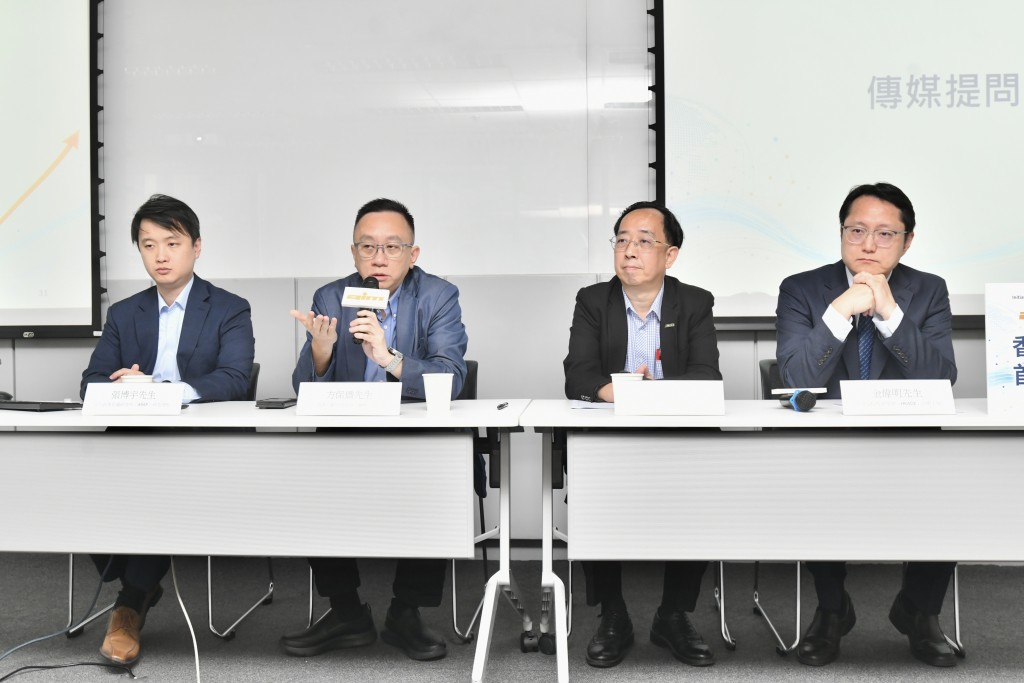
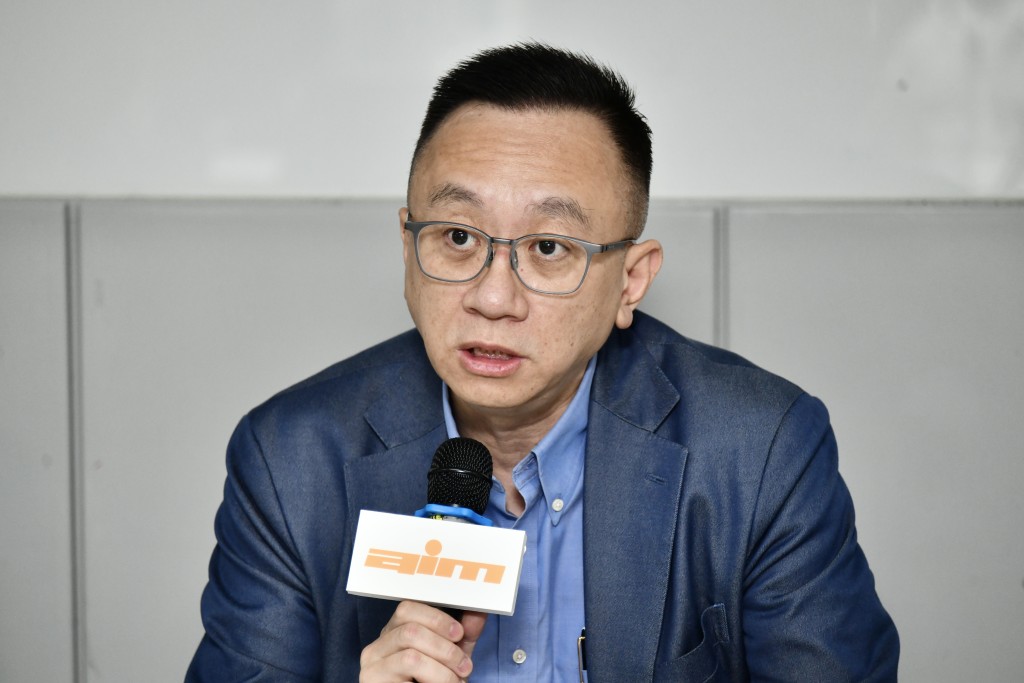
Francis Fong Po kiu, president of the Hong Kong Association of Interactive Marketing, said the AI abilities developed by young people would influence the city's future capacity for innovation.
Fong said the association would continue working across different sectors to help develop AI literacy among the next generation.
His comments reflect the broader concern raised by the survey: students will need more than basic familiarity with AI tools as the technology becomes increasingly embedded in education and working life.
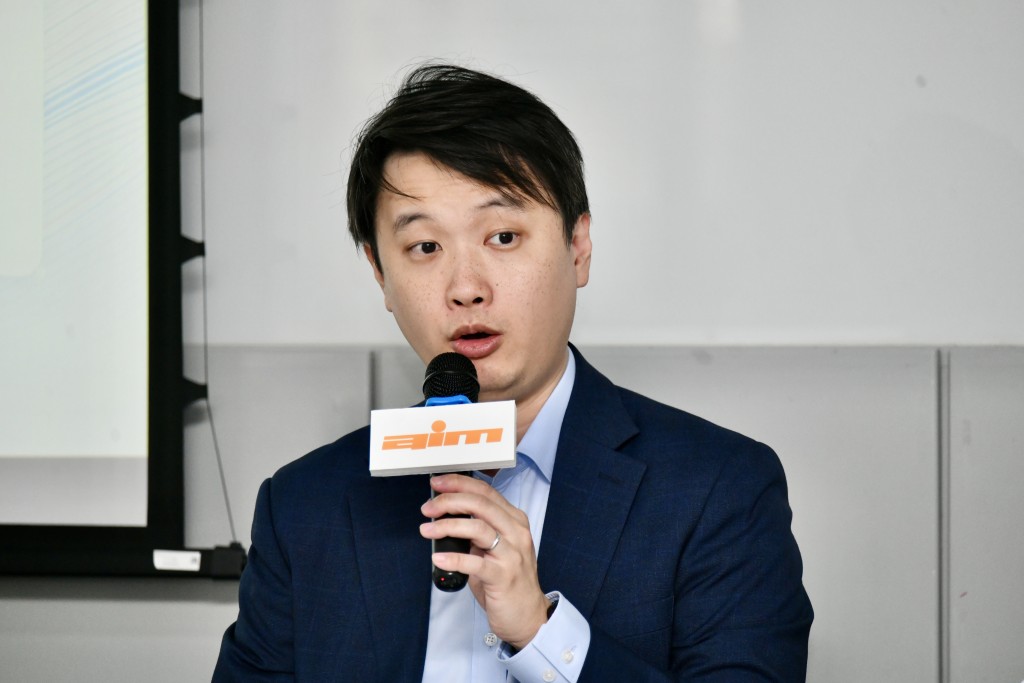
ASAP Research Director Alvin Cheung also pointed to areas where students could continue developing.
Cheung said young people still have room to build their confidence and maintain long term motivation for further study. At the same time, he said the survey showed that students already have a sound understanding of practical AI functions and ethical judgment.
That combination gives educators a starting point. Students appear comfortable with everyday applications and basic ethical questions, while their lower scores in creative use, technical understanding and confidence indicate where further learning could be directed.
Survey aims to inform future policy
The researchers described the project as Hong Kong's first dedicated research effort focused specifically on youth AI literacy.
The study's framework drew from international and mainland Chinese approaches alongside academic scales. Researchers assessed eight areas to produce a broader picture of how students view their own AI capabilities.
Cheung said the initiative aligns with the government's First Five Year Plan and its upcoming digital education blueprint.
He described the survey index as an evidence based reference that could support future policy development and teacher training.
The value of the research will depend partly on how its findings are used. A student self assessment can show confidence and perceived ability, but it does not necessarily demonstrate whether a student can independently perform a task or accurately explain the technology involved.
That distinction could be particularly important in creative AI use, where confidence and actual capability may differ.
Teachers seek broader use of AI in schools
Educators working directly with students also stressed the need to move beyond traditional subject boundaries.
Albert Wong Kin wai of the Association of IT Leaders in Education and Stanley Kam Wai ming of the Hong Kong Association for Computer Education both said stronger AI literacy would require schools to reduce the separation between academic disciplines.
They argued that students should have opportunities to apply AI across different subjects and in real world situations.
Such an approach could allow students to see AI as more than a tool for completing individual assignments. A student studying science, for example, could use AI to explore a research question, while another working on a media project could test different ways of developing and presenting an idea.
The emphasis on practical application also addresses the gap identified by the survey between familiarity and creative confidence.
Hong Kong's students already report relatively strong awareness of AI ethics and practical tools. The next stage is to give them enough opportunities to understand the technology behind those tools, question what they produce and use AI to develop ideas rather than simply reproduce information.
With creative AI application recording the lowest score in the survey, should Hong Kong schools place greater emphasis on hands on, cross disciplinary AI projects?