
Hong Kong has launched a new research cluster backed by about HK$2.5 billion in government funding, bringing together eight research centres and more than 30 universities and research institutions to develop technologies for clean energy, sustainable manufacturing and advanced materials.
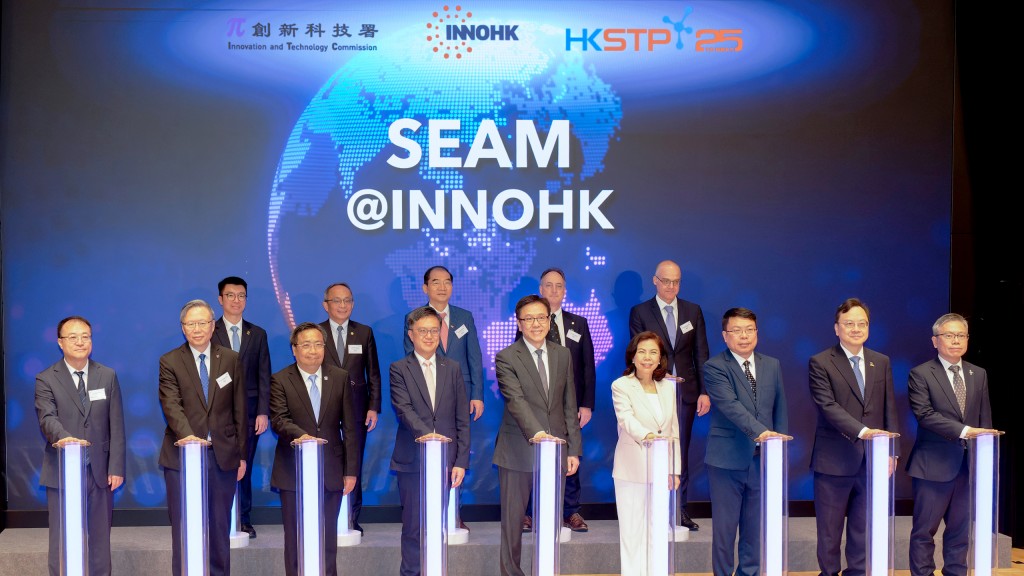
The Innovation and Technology Commission and the Hong Kong Science and Technology Parks Corporation launched SEAM@InnoHK at Hong Kong Science Park on September 1. The new cluster focuses on sustainable development, energy, advanced manufacturing and materials, with researchers working on technologies ranging from smart electricity grids and hydrogen systems to semiconductor manufacturing and space based production.
The launch marks the third major research cluster under the InnoHK initiative. Health@InnoHK focuses on medical technologies, while AIR@InnoHK covers artificial intelligence and robotics. SEAM@InnoHK expands the programme into areas linked to energy security, industrial production, environmental protection and advanced engineering.
Professor Sun Dong, Secretary for Innovation, Technology and Industry, said Hong Kong has five universities ranked among the world's top 100 and has established strengths in engineering, environmental sciences and materials sciences.
He described the city as a "super connector" capable of bringing together international technology companies, investment and specialist talent. The government, he said, wants research conducted in Hong Kong to move beyond laboratories and find practical uses in industry.
That focus on commercial application runs through the new cluster. Rather than treating research as an end in itself, the centres are being developed around technologies that can be tested, manufactured and eventually brought to market.
Smart grids designed for rising electricity demand
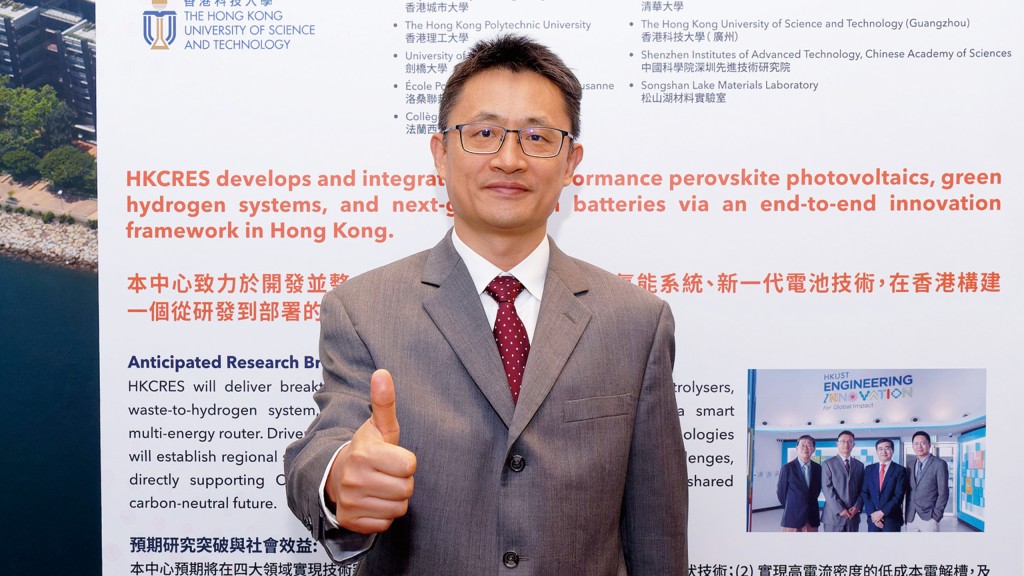
One of the new centres, the InnoHK Research Centre for Intelligent GRID and Energy Technologies, known as I GET, is being established by The Hong Kong Polytechnic University.
Its work focuses on integrating renewable energy, smart buildings, data centres, electric vehicles and energy storage into electricity networks that can respond to changing demand.
The problem is becoming more pressing as cities consume more electricity. Data centres, electric vehicles and increasingly sophisticated buildings can create sharp increases in demand at particular times.
Professor Sir Bashir M. Al Hashimi, I GET Centre Co head and Senior Vice President for Research and Special Initiatives at King's College London, said simply adding more electricity to conventional grids could create serious pressure on existing infrastructure.
I GET instead aims to use cognitive intelligence to manage electricity consumption in real time. The system can reduce non essential demand during peak periods and redirect available capacity when electric vehicle charging or other loads rise.
The intention is to keep the power system stable without requiring users to abandon normal routines.
Professor Chung Chi yung, I GET Centre Head, said the InnoHK structure allows international expertise to connect with Hong Kong and the Greater Bay Area's industrial base. The centre also aims to support commercial spin offs and contribute to the development of international standards.
Batteries and hydrogen move closer to deployment
Another centre is taking a broader approach to renewable energy and storage.
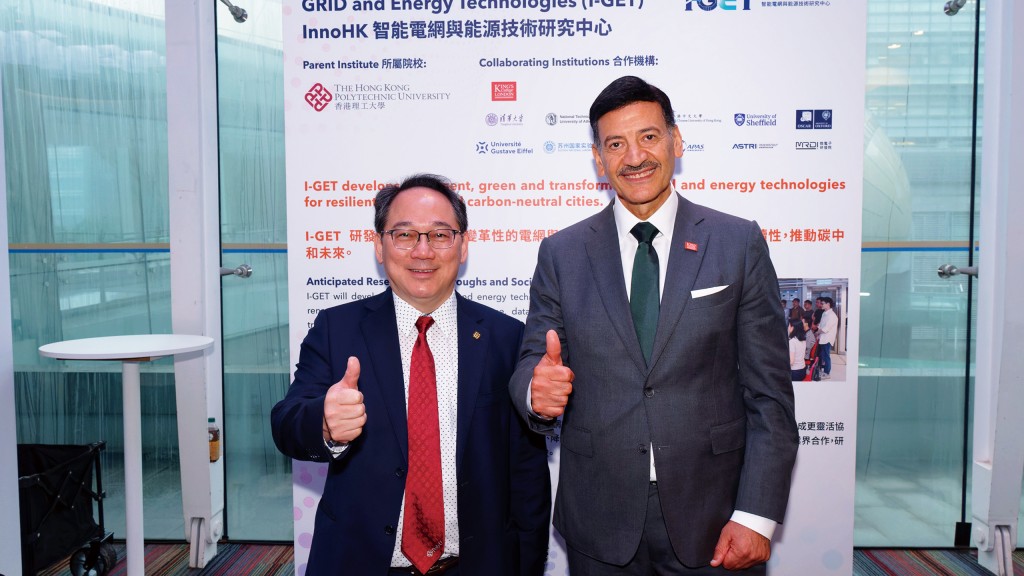
The Hong Kong Centre for Renewable Energy and Storage, or HKCRES, was established by the Hong Kong University of Science and Technology. Its researchers are working on technologies including perovskite solar cells, affordable electrolysers, waste to hydrogen systems, hydrogen storage, fuel cells and next generation batteries.
The centre is also developing a smart multi energy router capable of coordinating different energy sources and storage technologies.
Professor Shao Minhua, the centre's head, said advanced batteries and smart microgrids could improve power reliability and reduce fluctuations in electricity networks. The technologies could also support the wider adoption of electric transport over the next three to five years.
HKCRES is also testing hydrogen blended natural gas for power generation. The work is intended to support Hong Kong's carbon neutrality objectives while providing technologies that could eventually be commercialised elsewhere in Asia.
The research reflects a broader shift in energy development. Renewable generation can fluctuate depending on weather and time of day, while electricity demand does not always follow the same pattern. Storage and intelligent energy management can help close that gap.
AI and robotics target industrial waste
The SEAM cluster also tackles sustainability at the manufacturing level.
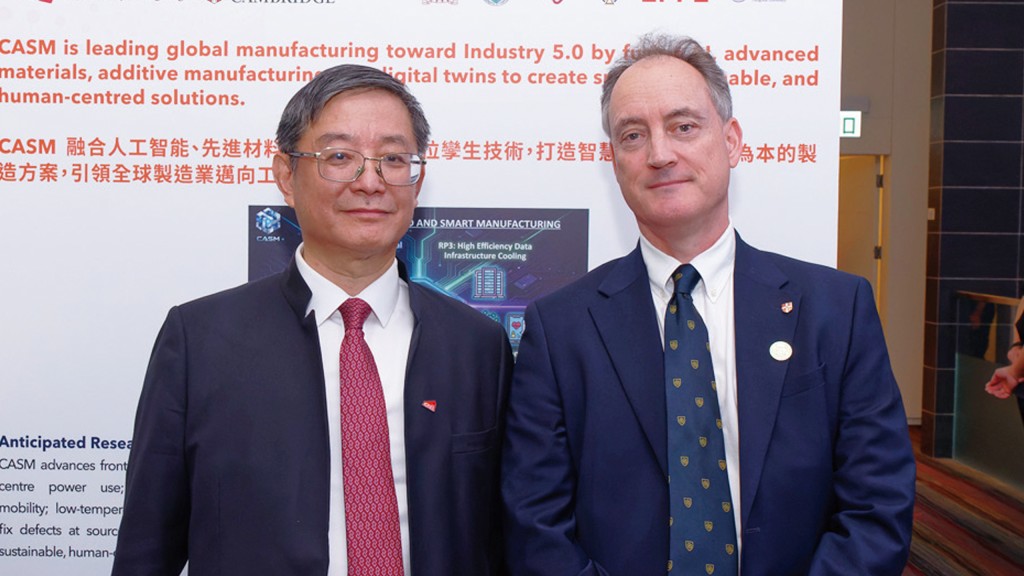
The InnoHK Centre for Advanced and Smart Manufacturing, or CASM, is jointly led by City University of Hong Kong and the University of Cambridge. The centre develops technologies associated with Industry 5.0, with an emphasis on sustainable and human centred production.
Professor Colm Durkan, CASM Centre Co head and Head of the Department of Engineering at Cambridge, said rising urban density and expanding digital infrastructure are increasing energy requirements.
CASM's research includes cooling systems that do not rely on conventional refrigerants and thermal management technologies intended to improve the energy performance of data centres.
The centre is also applying digital twins, additive manufacturing and artificial intelligence assisted inspection to industrial production.
Digital twins allow manufacturers to create virtual versions of production processes and test changes before applying them on factory floors. AI based inspection can identify defects earlier, while additive manufacturing can reduce material waste in selected production processes.
Professor Lu Jian, CASM Centre Head, said the centre plans to establish joint research and development teams with industrial partners, particularly in the Greater Bay Area. The objective is to test technologies under actual production conditions rather than limiting development to laboratory environments.
A smart laboratory for new sustainable materials
The Sustainable Materials and Advanced Renewable Technologies Centre, known as the SMART Centre, is addressing another bottleneck: the time and cost involved in discovering new materials.
City University of Hong Kong and École Polytechnique Fédérale de Lausanne, or EPFL, lead the centre.
Professor Harm Anton Klok, designated Co head of SMART Centre and Director of EPFL's Polymers Laboratory, said the centre is combining machine learning and robotics in a continuously operating laboratory.
The system is designed to accelerate the discovery of environmentally friendly materials by between 10 and 100 times while reducing research costs.
Researchers are also looking at ways to turn industrial food processing waste and seafood waste into useful materials. Potential applications include biodegradable packaging as well as non toxic components for solar technologies and batteries.
Such work could reduce dependence on petrochemical plastics and limit the amount of industrial waste sent to landfill.
Professor Alex Jen, designated Co head of SMART Centre, said dual supervision programmes involving Hong Kong, mainland China and EPFL will help train researchers in artificial intelligence and robotic material screening.
The centre's work therefore combines research with skills development, giving younger scientists experience with automated experimentation and international research networks.
Semiconductors and power electronics expand the cluster
SEAM@InnoHK is not limited to environmental technologies.
The InnoHK Centre for Heterogeneous Integration and Production, or CHIP, established by The Chinese University of Hong Kong, is working on semiconductor technologies that move beyond the limits of conventional silicon systems.
Researchers are integrating two dimensional materials with specialised wafer bonding and transfer printing equipment. The aim is to create new approaches to semiconductor manufacturing that can support applications in artificial intelligence, communications, healthcare and automobiles.
CHIP is collaborating with the National University of Singapore and Nobel Prize winning physicist Sir Konstantin Novoselov, who received the 2010 Nobel Prize in Physics.
Power electronics are another research focus.
The InnoHK Power Semiconductors and Applications Centre, or PowerSAC, led by the Hong Kong University of Science and Technology, is developing power devices based on wide bandgap materials such as gallium nitride and silicon carbide.
These materials can help reduce energy losses in power systems and are increasingly relevant to electric vehicles and high performance computing.
PowerSAC is pairing power semiconductor research with automated design tools and intelligent power chips. The centre is also working with 2014 Nobel Prize winning physicist Professor Hiroshi Amano on material growth and physics analysis.
The goal is not simply to develop new components but to move those technologies toward practical applications.
Research reaches batteries, solar technology and space
The InnoHK Centre of Functional Materials for Energy and Sustainability, or CFMES, led by The University of Hong Kong, is working on functional materials for batteries and energy related technologies.
Its research includes electrically enabled battery materials, light emitting technologies and systems that use light to support energy related processes.
The centre involves 2016 Nobel Prize winning chemist Professor Ben L. Feringa and is also expected to support the creation of start ups based on research findings.
The final centre, the InnoHK Centre for Space Manufacturing Technology, or CSMT, takes the programme beyond Earth.
Established by the Hong Kong Institute of Science and Innovation of the Chinese Academy of Sciences, CSMT is researching orbital additive manufacturing, ultra low loss optical fibres, biomaterials and construction methods using lunar regolith.
The technologies could support future deep space exploration while also producing applications for industries on Earth.
Three clusters form a wider innovation strategy
SEAM@InnoHK now joins Health@InnoHK and AIR@InnoHK as the third research cluster under the InnoHK programme.
Together, the three clusters cover medical technology, artificial intelligence, robotics, clean energy, smart grids, advanced materials, semiconductor systems, manufacturing and space technology.
The government sees the programme as part of Hong Kong's wider role in national innovation and industrial development. Its priorities also correspond with areas identified in the country's 15th Five Year Plan, including high end manufacturing, emerging industries and green transformation.
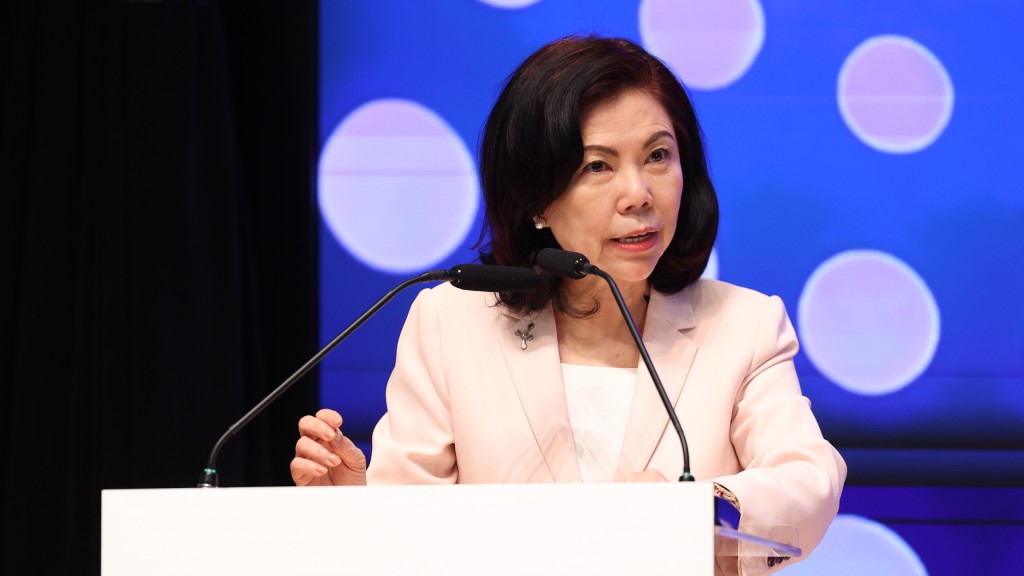
For HKSTP Chairman Cordelia Chung, the next step is to help researchers turn scientific advances into products and services that can operate outside the laboratory.
HKSTP plans to provide research facilities, connections with universities and research institutions, access to specialist talent and links with investors and industry.
That support matters because a laboratory breakthrough does not automatically become a commercial technology. Researchers need manufacturing partners, investment, testing facilities and customers willing to adopt new systems.
SEAM@InnoHK has been designed around that chain. Its researchers are working across universities, laboratories and industries while targeting problems that range from electricity demand and industrial waste to semiconductor production and space exploration.
With HK$2.5 billion committed to the cluster and eight research centres now operating within the programme, the next test is practical: how many of these laboratory advances can be turned into technologies that companies and communities actually use?