


Hong Kong’s artificial intelligence boom is reshaping its economy, driving a surge in exports, attracting investment from mainland technology companies and bringing fresh momentum to its financial markets. With AI related products accounting for about 70 percent of the city’s merchandise exports, Hong Kong is benefiting from soaring global demand for chips, computing equipment and other advanced electronics.
The scale of the expansion is striking. Hong Kong’s total goods exports rose 42.5 percent in the first eight months of 2026 compared with the same period last year, while exports in August alone jumped 53 percent year on year to nearly HK$668 billion ($85.11 billion).
Yet the opportunity extends beyond shipping more electronic products overseas. As Chinese mainland technology companies accelerate their international expansion, Hong Kong is increasingly serving as a base for global headquarters, research and development, fundraising and professional services.
The question is whether the city can turn this surge in AI demand into a lasting economic advantage.
Hong Kong Exports Surge as Global AI Demand Grows
Hong Kong’s latest trade figures reflect the growing appetite for the hardware that powers artificial intelligence. Training and operating advanced AI systems requires substantial computing capacity, specialised electronic components and sophisticated data processing equipment. As businesses invest in these technologies, demand is spreading across international supply chains.
According to the Hong Kong Special Administrative Region government’s Census and Statistics Department, the value of total goods exports increased 42.5 percent during the first eight months of 2026.
August delivered an even stronger performance. Exports climbed 53 percent from a year earlier to almost HK$668 billion, while imports surged 60 percent to HK$739 billion.
Electrical machinery, apparatus, appliances and electrical parts accounted for a significant share of the increase, with exports in the category rising more than 62 percent in August. Shipments of office machines and automatic data processing equipment performed even better, soaring 131 percent year on year.
These figures demonstrate how the expansion of AI is creating opportunities for established electronics manufacturers, component suppliers and international trading businesses.
Hong Kong’s wider economy has also benefited. Gross domestic product reached a record high in the first half of 2026, growing 5.1 percent year on year. It was the city’s strongest half year performance in nearly five years.
Irina Fan Yuen Yee, an economist with the HKSAR government, said AI related products now account for approximately 70 percent of Hong Kong’s total merchandise exports.
“As a major trading hub for technology related products, we’ve clearly benefited from the world boom in AI investment,” Fan said.
The figures help explain why AI has become increasingly important to Hong Kong’s economic performance. The technology is generating demand not only for software but also for the physical infrastructure required to develop, deploy and maintain increasingly powerful computing systems.
Chips, Memory and Computing Equipment Drive Trade Growth
Electronics has been a major component of Hong Kong’s merchandise trade for decades. What has changed is the type of technology generating the strongest demand.
Bruce Pang Ming, director of research at the Hong Kong Trade Development Council, said chips and memory products had recorded particularly significant growth in recent years, driven by developments in AI, big data and cloud computing.
These components help power the computing systems behind AI applications. As technology companies and other businesses expand their computing infrastructure, demand for processing power, memory and data storage equipment continues to create opportunities across the electronics industry.
Computer parts and enterprise grade routers are also contributing to trade growth. Corporations and data centres depend on such equipment to manage large volumes of information and maintain reliable connections between computing systems.
Much of this merchandise moves through Hong Kong as re exports. Some products arrive from overseas before being shipped to the Chinese mainland, while mainland manufactured goods pass through the city on their way to international customers.
This interconnected supply chain gives Hong Kong an important role in global technology commerce. Manufacturing may take place in one market, components may come from another, and the finished products may ultimately reach customers thousands of kilometres away.
Pang said demand for electronic products was not confined to the Chinese mainland. Other markets also needed mainland manufacturing capacity and products.
Hong Kong helps connect these markets by facilitating trade, logistics and cross border business transactions. Its established commercial networks allow companies to move products between suppliers and customers while accessing services that support international operations.
However, the next stage of growth could depend on whether the city can capture more value from the technology passing through its trading networks.
Mainland AI Companies Choose Hong Kong for Global Expansion
The AI boom is creating opportunities well beyond merchandise exports. As Chinese mainland technology companies seek to expand internationally, many are turning to Hong Kong to establish overseas operations and build relationships with global customers.
Their requirements extend beyond logistics. International expansion often involves raising capital, recruiting talent, conducting research, protecting intellectual property and securing professional advice on overseas markets.
These activities create opportunities for Hong Kong’s financial institutions, research centres and business service providers.
iFLYTEK, an AI company headquartered in Hefei, Anhui province, is among the businesses expanding its presence in the city. The company specialises in intelligent speech technologies and large language models and plans to invest HK$400 million in Hong Kong over the coming years.
Its relationship with Hong Kong was previously focused largely on moving products through the city’s trading and logistics networks. Establishing an international headquarters has allowed the company to broaden its activities to include overseas business operations and global market promotion.
Yan Qingxi, iFLYTEK’s chief director for Hong Kong and Macao, said the company viewed Hong Kong as a suitable base for its international expansion.
“The year 2025 marked the dawn of ‘AI for All’ and ‘AI Across Industries’. At this juncture, choosing Hong Kong as our bridgehead for globalization and international headquarters is a move with the right timing and at the right place,” Yan said.
Hong Kong also gives the company a place to demonstrate products and test practical applications before introducing technologies to additional markets.
Yan pointed to the city’s internationally recognised regulatory framework, data security compliance standards, intellectual property protection mechanisms and established global trade services as advantages for the business.
For companies developing AI products for international customers, these considerations can influence where they establish offices, develop partnerships and conduct commercial activities.
The move towards international headquarters also signals a broader change in how mainland technology businesses use Hong Kong. Rather than treating the city primarily as a route for overseas shipments, companies are increasingly using it to coordinate international operations and develop their global presence.
AI Research Expands at Hong Kong’s Cyberport
iFLYTEK’s growing investment is also reflected in its research and development activities.
The company and its Hong Kong listed subsidiary, Xunfei Healthcare, have established a global research institute at Cyberport, Hong Kong’s digital technology hub and startup incubator.
The facility focuses on healthcare and AI, including algorithms for medical large language models, AI assisted diagnosis and treatment, and digital health management.
Healthcare technology offers companies opportunities to apply AI to specialised tasks, from supporting medical analysis to helping manage health information. Developing these applications also requires attention to data governance, professional standards and the practical needs of healthcare providers.
Yan said Xunfei Healthcare planned to use Hong Kong’s advantages to develop a digital health governance framework aligned with international standards. The company also intends to adopt a scalable approach to health management that could be applied in global markets.
The company’s international business has already recorded significant growth. iFLYTEK generated more than 1 billion yuan ($150 million) in overseas revenue last year, up 275 percent from the previous year.
Its consumer hardware business has also expanded rapidly. Overseas sales of the company’s AI powered E Ink digital tablet increased more than 120 percent in the first half of 2026.
The wider Chinese trade figures point to similar momentum. According to China’s General Administration of Customs, imports and exports of computing related hardware, including electronic components and computer parts, rose 56.6 percent to 5.13 trillion yuan in the first half of 2026.
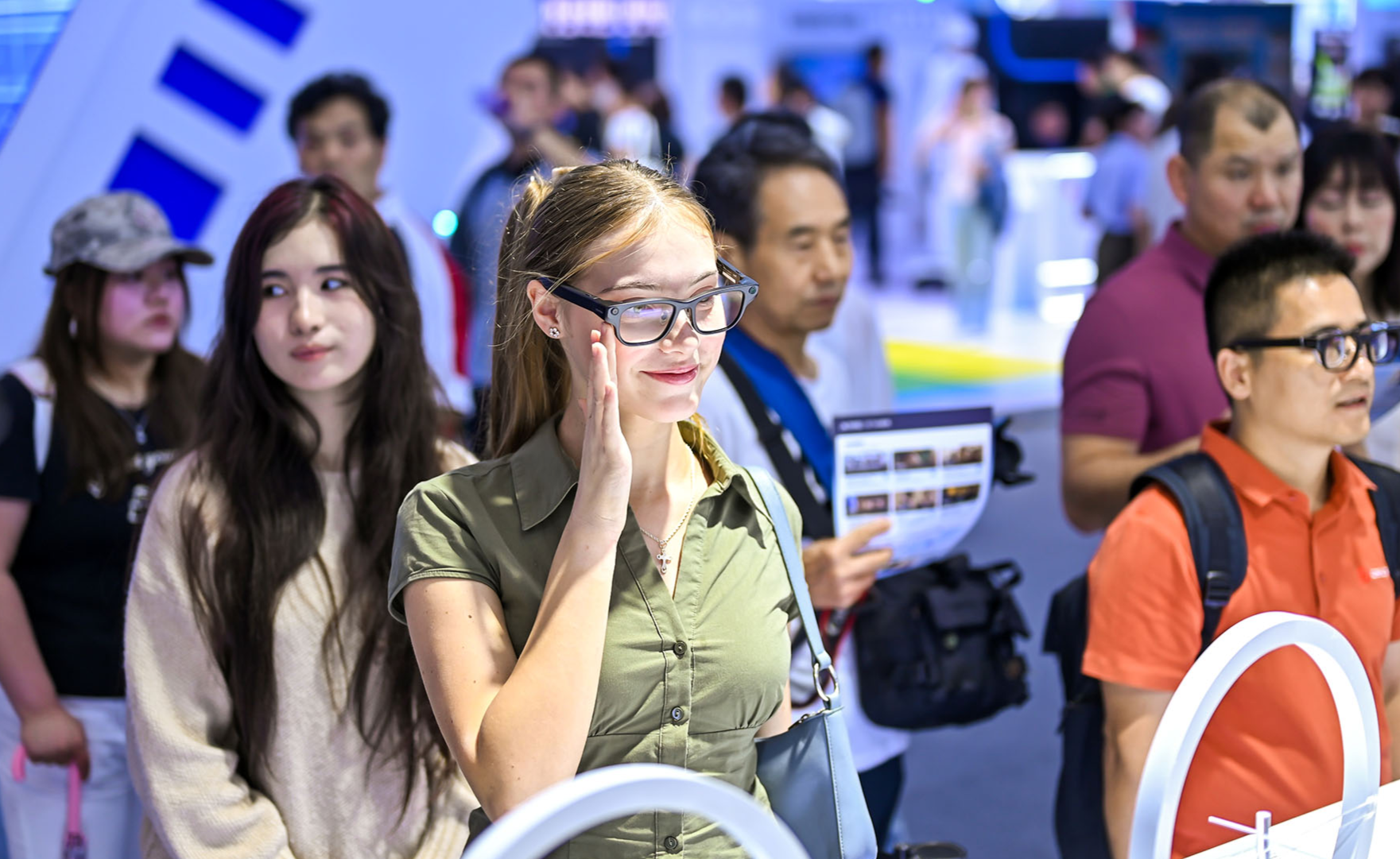
AI glasses, intelligent translators, mechanical exoskeletons and other smart devices are also reaching international markets. Meanwhile, industrial and surgical robots continue to record strong export growth.
For Hong Kong, these developments create opportunities to attract businesses involved in product development, research, international distribution and specialised services, rather than relying primarily on the movement of finished goods.
AI Listings Boost Hong Kong’s Financial Market
Hong Kong’s financial sector is also benefiting as technology companies seek funding to expand their businesses and develop new products.
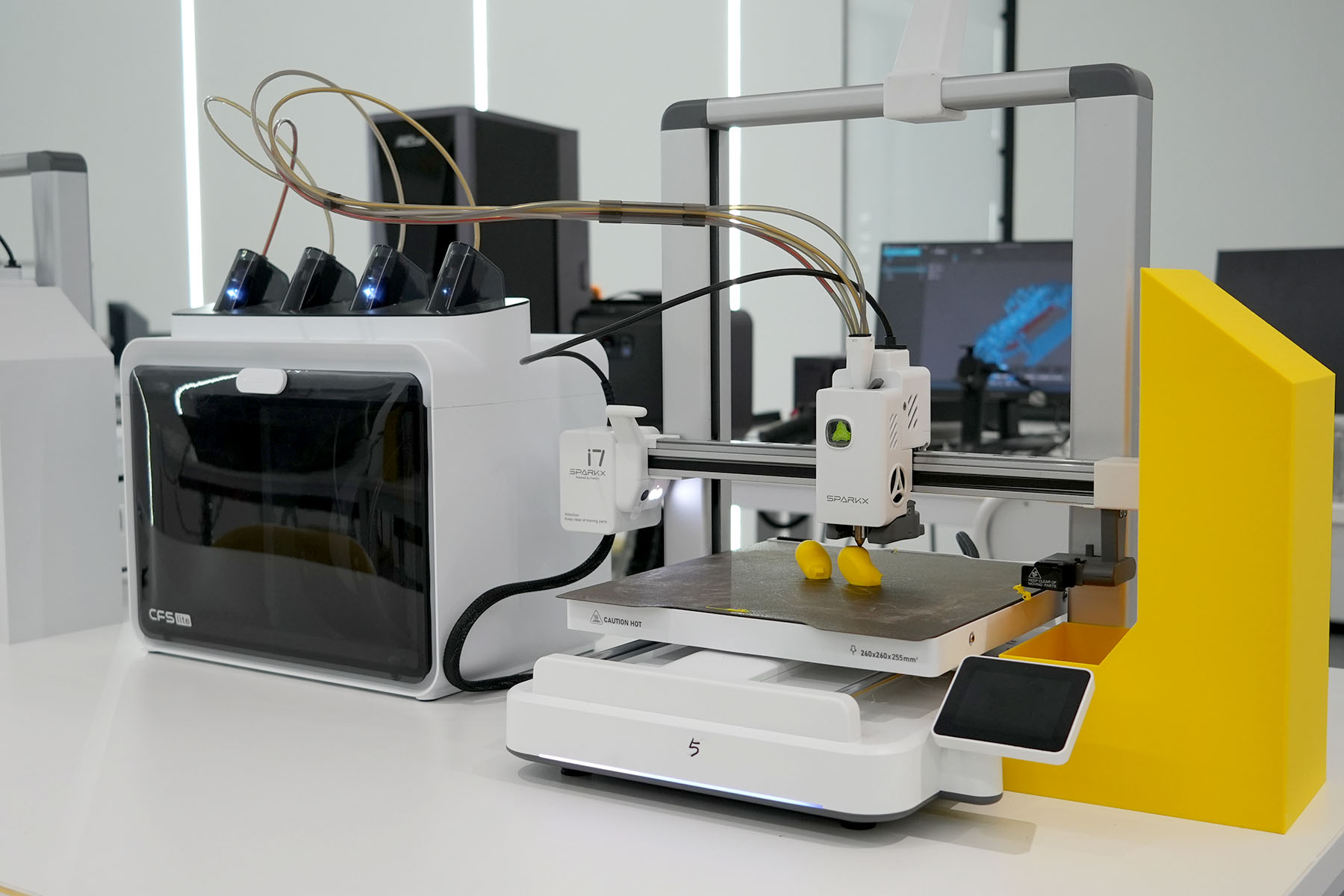
Shenzhen Creality 3D Technology Co Ltd, a global player in 3D printing, is increasing its investment in AI as it looks to respond to changing customer needs and capture opportunities in the international market.
The company listed on the Hong Kong Stock Exchange in May, becoming the first consumer grade 3D printing company to go public in the city. Its global offering raised HK$1.38 billion through the issuance of 73.42 million shares.
Part of the proceeds will go towards expanding its research and development team and integrating AI into its product ecosystem. The company is working to improve tools that allow users to generate 3D models more efficiently from text prompts or images.
Such tools could make 3D printing more accessible to people who have ideas for products but lack advanced modelling skills. AI assisted design can help simplify the process of turning a concept into a digital model that can be prepared for production.
Chen Chun, Creality’s chief executive officer and co founder, said improving AI powered production could help users complete their creative work more effectively and support further market growth.
The company sells most of its products overseas, making Hong Kong’s international business connections and financial services particularly relevant to its expansion plans.
Chen said listing in Hong Kong could improve the company’s international visibility and strengthen its integration with the global business community. Greater exposure could also make the company more accessible to overseas investors and consumers.
The city’s international capital pool and established professional services may help Creality plan its long term expansion and allocate funding across its operations, Chen said.
The company’s debut comes amid a broader increase in fundraising activity on the Hong Kong stock market.
According to Hong Kong Exchanges and Clearing, 106 companies went public in the city during the first eight months of 2026, raising a combined HK$342.4 billion. That represented a 153 percent increase compared with the same period last year.
Market estimates put funds raised through AI related listings at more than HK$235 billion, accounting for at least 65 percent of the total raised through initial public offerings during the period.
The figures point to strong fundraising activity among businesses associated with AI and related technologies. For Hong Kong, these listings create opportunities to connect technology companies with international investors while supporting the financing of research, product development and overseas expansion.
Still, successful fundraising is only one measure of progress. Companies must turn investment into commercially successful products, competitive services and sustainable revenue if the benefits are to endure.
Can Hong Kong Sustain Its AI Driven Economic Growth?
The rapid expansion of AI related trade raises an important question for Hong Kong: what happens if global technology spending slows?
The city’s trading, financial and professional services sectors are benefiting from increased demand, but its exposure to international commerce also makes it vulnerable to changes in global investment patterns.
If technology companies reduce spending or delay infrastructure projects, demand for electronic components and computing equipment could weaken. Such a slowdown would affect businesses involved in manufacturing, distribution, logistics and related services.
Tommy Chung Ki fung, a legislator representing the import and export sector, said he expected demand for AI products and related services to remain strong for at least the next two to three years.
However, he said Hong Kong needed to do more to turn the current expansion into a sustainable source of economic growth.
That means moving beyond the re export of technology products and developing more local expertise in research, advanced manufacturing and high value business services.
The HKSAR government’s first Five Year Plan for Economic and Social Development, covering 2026 to 2030, sets out plans to promote AI adoption across different sectors. Its approach includes both “industries for AI” and “AI for industries”, supporting the development of AI businesses while encouraging existing industries to adopt the technology.
The strategy could expand the benefits of AI beyond technology companies. Businesses in finance, healthcare, logistics and other sectors could use AI to improve their operations, develop new services and increase productivity.
The Northern Metropolis development is expected to play a role in expanding the city’s research and industrial capacity.
Hong Kong Park within the Hetao Shenzhen Hong Kong Science and Technology Innovation Co operation Zone is expected to support research and the commercial development of advanced technologies, including AI and data science, according to this year’s Policy Address.
The wider Northern Metropolis project will also reserve land for high value added industries and advanced manufacturing.
These plans could create opportunities for companies to conduct research, develop products and establish more sophisticated production operations in Hong Kong.
Chung said the initiatives were intended to help the city move beyond its existing role as a re export centre and develop a more integrated technology supply chain.
That ecosystem could connect research and development with the assembly of high technology products and downstream services such as trade financing and shipping insurance.
The goal is to allow Hong Kong to capture more economic value at every stage of the process, from developing technology and managing production to financing transactions and delivering products to international customers.
Chung said he hoped the city would develop a high value added supply chain management system and become a hub serving not only Asia but also the wider world.
Hong Kong’s latest export and investment figures show the scale of the opportunity created by the global AI boom. The longer term test will be whether the city can use that momentum to build stronger research capabilities, attract skilled professionals and support businesses developing technology for international markets.
Can Hong Kong turn its AI export boom into a lasting global technology advantage? Its ability to connect international trade with research, innovation and advanced manufacturing will help determine the next stage of its economic growth.