

Hong Kong is looking to its universities to drive scientific research, develop new technologies and turn academic discoveries into commercial products, as officials and industry leaders seek to strengthen the city's innovation economy.
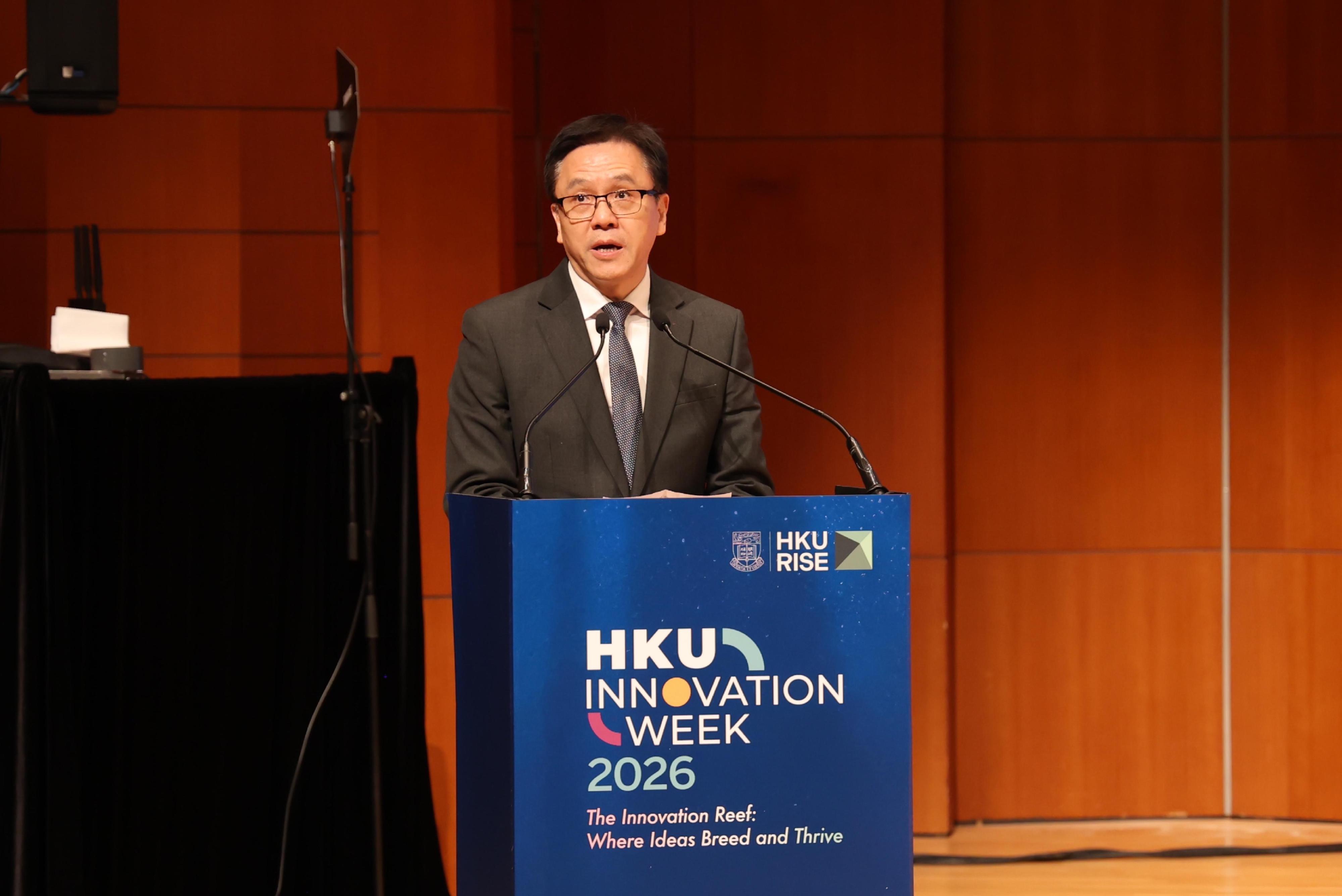
Secretary for Innovation, Technology and Industry Sun Dong outlined the government's commitment to supporting basic and applied research on Wednesday at the University of Hong Kong's Innovation Week 2026. The event brought together more than 1,000 representatives from government, academia, industry, research institutions and the investment community.
Sun said universities play an indispensable role in advancing knowledge, developing talent and translating research into practical results. He pledged continued support for university research that serves China's scientific and technological needs, while pointing to Hong Kong's State Key Laboratories and InnoHK Research Clusters as important parts of the city's research infrastructure.
The discussions at Innovation Week also exposed a challenge facing Hong Kong's technology ambitions: academic discoveries must move beyond research papers and laboratories if they are to generate commercial value. New initiatives announced at the event, including a joint venture fund and a research commercialisation alliance, aim to help researchers bridge that gap.
Government backs research institutions and laboratories
Sun said the Hong Kong Special Administrative Region government remained committed to consolidating the city's advantages as a base for both State Key Laboratories and InnoHK Research Clusters.
The two initiatives support research and collaboration in areas of scientific and technological development. InnoHK, in particular, seeks to bring researchers and institutions together through international research partnerships, helping Hong Kong participate in wider scientific networks.
Government support for basic research allows universities to investigate scientific questions that may not produce immediate commercial returns. Applied research, meanwhile, focuses on using scientific knowledge to address specific problems and develop technologies, treatments or products.
Both forms of research contribute to the innovation process, although moving from an experimental result to a product that customers can use often requires additional funding, technical development and commercial expertise.
Sun's remarks placed universities at the centre of Hong Kong's plans to strengthen its research capacity and support technological development that aligns with broader national priorities.
The event also gave universities an opportunity to demonstrate how their research could contribute to healthcare, engineering, sustainability and other areas with practical applications.
Leung Chun-ying calls for stronger commercial focus
Leung Chun-ying, vice-chairman of the National Committee of the Chinese People's Political Consultative Conference, also stressed the need to turn academic research into commercially useful products.
He said Hong Kong's innovation system relied heavily on universities as a primary source of new ideas because the city lacked a substantial physical industrial base.
That structure creates both opportunities and difficulties. Universities can produce scientific discoveries and develop specialised expertise, but commercialising those discoveries requires access to investors, business partners, manufacturing capabilities and potential customers.
A research paper or laboratory prototype does not automatically become a viable product. Companies must establish whether a technology solves a genuine problem, whether customers are willing to pay for it and whether it can be manufactured and delivered at a sustainable cost.
Leung argued that research should pay greater attention to commercial application rather than remain purely theoretical.
His comments reflected a wider concern among university and business leaders about the distance between academic success and market adoption. Research institutions may measure progress through publications, patents and scientific advances, while investors and businesses also need evidence that a technology can work outside the laboratory.
For Hong Kong, strengthening those connections could help locally developed technologies attract investment and reach customers in the city and overseas.
HKU introduces a platform to connect research with business
Richard Wong Yue-chim, HKU's acting president, acknowledged that moving an invention from the laboratory into practical use is rarely straightforward.
Researchers may encounter difficulties involving intellectual property ownership, funding, regulatory requirements, company formation and access to commercial partners. These obstacles can delay promising technologies even when the underlying science is sound.
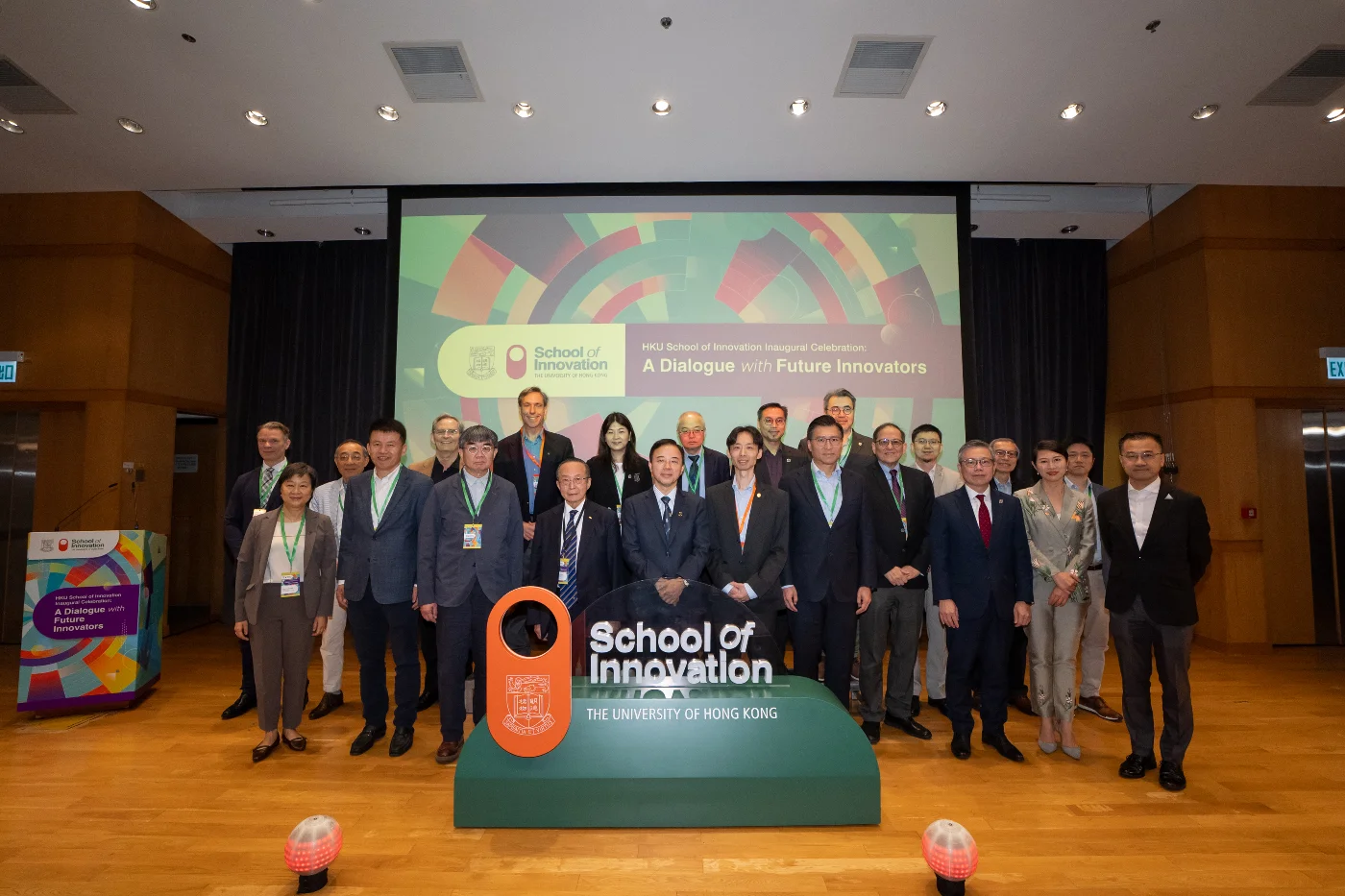
To address some of these challenges, HKU launched HKU RISE, which stands for Research, Innovation, Strategic Partnerships and Entrepreneurship.
The platform brings together research funding, intellectual property management, technology transfer and startup incubation under a unified structure. Its purpose is to help researchers move discoveries beyond academic settings and towards commercial development.
Technology transfer teams can help researchers assess whether an invention has commercial potential, protect intellectual property and identify organisations interested in licensing or developing the technology. Startup incubation can provide early-stage companies with support as they test products, develop business plans and seek investment.
Combining these functions can make it easier for researchers to identify the next steps after a scientific breakthrough. It can also help businesses and investors find technologies that may be suitable for further development.
The effectiveness of such a platform will depend on its ability to connect researchers with the resources and partners needed to turn scientific work into products that can compete in the market.
Innovation Week showcases more than 120 projects
HKU Innovation Week 2026, themed "The Innovation Reef: Where Ideas Breed and Thrive", runs until October 16.
The programme showcases more than 120 innovations spanning biomedical sciences, healthcare, smart living, engineering, architecture and sustainability. The event brings together university researchers, entrepreneurs, investors and public-sector representatives to explore potential applications for new technologies.
The range of projects illustrates how university research can extend beyond traditional academic disciplines. Biomedical research may lead to new treatments or delivery systems, while engineering and smart living projects can address practical challenges involving infrastructure, buildings and everyday services.
For startups, an event of this scale also provides an opportunity to introduce products to potential investors and establish contacts with organisations that could support further development.
However, exhibitions and networking events are only one stage in the commercialisation process. Technologies still need to demonstrate performance, meet applicable regulatory requirements and establish demand among prospective users.
Two companies at the event, CereThera and AilsynBio, presented their work in biomedical technology and therapeutics, illustrating different approaches to translating scientific research into potential commercial applications.
CereThera presents nasal spray for stroke emergencies
CereThera, an award winning biotechnology spinoff, showcased its NanoPowder Nasal Spray, which the company describes as the world's first rapid prehospital first aid product for strokes.
Shao Zitong, CereThera's founder and chief executive, said the product uses a university developed drug delivery platform known as "Nano-in-Micron".
According to Shao, the technology is designed to overcome the challenge of delivering medication across the blood brain barrier, which limits the movement of many substances from the bloodstream into brain tissue.
The company's approach aims to deliver medication to the brain through the nose, potentially avoiding the need for injections or surgery to administer the treatment.
Shao said the longer term objective was to shift part of stroke care from hospitals to the prehospital setting, where treatment could potentially begin before a patient reaches a medical facility.
The idea addresses a serious challenge in emergency medicine. Stroke treatment can be time sensitive, and delays in accessing appropriate care can affect patient outcomes. A delivery system that allows medication to be administered earlier could therefore have important implications if clinical evidence establishes that it is safe and effective.
However, the claims made about the product at Innovation Week should not be taken as proof that it has been approved for routine use or that it improves patient outcomes. The information provided does not specify its regulatory status, clinical trial results or availability to patients.
Further evidence would be needed to assess its effectiveness, appropriate use and potential role in emergency stroke treatment.
The product nevertheless illustrates the type of research driven technology that universities and biotechnology companies are seeking to develop into practical medical applications.

AI driven biotech company connects with investors
AilsynBio, a peptide therapeutics company that uses artificial intelligence driven technology, also reported making business connections during Innovation Week.
Bella Zheng Chengwen, the company's chief executive assistant, told the media that AilsynBio had successfully connected with several investors at the event.
"The participation of government officials helps us gain a better understanding of policies that support startups," Zheng said.
Her comments pointed to the value of bringing policymakers, researchers and investors together in the same setting. For early stage biotechnology companies, understanding government support programmes and identifying potential sources of funding can influence how quickly research advances towards commercial development.
Investor interest can also help companies assess the commercial potential of their work and identify possible routes to market.
AI driven approaches are increasingly being explored in drug discovery and the development of peptide based therapeutics. Such methods can assist researchers in identifying and evaluating potential candidates, although scientific validation and appropriate testing remain necessary before a treatment can be used clinically.
The company did not disclose the amount of investment it had secured or identify the investors it met during the event.
Its participation nevertheless showed how university innovation events can connect specialist research companies with people and organisations that may help finance their next stages of development.
HKU and DEFTA Partners establish joint fund
HKU and Silicon Valley venture capital firm DEFTA Partners announced the first close of the HKU Entrepreneurship Engine Fund x DEFTA Joint Fund.
The fund is intended to support technology validation, market adoption and commercialisation, with a particular focus on deep technology and research intensive ventures.
Deep technology companies often rely on scientific or engineering advances that require substantial development before a product is ready for widespread use. Compared with businesses built around established products or services, these ventures may face longer development periods and greater technical uncertainty.
Funding can help companies test whether their technologies work outside controlled research settings, refine products and determine whether customers have a practical need for them.
The fund's focus on validation and market adoption addresses two stages that can prove difficult for university spinouts. A discovery may be scientifically promising but still require further testing, investment and commercial planning before it can support a viable business.
The announcement of the fund's first close indicates that the fundraising process has reached an initial milestone. The information provided does not state the amount raised, the total target size or the number of companies expected to receive funding.
Its eventual impact will depend on the ventures it supports and their progress towards commercial use.
Research partnership alliance brings organisations together
HKU also launched the HKU Strategic Partnership Alliance for Research and Commercialisation, bringing together more than 30 corporations, public sector organisations and nongovernmental partners.
The alliance aims to establish a global network through which universities and external organisations can collaborate on research and accelerate the practical use of scientific discoveries.
Its proposed activities include collaborative research, the establishment of joint laboratories and efforts to move research findings into real world applications.
Joint laboratories can allow university researchers and business partners to work together on specific technical problems, combining academic expertise with industry experience. Corporate partnerships can also help researchers understand practical requirements earlier in the development process, potentially reducing the gap between a laboratory result and a product that businesses or public services can use.
For participating organisations, the alliance offers a structure for developing longer term research relationships rather than relying only on individual projects or occasional meetings.
The involvement of public sector and nongovernmental partners could also create opportunities for research addressing public needs, depending on the projects developed through the network.
The alliance's success will ultimately depend on the collaborations it produces, the technologies that progress towards practical use and the benefits delivered to industry and society.
As Innovation Week continues until October 16, the new fund, research platform and partnership alliance give HKU additional mechanisms to connect scientific work with investment and commercial expertise.
Can Hong Kong's universities turn more of their scientific discoveries into successful businesses and practical solutions?