

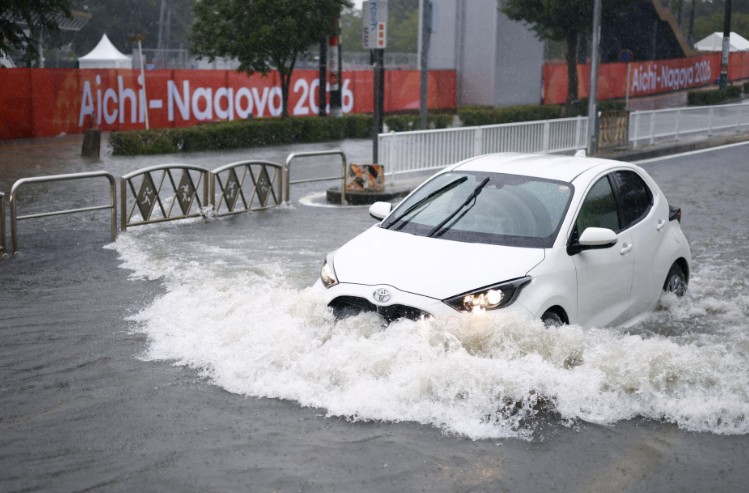
Hundreds of athletes preparing for the Asian Games in Nagoya were forced to leave their accommodation temporarily after record rainfall battered the Japanese city, flooding streets, disrupting public transport and sending water into some competition venues just before events were due to begin.
About 104 millimetres of rain fell in Nagoya within a single hour on Tuesday, according to reports, prompting municipal authorities to issue an evacuation order for parts of the city. Athletes staying near Nagoya Port were among those told to move to safer locations as officials responded to the severe weather.
The evacuation came only days before the opening ceremony scheduled for September 19, with some sporting events due to start earlier. Basketball competition was set to begin on Thursday, putting added pressure on organisers as they assessed the effects of the heavy rain.
Athletes Moved From Accommodation
The athletes were staying in the Garden Pier area of Nagoya Port, where organisers have placed temporary wooden accommodation units instead of creating a conventional athletes' village.
An official from the Nagoya Port Authority said hundreds of athletes staying in the area were instructed to evacuate after the authorities issued the order.
The athletes were able to return about two hours later after the evacuation order was lifted, according to the official.
The temporary relocation added an unexpected complication to preparations for an event expected to attract thousands of competitors and officials. With athletes due to compete across numerous venues, organisers must also account for transport, accommodation and safety arrangements when severe weather strikes.
The decision to house competitors in several types of accommodation rather than a single athletes' village had already created a more spread out Games setup. Organisers are relying on a cruise ship, hotels and temporary wooden containers to house participants.
That arrangement means severe weather can affect different groups of athletes in different ways, depending on where they are staying and how easily they can reach competition venues.
Record Rainfall Hits Nagoya
The rainfall that struck Nagoya was intense enough to overwhelm parts of the city's infrastructure.
Around 104 millimetres of rain fell in one hour on Tuesday. The amount was significant enough for municipal authorities to issue an evacuation order covering parts of the city.
The Japan Meteorological Agency also issued its highest flood warning for a major river in the area as water levels rose.
Nagoya's public transport system was affected as well. Subway and bus services were temporarily suspended, disrupting movement across the city at a time when athletes, officials and organisers were preparing for the Games.
For an international sporting event involving thousands of people, transport interruptions can quickly become an operational problem. Athletes need reliable routes between accommodation and venues, while officials must coordinate movements involving large numbers of participants.
The heavy rainfall also raised concerns about the condition of competition facilities.
Water Reported Inside Competition Venues
Reports said rainwater entered several competition venues in Nagoya.
The extent of the damage was not immediately clear. City officials and Games organisers had not confirmed how much water entered the facilities or whether any venues suffered significant damage.
The timing was particularly difficult for organisers because several events were scheduled to begin before the official opening ceremony.
Basketball competition was due to start on Thursday, meaning officials had limited time to inspect facilities and determine whether they were suitable for competition.
Sports venues require careful checks after major rainfall, particularly when water has entered indoor areas or affected equipment and surrounding infrastructure. Organisers also have to consider access routes for athletes, spectators and staff if further rain arrives.
More wet weather was forecast for the coming days, adding another concern for officials preparing the venues and transport network.
Asian Games Begin Under Weather Pressure
The Asian Games are expected to bring more than 17,000 athletes and officials to the host city and surrounding areas. That figure is larger than the number of participants involved in the Olympic Games, making the scale of the event a major logistical undertaking.
The large number of participants means that weather disruptions can have consequences far beyond individual competitions.
Accommodation, transport, training schedules and competition timetables all depend on conditions remaining manageable. When heavy rain affects roads, public transport or venues, organisers must quickly reassess plans.
The evacuation at Garden Pier showed how quickly those preparations can be tested.
Although athletes returned to their accommodation after about two hours, the incident came at a sensitive point in the Games schedule. Competitors need sufficient time to rest, train and prepare for events, while organisers must ensure that accommodation remains safe.
Climate Change Adds to Weather Concerns
Scientists have warned that human induced climate change is contributing to more frequent and intense extreme weather events in Japan and other parts of the world.
Heavy rainfall has become an increasing concern for communities facing stronger storms and changing weather patterns. Japan's geography and seasonal weather systems can already produce periods of intense rainfall, but climate change can increase the amount of moisture held in the atmosphere, contributing to heavier precipitation during certain events.
For Nagoya, the immediate challenge was dealing with the rainfall that arrived just as the city prepared to host one of Asia's largest sporting events.
The incident also shows why organisers of major international competitions must plan for severe weather as part of routine event preparation. Accommodation sites, transport routes and competition venues all need contingency plans when extreme conditions threaten normal operations.
No Traditional Athletes' Village
This year's Games have taken a different approach to athlete accommodation.
Instead of constructing a dedicated athletes' village, organisers have arranged accommodation across several locations and formats. Athletes are staying in hotels, on a cruise ship and in temporary wooden container units.
The Garden Pier accommodation forms part of that temporary setup.
While such arrangements can provide flexibility, they also require organisers to coordinate participants across a wider area. Weather disruptions can complicate that task, particularly when public transport services are suspended.
Tuesday's rainfall caused subway and bus services to stop temporarily, making movement around Nagoya more difficult.
The combination of heavy rainfall, transport disruption and the evacuation order meant that officials had to respond to several problems at once.
Games Preparations Continue
Despite the disruption, the athletes returned to the Garden Pier accommodation after the evacuation order was lifted.
There was no immediate confirmation of major damage to Games facilities, although reports of rainwater inside several venues prompted questions about the condition of sites ahead of competition.
Officials will have to continue monitoring weather conditions as the Games approach their formal opening ceremony.
The basketball competition was scheduled to begin Thursday, meaning preparations were already moving from general event organisation to active competition management.
With more than 17,000 athletes and officials expected to attend, even a temporary disruption can require careful coordination. Organisers must ensure that athletes can reach venues safely, that competition areas remain usable and that accommodation remains secure.
The immediate task is clear: inspect every affected venue, monitor the weather closely and keep athletes informed if further evacuation or transport changes become necessary.
With more rain forecast, will Nagoya's Games organisers be able to keep competition and athlete transport running smoothly as the Asian Games get under way?