

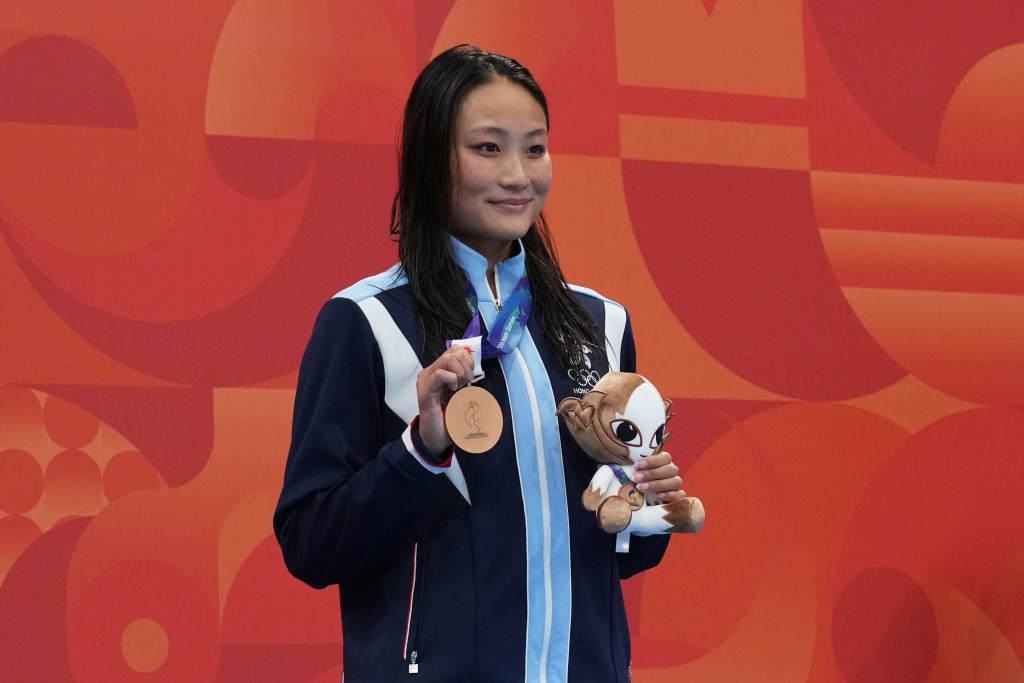
Hong Kong swimmer Natalie Kan Cheuk tung claimed bronze in the women’s 100 metre butterfly at the Aichi Nagoya Asian Games on Wednesday, setting a Hong Kong record of 58.05 seconds as she secured her first individual medal at the continental event.
Kan, competing at her third Asian Games, produced her strongest swim of the competition when it mattered most. She was fourth at the halfway point of the final but surged over the closing 50 metres to take the last place on the podium, finishing just 0.04 seconds ahead of South Korea’s An Se Hyeon.
The result marked a major step forward for the 24 year old, who had finished sixth in the same event at the previous Asian Games. Her performance also lowered a Hong Kong record that had stood since 2023, when Siobhan Haughey set the previous mark of 58.12 seconds.
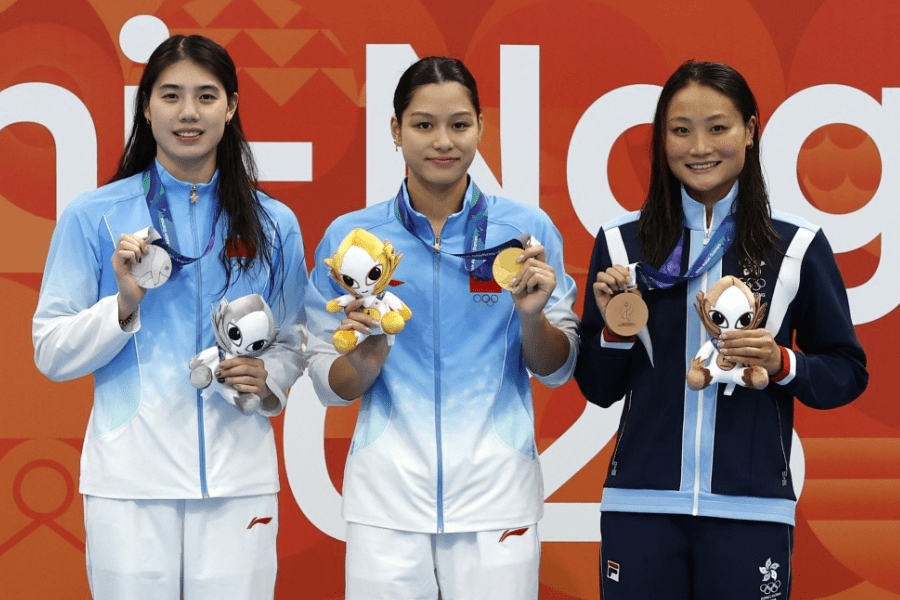
China’s Yu Yiting won the gold medal in 56.41 seconds, while her compatriot Zhang Yufei took silver in 56.44 seconds. The margin between the two Chinese swimmers was only 0.03 seconds.
Hong Kong’s other finalist, Yeung Hoi ching, finished ninth in 1 minute 0.55 seconds.
Kan delivers when the medal was within reach
Kan entered the final knowing that the race would require a fast finish. She was fourth after the opening 50 metres, leaving her outside the medal positions at the halfway point.
Rather than allowing the early deficit to dictate the outcome, she maintained her pace and closed strongly. Her final push moved her past An Hyeon by four hundredths of a second and secured bronze.
The time of 58.05 seconds also gave Kan a new national record for Hong Kong.
The previous record of 58.12 seconds had been set by Haughey in 2023. Breaking a mark associated with one of Hong Kong's most accomplished swimmers added another layer to Kan's achievement.
For Kan, however, the medal mattered more than the record.
She said she was surprised by the result after finishing sixth at the previous Asian Games.
“I just went all out this morning and left everything behind,” Kan said.
Her confidence had already received a boost earlier in the day when she produced a personal best during the heats. That swim gave her a sense of accomplishment before she returned to the pool for the final.
A year of preparation pays off
Kan's bronze came after a year devoted to preparing for the Asian Games.
After graduating from university, she spent the following year focusing on training and competition with the Games as a major target. That preparation eventually produced a performance that improved her standing from sixth at the previous edition to third in Aichi Nagoya.
The progression also reflects how much Kan has improved in the event over the past year.
She said she had cut approximately one second from her 100 metre butterfly time during that period. The improvement became particularly significant in the final, where a few hundredths of a second separated the medal contenders.
Her new Hong Kong record was therefore not an isolated improvement. It followed a sustained effort to bring her time down and compete more closely with Asia's leading butterfly swimmers.
The final offered little room for error. Yu and Zhang were separated by only 0.03 seconds at the finish, while Kan and An were separated by 0.04 seconds for bronze.
In such a tightly packed race, Kan's closing speed made the difference.
Waves were a concern before the final
Kan also acknowledged a concern she had carried into the race.
The movement of water created by neighbouring swimmers can affect a swimmer's rhythm, particularly during a short event such as the 100 metre butterfly. Kan said she had worried about the waves produced by competitors around her.
Once the final began, however, the concern faded.
She found that the conditions did not interfere with her performance and was able to maintain her focus through the closing stages.
That allowed her to concentrate on the race rather than the swimmers around her. By the final metres, she had moved into the medal position and held on for bronze.
The margin over An Hyeon was tiny, but enough to give Kan the first individual Asian Games medal of her career.
First individual medal after two Games
Kan's third appearance at the Asian Games produced a result that had previously eluded her.
She had competed at the continental event before but had not reached the individual podium. Her sixth place finish at the previous Games had shown that she could contend with the region's strongest swimmers, but the gap to a medal remained.
This time, she closed that gap.
The bronze also gave Kan a result she could use as evidence of her own progress. She has spoken openly about struggling with self confidence and said the support of her coaches, family and loved ones had helped her continue pushing forward.
For a swimmer competing at this level, the difference between making a final and reaching the podium can be measured in fractions of a second. Kan's record breaking 58.05 seconds demonstrated that the work she had put into the event was producing measurable results.
She said winning her first individual Asian Games medal showed her that she could continue improving.
“Today I finally did it,” she said.
The statement reflected both relief and satisfaction after a long period of preparation.
A new target after the breakthrough
The bronze medal has also changed Kan's view of what she can achieve.
She said the result had given her greater confidence ahead of future competitions. That confidence comes at a time when her performances in the 100 metre butterfly have continued to improve.
Cutting about one second from her time in a single year is a significant step for an established international swimmer. Kan's new Hong Kong record now gives her a fresh benchmark to chase.
The record itself may eventually be broken, but for now it represents the fastest 100 metre butterfly time recorded by a Hong Kong swimmer and a clear marker of her progress.
The medal also provides a tangible reward for the year she spent preparing after university graduation. Instead of simply returning to the Asian Games to improve on her previous sixth place, Kan left with a place on the podium and a national record.
HK$250,000 reward for bronze
Kan will receive HK$250,000 under the Jockey Club Athlete Incentive Awards Scheme for winning an individual bronze medal.
The award adds financial recognition to a result that already represents a major personal milestone.
Her performance also contributed another medal to Hong Kong's swimming campaign at the Games, while Yu Yiting and Zhang Yufei dominated the top two positions for China.
Kan's race was decided by the smallest of margins, but the outcome was clear. She finished in 58.05 seconds, broke Haughey's 2023 Hong Kong record and held off An Hyeon by four hundredths of a second.
After years of competition and a full year of focused preparation, Kan finally reached the Asian Games individual podium.
With a new Hong Kong record and her confidence rising, what can Natalie Kan achieve when she takes the next step in her international career?