

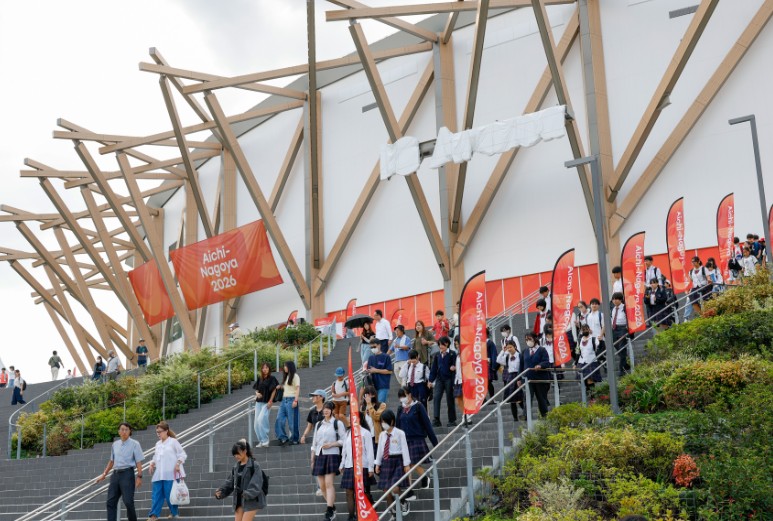
The Aichi Nagoya Asian Games are heading into their opening weekend with organisers facing a fresh weather threat, after Tropical Storm Dujuan moved towards central Japan and raised the possibility of a typhoon reaching the region on September 21.
The 20th Asian Games will officially open in Nagoya on Saturday, September 19, but competition has already begun in several sports, including football, basketball and volleyball. With thousands of athletes and officials arriving across the Aichi region, organisers are now preparing for the possibility that heavy rain and strong winds could disrupt the early schedule.
Tropical Storm Dujuan Heads Towards Central Japan
Dujuan was positioned off Japan’s Pacific coast on Thursday and was moving northwest towards central Japan. The storm had maximum sustained winds of 90 kilometres per hour, with gusts reaching 126 kilometres per hour.
The projected path has placed Nagoya and the surrounding Aichi region under close watch as the Games enter their first full days of competition.
The weather concern comes after the region was already hit by torrential rain last week. The downpour caused schools to close, disrupted railway services and forced several hundred athletes to leave their accommodation temporarily.
The recent conditions have given organisers little room for complacency. Sporting events are being staged across a wide area, meaning disruption to transport, training facilities and competition venues could affect athletes even if individual events remain open.
Kosei Inoue, Japan’s chef de mission for the Asian Games and an executive board member of the Japanese Olympic Committee, acknowledged the possibility of further disruption during a news conference.
He said some competitions had already experienced delays or postponements because of heavy rain and severe weather. He also warned that a typhoon could approach on September 21.
Inoue said Japanese officials were holding detailed meetings to prepare for different scenarios and ensure that appropriate responses could be made if conditions deteriorate.
Weather Adds Pressure Before Opening Ceremony
The timing of the storm threat is particularly significant because the Asian Games are only beginning to gather full momentum.
The opening ceremony will take place in Nagoya on Saturday, while several competitions have already started to accommodate the large programme. The Games will run through October 4 and involve athletes and officials from 45 countries and regions.
Around 17,000 athletes and officials are registered for the event, a larger number than organisers originally expected. The Games feature 43 sports and 469 medal events, with new disciplines including mixed martial arts, padel, surfing, virtual taekwondo and teqball.
That scale makes weather planning particularly complicated. A disruption in one part of the region can affect transportation and accommodation arrangements elsewhere, especially when teams have to travel between venues.
The latest storm warning also comes as organisers continue to deal with concerns over accommodation.
Athletes Face Accommodation Problems
Unlike many major multi sport events, the Aichi Nagoya Games do not have a traditional purpose built Athletes’ Village.
Organisers instead turned to a mixture of hotels, temporary wooden accommodation units and the Italian cruise ship Costa Serena to house participants.
The cruise ship arrived in Nagoya earlier this week and is being used to accommodate thousands of athletes and officials. Around 2,000 additional participants are staying in shipping container style accommodation at the port, while others have been placed in hotels and other accommodation.
The arrangement was intended to reduce costs and avoid constructing a dedicated village. However, the system has faced practical difficulties as delegations arrived.
Japan’s deputy chef de mission, Hisashi Mizutori, said some athletes and officials had been forced to wait for extended periods because of delays involving accreditation and room assignments.
He also acknowledged cases in which coaches, team officials and athletes were assigned to the same rooms.
In some cases, room allocations were based largely on the number of available beds rather than the specific needs of each delegation. That created situations in which male and female athletes were assigned together or coaches were placed in rooms with athletes.
Mizutori said the Japanese Olympic Committee had anticipated accommodation problems and had secured hotel rooms as a backup option.
Officials are now working with affected teams to make changes where necessary. If arrangements cannot be corrected within the existing accommodation system, the backup hotels could be used instead.
South Korean Team Raises Complaints
The accommodation controversy has extended beyond Japan’s own delegation.
South Korean officials have complained about temporary wooden cabins being used for some athletes. Basketball officials in particular raised concerns about the size of beds, saying they were unsuitable for players who stand more than two metres tall.
Images and reports from the accommodation sites have added to concerns about whether some facilities are suitable for athletes competing at the highest level.
Organisers have defended the accommodation plan, describing the facilities as functional and saying they are responding to individual complaints.
Hideaki Omura, governor of Aichi prefecture and head of the organising effort, said officials were dealing with concerns as they emerged. A committee that included former athletes and Olympians had also inspected the temporary facilities before the Games.
The organising committee has attributed the accommodation strain partly to the increase in participant numbers. The original planning figure was about 15,000 athletes and officials, but the final number rose to around 17,000 as additional sports were included in the programme.
The Olympic Council of Asia and the Aichi Nagoya Asian Games Organizing Committee said in a joint statement that all more than 17,000 registered athletes and officials had been provided with Games appropriate accommodation.
Backup Plans Could Become More Important
The weather threat now gives those contingency arrangements another test.
The Costa Serena is designed to function as a floating accommodation facility, while temporary units and hotels are being used elsewhere. Severe weather could complicate operations at all three types of accommodation, particularly if transport links are disrupted or officials need to move athletes between locations.
Last week’s heavy rain already showed how quickly conditions can affect the Games. Schools were closed, train services were suspended and athletes were temporarily evacuated from accommodation.
A typhoon would introduce a different level of risk, with strong winds potentially affecting transport, outdoor competitions and access to venues.
Organisers therefore face two immediate tasks. They must keep competition running wherever conditions permit while ensuring that athletes, officials and staff can move safely around the region.
The early days of the Aichi Nagoya Games will now be closely tied to the weather forecast. Competition has already started, the opening ceremony is approaching and thousands of participants are settling into accommodation arrangements that are still being adjusted.
For organisers, the immediate priority is clear: keep teams informed, maintain safe transport and accommodation arrangements, and be ready to postpone events when weather conditions make competition unsafe.
With the storm threat approaching and accommodation arrangements still being adjusted, what measures should organisers prioritise to keep athletes safe and competitions running smoothly?