

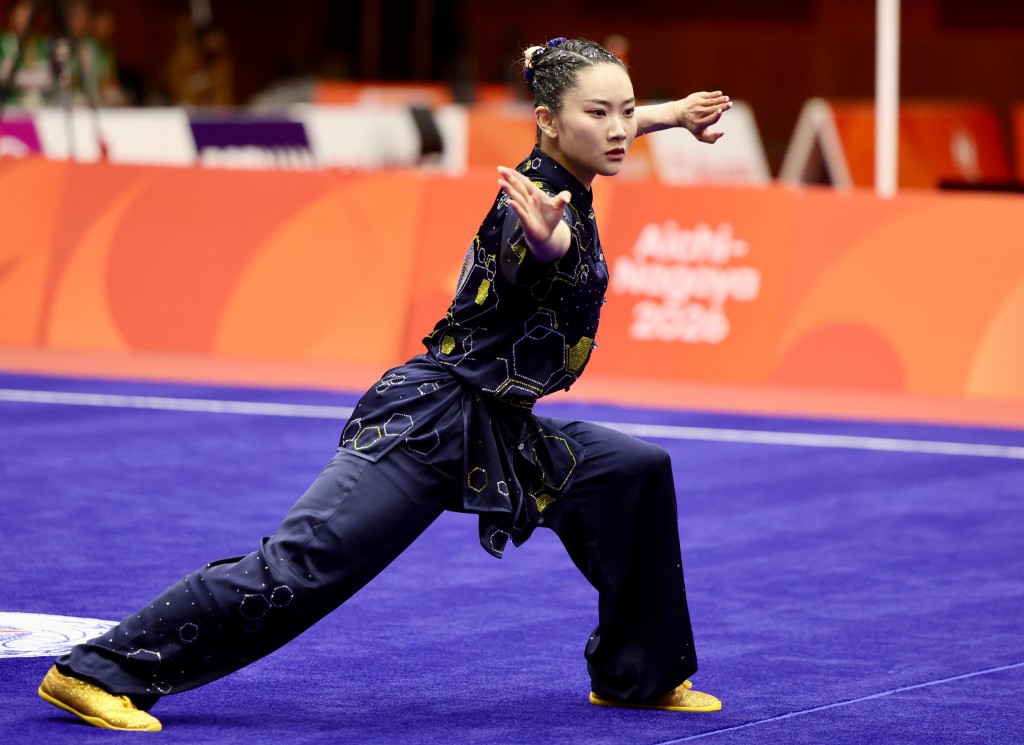
Lydia Sham Hui yu gave Hong Kong its first gold medal at the Aichi Nagoya Asian Games after producing a winning score of 9.713 points in the women’s Changquan at the Aichi Prefectural Martial Arts Hall.
Sham finished just 0.003 points ahead of Macau’s Sou Cho man, who scored 9.710, while Indonesia’s Eugenia Diva Widodo took bronze with 9.706. The result marked Sham’s third appearance at the Asian Games and turned an already significant competition into a landmark moment for Hong Kong.
The victory was particularly notable because Sham entered the Games carrying more than competitive expectations. She was one of Hong Kong’s flag bearers at the opening ceremony, placing her among the athletes representing the city in one of the most visible roles at the event. She then followed that responsibility with a performance that secured Hong Kong’s first gold of the Games.
A narrow victory decided by fractions
The Changquan competition was separated by tiny margins. Sham’s 9.713 was only three thousandths of a point higher than Sou’s 9.710, with Widodo another four thousandths behind at 9.706.
Such a close result left little room for error. In an event where athletes are judged on the execution and presentation of a carefully choreographed routine, small differences can determine the final order.
For Sham, the winning score reflected years of preparation and a more focused approach to her discipline. Her route to the podium also involved a significant change in how she trained and competed.
Rather than continuing to divide her attention across all round events, Sham chose to concentrate specifically on Changquan.
That decision allowed her to spend more time working on details within the routine, including movements that may appear straightforward to an audience but require repeated practice to execute precisely.
“It gave me more time to refine subtle movements that might seem simple to outsiders,” Sham said after her victory.
The shift gave Sham additional time to polish the technical details of her performance and sharpen the elements that can separate closely matched competitors.
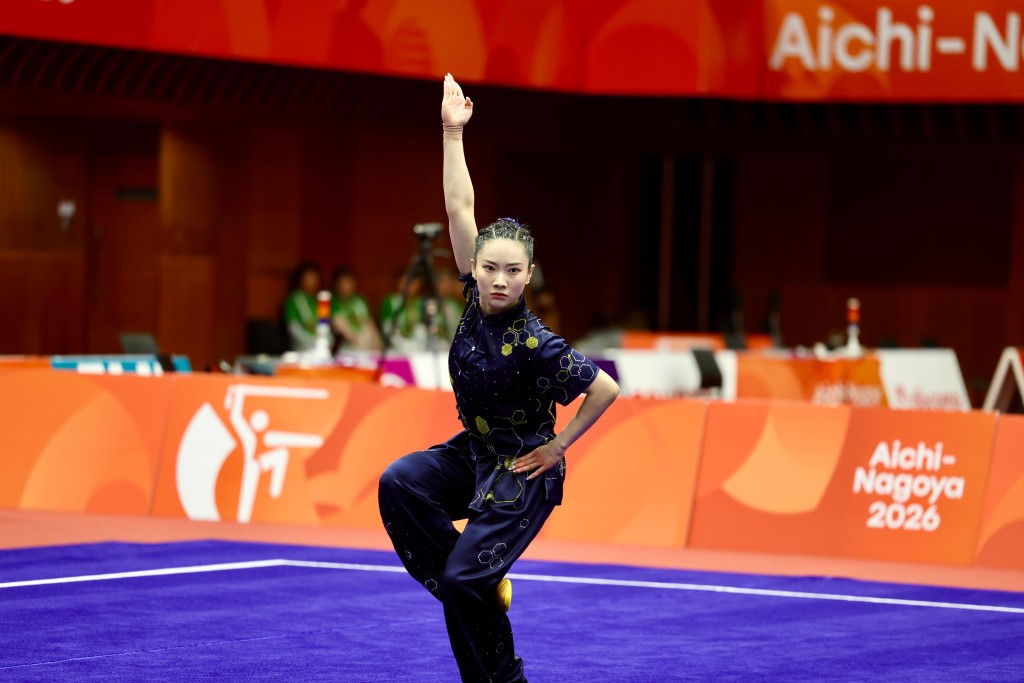
A third Asian Games appearance
The gold medal came during Sham’s third Asian Games campaign, adding another major achievement to her international career.
Competing at a continental multi sport event for the third time also meant that Sham arrived in Aichi Nagoya with experience of the pressures surrounding the Asian Games. This time, however, she entered the competition with the added distinction of serving as one of Hong Kong’s flag bearers at the opening ceremony.
Her performance in Changquan converted that symbolic role into a sporting achievement.
The result also demonstrated how small changes in preparation can influence performance at the highest level. Sham’s decision to focus on a single discipline gave her more opportunity to work repeatedly on movements and sequences that demand precision.
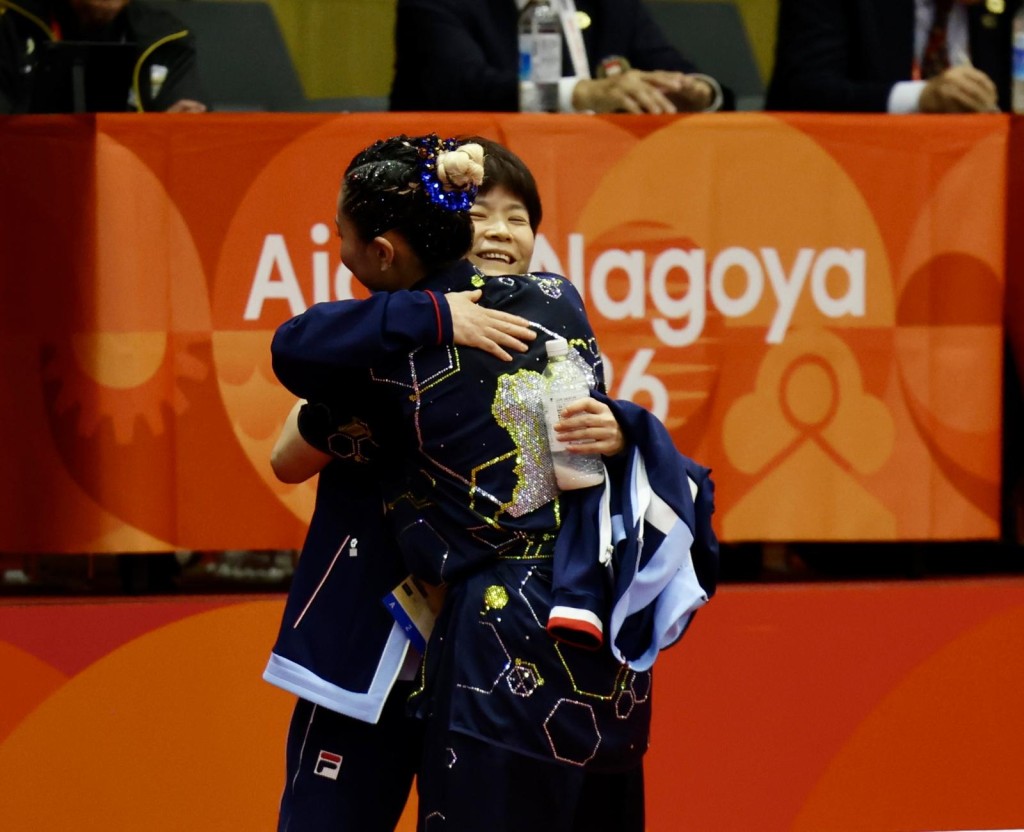
Her comments after the event pointed not only to her own preparation but also to the people supporting her throughout the process.
Sham expressed gratitude to her coaching team and medical team following the emotional victory, recognising their contribution to her preparation and competition campaign.
Hong Kong’s first gold of the Games
Sham’s victory gave Hong Kong its first gold medal of the Aichi Nagoya Asian Games.
The achievement came in an individual event, meaning it also carried a direct financial incentive under the Jockey Club Athlete Incentive Awards Scheme for the 20th Asian Games.
Under the scheme, individual athletes receive HK$1 million for a gold medal, HK$500,000 for silver and HK$250,000 for bronze.
The incentive structure is different for team events. Athletes involved in the top three team finishes are eligible for HK$2 million for gold, HK$1 million for silver and HK$500,000 for bronze.
Sham therefore earned a HK$1 million incentive following her first place finish in the women’s Changquan.
The award adds a financial dimension to an achievement that already carries significance for Hong Kong’s Asian Games campaign. More importantly, her result established the city’s first gold medal mark at the Games and came after a contest decided by less than one hundredth of a point.
Precision behind the podium finish
The closeness of the Changquan result also puts Sham’s preparation into perspective.
Her final score was not separated from the silver medal by a large numerical margin. Instead, the difference between first and second place was just 0.003 points. The gap between Sham and Widodo was 0.007 points.
Those numbers illustrate how little separates athletes competing at this level.
Sham’s move away from an all round focus toward Changquan allowed her to dedicate more training time to the discipline. Her explanation after the event also offers a glimpse into what that preparation involved: repeated attention to movements that might not stand out to spectators but can influence a judge’s assessment.
For an athlete working within such narrow margins, those details matter.
Her result in Aichi Nagoya shows the outcome of that specialised preparation. After three Asian Games appearances, Sham now leaves this competition with an individual gold medal and a place in Hong Kong’s Games history.
The city’s first gold medal of the Aichi Nagoya Asian Games has been secured by a performance measured in thousandths of a point.
What do you think was the key to Lydia Sham’s gold medal performance: her Changquan specialisation, preparation, or experience?