

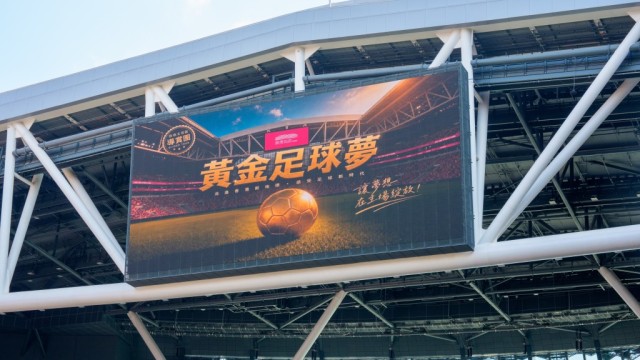
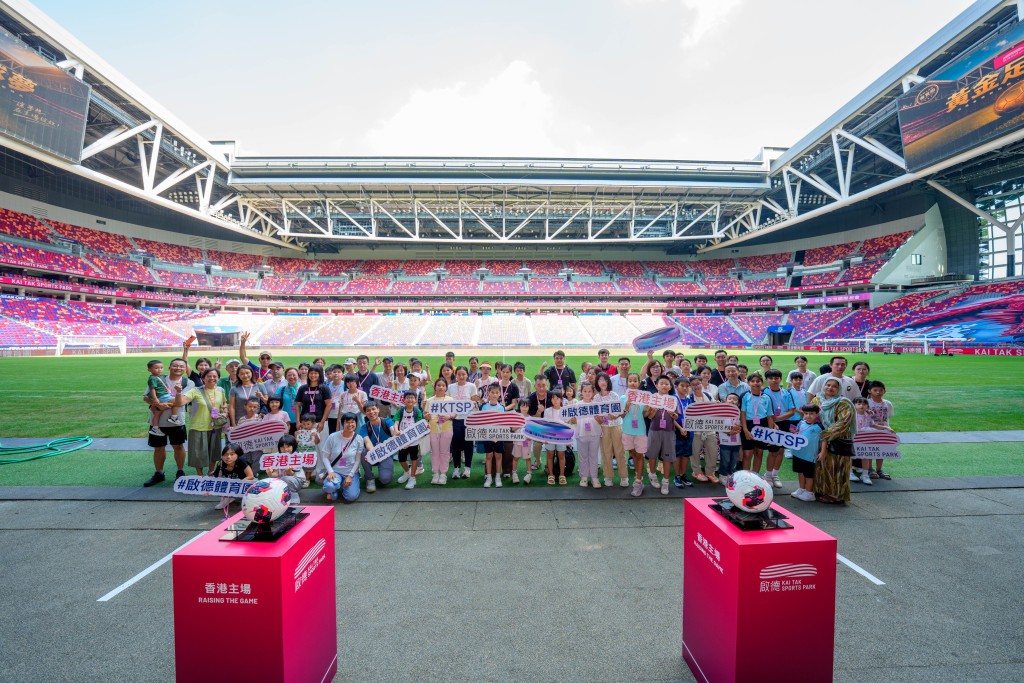
Kai Tak Sports Park gave nearly 200 Hong Kong residents a rare opportunity to experience life inside a professional football stadium on National Day, opening areas usually reserved for players and match officials. The inaugural football themed guided tour brought families, schoolchildren and teachers behind the scenes at the city’s flagship sporting venue, allowing young visitors to walk through players’ dressing rooms, enter the stadium through the tunnel and test their football skills on the pitch.
The event offered more than a look inside a major sports facility. Through guided visits, practical football activities and simulated media sessions, organisers introduced participants to the routines, responsibilities and traditions associated with professional football. For many children, stepping onto the field of a 50,000 seat stadium also offered a chance to imagine what it might feel like to represent Hong Kong in front of a home crowd.
Families and Students Explore Hong Kong’s Major Sports Venue
The tour brought together residents of Kai Tak Light Public Housing, students and families from Baptist Rainbow Primary School, and members of SKH Holy Carpenter Primary School. Teachers and parents joined the children, making the event a community outing as well as an introduction to the facilities and culture of professional sport.
Representatives from Kai Tak Sports Park led the visit alongside Cheung King fan, vice chairman of the Hong Kong Children’s Foundation, and members of the Kowloon City District Council.
Their participation reflected the event’s community focus, connecting a major sporting development with the people living and studying in nearby districts. Rather than experiencing the stadium only as spectators attending a match, visitors could explore how the venue operates and see the spaces that professional players use before competing.
For younger participants, the guided format also made the stadium more accessible. Coaches and organisers explained different aspects of football in a setting where children could ask questions, observe facilities at close range and take part in activities themselves.
The initiative aimed to encourage a stronger interest in sport while helping residents develop a sense of connection with a venue designed to host major competitions and public events.
Inside the Dressing Room and Players’ Tunnel
One of the main attractions was the opportunity to follow the route professional footballers take on match day.
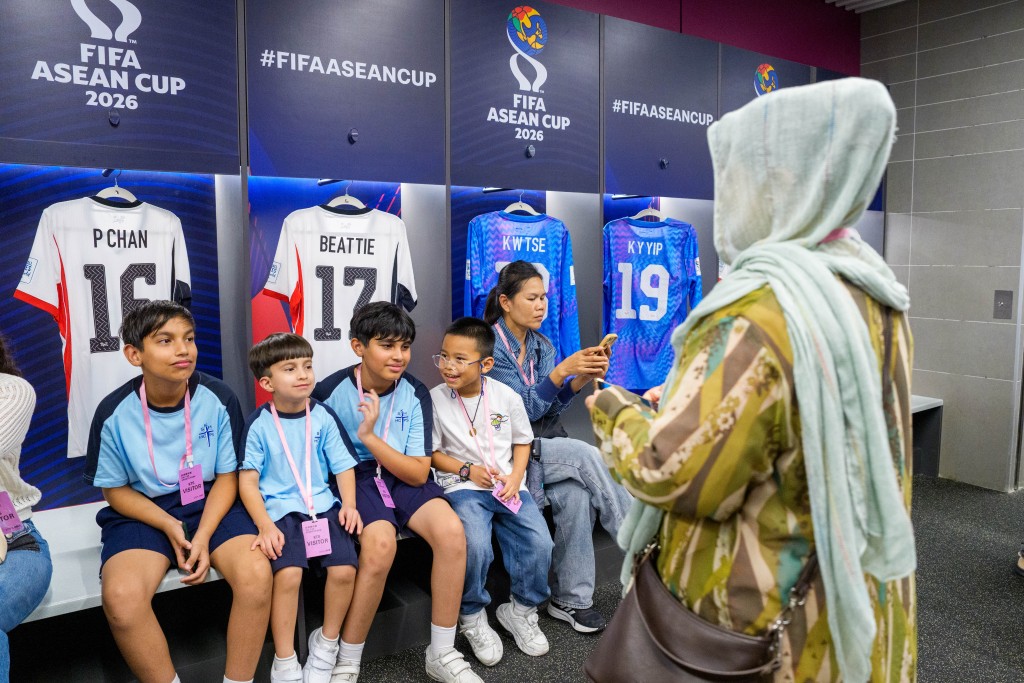
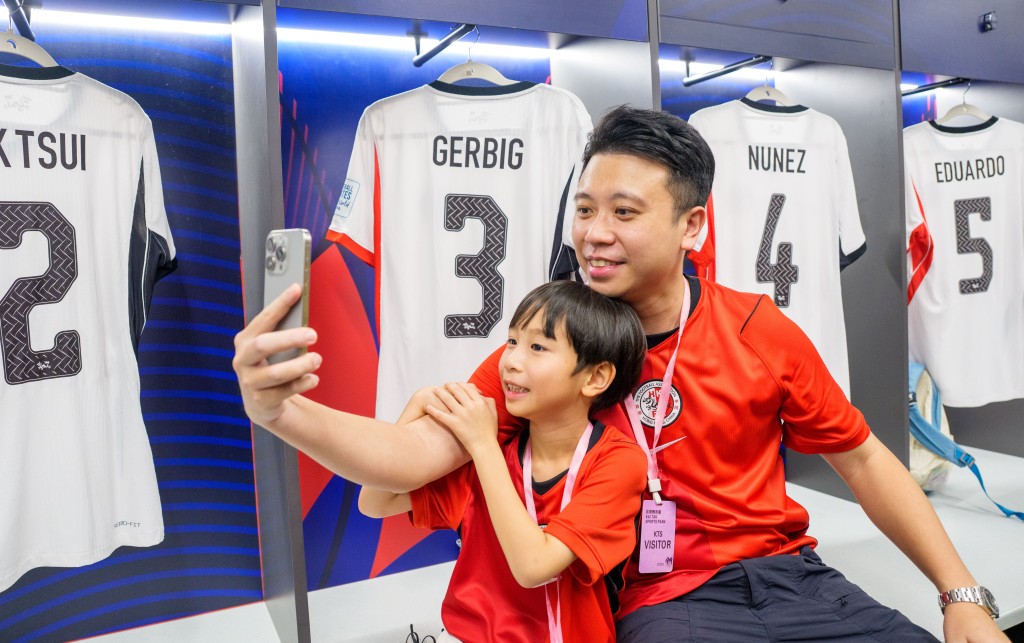
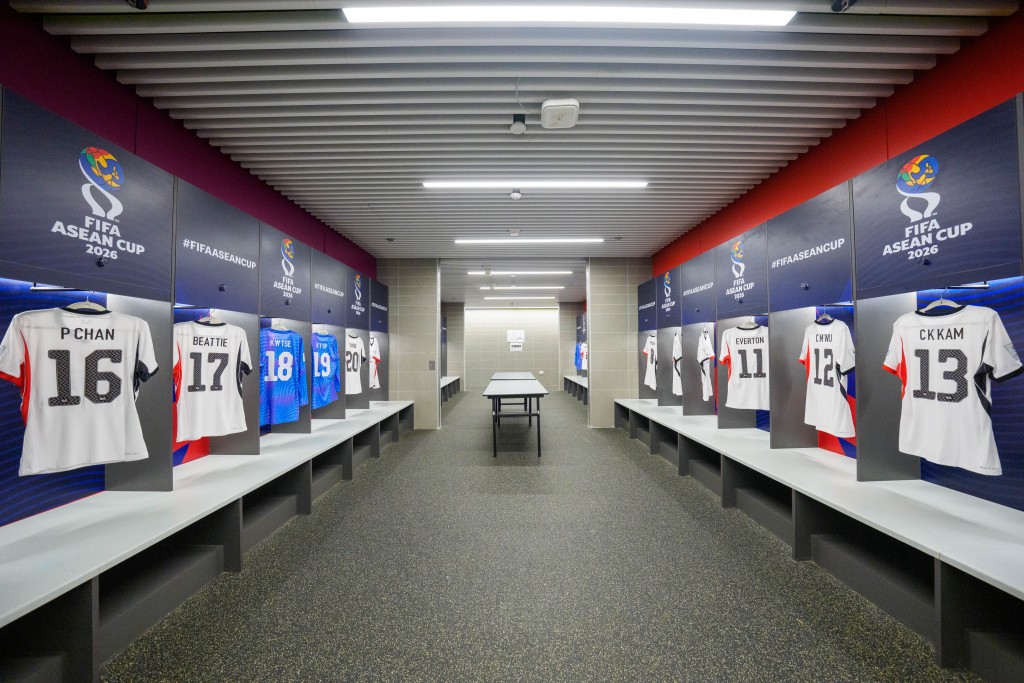
The tour began in the home team dressing room, where players prepare before a game. Participants then moved through the players’ tunnel, passed the team dugouts and made their way towards the pitch.
For children who normally watch football from television screens or stadium seats, the experience offered a different perspective on the sport. The route helped them understand the sequence of activities that takes place before players emerge onto the field, from preparation inside the dressing room to the final walk towards kickoff.
The moment participants stepped out of the tunnel and looked across the main stadium was another highlight. With seating for 50,000 spectators, the venue provided a striking view of the scale of professional football in Hong Kong.
The experience encouraged some young visitors to picture themselves playing at the highest level. Wearing the Hong Kong representative team jersey and competing in front of a home crowd became a tangible possibility to imagine, even if only for a few moments.
That connection between seeing a professional facility and imagining a future in sport formed an important part of the tour’s educational purpose. By bringing children closer to the environments in which elite athletes compete, the programme sought to make football more familiar and accessible to the next generation.
Young Visitors Test Their Football Skills on the Pitch
After exploring the stadium’s player facilities, participants had the opportunity to step onto the football field and take part in practical activities.
Certified coaches guided children through dribbling challenges and football skill exercises on the venue’s turf. The sessions allowed participants to move beyond watching the game and experience some of the basic techniques involved in playing it.
Dribbling exercises gave children an opportunity to practise ball control, coordination and movement while receiving guidance from trained coaches. The activities also encouraged participants to learn through practice, rather than relying solely on explanations from tour guides.
Playing on a field associated with major sporting events added another dimension to the experience. For young football fans, the chance to run drills on the same pitch where professional matches can take place offered an unusual opportunity to connect their interest in the game with a real sporting environment.
The activities also supported the programme’s wider aim of encouraging participation in sport. Introducing children to football in an enjoyable, supervised setting can help them become more comfortable with physical activity and consider pursuing the sport through school teams, local clubs or community programmes.
However, the tour was not limited to playing football. Organisers also introduced participants to the communication and organisational work that surrounds professional matches, showing that a major sporting event involves far more than the action on the field.
Children Take on the Roles of Coaches and Players
The main press conference auditorium provided another interactive stop on the tour. There, participants took part in a role playing exercise in which they acted as head coaches and star players responding to questions from the media.
The simulation introduced families to a familiar but often overlooked part of professional sport. Following a match, coaches and players may face questions about tactics, performances, results and decisions made during the game. The press conference exercise gave participants a chance to experience this side of the sporting world for themselves.
Taking on these roles also encouraged children to think about how athletes communicate with the public. Players and coaches represent their teams during interviews, and their responses can influence how supporters understand a match or a team's performance.
For schoolchildren, the activity offered a practical way to build confidence in speaking and responding to questions. It also demonstrated how communication skills complement athletic ability in professional sport.
By including the press conference auditorium alongside the dressing room, tunnel and pitch, the tour presented a broader picture of football. Participants could see how preparation, competition and communication fit together within the organisation of a professional sporting event.
Learning Football History, Fan Traditions and Sporting Values
Throughout the programme, organisers conducted interactive sessions on football history, fan traditions, memorable sporting moments and appropriate spectator behaviour.
These discussions helped participants understand the culture that develops around football clubs and national teams. Supporters contribute to the atmosphere at matches through their chants, encouragement and continued backing for their teams, whether the result brings celebration or disappointment.
Organisers also discussed the familiar idea of fans as the team's “twelfth player”, a phrase used to describe the influence of crowd support on the atmosphere surrounding a match.
The sessions placed particular emphasis on the relationship between teams and their supporters. A home stadium is not simply a place where players compete. It can also become a gathering point where people from different backgrounds share an interest in sport and support the same team.
Participants were introduced to values including teamwork, mutual respect, discipline, resilience and civic responsibility. These principles apply both on and off the pitch.
Teamwork requires players to cooperate towards a shared goal. Respect means recognising opponents, teammates, officials and spectators, even when competition becomes intense. Discipline helps athletes follow rules and maintain their focus, while resilience encourages them to respond constructively to setbacks.
Spectator etiquette formed another part of the programme, reinforcing the importance of supporting teams without disrupting the experience or safety of others.
By combining football activities with discussions about conduct and community participation, the tour aimed to show children that enjoying sport also involves understanding the responsibilities that come with being a player or supporter.
Kai Tak Sports Park Expands Its Community Role
Kai Tak Sports Park has been developed as a venue for major international sporting competitions and large scale events. Its community outreach programme reflects a wider ambition to connect the facility with residents beyond those who attend matches or other events.
The National Day tour gave nearby families and schoolchildren access to areas they might not ordinarily visit, while introducing them to the facilities and traditions associated with professional football.
The initiative also created opportunities for schools, community organisations and district representatives to take part in activities centred on sport. Bringing these groups together can help strengthen local engagement with the venue and introduce children to sporting opportunities in their own city.
For families living near the sports park, programmes of this kind offer a way to become more familiar with a major public facility. For students, they can turn an ordinary school or community outing into an opportunity to learn about athletics, teamwork and the organisation of professional competitions.
The management has indicated plans to expand its community outreach through additional themed tours covering different sporting disciplines. These programmes are expected to offer new perspectives on stadium operations, improve public understanding of sport and encourage more residents to participate in sporting activities.
Further themed visits could also give participants opportunities to learn about sports beyond football, depending on the activities and facilities included in future programmes.
Future Tours Aim to Bring More Residents Closer to Sport
The inaugural tour established a format that combined stadium access, practical activities and education about sporting culture. Its emphasis on participation meant that children were not simply guided through the building. They were invited to move through the spaces used by professional players, practise skills on the pitch and experience the media responsibilities associated with major matches.
The event also demonstrated how a large sporting venue can serve audiences beyond ticket holders. By opening selected facilities to residents, schools and families, Kai Tak Sports Park can introduce more people to its operations and encourage younger generations to take an interest in sport.
The next step will be the expansion of community programmes and themed tours, which the park’s management plans to develop across different sporting disciplines.
For residents who joined the National Day visit, the experience offered a closer look at the work and preparation behind professional football. For the children who stepped onto the pitch, it also provided a chance to picture themselves as future players rather than spectators.
Would you or your child be interested in joining a future guided tour of Kai Tak Sports Park and experiencing the facilities where Hong Kong’s sporting events take place?