

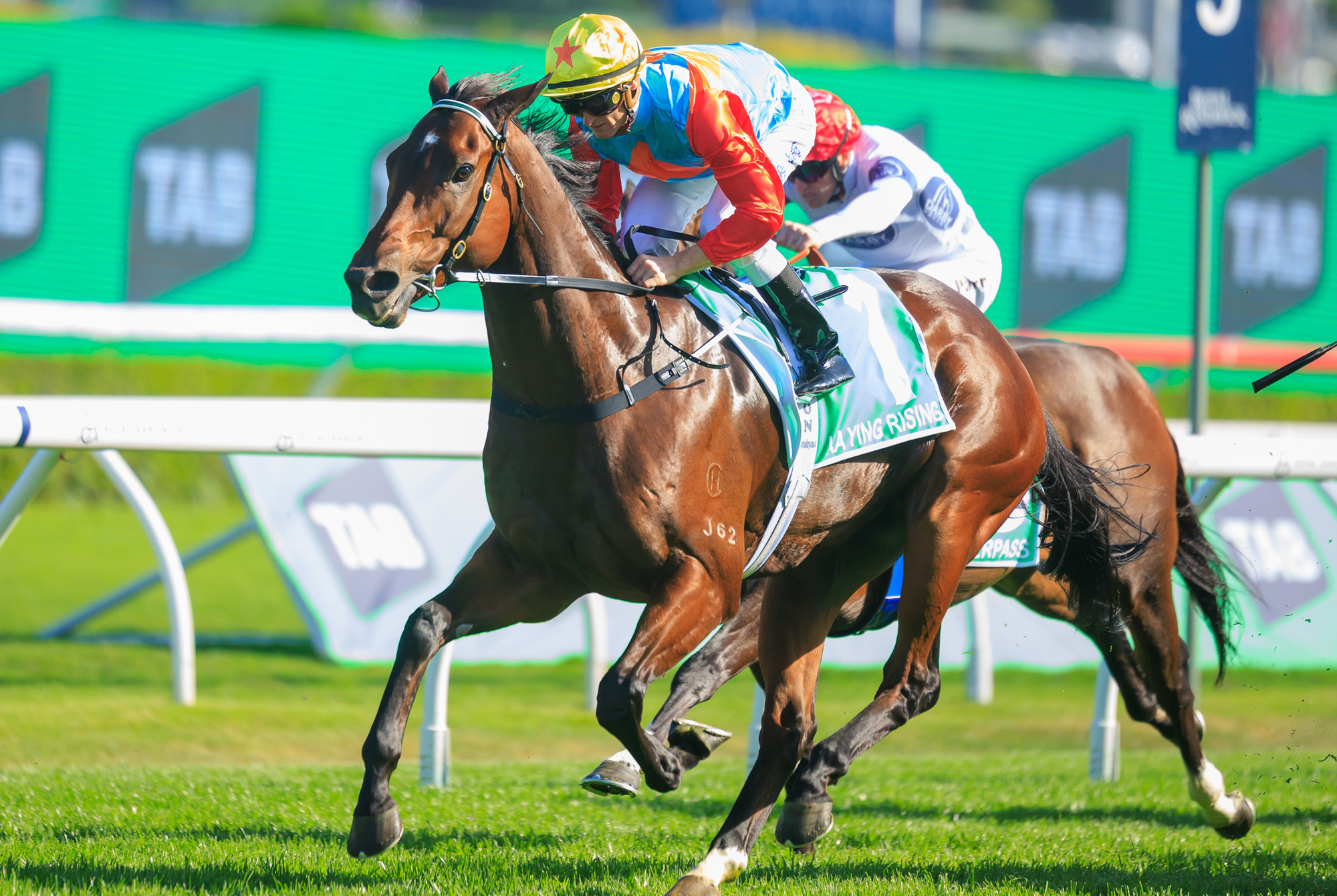
Ka Ying Rising against Australia’s leading sprinting mares could become one of the most anticipated races of next season, but getting the horses to the same starting gate may prove harder than creating the hype.
Hong Kong trainer David Hayes has made no secret of his enthusiasm for a showdown between Ka Ying Rising and Australia’s Autumn Glow and Sheza Alibi next March. The idea has also found support on the Australian side. John Messara, managing owner of Autumn Glow and a traditionalist when it comes to racing, is open to the challenge. Peter Moody and the owners of Sheza Alibi have also indicated that they would consider the contest.
The disagreement is not about whether the race would attract attention. It is about where it should be run, over what distance and, perhaps most importantly, who should pay for it.
Sydney has an obvious proposal. Rosehill could stage the race over 1,500 metres on Golden Slipper Day, one of the biggest occasions on the Australian racing calendar. Melbourne has another option, with Flemington offering a 1,400 metre contest a week later.
Both locations have a strong racing case. Neither has yet solved the central problem.
Ka Ying Rising is the horse the proposed race needs most. His participation would give the contest its international identity and draw enormous interest from Hong Kong. Yet his connections have little reason to chase the opportunity simply for the sake of making the Australian race happen.
Owner Leung Shek Kong remains undecided. Hayes has described him as "half half", suggesting that the decision is still finely balanced. The Hong Kong Jockey Club has also not publicly committed itself to sending the star sprinter abroad.
That leaves the financial question hanging over the proposal.
One idea would require each set of connections to contribute A$1 million, with a corporate sponsor adding further money. The winner would then collect the entire purse.
It is an eye catching concept, but there may be a more practical way to finance the meeting.
World Pool could offer a different solution
The Hong Kong Jockey Club already has a mechanism capable of turning an international race into a major betting event. World Pool allows racing jurisdictions to combine their wagering pools, bringing together punters from different markets rather than relying on one country's betting turnover.
That matters because a race involving Ka Ying Rising, Autumn Glow and Sheza Alibi would create interest well beyond Australia and Hong Kong.
There is, however, a condition.
For World Pool to work at its full potential, the race needs to look like a proper race. A three horse exhibition built around three famous names may generate headlines, but it carries obvious risks. A full field gives punters more genuine choices, creates more betting combinations and produces a stronger product for international wagering.
The George Ryder Stakes could provide the answer.
Rather than inventing an entirely separate contest and asking owners to finance it from scratch, organisers could build the proposed showdown around an established race such as the George Ryder Stakes. The stars would provide the attraction, while the existing race structure would supply the wider field needed to create a genuine betting market.
That approach would also fit the Jockey Club's broader international ambitions.
Hong Kong racing has spent years trying to position itself as part of the global racing community rather than as an isolated jurisdiction. The clearest example came through Romantic Warrior, whose campaigns took him from Hong Kong to Australia, Japan and the Middle East.
Those trips were not necessarily the kind of travel a racing administrator would design on paper.
Yet they happened because owner Peter Lau Pak fai was willing to pursue an ambitious idea and trainer Danny Shum Chap shing had the conviction to carry it out. Romantic Warrior's international campaigns ultimately became a major part of his racing story and gave Hong Kong a horse capable of competing on several of the sport's biggest stages.
The same principle could apply to Ka Ying Rising.
Ka Ying Rising has changed the betting equation
The strongest argument for sending the horse abroad may not come from international marketing. It may come from what is happening at Sha Tin.
Ka Ying Rising has become such a dominant favourite that his races can distort the local betting market.
Romantic Warrior once started at the minimum dividend in March, with 78.12 percent of the win pool invested on him. That was roughly the kind of support expected from a genuine 1.05 favourite.
Ka Ying Rising has moved beyond even that level.
In his last five starts at the minimum dividend, between 92.66 percent and 97.52 percent of the win pool has been placed on him.
The figures from his recent races illustrate just how extreme the concentration has become.
On Champions Day, HK$94.44 million from a total win pool of HK$97.15 million was wagered on Ka Ying Rising. That meant almost HK$35 was placed on him for every HK$1 invested across his seven rivals combined.
Put another way, the money on Ka Ying Rising was 244 times the average amount wagered on each of his opponents.
On September 6, the imbalance was even more striking. The betting ratio was more than HK$39 on Ka Ying Rising for every HK$1 on his five opponents. His support was 196 times the average amount invested on an individual rival.
At that point, the betting market barely resembles a conventional contest.
The club has had to supplement the payouts because the concentration of money on Ka Ying Rising can leave insufficient funds to return even the minimum dividend. The Jockey Club contributed about HK$19 million in April and roughly HK$18 million this month to ensure the horse paid the minimum return.
That is a remarkable amount of support for a betting pool dominated by one horse.
It also explains the argument for taking Ka Ying Rising somewhere else.

Australia would change the equation
At Sha Tin, punters know the horse, know the opposition and have repeatedly seen him deliver.
Put him on Australian soil against horses such as Autumn Glow and Sheza Alibi, over a distance that tests him in a different way, and the betting dynamics would change immediately.
Australian punters would have reasons to support their mares. Hong Kong punters would back their champion. Neither side would have the certainty that accompanies a routine Ka Ying Rising start at Sha Tin.
That is precisely where an international commingled pool becomes attractive.
World Pool was designed to connect racing markets and allow the betting public in different countries to participate in the same event. A race featuring a Hong Kong superstar and Australia's leading mares would provide a natural setting for that model.
But the race still needs depth.
Seven starters are required for quinella place betting in Hong Kong. Quinella is already one of the most popular bets among local punters. When Ka Ying Rising raced against only five rivals this month, quinella place was not offered.
That is a lost betting opportunity.
His races can still attract heavy turnover, but much of the action is concentrated around the most obvious exotic bets because there is little uncertainty elsewhere.
A properly constructed international race could change that.
The stars should attract the field, not replace it
The danger with building a race entirely around three horses is obvious.
A three horse contest can disappear before the gates even open. A late scratching leaves two runners and turns the headline event into a match race. Two scratchings reduce it further to a solo gallop.
Even without a scratching, three runners leave little room for the kind of betting complexity that makes a major World Pool meeting attractive.
The solution is not to abandon the idea of Ka Ying Rising meeting Australia's best mares. It is to build the event properly.
Put the stars at the centre of the race. Give the owners a compelling financial structure. Use an established Australian race where possible. Add enough quality runners to create a genuine contest and a meaningful international betting market.
That would give everyone something to race for.
For Ka Ying Rising's connections, it would be a chance to test the horse against unfamiliar rivals on foreign ground. For Australia, it would bring one of Hong Kong's most dominant stars into a major domestic meeting. For the Jockey Club, it would provide another opportunity to demonstrate that Hong Kong racing can participate in major international events.
And for punters, it would finally answer a question that Sha Tin's increasingly one sided markets cannot.
How good is Ka Ying Rising when the money, the track and the opposition all become genuinely international?
Would you like to see Ka Ying Rising take on Autumn Glow and Sheza Alibi in Australia next season?