

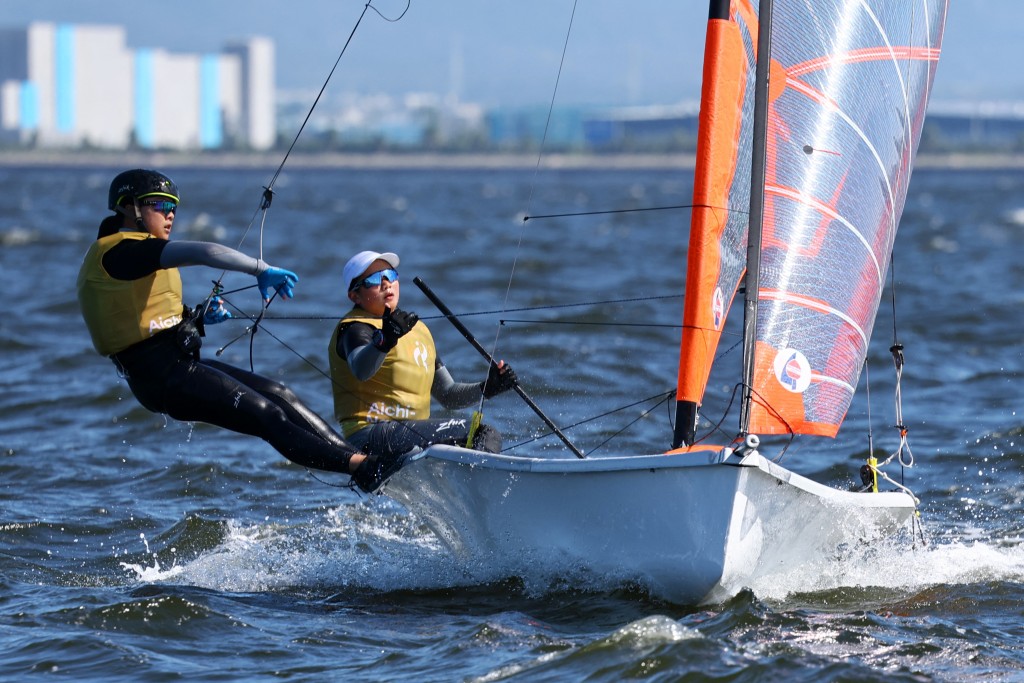
Hong Kong’s young sailors swept both youth skiff gold medals at the 20th Asian Games, with Ethan Kiu, Louis Polson, Chloe Kong and McCarley Wong producing commanding performances on the water.
Kiu and Polson were unbeaten throughout the boys’ competition, winning all 12 races to finish with 11 net points. Kong and Wong matched that success in the girls’ event, winning nine races and taking gold with 14 net points.
Kiu and Polson Deliver Perfect Campaign
The boys’ skiff competition quickly became a race for second place as Kiu and Polson established control from the opening round.
The 15 year old Hong Kong pairing won every one of the 12 races contested during the regatta. No rival crew managed to finish ahead of them in any race, giving the teenagers a remarkable unbeaten record on their way to the Asian Games title.
Their final score reflected that consistency.
Sailing uses a low point scoring system, meaning competitors receive points according to their finishing positions. A lower total produces a better overall result. After the required races, competitors can discard their single worst score, reducing the effect of one disappointing result on their final position.
Kiu and Polson finished with only 11 net points after the discard was applied.
Singapore took the silver medal with 35 points, leaving the Hong Kong crew 24 points clear at the top of the standings.
The result was not built around one decisive race. The teenagers steadily extended their advantage by producing the same result again and again. Each victory added to a sequence that their closest rivals could not break.
For a pair competing at only 15 years of age, the performance also provided a major international achievement at an early stage of their sailing careers.
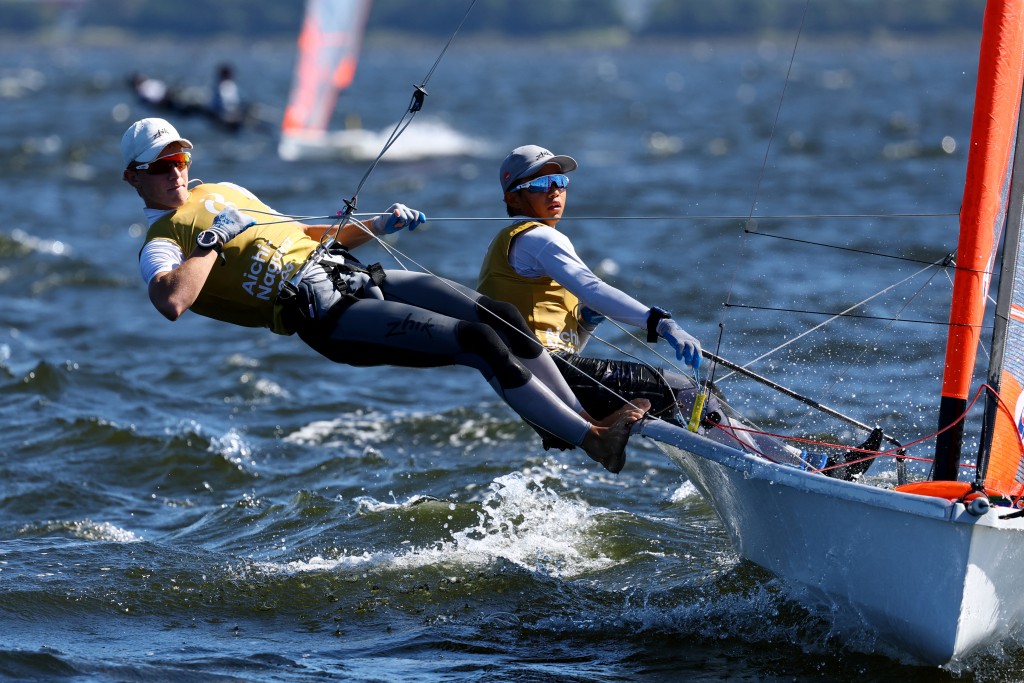
Hong Kong Completes Girls’ Skiff Sweep
Hong Kong secured its second youth skiff gold in the girls’ competition.
Chloe Kong and McCarley Wong won nine of the 12 races and remained at the top of the standings after the discard was applied. Their final score of 14 net points was enough to secure the gold medal.
Japan finished second with 20 points, while Malaysia claimed bronze with 34.
The six point margin over Japan was smaller than the boys’ gap, but Hong Kong still had a clear advantage when the final scores were calculated.
Kong and Wong’s nine race victories accounted for three quarters of the races in the competition. Their results gave them the consistency needed to remain ahead while allowing them to absorb the effect of their lowest score under the competition format.
The two victories meant Hong Kong claimed gold in both youth skiff categories at the Games.
For the sailing delegation, it was a significant return from its younger competitors. The boys’ crew remained unbeaten, while the girls’ crew combined nine race victories with enough strong results to finish first overall.
Halliday Adds Silver Medal
The youth success came alongside another strong result for Hong Kong’s sailing team.
Veteran sailor Nicholas Halliday won silver in the men’s ILCA 7 single handed dinghy event.
The ILCA 7 differs from the youth skiff competitions because it is sailed by one competitor rather than a two person crew. Halliday’s silver therefore added an individual medal to the two golds won by Hong Kong’s youth teams.
His result also gave the sailing delegation a podium finish across different types of competition, with experienced and younger sailors contributing to the medal haul.
The combination of Halliday’s silver and the two youth gold medals gave Hong Kong three sailing medals from the events described.
Two Gold Medals Bring HK$2 Million Awards
The success will also carry a significant financial reward for the two winning crews.
Under the Jockey Club Athlete Incentive Awards Scheme, Hong Kong athletes who achieve podium finishes at major multi sport competitions can receive financial awards in recognition of their performances.
The boys’ skiff gold medal team will receive HK$2 million, while the girls’ skiff gold medal team will also receive HK$2 million.
For Kiu and Polson, the award follows a perfect 12 race campaign. For Kong and Wong, it comes after nine race victories and a final score that placed them six points ahead of Japan.
The financial support is designed to recognise athletes who achieve major international results and help them continue their sporting development.
Competitive sailing can involve substantial costs. Athletes require boats and equipment, coaching, training programmes, travel and participation in international events. Financial support can therefore provide young medal winners with additional resources as they continue competing at higher levels.
For the four youth champions, the Asian Games medals and accompanying awards provide both recognition and practical support at an important stage of their careers.
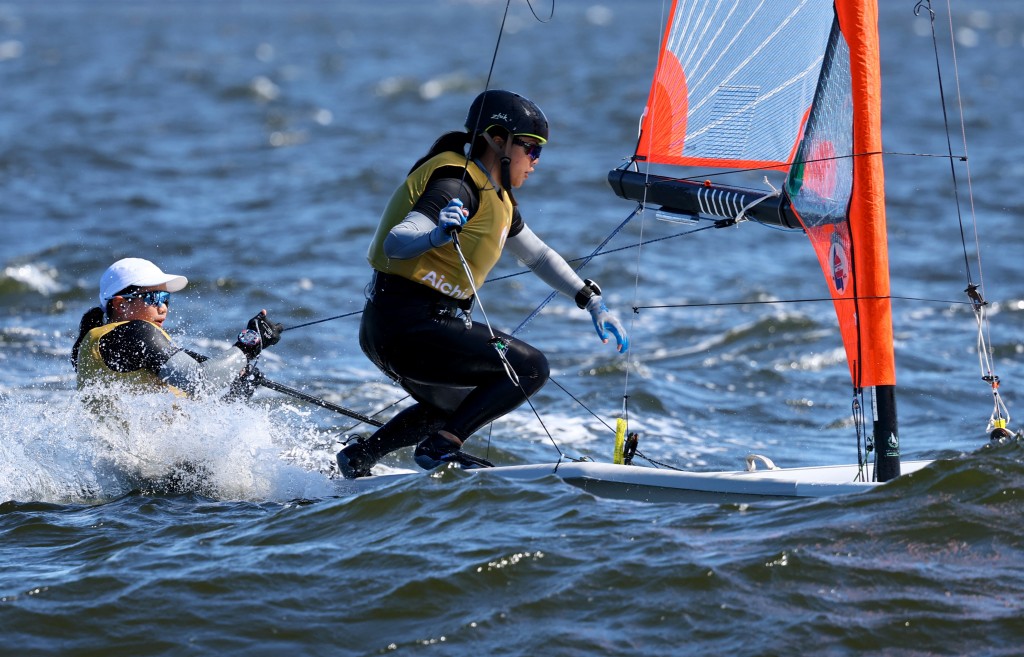
Consistency Sets Hong Kong Crews Apart
The results also demonstrate why consistency matters in sailing.
A regatta is not decided by one race alone. Competitors must perform repeatedly while dealing with changing wind conditions, tactical decisions, starting positions and the mistakes that can quickly affect a finishing position.
The low point scoring system places particular emphasis on maintaining strong results across the series.
Kiu and Polson handled that challenge without a single race defeat. Their 12 victories gave them the strongest possible record before the final score was calculated.
Kong and Wong faced a different contest but produced a similarly effective campaign. Their nine wins provided the foundation for a 14 point final score, enough to finish ahead of Japan and Malaysia.
The difference between the two events was reflected in the final margins. Singapore finished 24 points behind Hong Kong in the boys’ event, while Japan was six points behind the Hong Kong girls.
Both results, however, produced the same outcome: Hong Kong at the top of the podium.
Young Sailors Make Their Mark
The performances of Kiu, Polson, Kong and Wong give Hong Kong four young athletes with major international results to build on.
Kiu and Polson’s age makes their unbeaten run particularly notable. At 15, the pair already have an Asian Games gold medal and a 12 race winning record attached to their names.
Kong and Wong have also established themselves as successful competitors at a major international event, finishing ahead of crews from Japan and Malaysia after winning nine races.
The next stage will involve maintaining that progress as they face stronger competition and gain experience at senior level.
Their Asian Games performances also provide measurable targets for future competitions. Kiu and Polson will be looking to match the consistency that produced their perfect series, while Kong and Wong can build on the nine race victories that carried them to gold.
Hong Kong’s sailing programme now has two youth crews with Asian Games titles and substantial financial awards supporting their continued development.
The message from the water was straightforward: Hong Kong’s young sailors can compete successfully against leading crews from across Asia, and they now have results to prove it.
Which of these young Hong Kong sailors do you think has the potential to make the biggest impact at senior international level?