
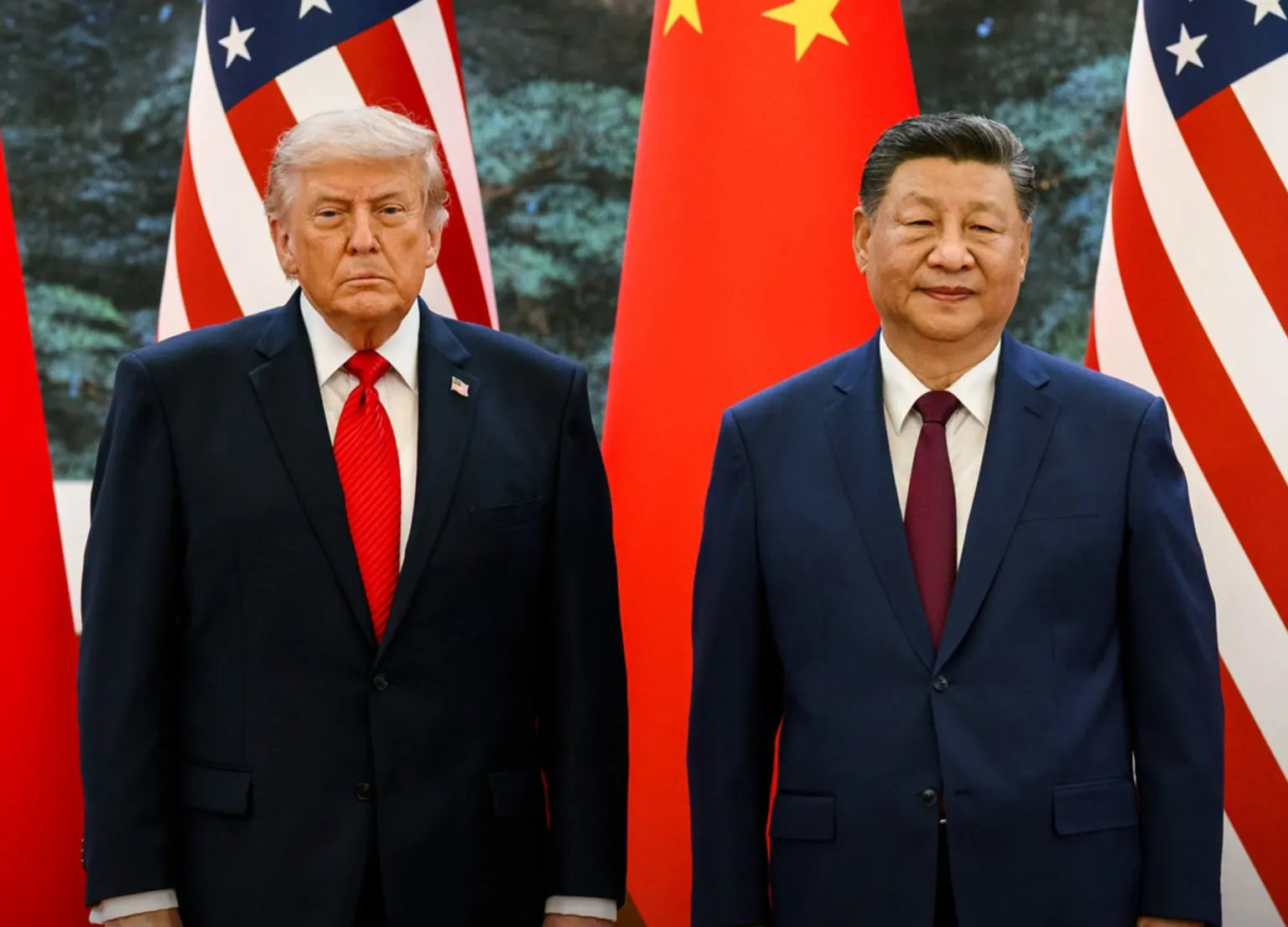
Chinese President Xi Jinping used his first White House visit in more than a decade to put Beijing’s most sensitive concerns directly before Donald Trump, calling for restraint over Taiwan, negotiation to end the Iran war and human control over artificial intelligence.
The message came during a ceremony filled with carefully staged displays of warmth. Trump welcomed Xi with full state honors, praised what he called their “truly great friendship” and later invited the Chinese leader aboard Marine One during a tour of the newly built White House helipad.
Yet the cordial atmosphere did not erase the disagreements between Washington and Beijing. Taiwan, artificial intelligence, Iran, trade and other security issues remain major points of friction between the two governments. Contemporary reports from the summit found little public evidence of a major breakthrough on those disputes.
Xi Calls for No Conflict
Xi opened his talks with Trump by stressing the need to prevent competition between the two powers from becoming direct confrontation.
The Chinese president said Washington and Beijing should ensure there is “no conflict and no confrontation between us,” presenting stable relations as a shared responsibility.
The remarks reflected Beijing’s broader approach to its relationship with Washington. China wants competition with the United States managed without allowing disputes over security, technology, trade or Taiwan to trigger a wider crisis.
Trump, meanwhile, struck a notably warmer tone.
“President Xi and I have made tremendous strides on the issues facing our two countries,” Trump said as the meeting began.
He said the leaders would discuss security, technology and what he calls “super intelligence,” or SI, during their talks.
The contrast between the two leaders was visible from the beginning. Trump focused heavily on the personal relationship and the positive atmosphere surrounding the visit, while Xi used his public remarks to identify areas where Beijing expects Washington to exercise restraint.

AI Becomes a Point of Difference
Artificial intelligence was one of the clearest areas where the leaders presented different emphases.
Xi said both China and the United States have the ability and responsibility to develop and manage AI while ensuring that its development remains under human control and serves public interests.
That position comes as Washington and Beijing compete aggressively for leadership in advanced AI. Both countries see the technology as economically important and increasingly connected to national security.
Trump has repeatedly rejected calls for broad restrictions that could slow American AI development. Before the summit, he said he did not want to impose unnecessary limits on the technology, signaling that Washington would prioritize continued development.
Xi’s remarks therefore placed the question of control directly into the summit agenda.
The difference is not simply about technology. AI is becoming part of the wider strategic competition between the two countries, with questions surrounding computing power, advanced chips, military applications, data and the development of increasingly capable systems.
The two sides were expected to discuss possible mechanisms for continued dialogue on AI, but reporting from the meeting indicated that the leaders did not announce a major agreement on the issue.
Taiwan Remains Beijing’s Red Line
Taiwan was another central issue.
Xi urged Trump to handle the Taiwan question with “prudence” and called on Washington to oppose Taiwan independence.
Beijing considers Taiwan part of China and has repeatedly stated that it will not accept formal Taiwanese independence. Washington does not maintain formal diplomatic relations with Taipei, but US law provides for support for Taiwan’s ability to defend itself.
The issue has become increasingly sensitive as the United States continues to approve weapons sales to Taiwan.
Before Xi’s visit, Reuters reported that Beijing was expected to press Trump over US arms sales to the island, citing China’s interpretation of earlier US commitments. Washington has maintained that its policy toward Taiwan remains unchanged.
Xi’s message therefore went beyond a general call for stability. He placed Taiwan directly within the broader question of how the two powers should manage their strategic relationship.
Trump did not publicly offer a detailed response when reporters later asked about Taiwan. Instead, he praised the meeting and avoided answering several questions shouted by reporters as he and Xi appeared together.

China Calls for Negotiations Over Iran
The war involving Iran also featured in Xi’s message to Trump.
Xi urged the United States to resolve the conflict through dialogue and negotiation as soon as possible. His comments came as Washington has sought to manage the wider consequences of the conflict while China maintains its own diplomatic and strategic interests in the Middle East.
China’s position reflects its preference for negotiations rather than an open ended military confrontation.
The issue also carries implications for US China relations because Beijing has maintained ties with Tehran. Reports have indicated that China has shared intelligence with Iran, adding another layer to Washington’s expectations about Beijing’s possible role in the conflict.
Trump, however, did not publicly provide details about any agreement with Xi on Iran after their meeting.
The lack of a visible breakthrough reinforced the difference between the ceremony surrounding the summit and the difficult policy questions facing both governments.
White House Puts on a Major Show
The ceremony surrounding Xi’s visit was unusually elaborate.
Trump personally welcomed Xi at Joint Base Andrews on Wednesday, a rare gesture for a visiting foreign leader. The White House had announced that Xi’s visit would include a formal state arrival ceremony, military events and a state dinner.
On Thursday, the leaders appeared together on the White House South Lawn before inspecting a military review in the Rose Garden.
US military aircraft later flew over the White House, including a B 2 bomber. The aircraft type has been used in US strikes against Iranian nuclear facilities.
The symbolism was unmistakable. American and Chinese flags stood together as the two presidents attempted to project a cooperative relationship despite disagreements that extend across trade, technology and security.
Trump also gave Xi a tour of the new helipad at the White House and took him inside Marine One.
The gesture attracted considerable attention because Marine One is one of the most recognizable and closely protected assets associated with the US presidency.
Trump later told reporters, “We had a great meeting.”
He did not answer shouted questions about Iran, Taiwan, fentanyl trafficking or Hong Kong media tycoon Jimmy Lai.
Trade Truce Extended
Trade remained another major issue behind the ceremonial displays.
The United States and China have spent years imposing tariffs and restrictions on one another, creating uncertainty for companies and adding pressure to the global economy.
There was, however, a modest sign of movement before Xi arrived at the White House.
US Treasury Secretary Scott Bessent announced an extension of the existing trade truce, delaying its expiration by two months. The arrangement gave the two governments additional time to manage their economic disputes while avoiding an immediate escalation in tariffs.
Trade, rare earth supplies and technology were among the issues surrounding the summit. US officials have also been seeking Chinese cooperation on matters affecting global supply chains.
Still, the extension does not resolve the deeper disagreements between Washington and Beijing.
A State Dinner With Technology Leaders
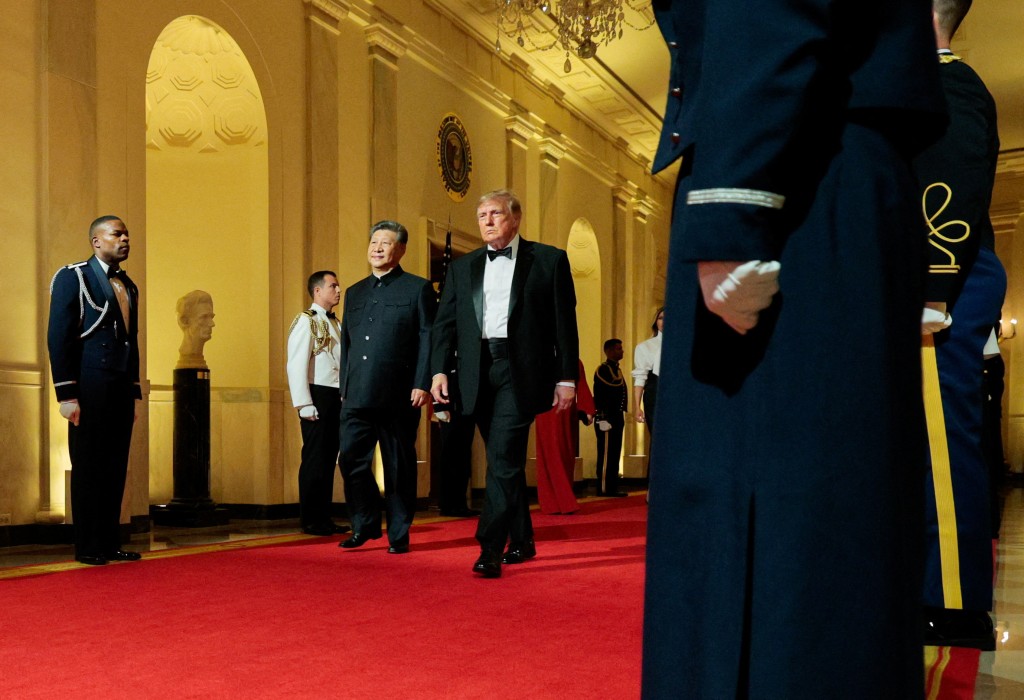
Trump’s outreach to Xi continued into the evening with a state dinner attended by prominent figures from American business and technology.
The guest list reflected the importance of the technology relationship. Leaders from major US companies and the artificial intelligence industry were expected to attend, putting some of the world's most influential technology executives in the same room as the two presidents.
The White House also prepared an elaborate menu for the event, including yellow squash veloute, sesame crusted sea bass and a vanilla dessert served with White House honey ice cream.
The details added to the carefully managed spectacle surrounding the visit.
But the central questions remained outside the dining room.
Can Washington and Beijing prevent competition over AI from becoming a wider security dispute? Can the two governments manage their opposing positions over Taiwan? And can China and the United States cooperate on Iran while maintaining sharply different strategic interests?
Xi’s visit showed that both leaders can stage a display of personal warmth while putting firm positions on the table.
For Trump, the summit offered an opportunity to emphasize his relationship with Xi and seek progress on trade and other issues. For Xi, the visit provided a platform to communicate Beijing’s expectations on Taiwan, AI and the Iran conflict directly to the US president.
The next phase will depend less on the ceremony and more on what Washington and Beijing do with those positions after the flags come down.
Do you think the United States and China can maintain cooperation while their differences over Taiwan, AI and Iran continue to deepen?