

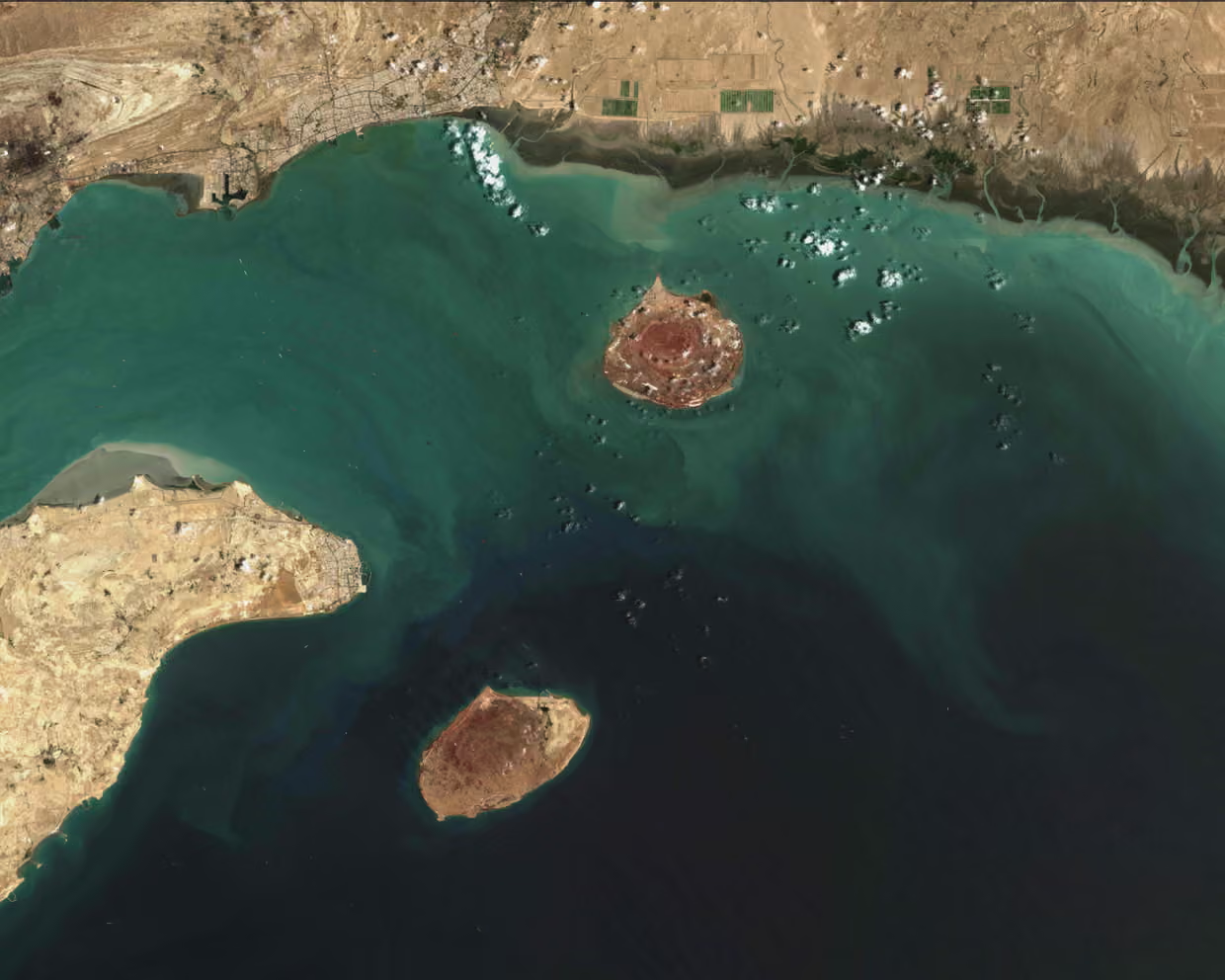
TEHRAN, Iran: U.S. forces struck two weapons installations on Iran’s Larak Island after American personnel detected members of Iran’s Islamic Revolutionary Guard Corps preparing to launch rockets loaded with mines into the Strait of Hormuz, according to senior U.S. officials quoted by Reuters.
The strike, carried out on Sunday night local time, marked the first acknowledged U.S. military action against Iran in roughly a month, according to Washington. The operation took place on Larak Island in Hormozgan province, an area positioned near the strategically important Strait of Hormuz, one of the world’s main routes for oil and other energy shipments.
Explosions reported near Larak Island
Residents living near the island reported hearing explosions during the attack, according to reports from the area. The blasts added to growing concerns over renewed military activity around the waterway, where any disruption could have consequences far beyond Iran and the United States.
Senior U.S. officials told Reuters that American forces had been monitoring activity on Larak Island when they observed Revolutionary Guard personnel preparing to launch rockets loaded with mines toward the Strait of Hormuz. U.S. forces then targeted two Revolutionary Guard weapons facilities on the island.
The officials did not indicate in the reported account whether the rockets had already been launched or provide details about the number of personnel involved. They also did not publicly disclose the weapons used by U.S. forces or give an immediate assessment of the extent of damage caused to the installations.
Iran accuses U.S. and Israel
The Iranian Revolutionary Guard gave a sharply different account of the incident. In a statement, the powerful military organisation accused the United States and Israel of carrying out the attack on Larak Island and said the strikes caused multiple injuries.
The Revolutionary Guard did not provide an immediate figure for the number of people wounded. It also did not publicly acknowledge the U.S. claim that its personnel had been preparing to launch rockets loaded with mines into the Strait of Hormuz.
Instead, the Guard warned that the attack would be answered and said those responsible would be punished. The threat raises the possibility of further military action at a time when tensions between Iran, the United States and Israel remain high.
Larak Island’s position near the Strait of Hormuz
Larak Island sits in Hormozgan province, close to the Strait of Hormuz. The narrow waterway connects the Persian Gulf with the Gulf of Oman and the Arabian Sea, making it one of the most closely watched maritime routes in the Middle East.
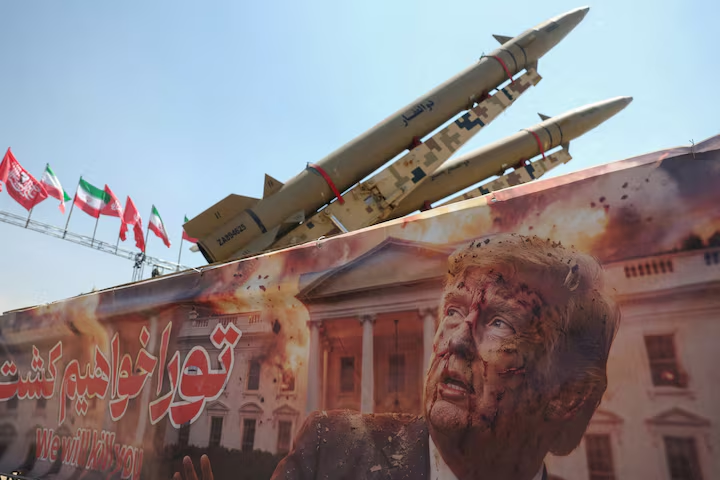
Iran has long maintained a substantial military presence around the Strait and has repeatedly demonstrated its ability to threaten shipping in the area during periods of confrontation with the United States. The Revolutionary Guard, in particular, operates forces and weapons systems around the Persian Gulf and Strait of Hormuz.
The reported U.S. strike therefore carries significance beyond the immediate damage to the two facilities. Any escalation around Larak Island could affect commercial shipping and raise concerns among energy markets and governments whose economies depend on uninterrupted access through the waterway.
Concerns over shipping and energy supplies
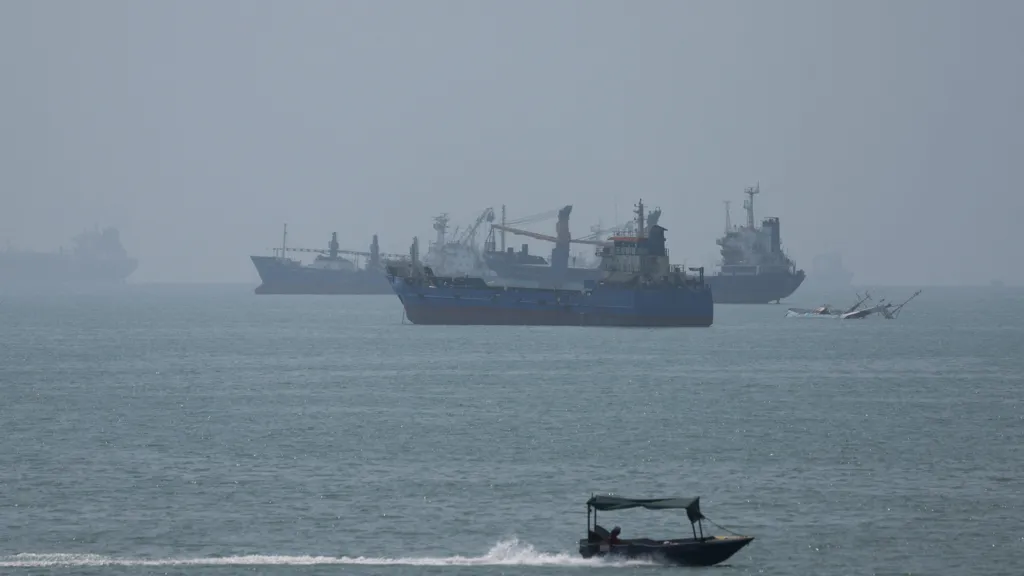
The Strait of Hormuz is especially sensitive because of the volume of energy supplies that pass through it. A sustained confrontation in or around the waterway could increase risks for commercial vessels, shipping companies and energy producers, even if the fighting remains limited to military targets.
For now, however, the reported U.S. operation appears to have been narrowly focused on weapons installations that Washington said posed a threat to shipping in the strait.
The timing is also significant. Sunday’s attack was described by U.S. officials as the first American military action against Iran in about a month. The pause had provided some distance from previous confrontations, but the latest strike shows how quickly tensions can rise again when military movements are detected around the Gulf.
Washington cites preparations for an attack
The U.S. account places the immediate trigger for the operation on preparations by Revolutionary Guard personnel to use rockets loaded with mines. Mines and other weapons capable of threatening vessels in the Strait of Hormuz have long been a source of concern for the United States and its regional partners because even a limited attack on shipping could disrupt one of the world’s busiest energy corridors.
Iran’s response suggests that Tehran does not accept Washington’s description of the events. By blaming both the United States and Israel and promising retaliation, the Revolutionary Guard signalled that the strike could become part of a broader cycle of attacks.
The Guard is one of Iran’s most powerful military institutions and operates separately from the country’s regular armed forces. It has played a central role in Iran’s regional military strategy and has frequently been involved in confrontations with U.S. forces and Israel.
Questions remain over damage and casualties
The latest incident also comes against a broader backdrop of repeated tensions involving Iranian military sites, American forces and Israeli operations. Each new strike carries the risk of triggering a response, particularly when casualties are reported.
Residents near Larak Island said they heard explosions, providing an indication that the attack was audible beyond the immediate target area. Further details about the scale of the damage and the number of casualties were not immediately available in the reported accounts.
Neither side’s initial statements provided a complete picture of what happened on the island. The U.S. officials described the intelligence that led to the strikes, while Iran focused on the consequences of the attack and its intention to retaliate.
That leaves several questions unresolved, including the precise nature of the weapons at the targeted installations, the extent of the damage and whether the Revolutionary Guard was able to move or deploy any of the weapons it had allegedly been preparing.
Iran threatens retaliation
The immediate concern now is whether Iran will carry out the retaliation it has threatened. Any response involving U.S. military personnel, Israeli targets or commercial shipping could quickly widen the confrontation and put additional pressure on governments across the region.
For ships operating near the Strait of Hormuz, the incident is another warning that military tensions can rapidly translate into risks at sea. The waterway remains open, but the presence of weapons capable of threatening vessels means developments around Larak Island will be closely watched by military and maritime authorities.
The United States says its forces acted after identifying preparations that could endanger shipping. Iran’s Revolutionary Guard says its territory was attacked and has promised a response.
With both sides standing by sharply different accounts of the incident, the next concrete development will be whether Iran follows through on its retaliation threat and whether further military activity emerges around the Strait of Hormuz.