

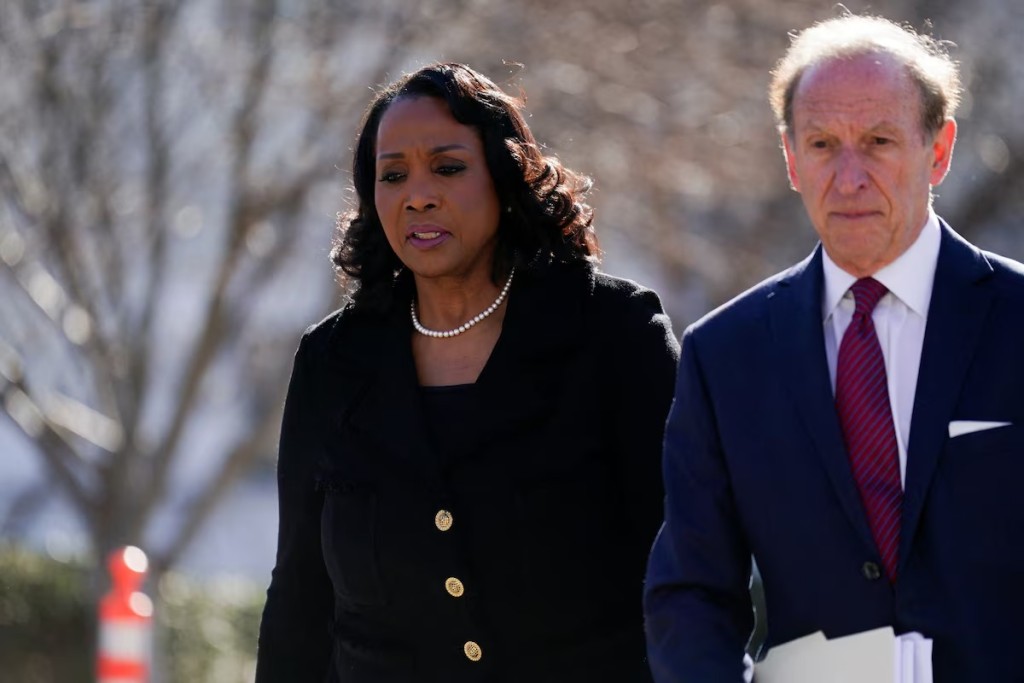
President Donald Trump has opened a new investigation into Federal Reserve Governor Lisa Cook over allegations that she made false statements on mortgage documents, renewing his effort to remove her from the US central bank despite a Supreme Court ruling that allowed her to remain in office.
A presidential memorandum dated October 7 establishes a committee of inquiry to examine the allegations and advise Trump on whether there is legal cause to dismiss Cook. The decision brings a dispute over mortgage applications into a wider legal confrontation over presidential authority and the independence of the Federal Reserve.
White House sets November hearing for Lisa Cook
Under the memorandum, the committee must hold an in-person hearing at the White House on November 5. The session will last no longer than four hours and will take place behind closed doors, although officials must prepare a transcript.
Cook will be required to attend and answer questions from committee members, their representatives and her legal counsel, if she has one. She may also present arguments, written evidence and statements from witnesses in her defence.
The committee must provide Cook with the evidence it intends to consider before the hearing. She can submit a written statement outlining her position at least three days before the session and provide a further written response by November 10.
After reviewing the evidence and Cook's submissions, the committee will prepare written findings of fact and legal conclusions. It will then recommend whether the allegations provide sufficient grounds for removing her from the Federal Reserve's Board of Governors.
The memorandum does not itself remove Cook from office. Instead, it establishes a process intended to determine whether Trump has the legal grounds required to dismiss her.
The committee's findings will go to the president, who initiated the inquiry. The hearing will not be open to the public, limiting the opportunity for outside observers to follow the questioning as it takes place. The White House has also authorised the committee to consult relevant executive branch officials, including personnel from the Department of Justice.

Why Trump is targeting the Federal Reserve governor
The dispute began in 2025, when Trump attempted to remove Cook over allegations concerning mortgage applications she submitted before joining the Federal Reserve.
The allegations centred on statements about the properties' intended use and occupancy. Trump's position was that the mortgage-related representations raised questions about Cook's honesty and fitness to serve on the central bank's governing board.
The accusations remain allegations, not an established finding of wrongdoing. The inquiry announced this month is designed to examine the evidence and assess whether the conduct described by the administration meets the legal standard for removal.
Cook was appointed to the Federal Reserve Board in 2022 by former President Joe Biden, a Democrat. Biden reappointed her in 2023, and her current term is scheduled to run until 2038.
She also holds a historic place in the institution as the first Black woman to serve on the Federal Reserve Board of Governors. Her position gives the dispute significance beyond the allegations themselves, as the outcome could affect how the president exercises authority over officials responsible for US monetary policy.
The Federal Reserve plays a central role in the American economy. Its decisions on interest rates and monetary conditions influence borrowing costs, business investment, household finances and financial markets. Its governing board is therefore expected to make decisions within its legal mandate rather than simply follow the political preferences of the president.
That institutional role has helped make Cook's case a closely watched test of the boundaries between executive power and central bank independence.
Supreme Court ruling complicates Trump's removal effort
Trump's earlier attempt to dismiss Cook led to a legal battle that reached the US Supreme Court. In June 2026, the court allowed her to remain in office while the litigation continued, rejecting the administration's attempt to clear the way for her removal at that stage.
The dispute involved both the substance of the allegations and the process Trump followed. The court's decision addressed the legal protections Cook was entitled to receive, including notice of the accusations and an opportunity to respond before being removed.
The ruling did not amount to a final determination that every allegation against Cook was unfounded. Rather, it prevented her removal from taking effect while the legal challenge proceeded and required the administration to confront the applicable legal standards.
That distinction matters. An accusation against a public official does not automatically establish grounds for dismissal, particularly when a statute limits the circumstances in which an officeholder can be removed.
The new committee appears intended to address the procedural concerns raised in the earlier case by giving Cook notice, access to the evidence being considered and an opportunity to present her defence.
However, the creation of a hearing does not guarantee that the process will resolve the broader legal dispute. Questions may remain about whether the evidence establishes sufficient cause for removal and whether the administration's procedures comply with the Supreme Court's ruling.

Implications for Federal Reserve independence
The investigation comes amid wider concerns about the relationship between the White House and the Federal Reserve. Presidents have strong political interests in economic performance, particularly when interest rates affect mortgages, business borrowing, employment and consumer spending. The central bank, however, must make monetary policy decisions within its own statutory framework.
Allowing a president to dismiss a governor without meeting the required legal standard could weaken protections designed to prevent political pressure from determining who serves on the board. Conversely, the administration argues that allegations of misconduct should be examined when assessing whether an official remains qualified to hold office.
The central question is whether the evidence supports removal under the law, not simply whether the president wants a different outcome.
Cook's case also illustrates how personnel disputes can become institutional conflicts. A decision about one governor could influence future attempts by presidents to remove officials who hold positions with legally protected terms.
For financial markets, the dispute adds another source of uncertainty surrounding the Federal Reserve's governance. The committee's findings could shape the next stage of the legal fight, although the immediate consequences for interest rates or monetary policy cannot be determined from the announcement alone.
What happens next?
The November 5 hearing will give the committee an opportunity to question Cook and examine the evidence supporting the allegations. She will then have until November 10 to submit a post-hearing statement before the committee prepares its findings and recommendation.
The process will not automatically settle every question raised by the earlier Supreme Court case. Its outcome will depend on the evidence, the committee's assessment and the legal requirements governing removal from the Federal Reserve Board.
For now, Cook remains in office while Trump pursues a new route to justify her dismissal. The next major test will be whether the inquiry produces evidence and legal findings sufficient to meet the standard for removal.
Can the White House establish a lawful basis for removing Lisa Cook, or will the renewed investigation lead to another court challenge?