

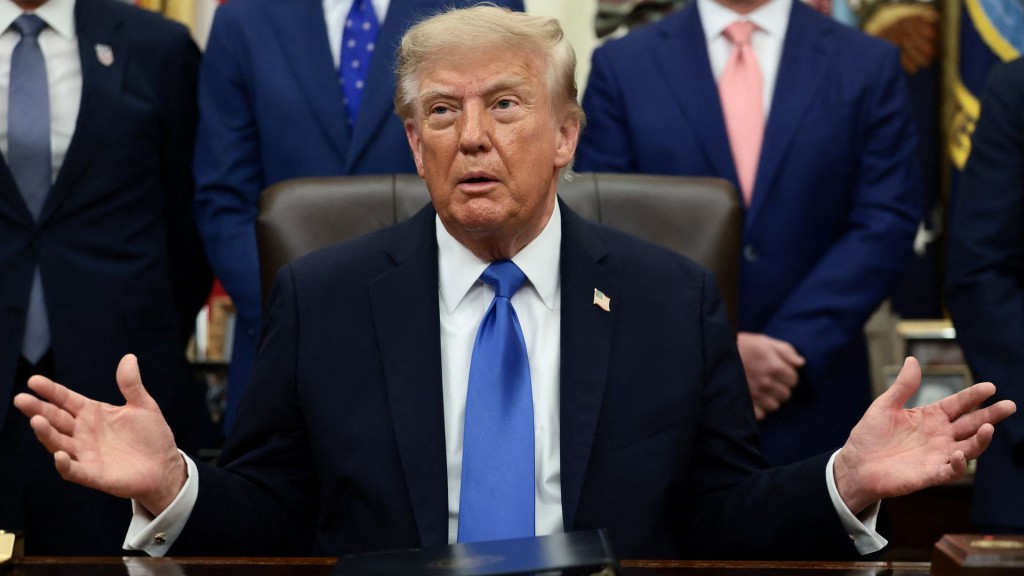
US President Donald Trump has suggested renaming the Strait of Hormuz as “Trump Strait” while American forces are engaged in renewed clashes with Iran, adding another provocative geographical proposal to a growing list of places and landmarks he has sought to rename during his second term.
Trump made the suggestion on Wednesday as he claimed the United States had full control over the strategically important waterway. Hours later, however, he appeared to back away from the idea, telling reporters in the Oval Office that the proposal had merely been mentioned in passing.
“Now that we have it under U.S.A. control, should we change the name Hormuz Strait to TRUMP STRAIT??? Like America itself, it would be ‘hotter’ than ever before!” Trump wrote on his Truth Social network.
The White House subsequently reinforced the suggestion by posting a map of the Gulf on social media showing the waterway under Trump’s proposed name. The post added: “It’s got a nice ring to it.”
The proposal came at a particularly tense moment in the conflict with Iran. Fighting has intensified around the Strait of Hormuz after a period of relative calm, while the waterway remains at the centre of international concern because of its role in global energy supplies.
Trump later plays down the proposal
Trump was asked later on Wednesday whether he genuinely intended to rename the waterway.
With a chuckle, he suggested that the idea should not necessarily be taken as a formal policy announcement.
“It was just thrown out there,” Trump said when an AFP reporter questioned him about the proposal in the Oval Office.
The clarification did little to end speculation, however. Trump has previously floated geographical changes in a joking or offhand manner before taking formal action.
Last week, he signed an order renaming Lake Ontario as “Lake America” amid an escalating trade dispute with Canada. The proposal had initially appeared to be little more than a provocative suggestion, but it later became an official order.
Trump also renamed the Gulf of Mexico the “Gulf of America” shortly after returning to the White House in January 2025. Mexico and Canada have not accepted the US name change, and the traditional name remains widely used outside the United States.
The president has increasingly attached his name or political brand to prominent American institutions and places. Among the most notable examples is the Kennedy Center in Washington, which has also become part of his broader campaign to reshape the institutions and symbols associated with his presidency.
On Wednesday, the US Treasury also issued $1 coins bearing Trump’s face as part of commemorations marking the 250th anniversary of American independence.
Strait of Hormuz becomes centre of Iran conflict
Behind the unusual naming proposal is a far more serious confrontation.
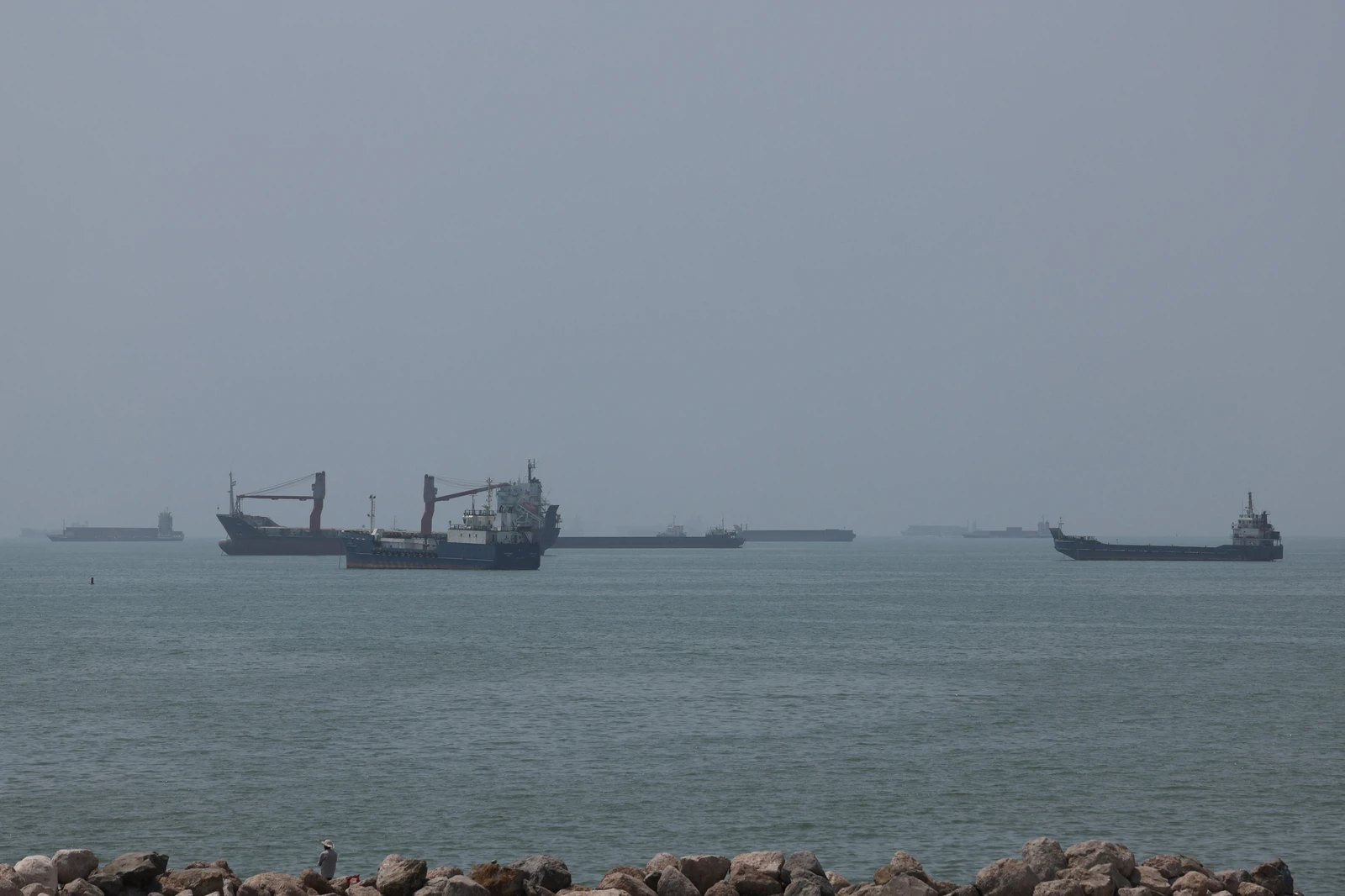
The Strait of Hormuz is one of the world's most important maritime passages. Roughly one fifth of global oil supplies passes through the waterway, making any disruption there a concern for governments, energy companies and consumers far beyond the Middle East.
Iran has effectively shut down the strategic passage in retaliation for the war launched by the United States and Israel in late February, according to the account provided in the original report. The resulting disruption has contributed to rising fuel prices in the United States and added pressure to an already unstable global energy market.
Trump has repeatedly threatened to claim sovereignty over the waterway. At one point, he published a map depicting the Strait of Hormuz as part of what he described as new US territory.
The claims have come as American and Iranian forces have exchanged attacks around the waterway.
On Tuesday, US forces launched fresh strikes near the Strait of Hormuz after Trump said Iran had resumed efforts to lay mines in the passage. Naval mines could pose a serious threat to commercial shipping, potentially forcing vessels to avoid the route or requiring military operations to clear the waterway.
Iran strongly condemned at least one of the US attacks. Iranian officials said a US strike killed four people at a wedding and described the incident as a war crime.
Tehran then launched retaliatory strikes against US military bases in several countries across the region, including Jordan, the United Arab Emirates, Kuwait, Bahrain and Iraq.
The attacks have raised fears that the conflict could spread further across the Middle East, putting American military personnel, regional governments and commercial shipping at greater risk.

Trump warns of further US attacks
Trump showed no indication on Wednesday that Washington was preparing to step back from military action.
Speaking to reporters in the Oval Office, the president said the United States remained prepared to strike Iran again.
“It was a very heavy attack last night, and we're prepared to do another one any time we want,” Trump said.
He added that any renewed campaign would not continue for “too long,” without providing a specific timetable or explaining what conditions would bring the fighting to an end.
The comments came more than six months after the initial US-Israeli assault on Iran. Despite periods of reduced fighting, the conflict has continued to threaten regional stability and global energy markets.
The latest escalation has also created political problems for Trump at home.
US fuel prices have risen sharply as the conflict disrupts energy supplies and increases uncertainty around oil shipments. Higher gasoline and energy costs can quickly affect household budgets, transportation expenses and the wider US economy.
The political consequences could also become significant. Trump's Republican Party is facing the November midterm elections, with forecasts suggesting it could lose at least partial control of Congress.
A name change with wider political implications
The proposed “Trump Strait” label may have been delivered with humour, but the reaction reflects the wider political significance of the waterway.
The Strait of Hormuz is internationally recognised by its established name and is not simply an American geographic feature. It lies between Iran and Oman and serves as a maritime gateway connecting the Persian Gulf with the Gulf of Oman and the wider Arabian Sea.
Any attempt by Washington to impose a new name would therefore face resistance from countries in the region and from international institutions that use established geographic terminology.
Trump's previous renaming efforts have shown that statements initially presented as jokes or provocations can become government policy. That history explains why even an apparently casual suggestion about the Strait of Hormuz has attracted attention.
The timing is also significant. Trump raised the idea while claiming that the United States had control over the waterway, even though Iran remains a major regional power and the strategic passage sits alongside territory and waters involving several countries.
The proposal also arrives as the US president attempts to project strength during a costly and increasingly complicated war.
For global markets, however, the name of the waterway matters far less than whether ships can safely pass through it.
With around a fifth of the world's oil supply moving through the Strait of Hormuz, continued disruption could keep pressure on energy prices and increase the economic costs of the conflict. For governments watching the crisis, the immediate concern is not whether the waterway will become “Trump Strait,” but whether commercial vessels can return to safe and reliable passage.
Trump's joking reference to a new name may dominate the headlines for a day. The military activity surrounding the actual Strait of Hormuz carries consequences that could last considerably longer.