

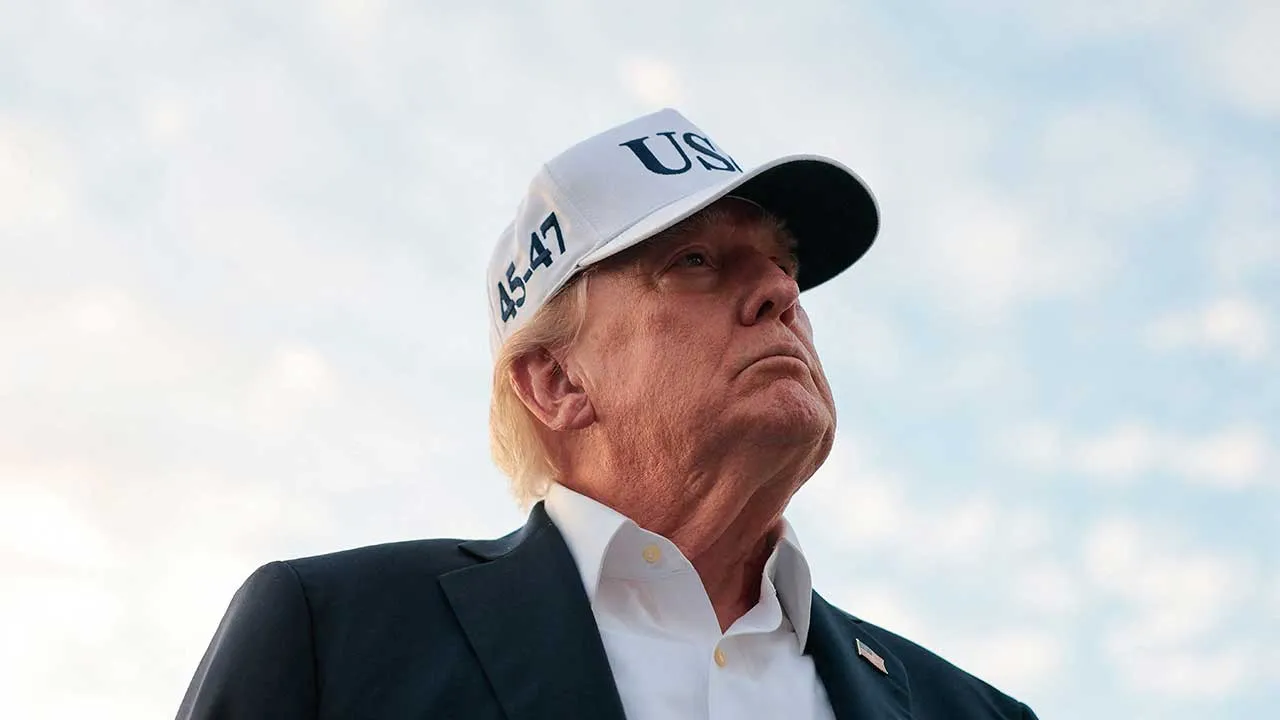
US President Donald Trump says he is nearing a major decision over whether to resume large scale military operations against Iran, as the conflict enters a new phase marked by diplomatic pressure, tensions around the Strait of Hormuz and increasingly sharp exchanges between Tehran and European governments.
In an interview with Axios published Thursday, Trump said he was weighing whether to launch another major attack in an effort to end the war. “I have a big decision coming up,” he said, adding that he was considering whether to “go in and annihilate them” or hold back. He also said that “anything could happen with me.”
Trump's remarks came days before he is due to meet the leaders of six Gulf countries on the sidelines of the United Nations General Assembly in New York. The group includes Saudi Arabia, the United Arab Emirates, Qatar, Bahrain, Kuwait and Oman.
The meeting could influence Washington's next steps. Trump has repeatedly said in recent days that the war will end soon, but US officials cited in the Axios report described the conflict as having settled into an unstable situation in which neither a full military campaign nor a lasting peace has taken hold. Some officials believe Trump could consider renewed major combat operations after the US midterm elections if diplomacy fails to produce an agreement.
Gulf allies face a major decision
The views of Gulf governments are expected to matter as Washington considers its options.
The six countries surrounding the Gulf have direct security and economic interests in the conflict. Any major expansion of military operations could increase the risk of Iranian retaliation against US forces, regional partners and energy infrastructure.
That concern has already shaped US calculations. According to Axios, Trump decided in August not to escalate military action after Saudi Arabia and Qatar raised concerns about possible Iranian retaliation against important oil facilities. The US military has nevertheless been instructed to maintain current force levels in the Middle East through the end of the year, leaving Washington with the capacity to resume combat operations if Trump chooses to do so.
The meeting in New York will therefore come at a sensitive point. Trump is expected to hear directly from regional leaders before deciding whether to pursue another diplomatic effort or move toward renewed military action.
The White House is also working on plans for the period after the fighting, including measures aimed at containing Iran and strengthening ties between Israel and other countries in the region, according to the Axios report.
Strait of Hormuz becomes another flashpoint
While Washington weighs its next move, the situation at sea has added another source of risk.
Iran's Islamic Revolutionary Guard Corps Navy said early Friday that it had struck and stopped a Togo flagged oil tanker in the Strait of Hormuz after accusing the vessel of attempting an illegal passage through the waterway.
The vessel, identified by the IRGC as the Trend, caught fire after the reported strike and was brought to a halt, according to a statement carried by Iranian state media. The IRGC said the tanker had attempted to cross the strait after being deceived and encouraged by the US military.
Iran warned that ships attempting what it considers unauthorised passage could face destruction. The IRGC also said its forces remained in control of the Strait of Hormuz and would prevent passage by what it described as aggressors.
The circumstances of the incident have not been independently established in full. The United Kingdom Maritime Trade Operations agency reported a security incident in the Strait of Hormuz, about 30 kilometres northeast of Khasab, Oman, but did not provide details about the vessel involved. It was also not immediately clear whether that incident involved the Trend.
The waterway is one of the world's most important energy routes, making any disruption there a concern for governments, shipping companies and energy markets far beyond the region.
The latest tanker incident therefore comes as Trump considers whether further military action could bring the conflict to a close or instead create another cycle of retaliation.
Tehran expels Swedish diplomat
Iran's diplomatic relations with European countries have also deteriorated as the conflict continues.
On Thursday, Tehran ordered a Swedish diplomat to leave Iran within 48 hours, in retaliation for Sweden's expulsion of an Iranian embassy official from Stockholm a day earlier.
Iran's Foreign Ministry said its director general for Western Europe, Alireza Yousefi, summoned the Swedish ambassador and delivered a formal protest. Tehran rejected Sweden's allegations as unjustified and accused Stockholm of pursuing hostile policies and allowing anti Iranian groups and individuals to operate in the country.
Sweden had said its decision involved activities by an Iranian embassy official that were incompatible with the Vienna Convention on Diplomatic Relations.
Swedish Justice Minister Gunnar Strommer later told Swedish state broadcaster SVT that the decision was connected to alleged Iranian activities targeting Jewish and Israeli interests in Sweden.
Iran rejected the accusations and described Sweden's action as a violation of international law. Tehran said it considered the expulsion of its diplomat unjustified and warned that it would take reciprocal measures to protect its interests.
The diplomatic dispute adds another layer to an already strained relationship between Iran and European governments.
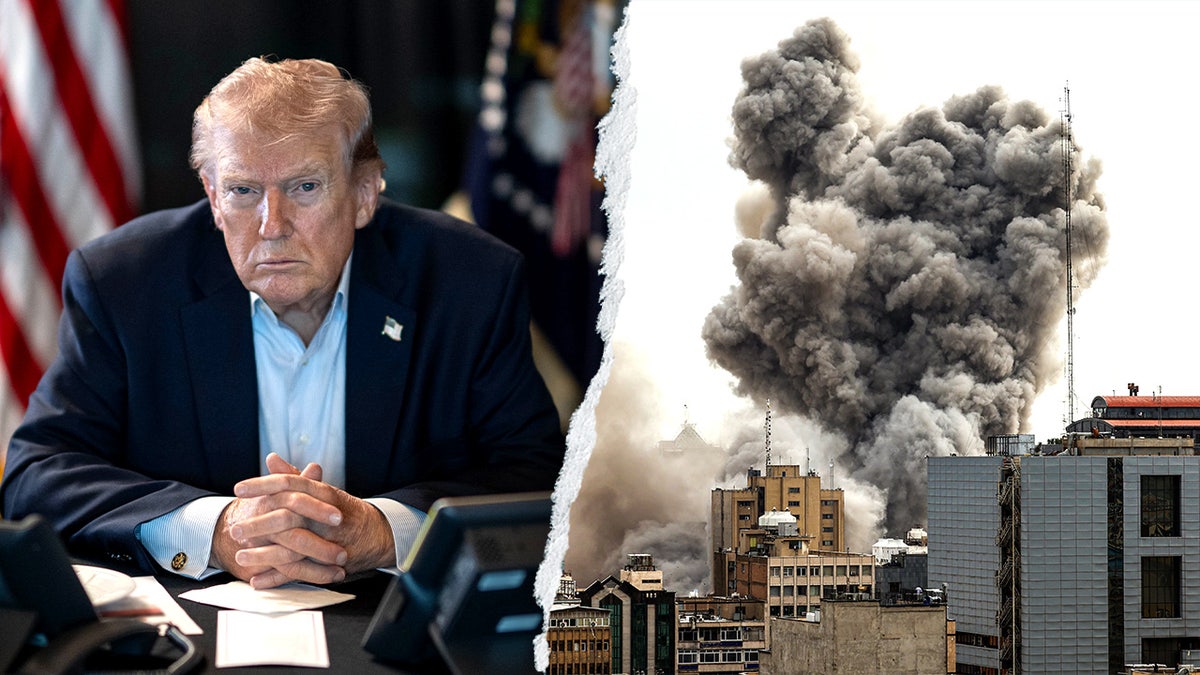
Germany summoned over criticism of Tehran
Germany has also come under pressure from Tehran.
Iran's Foreign Ministry summoned German Ambassador Axel Wilhelm Dittmann following remarks by German Chancellor Friedrich Merz and what Iranian officials described as interventionist activities by the German embassy in Tehran.
Alireza Yousefi conveyed Tehran's protest to Dittmann and rejected what Iran described as unfounded allegations by Merz. The Iranian Foreign Ministry said Berlin's approach toward Iran and regional issues was unjustified and destructive.
Merz had called on Iran to stop supporting armed groups in the region, end what he described as its military nuclear programme and lift its blockade of the Strait of Hormuz. Iran has consistently rejected allegations that it is pursuing a military nuclear programme.
During the meeting with the German ambassador, Iranian officials also criticised Germany's political and military support for Israel and accused Berlin of taking sides in the wider regional conflict.
The German embassy's alleged involvement in domestic matters was another reason cited by Tehran for summoning Dittmann.
The diplomatic exchanges with Sweden and Germany show how the conflict is affecting Iran's relations with European governments as well as its direct confrontation with the United States and Israel.
Netanyahu calls for removal of Iran's government
Israel's Prime Minister Benjamin Netanyahu has meanwhile signalled that Israel's objectives extend beyond limiting Iran's military capabilities.
Speaking Thursday at a ceremony honouring members of Israel's Shin Bet domestic security agency, Netanyahu said Israel intended to defeat Iran's government, eliminate Hamas and continue its campaign against Hezbollah.
“We will eliminate Hamas, and first and foremost we will defeat the regime in Iran. We will topple it. It will fall,” Netanyahu said.
He also said Israel would continue pursuing people involved in the Hamas led October 7, 2023 attack. “No one is immune,” he said.
Netanyahu's comments came as Israel approaches its October 27 national election. He is seeking a record seventh term, while recent polling has shown his Likud party facing a strong challenge from centrist forces. Reuters reported this month that surveys had pointed toward difficulties for Netanyahu's nationalist religious coalition, although the composition of any future governing coalition remains uncertain.
The election adds a domestic political dimension to Israel's military strategy. Netanyahu is campaigning while the country remains involved in conflicts involving Iran, Hamas and Hezbollah.
Washington faces pressure on several fronts
For Trump, the immediate challenge is deciding how to handle a conflict that has resisted a clean military or diplomatic ending.
The US president has continued to speak publicly about bringing the war to a conclusion, while his administration maintains military forces in the region and prepares for the possibility of renewed operations.
At the same time, regional governments have their own security concerns. Gulf states want to avoid becoming targets in a wider confrontation, while remaining closely connected to Washington's security arrangements.
The Strait of Hormuz presents another complication. Any sustained disruption could affect international shipping and energy supplies, increasing pressure on governments far beyond the Middle East.
European governments are also taking increasingly firm positions toward Tehran, while Iran is responding with diplomatic expulsions and formal protests.
The result is a conflict with several tracks running at once: military operations, diplomatic negotiations, maritime security and domestic political calculations in both the United States and Israel.
Trump's meeting with the six Gulf leaders next week will provide an important opportunity for the regional governments to make their concerns known directly. The question now is whether those discussions will push Washington toward another diplomatic effort or toward the large scale military action Trump says he is considering.