

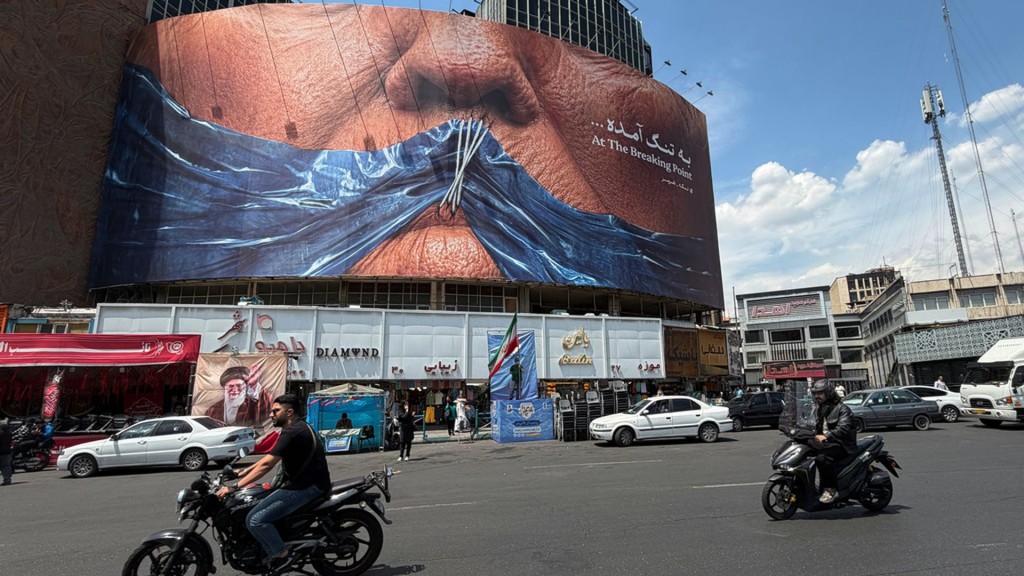
Iran’s Islamic Revolutionary Guard Corps has made a direct appeal to American voters, calling on them to reject President Donald Trump’s Iran policy and oppose US support for Israel and foreign wars ahead of the November midterm elections.
The appeal came in a 25 page open letter addressed to the American public and released on Tuesday. The Revolutionary Guards argued that Iran and the United States could coexist peacefully if Washington changed its approach to Tehran, while defending Iran’s nuclear programme and its ability to restrict traffic through the Strait of Hormuz.
The unusual outreach comes as the United States and Iran remain locked in an eight month conflict that has disrupted oil shipments, damaged Iran’s economy and increased pressure on the Trump administration ahead of the US midterms. Recent diplomatic efforts have focused heavily on the Strait of Hormuz, a major route for global energy shipments.
The letter represents an attempt by Iran’s most powerful military organisation to take its argument directly to the American public rather than limiting its message to governments and diplomats.
Guards target American voters
Hossein Mohebbi, spokesperson for the Revolutionary Guards, acknowledged that he did not expect the letter to change the Trump administration’s conduct in the weeks before the election.
He said the intended audience was broader than the White House.
“The American people are not knowledgeable about many developments,” Mohebbi told reporters, according to Reuters. “We believe if they knew more, they would think differently and take other decisions.”
The comments make clear that Tehran is seeking to shape the debate among US voters at a time when the conflict has become intertwined with domestic political pressure.
The midterm elections will determine control of Congress and are taking place against the backdrop of higher energy costs and continued fighting in the Middle East. Reuters has reported that the war and disruptions to energy routes have placed additional economic pressure on American households while creating political difficulties for the administration.
Iran’s Guards used the letter to challenge Washington’s stated justification for military action. The organisation argued that the United States knows Iran is not seeking to build a nuclear weapon and accused Trump of presenting Tehran’s nuclear activities as more threatening than Iran says they are.
Iran maintains that its nuclear programme is peaceful. Western governments, however, have raised concerns about Iran’s uranium enrichment activities and its ability to develop nuclear weapons capability. Reuters reported last week that a senior Iranian official said Tehran would not make concessions on its nuclear programme even if Washington accepted Iran’s proposal concerning the Strait of Hormuz.

Guards attack Trump’s credibility
The letter also contained a direct personal attack on Trump.
Mohebbi said American national security and the lives of US service members had effectively been placed in the hands of a president whom he accused of dishonesty and excessive concern with personal wealth.
His comments reflect the Guards’ broader argument that US voters should question the reasons behind Washington’s military campaign against Iran.
Trump has repeatedly said Iran must not be allowed to obtain a nuclear weapon. In remarks at the United Nations General Assembly last week, he also warned that the United States could take extreme military action against Iran if he chose to do so, according to the Reuters report on the Guards’ letter.
Tehran’s response has been to insist that the conflict did not have to continue and that Washington could still pursue a negotiated settlement.
Iranian officials have recently put forward a proposal centred on the Strait of Hormuz. Foreign Minister Abbas Araqchi said on Sept 25 that Iran had presented the United States with a seven day plan that could lead to the reopening of the waterway and the restoration of normal maritime passage.
Trump rejected the proposal the following day, saying he had refused the Iranian deal. He argued that Tehran was seeking an agreement because the restrictions on the waterway were hurting Iran economically.
Hormuz remains at centre of dispute
The Strait of Hormuz has become one of the most contested issues in the conflict.
Iran’s Guards dispute US claims that Washington has largely overcome Tehran’s ability to restrict shipping through the waterway. Mohebbi argued that the movement of a small number of vessels under difficult conditions should not be interpreted as proof that the strait is functioning normally.
He pointed to the high cost and risks involved in protecting shipping and argued that the passage of isolated vessels does not amount to unrestricted maritime traffic.
The issue has major economic consequences because the strait connects the Persian Gulf with the Gulf of Oman and provides a major route for oil exports from Gulf producers.
Kpler data cited by Reuters showed that oil exports through the waterway had recovered in September and were expected to reach almost 10 million barrels per day. That figure is roughly half the volume recorded before the war.
The recovery suggests that some oil is moving again, but traffic remains well below prewar levels.
Washington has also increased efforts to protect tankers using the route. At the same time, Iran has maintained pressure on shipping as part of its wider military and economic response to the conflict.
Diplomatic efforts continue despite rejection
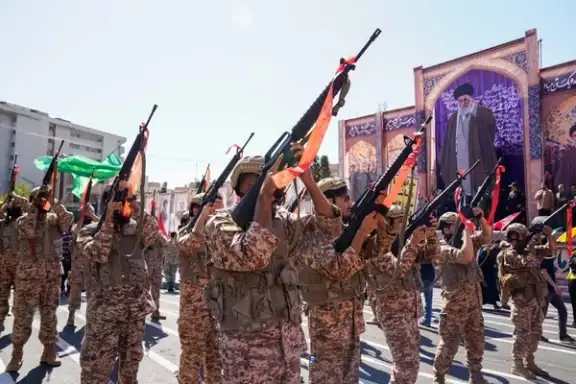
The Guards’ appeal to US voters comes alongside renewed diplomatic activity involving Qatar.
Qatar has been mediating between Washington and Tehran, with its officials attempting to establish conditions for negotiations that could end the conflict. Qatari Foreign Ministry spokesperson Majed al Ansari said on Tuesday that Doha was exchanging messages between the two sides and working toward common ground.
The talks have not produced an agreement.
Iran has linked the reopening of the Strait of Hormuz to several demands, including changes to the US blockade and economic restrictions. A senior Iranian official told Reuters that Tehran would keep the waterway closed until its conditions were met.
The dispute over the strait is therefore tied directly to the wider conflict. Any agreement on maritime traffic would also have implications for oil markets, international shipping and the economic pressure facing both countries.
Trump has rejected Iran’s recent proposal, although US and Iranian officials have continued communicating through intermediaries. Qatar’s involvement suggests that diplomatic channels remain open despite the absence of a settlement.
Iran seeks influence beyond the battlefield
The Revolutionary Guards’ decision to address American voters directly adds another dimension to the conflict.
Rather than directing the letter solely at Trump or US officials, the Guards framed their message around the choices facing ordinary Americans. Their argument is that voters should question continued US involvement in the war, Washington’s support for Israel and the administration’s description of Iran’s nuclear ambitions.
Whether that message reaches a significant number of US voters is uncertain. Mohebbi himself acknowledged that the letter was unlikely to alter the administration’s position immediately.
The broader information campaign comes as Iran continues to face military and economic pressure. Reuters has reported that the conflict has damaged Iran’s conventional military capabilities and strained an already weak economy, while restrictions on oil exports have reduced the country’s revenue.
At the same time, Iran has retained the ability to disrupt regional shipping and launch attacks through its own forces and allied groups. The conflict has therefore continued to affect areas far beyond Iran and the United States.
The Guards’ message now places the American electorate directly inside that dispute. Tehran is asking voters to judge the costs of the war and Washington’s Iran policy before they cast their ballots in November.
For the United States, the letter adds another political message to an election campaign already shaped by war, energy prices and foreign policy. For Iran, it offers a public argument that the conflict can still move toward negotiations if Washington changes course.
Will the Revolutionary Guards’ direct appeal to American voters influence the debate over Iran, the war and the Strait of Hormuz before the midterm elections?