


The fourth Greater Bay Area Governance Forum concluded in Guangzhou on Thursday with the adoption of the Cross-Border Policy Coordination Protocol, a landmark inter-governmental framework establishing quarterly coordination meetings between the administrations of Hong Kong, Macau, and the nine mainland cities of the Guangdong-Hong Kong-Macau Greater Bay Area. The protocol creates, for the first time, a formal institutional architecture for harmonising policies across the 11 cities on issues where inconsistent approaches create friction for residents, businesses and institutions operating across administrative boundaries.
The Coordination Architecture
The protocol establishes four permanent coordination committees, each co-chaired by a senior official from Hong Kong SAR and a counterpart from the Guangdong Provincial Government. The Infrastructure and Transport Committee will address cross-boundary transport planning, including the long-debated extension of Hong Kong's MTR network to Qianhai and the integration of ticketing systems across the region's expanding rail network. The Environment and Resources Committee will coordinate air quality management, water supply planning and waste management across the Pearl River Delta, building on the existing collaborative arrangements that have produced measurable improvements in regional air quality over the past decade.
The Talent and Professional Mobility Committee takes on one of the most practically significant challenges in the Bay Area's daily operation: the incomplete mutual recognition of professional qualifications between Hong Kong and the mainland. Lawyers, doctors, architects and engineers from Hong Kong currently face substantial barriers to practising their professions on the mainland, and the protocol commits both sides to developing a comprehensive mutual recognition framework for at least 12 professional categories by 2028.
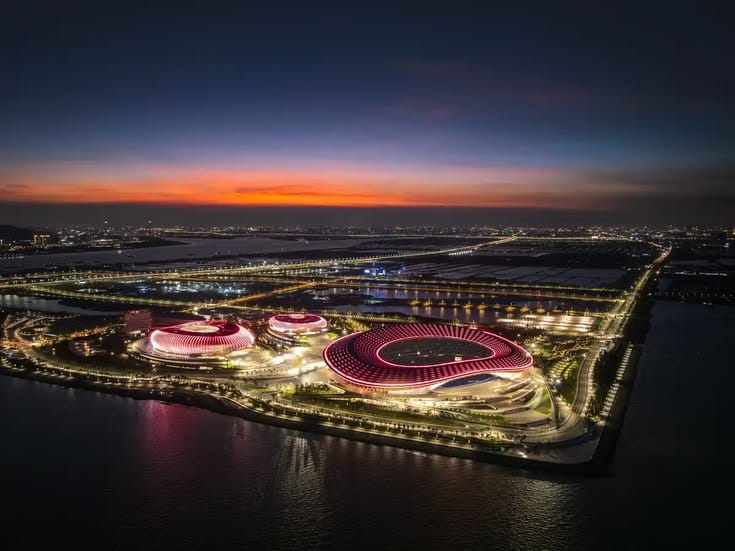
The Cross-Border Policy Coordination Protocol establishes four permanent committees addressing infrastructure, environment, talent mobility and digital governance.
Digital Governance: The Most Complex Frontier
The Digital Governance and Data Committee faces the most technically complex coordination challenge: reconciling Hong Kong's internationally oriented digital regulatory framework, based on common law and internationally compatible data protection standards, with the mainland's Data Security Law and Personal Information Protection Law framework, which impose data localisation requirements and government access provisions that differ materially from Hong Kong's approach.
A dedicated working group of legal experts, technologists and regulatory officials from both sides will develop a "data governance bridge" framework that enables specified categories of commercial data to flow between Hong Kong and the mainland for defined purposes while respecting both jurisdictions' regulatory requirements. Early priorities include financial transaction data for cross-boundary payment processing, healthcare data for residents seeking medical care across the boundary, and logistics data for the region's extensive cross-boundary cargo movement.
Reactions from Business and Civil Society
Business organisations on both sides of the boundary have broadly welcomed the protocol, identifying the talent mobility provisions and the commitment to professional qualification recognition as addressing the most concrete operational barriers faced by companies with operations across the Bay Area. The Hong Kong General Chamber of Commerce President Florence Hui described the forum's outcomes as "a meaningful step toward the seamlessly integrated economic geography that has always been the Bay Area's potential but has not yet been its reality."
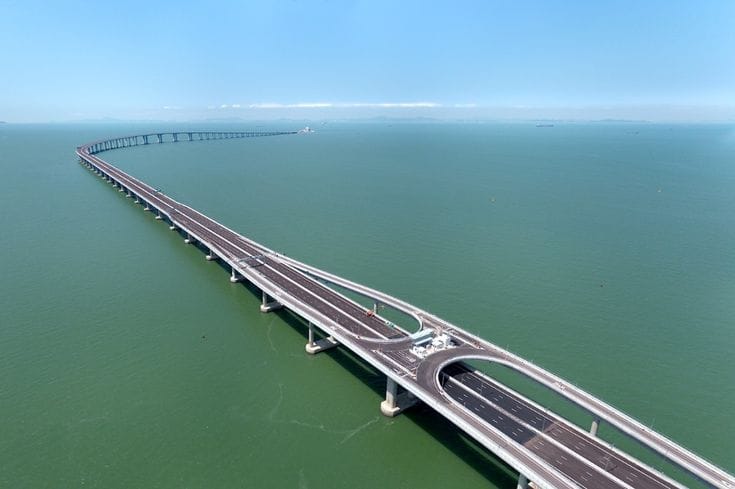
The protocol commits to developing mutual professional qualification recognition for at least 12 categories by 2028, addressing a key barrier for HK professionals working on the mainland.
Hong Kong's Strategic Position
Chief Executive John Lee, speaking at the closing ceremony, emphasised that the coordination protocol strengthens rather than diminishes Hong Kong's unique institutional character within the Bay Area. "Hong Kong brings to the Bay Area something irreplaceable: an internationally credible legal system, a fully convertible currency, a globally connected financial market, and a talent base with deep international experience and networks," he said. "The coordination framework ensures that these assets serve the entire Bay Area, while preserving the institutional distinctiveness that makes them valuable."
Political scientists have noted that the governance forum represents a pragmatic approach to the integration challenge: rather than imposing uniform policies across jurisdictions with fundamentally different legal and regulatory foundations, the protocol creates structured dialogue mechanisms that enable incremental convergence where it is mutually beneficial while respecting the principle that Hong Kong and Macau maintain their distinct systems under the One Country, Two Systems framework.