

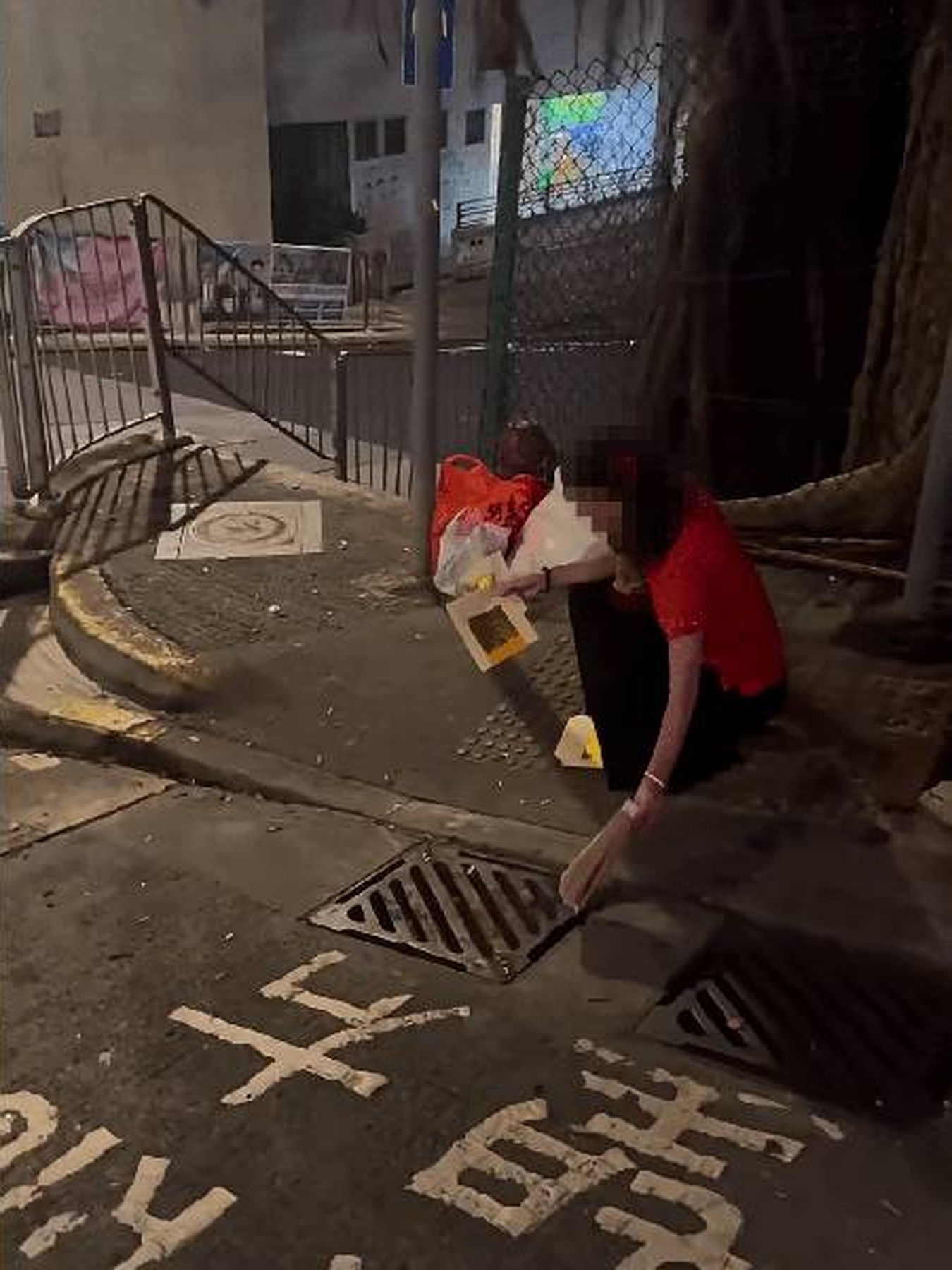
A woman has drawn widespread criticism after footage appeared to show her throwing burning paper offerings into a roadside drain in Sai Ying Pun, raising concerns about fire and public safety.
A woman has sparked widespread outrage in Hong Kong after footage appeared to show her throwing burning offerings into a roadside drainage opening during preparations for the Hungry Ghost Festival.
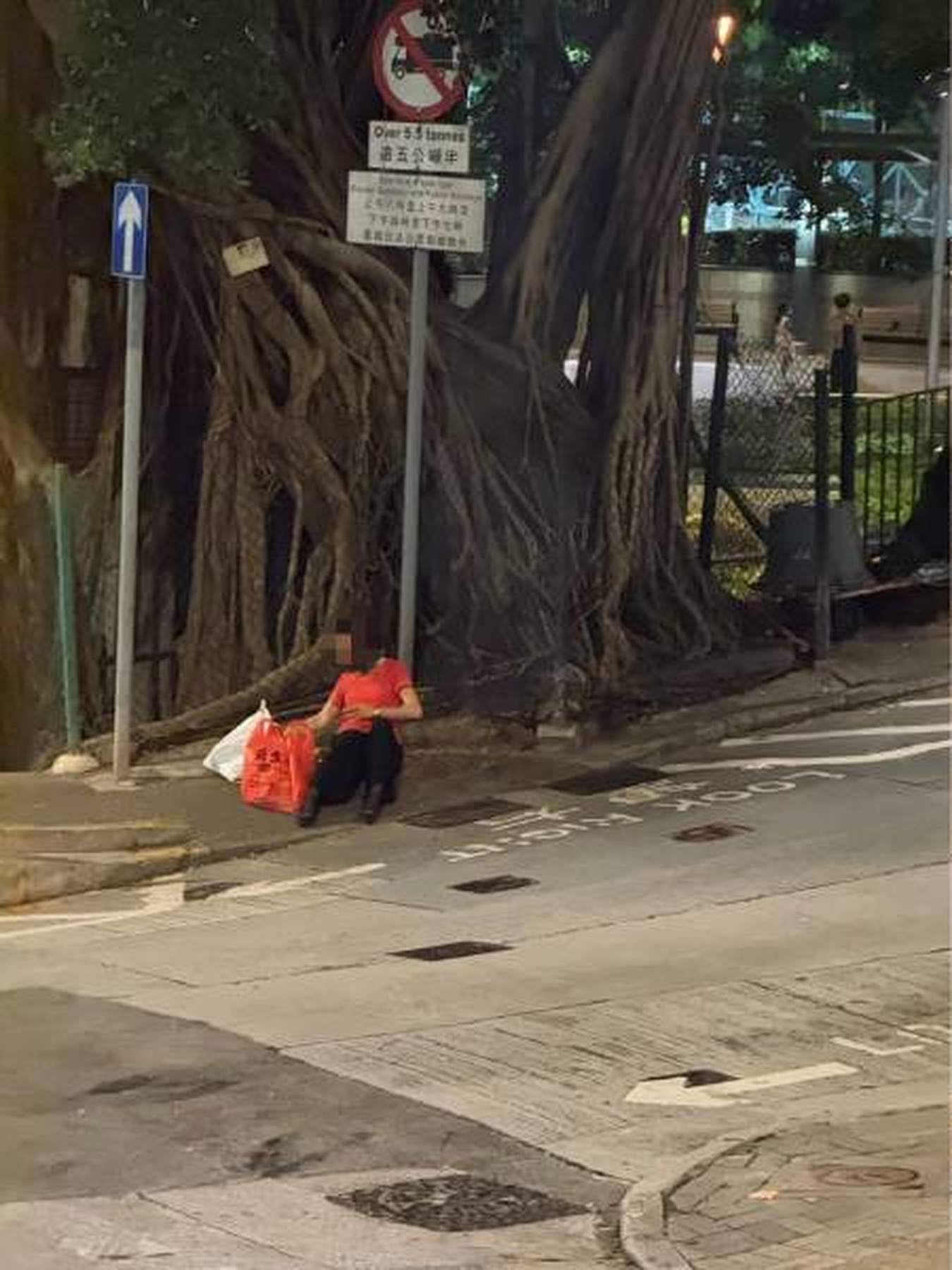
The incident reportedly took place near the Sai Ying Pun Community Complex on High Street, an area that has long attracted public attention because of its association with the site popularly known as the “High Street Ghost House.”
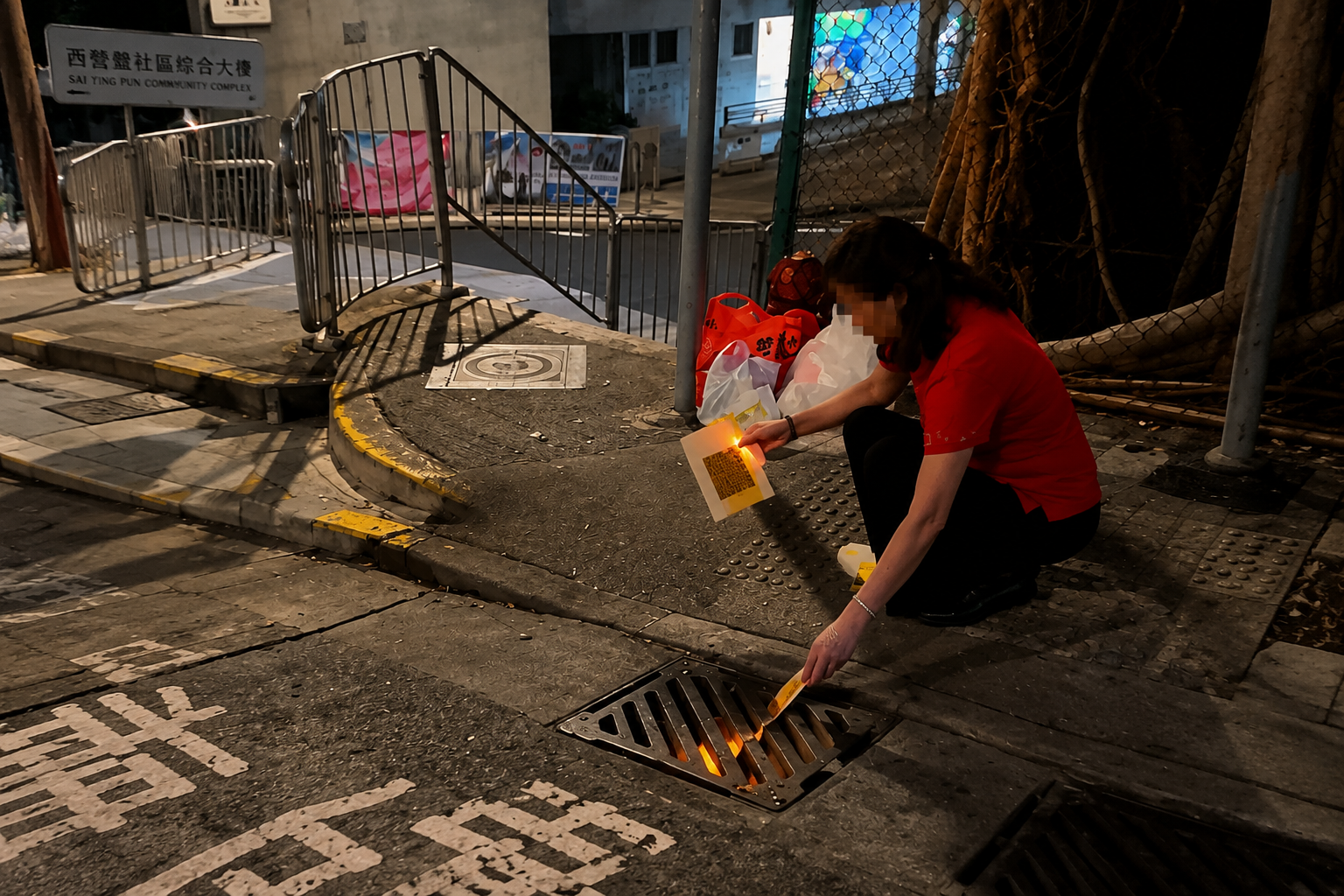
Video of the incident was circulated on Threads on Friday, showing a woman dressed in red burning traditional paper offerings at the junction of High Street and Eastern Street.
The footage appeared to show the woman placing or throwing ritual materials that were still burning into an opening connected to the roadside drainage system.
The incident quickly drew criticism online, with residents and social media users raising concerns about the potential consequences of introducing open flames and burning materials into underground infrastructure.
The controversy comes as Hong Kong approaches the seventh lunar month, when many residents take part in traditional Hungry Ghost Festival practices. During the festival period, people commonly burn incense, joss paper and other offerings as part of rituals to honour ancestors and wandering spirits.
While such practices are deeply rooted in Chinese tradition, authorities have repeatedly urged members of the public to handle burning materials responsibly and avoid creating fire hazards in public places.
Safety concerns over underground drainage systems
The Sai Ying Pun incident generated particular concern because the burning offerings were allegedly placed inside a roadside drain rather than in a designated container or suitable area for burning.
Some commenters warned that an open flame in an underground drainage system could potentially create a serious safety hazard, particularly if combustible gases were present.
Underground drainage and sewer systems can contain gases produced by the decomposition of organic material. Depending on the environment and concentration, some gases can be flammable. Introducing an ignition source into an enclosed system could therefore create risks that are difficult to assess from the surface.
Social media users said an incident involving an underground fire or explosion could potentially damage infrastructure and pose a danger to people nearby.
Some commenters also expressed concern that an explosion could affect underground pipelines or other utilities, although the actual risk in any particular drain would depend on the design of the drainage system, the presence and concentration of combustible gases and other environmental conditions.
The footage prompted calls for the incident to be reported to police or the relevant authorities.
Several users also stressed that roadside drains are designed to carry away rainwater and other permitted flows and should not be treated as places for disposing of burning materials.
Hungry Ghost Festival brings increased use of joss paper
The incident occurred ahead of the Hungry Ghost Festival, traditionally observed during the seventh month of the lunar calendar.
During this period, many families and communities conduct rituals to remember deceased relatives and pay respects to ancestors. Some people also burn joss paper and other paper offerings as part of traditional customs.
The burning of incense and paper offerings is a common sight in Hong Kong during major traditional festivals. Designated burners and other facilities are available in many areas to allow people to conduct such activities more safely.
However, burning materials in unsuitable locations can create several hazards, including the risk of fire, smoke and injury.
The Sai Ying Pun incident has renewed discussion online about where residents should conduct such rituals and how burning materials should be disposed of once a ceremony has ended.
Residents who burn incense or paper offerings are generally expected to ensure that flames are properly controlled and extinguished and that hot or burning materials are not left where they could ignite other objects.
Throwing burning materials into a drain creates an additional concern because much of the relevant infrastructure is hidden underground, meaning members of the public cannot easily see what the flames or embers may encounter.
Potential legal consequences
Hong Kong law also places restrictions on the disposal of waste and refuse in drainage and other public infrastructure.
The Public Cleansing and Prevention of Nuisances Regulation contains provisions concerning the disposal of waste in places including watercourses, channels, ditches and reservoirs.
Section 4(1) prohibits the depositing of waste or refuse in specified public drainage and water systems. A person convicted of an offence under the relevant provisions can face a fine and imprisonment, with the maximum penalty cited in relation to the provision being a HK$25,000 fine and six months in jail.
The exact offence and penalty applicable to an individual case would depend on the circumstances and the relevant legislation.
There could also be more serious consequences if the use of fire resulted in damage to property.
Section 60(3) of the Crimes Ordinance deals with the destruction or damage of property by fire. Arson is a serious criminal offence in Hong Kong and can carry a maximum sentence of life imprisonment upon conviction in circumstances covered by the provision.
However, the appearance of burning offerings in a drain does not by itself establish that an arson offence has occurred. Any potential criminal liability would depend on the facts of the incident, including whether property was intentionally or recklessly damaged and whether the legal elements of the relevant offence were satisfied.
Public concern grows over festival safety
The incident has highlighted the tension between traditional religious customs and the need to maintain public safety in a densely populated city.
Hong Kong has limited public space, and activities involving fire can present particular challenges in busy neighbourhoods where pedestrians, buildings, vehicles and underground infrastructure are often located close together.
Sai Ying Pun is a densely developed urban district with a mixture of residential buildings, shops, public facilities and narrow streets. An uncontrolled fire in such an environment could spread quickly or create difficulties for emergency responders.
For residents observing the Hungry Ghost Festival, authorities and community groups typically encourage the use of appropriate facilities for burning incense and offerings.
People taking part in traditional rituals can also reduce risks by ensuring that burning materials are placed in suitable containers, keeping flames away from combustible objects and making certain that ashes and embers are completely extinguished before disposal.
The video circulating online has nevertheless raised broader questions about awareness of these precautions.
Social media brings incident to public attention
The footage spread quickly after being posted on Threads, with users expressing concern over what they described as irresponsible handling of burning offerings.
Some commenters called on authorities to investigate, while others used the incident to remind the public that drains and other public infrastructure should not be used to dispose of burning objects.
It remains unclear from the footage alone whether any damage occurred to the drainage system or whether authorities subsequently took enforcement action against the woman.
The video also does not establish the condition of the underground drainage system at the time of the incident or whether any combustible gas was present.
Those factors would need to be determined through an appropriate investigation rather than inferred solely from the footage.
Nevertheless, the incident has served as a timely reminder that traditional festival activities involving fire need to be carried out with care.
As the Hungry Ghost Festival approaches, residents across Hong Kong are expected to continue observing customs that have been passed down through generations. The challenge for the community is to preserve those traditions while ensuring that rituals involving fire do not put pedestrians, buildings, public infrastructure or the wider community at unnecessary risk.
The Sai Ying Pun footage has brought that issue into sharp focus, with online users urging residents to use designated facilities and dispose of ashes and other ritual materials responsibly rather than placing them in roadside drains or other public infrastructure.