

By Sarah Chan
HONG KONG: The Hong Kong Jockey Club contributed a record HK$39.3 billion to the community during the 2025/26 financial year, while total wagering and lottery turnover climbed to HK$331.7 billion, according to figures presented at the club's annual general meeting on Wednesday.
Chief executive Winfried Engelbrecht Bresges described the year's performance as producing "outstanding results both on and off the track", pointing to strong racing performances, increased tourism at racecourses and continued support for charities and community programmes.
The club's contribution came from several sources. It paid HK$29.3 billion in betting duty and profits tax, HK$1.4 billion to the Lotteries Fund and HK$8.6 billion through donations approved by the Hong Kong Jockey Club Charities Trust.
The betting duty and profits tax paid by the club represented 6.4 percent of all taxes collected by Hong Kong's Inland Revenue Department during the 2025/26 assessment year.
The figures underline the scale of the club's role in Hong Kong's public finances and charitable sector, even as the organisation faces a growing illegal gambling market, additional taxation on football betting and uncertainty over the expansion of regulated sports betting.
Racing and Football Drive Record Turnover
The club recorded total revenue of HK$50.8 billion from gaming and non gaming activities during the financial year, an increase of 3.1 percent from the previous year.
Racing remained a major source of activity. Turnover from Hong Kong racing reached HK$143.3 billion across 88 meetings, an increase of 3.6 percent, generating gaming revenue of HK$19.9 billion.
A significant share of racing turnover came through the club's commingling arrangements, which allow overseas bettors to wager on Hong Kong races through their local betting systems.
A total of HK$34.3 billion was wagered on Hong Kong racing through commingling from 26 countries and jurisdictions. That represented 23.9 percent of total racing turnover.
Football betting produced an even larger turnover figure. Football wagering increased 3.6 percent to HK$179 billion, generating HK$22.6 billion in gaming revenue.
The club attributed part of the growth to the introduction of new bet types and league competitions, as well as interest surrounding major international football events.
Mark Six turnover also increased during the year. Turnover rose 4.2 percent to HK$9.4 billion, generating HK$4.3 billion in revenue.
Together, the figures show that the club's business extends well beyond horse racing. Football betting and lottery operations now account for a substantial portion of its overall gaming activity.
Ka Ying Rising and Romantic Warrior Dominate Racing Season
The financial results came during a season in which Hong Kong racing enjoyed international attention, led by two horses whose performances became central to the club's public profile.
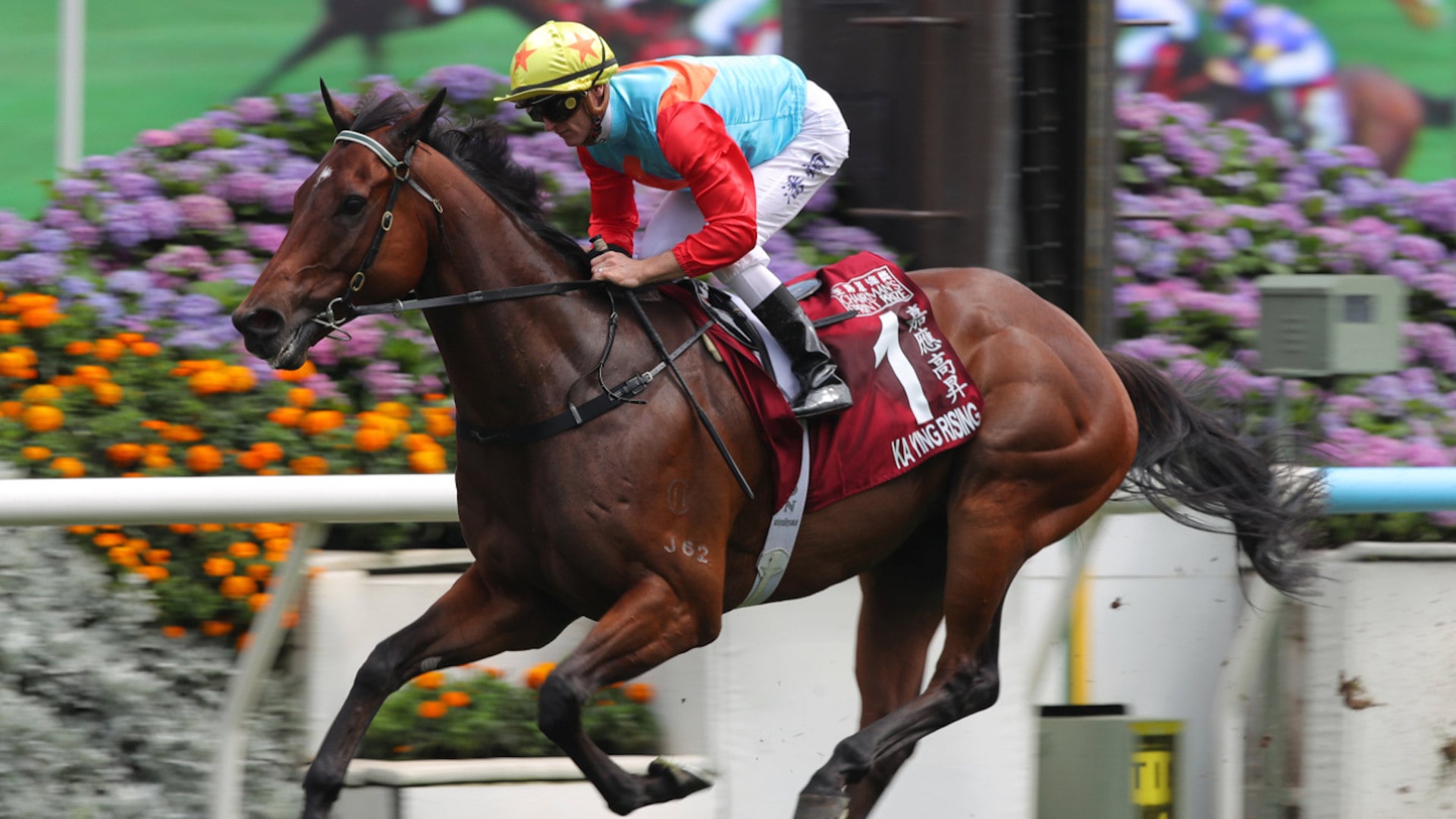
Engelbrecht Bresges singled out Ka Ying Rising and Romantic Warrior, saying both horses excelled on the international stage before becoming the first joint winners of the Horse of the Year honours.
Romantic Warrior's retirement was announced on Wednesday, bringing an end to one of the most successful careers in modern Hong Kong racing.
The horse retired as the world's highest earning racehorse, having accumulated more than HK$288 million in prize money. Its record includes major victories that helped raise the profile of Hong Kong racing well beyond the city's borders.
Ka Ying Rising, meanwhile, is preparing to return to competition at Sha Tin for Sunday's opening meeting of the 2026/27 season.
The horse will attempt to extend its winning streak to 21 consecutive victories, giving the club another major attraction at the start of the new racing season.
The success of the two horses has also provided a boost to the club's efforts to promote racing as part of Hong Kong's tourism offering.
Racecourses Attract Record Tourist Numbers
Hong Kong's racecourses received 401,259 tourist visits during the 2025/26 season, according to the club.
The figure represents a 105 percent increase compared with 2024/25 and is four times the number recorded in 2023/24.
The club attributed the increase to several initiatives, including its partnership with China Travel Group and the Hong Kong Tourism Board's strategy of using major events to attract visitors.
It also pointed to its Racing with Golf, Rugby and Football initiatives, which combine racing with other sporting activities to create broader visitor experiences.
Chairman Martin Liao Cheung Kong said the performance of Hong Kong's leading horses had strengthened the city's standing in international racing while helping bring more visitors to racecourses.
"The unprecedented success of our horses cemented Hong Kong's position as one of the global leaders in horse racing, while also attracting record numbers of tourists to our racecourses," Liao said.
He also pointed to the performance of the club's licensed football betting service.
The increase in tourist visits gives the club another source of economic activity at a time when it is seeking to expand revenue from areas outside wagering.
HK$8.6 Billion Directed to Charities and Community Projects
The club's charitable commitments remained a major part of its financial contribution.
During the year, HK$8.6 billion in Charities Trust donations supported 191 charities and community projects.
Among the largest individual commitments was a special HK$1.7 billion donation to establish a public riding school at Tseung Kwan O.
The club and its Charities Trust have also donated HK$270 million to support victims of the Tai Po fire in November.
The scale of the donations means that the club's financial performance has a direct effect on organisations working across Hong Kong's social services, community development and other areas.
To support future charitable giving, the club transferred HK$3.2 billion to the Charities Trust.
That amount included HK$1.1 billion, representing 95 percent of its operating surplus after tax, together with HK$2.1 billion generated from investment returns.
The structure allows the trust to continue supporting community projects even as the club faces pressure on its own finances.
Illegal Gambling Remains Major Concern
Despite the record community contribution, club executives warned that the financial outlook is becoming more difficult.
Liao said the club's biggest challenge remains competition from a large and expanding illegal gambling market.
Illegal betting operators can offer products outside Hong Kong's regulated system and compete directly with licensed betting services. The club has repeatedly argued that the growth of such operations threatens both public revenue and consumer protection.
Liao said the club had maintained its support for charities despite what he described as a difficult operating environment and the expanding threat posed by illegal gambling.
The club is also facing the impact of a special football betting duty worth HK$2.4 billion a year.
At the same time, the government has unexpectedly paused the granting of a licence for regulated basketball betting, despite the club having invested substantially in preparation for a planned launch in 2026.
The club said it respected the government's decision but warned that illegal basketball betting could continue to expand in the absence of a regulated alternative.
According to the club, that expansion could bring wider social and criminal consequences.
Technology Investment Could Put Further Pressure on Surplus
The club has been investing heavily in technology, including improvements to the customer digital experience and the development of a new sports wagering platform.
Those investments are intended to strengthen the club's services and improve its ability to compete in a rapidly changing betting market. However, the financial benefits will not appear immediately.
As a result, the club expects its operating surplus to decline further over the next several years.
The organisation has already begun responding by reducing operating costs and seeking greater efficiency.
It is also looking for additional revenue from activities outside wagering, an approach that could become increasingly important as taxes, technology costs and competition from illegal operators put pressure on traditional betting income.
The challenge for the club is to make those changes without reducing the level of support it provides to the community.
Conghua Racing Plans Delayed
The club also confirmed that plans for official racing at Conghua Racecourse in Guangzhou have been delayed.
The launch had originally been scheduled for October, but the club said the start date was postponed following the latest risk assessment by relevant mainland departments.
The Hong Kong Jockey Club said it and the relevant authorities are working on appropriate mitigation measures.
No new launch date has been announced.
The Conghua facility already serves as an important training base for Hong Kong racehorses, but the introduction of official racing would represent a further development in the club's operations across the border.
The delay adds another element of uncertainty as the club begins the 2026/27 racing season.
For now, the organisation enters the new season with record community contributions behind it, two internationally recognised horses at the centre of public attention and a large tourism audience visiting its racecourses.
But the financial numbers also point to a more difficult period ahead. Illegal gambling, the HK$2.4 billion annual football betting duty, delayed basketball betting plans, major technology spending and the postponed Conghua racing programme will all shape the club's next phase.
Its immediate priority is to protect the regulated betting system, contain costs and maintain the flow of funding to the charities and public programmes that received HK$39.3 billion during the year.