

Hong Kong Customs has seized about 20 kilograms of suspected ketamine concealed in two shipments from Europe, including one consignment hidden inside garden posts and another packed into swimming pool sanitiser buckets.
The drugs had an estimated combined street value of about HK$7.6 million, or roughly US$973,000, according to Customs. Three people have been arrested in connection with the separate cases, including two boys aged 13 and 14.
The first seizure took place on August 27, when Customs officers inspected an express parcel arriving from Belgium. The shipment had been declared as containing garden posts, but officers selected it for inspection following a risk assessment.
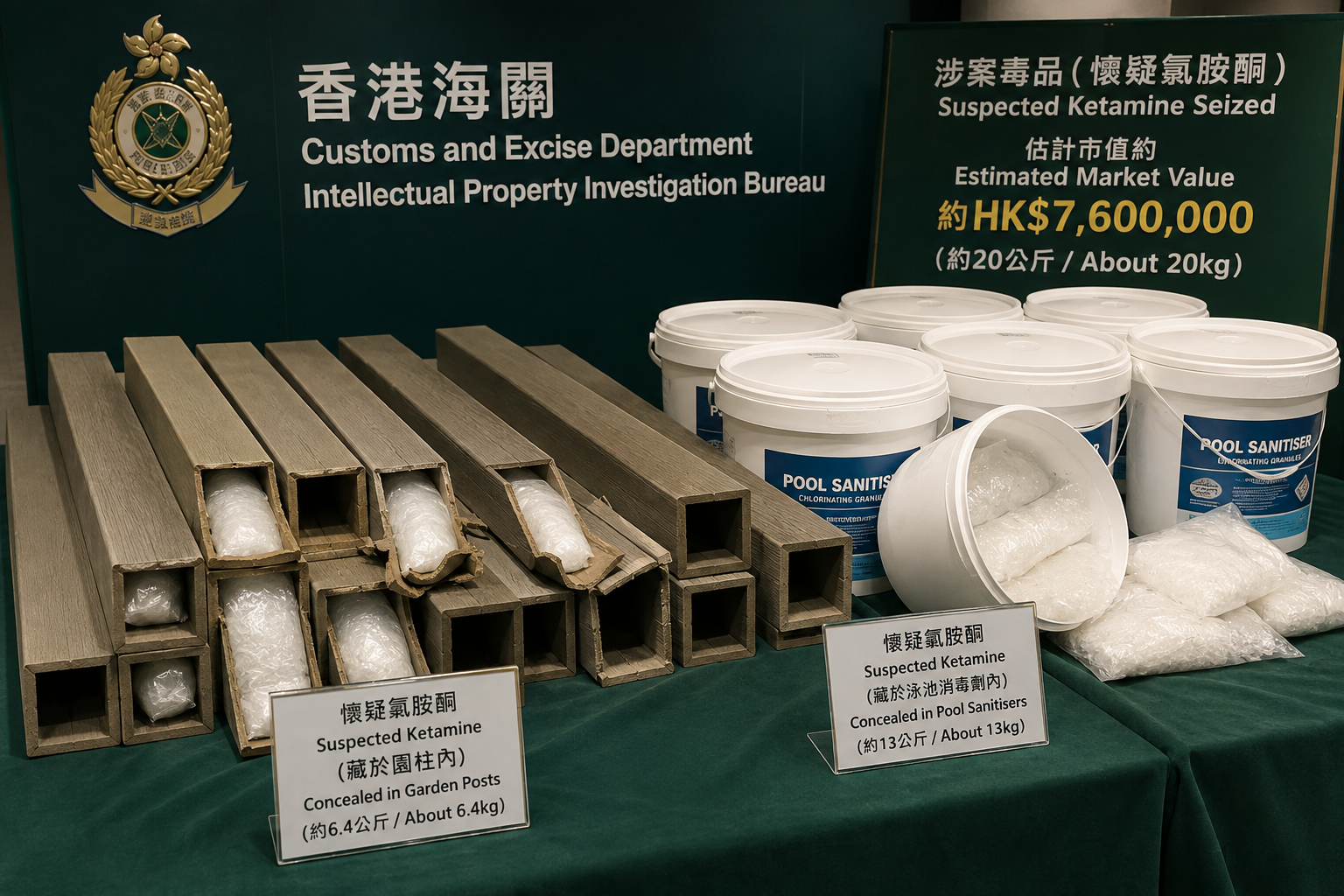
Inside 17 garden posts, officers found about 6.4 kilograms of suspected ketamine. Customs estimated the drugs had a market value of approximately HK$2.6 million.
The discovery prompted a follow up investigation that led officers to arrange a controlled delivery operation. Two boys, aged 13 and 14, were subsequently arrested in Ngau Tau Kok on Monday.
The teenagers were expected to face one count of trafficking in a dangerous drug. Their case was brought before the Kowloon City Magistrates' Courts on Wednesday.
Drugs concealed inside garden posts
The method used in the first shipment involved concealing the suspected ketamine inside objects that could appear ordinary during transportation.
The parcel was declared as garden posts, a type of item that would not ordinarily raise suspicion when sent as part of a household or gardening shipment. Customs officers, however, selected the consignment for inspection after assessing the shipment as presenting a potential risk.
Their examination uncovered the suspected ketamine hidden inside 17 garden posts.
The quantity recovered was substantial. Customs put the estimated value of the 6.4 kilograms of suspected ketamine at HK$2.6 million.
The subsequent controlled delivery operation allowed investigators to trace the shipment after the seizure. Two teenagers were arrested in Ngau Tau Kok several days after the drugs were intercepted.
The arrests have also drawn attention to the age of the suspects. Both are teenagers, aged 13 and 14, and face a serious drug trafficking allegation.
Their case was brought before the Kowloon City Magistrates' Courts on Wednesday.
Second shipment came from Spain
A separate investigation uncovered another shipment containing suspected ketamine only days later.
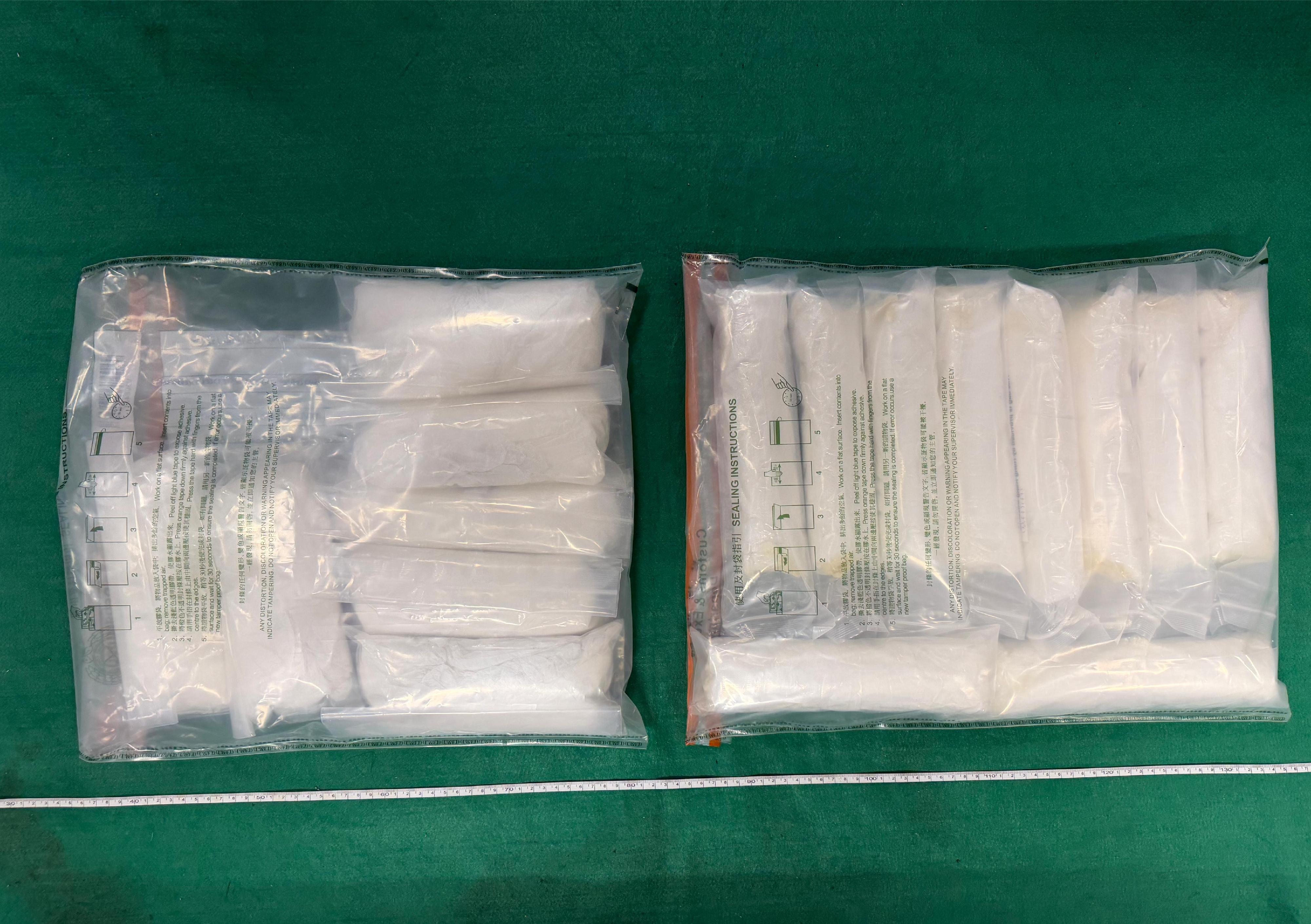
On Sunday, Customs officers inspected an air parcel arriving from Spain via France. The shipment had been declared as swimming pool sanitiser.
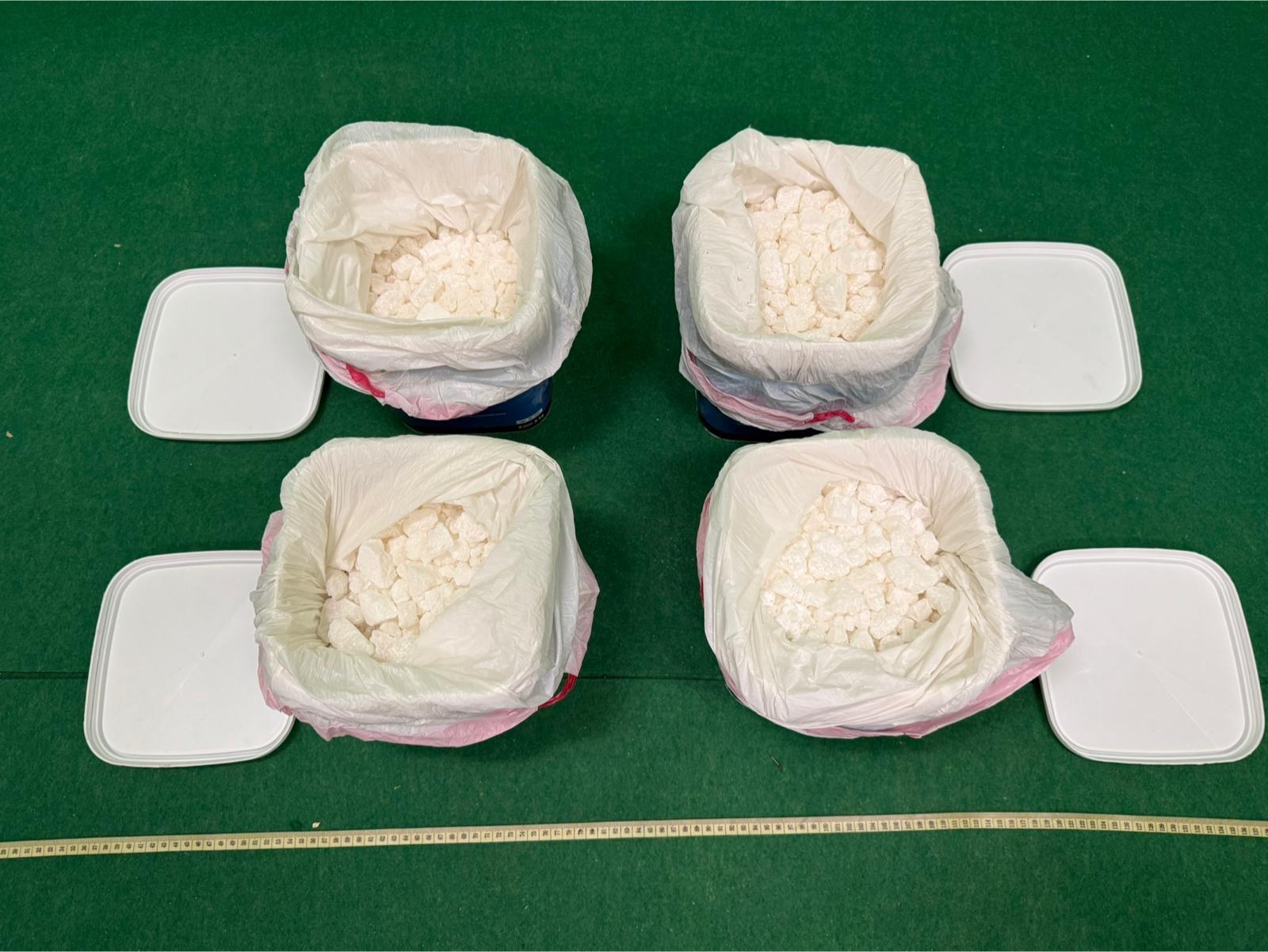
The inspection uncovered approximately 13 kilograms of suspected ketamine concealed inside four plastic buckets.
Customs estimated the drugs were worth more than HK$5 million.
The quantity in the second shipment was more than twice that recovered from the garden posts. Combined with the first seizure, officers intercepted approximately 19.4 kilograms of suspected ketamine across the two operations, which Customs described as about 20 kilograms in total.
Investigators then carried out another controlled delivery operation.
The following day, officers arrested a 23 year old local man in Kwai Chung in connection with the second shipment.
He was charged with one count of attempting to traffic in a dangerous drug. His case was also brought before a court on Wednesday, this time at the West Kowloon Magistrates' Court.
The two investigations were separate, with different concealment methods, shipment routes and suspects.
Customs warns against dangerous drug trafficking
The seizures demonstrate the variety of everyday items that can be used to conceal suspected narcotics during international shipments. In these cases, garden posts and swimming pool sanitiser buckets were used to disguise the contents of parcels arriving from Europe.
Customs officers rely on risk assessments and inspections to identify suspicious consignments. The first parcel came from Belgium, while the second originated in Spain and travelled through France before reaching Hong Kong.
The use of controlled delivery operations in both cases allowed investigators to continue tracing the shipments after the suspected drugs had been identified.
Such operations can provide investigators with an opportunity to identify people believed to be connected to the movement or collection of suspected narcotics rather than stopping an investigation at the point where a parcel is intercepted.
The cases also show the financial value attached to relatively small physical shipments. The first consignment contained suspected ketamine valued at HK$2.6 million, while the second contained drugs estimated to be worth more than HK$5 million.
Together, Customs placed the estimated market value of the suspected ketamine at HK$7.6 million.
Serious penalties under Hong Kong law
A Customs spokesperson reminded the public that trafficking in a dangerous drug is a serious offence under Hong Kong's Dangerous Drugs Ordinance.
The maximum penalty upon conviction is a fine of HK$5 million and life imprisonment.
The warning applies to people involved at different stages of the illegal drug trade, including those who transport, deliver or otherwise participate in the trafficking of dangerous drugs.
In the two cases announced by Customs, the allegations now have to proceed through the courts. The arrests and charges do not by themselves establish guilt, and the defendants will be dealt with according to the judicial process.
The first case involves two teenagers who were arrested after investigators conducted a controlled delivery linked to the shipment from Belgium. The second involves a 23 year old man arrested after a separate controlled delivery connected to the shipment that arrived from Spain through France.
International shipments under scrutiny
Both cases involved parcels arriving from overseas, with the suspected drugs concealed among goods that could appear unrelated to narcotics.
The first shipment contained 17 garden posts. The second consisted of four plastic buckets described as swimming pool sanitisers.
The different concealment methods point to the practical challenge faced by Customs officers when screening international cargo and parcels. Items used to hide suspected drugs can have legitimate commercial or household uses, making inspection and risk assessment an important part of the enforcement process.
The August 27 seizure also preceded the arrests by several days. Customs first identified the suspected ketamine before conducting a controlled delivery that resulted in the arrests of the two teenagers in Ngau Tau Kok.
The second case moved more quickly. Officers discovered approximately 13 kilograms of suspected ketamine in the air parcel on Sunday and arrested the 23 year old man in Kwai Chung the following day.
Both cases were brought before the courts on Wednesday.
The seizures have removed a combined quantity of almost 20 kilograms of suspected ketamine from the supply chain, according to Customs. The estimated market value of the drugs reached HK$7.6 million.
For the suspects, the next stage will take place in court, where the trafficking and attempted trafficking allegations will be considered under Hong Kong law.