


By Sarah Chan
Ma urges students to focus on careers
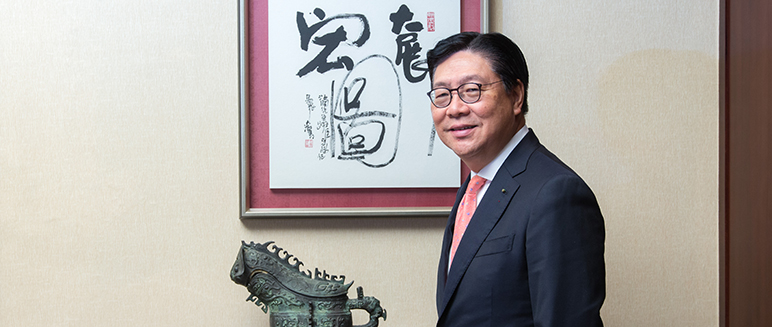
Hong Kong Trade Development Council chairman Frederick Ma Si hang has told university students that hard work, persistence and professional experience should come before the pursuit of property and other material possessions.
Speaking at an orientation event at Saint Francis University on Tuesday, Ma shared his own early career struggles and told students that financial rewards often come after people have developed their skills and proved themselves at work.
His message came as many young people in Hong Kong continue to face difficult decisions about careers, housing and financial security. For students preparing to enter the workforce, Ma argued that there was little value in becoming consumed by the pressure to buy a home, a car or other expensive possessions at an early age.
Instead, he encouraged them to concentrate on learning, performing well in their jobs and developing the confidence needed to take on increasingly demanding responsibilities.
Early career setback in New York
Ma used his own experience to illustrate his point.
When he was still in his twenties, a bank posted him to New York. The assignment placed him in an unfamiliar working environment and required him to deal with areas of banking in which he had limited experience, including foreign exchange trading.
The move was difficult. Ma said he struggled to understand parts of his new role and adapt to the environment around him. The pressure became so intense that there were moments when he would retreat behind closed doors and cry.
Rather than treating the setback as a reason to give up, Ma decided to devote more time to learning.
He spent his weekends studying documents, researching unfamiliar terminology and trying to understand the work that had initially seemed beyond his experience. He continued doing so outside normal working hours, gradually building the knowledge required to perform his role with greater confidence.
The effort eventually paid off.
After about a year and a half in New York, Ma received a promotion. The experience gave him a clearer understanding of how professional setbacks could be overcome through sustained effort.
He told students that the first major challenge in a career can feel like climbing a mountain. Once that first mountain has been climbed, he said, later challenges become easier because young professionals have already learned how to deal with pressure, uncertainty and failure.

Property should not become an early obsession
Ma also addressed one of the most persistent concerns among young people in Hong Kong: home ownership.
Hong Kong's property market has long placed home ownership beyond the immediate reach of many younger residents, creating pressure among those who believe they need to buy a flat as soon as they begin earning a salary.
Ma urged students not to allow that pressure to dictate their early career decisions.
He pointed to his own experience, noting that he did not buy his first home until he was 40.
Saint Francis University president Stephen Cheung Yan leung also offered a personal example. Cheung said he did not become a homeowner until he was in his 60s.
The experiences of the two senior figures were used to reinforce a simple message for students: there is no fixed age by which a person must own a home.
Ma encouraged young people to focus first on becoming good at their jobs and building a stable career. Property, cars and other material possessions, he suggested, should not become measures of success during the early stages of working life.
For graduates entering a competitive economy, developing professional skills can provide benefits that extend beyond an immediate salary. Experience can lead to promotions, stronger professional networks and opportunities in other markets.
Greater Bay Area offers wider opportunities
Ma also encouraged students to look beyond Hong Kong when considering their future.
He pointed to the rapid development of mainland China and the opportunities emerging across the Guangdong Hong Kong Macao Greater Bay Area.
The region brings together major economic centres including Hong Kong, Macao, Guangzhou and Shenzhen, creating a much larger market for businesses and professionals than Hong Kong alone.
For young people deciding where to build their careers, Ma suggested that mainland cities and other international markets should not be viewed as distant alternatives. They can form part of a wider career strategy.
His advice reflects the growing links between Hong Kong and mainland businesses, particularly as companies seek access to international markets and new sources of investment.
Students with experience in more than one market may also gain a broader understanding of how companies operate across different regulatory, commercial and cultural environments.
Ma's comments therefore went beyond a simple call to work harder. He encouraged students to think about where their skills could be used and to remain open to opportunities outside the territory.
Corporate experience before entrepreneurship
For students considering starting their own businesses, Ma recommended gaining corporate experience before taking the plunge.
He advised aspiring entrepreneurs to spend time working in established companies so they could develop practical knowledge and build up capital before launching their own ventures.
Starting a company requires more than an idea. Entrepreneurs need to understand customers, finances, employees, suppliers and the day to day demands of running an organisation.
Corporate employment can provide exposure to many of these areas while allowing young professionals to learn from experienced managers and colleagues.
Ma's recommendation was also tied to financial preparation. Building savings before starting a company can give entrepreneurs more room to manage the early costs and uncertainty that come with establishing a business.
For students who dream of becoming entrepreneurs, the message was to treat employment as part of the preparation rather than seeing it as a detour from their ultimate goal.
Mainland companies seeking overseas expansion
Ma also spoke about Hong Kong's role as a bridge between mainland Chinese businesses and international markets.
He said the Hong Kong Trade Development Council, as a core member of the government's GoGlobal Task Force, had recently received numerous inquiries from mainland enterprises seeking advice on expanding overseas through Hong Kong.
The inquiries reflect growing interest among mainland companies in using the city as a base for international expansion.
Hong Kong's established financial system, professional services sector and international business connections can provide companies with support as they enter markets outside mainland China.
Ma expressed confidence that more mainland enterprises would use Hong Kong as a platform for expanding internationally.
For the HKTDC, such inquiries also create an opportunity to connect mainland businesses with overseas partners, markets and professional services.
The council's role is particularly relevant as companies seek to move beyond domestic markets and establish international operations.
Belt and Road Summit to bring business leaders together
Ma also referred to the upcoming Belt and Road Summit in Hong Kong.
The event is scheduled to take place next week and will bring together senior government officials and business leaders from different markets.
The summit provides another platform for companies and officials to discuss investment, trade and commercial cooperation linked to Belt and Road markets.
For Hong Kong, the event also reinforces the city's role as a meeting point for mainland and international businesses.
Ma's comments at the university event connected that wider economic role with the choices facing students. The opportunities available to young people, he suggested, are not limited to the jobs and industries immediately around them.
A longer view of success
Ma's advice to students was rooted in his own career rather than a promise of quick financial success.
His experience in New York showed him that professional progress can take time. The promotion he received after about a year and a half did not come when he was struggling with unfamiliar work. It came after he had spent months learning, studying and adapting to the demands of the job.
That experience shaped his view that young professionals should not judge their careers too early.
For students entering the workforce, the immediate priorities are learning how to do a job properly, developing useful skills and gaining experience that can open doors later.
Home ownership can come later. So can other material goals.
Ma's broader message was that financial security is more likely to follow sustained professional development than anxiety about achieving a particular standard of living at a young age.
His own timeline illustrates the point. He did not buy his first home until he was 40, yet the delay did not prevent him from building a successful career.
For the students listening at Saint Francis University, the practical lesson was straightforward: build skills first, take difficult assignments seriously, gain experience and remain open to opportunities beyond Hong Kong. Wealth, Ma argued, should be the result of that long term effort rather than the starting target.