

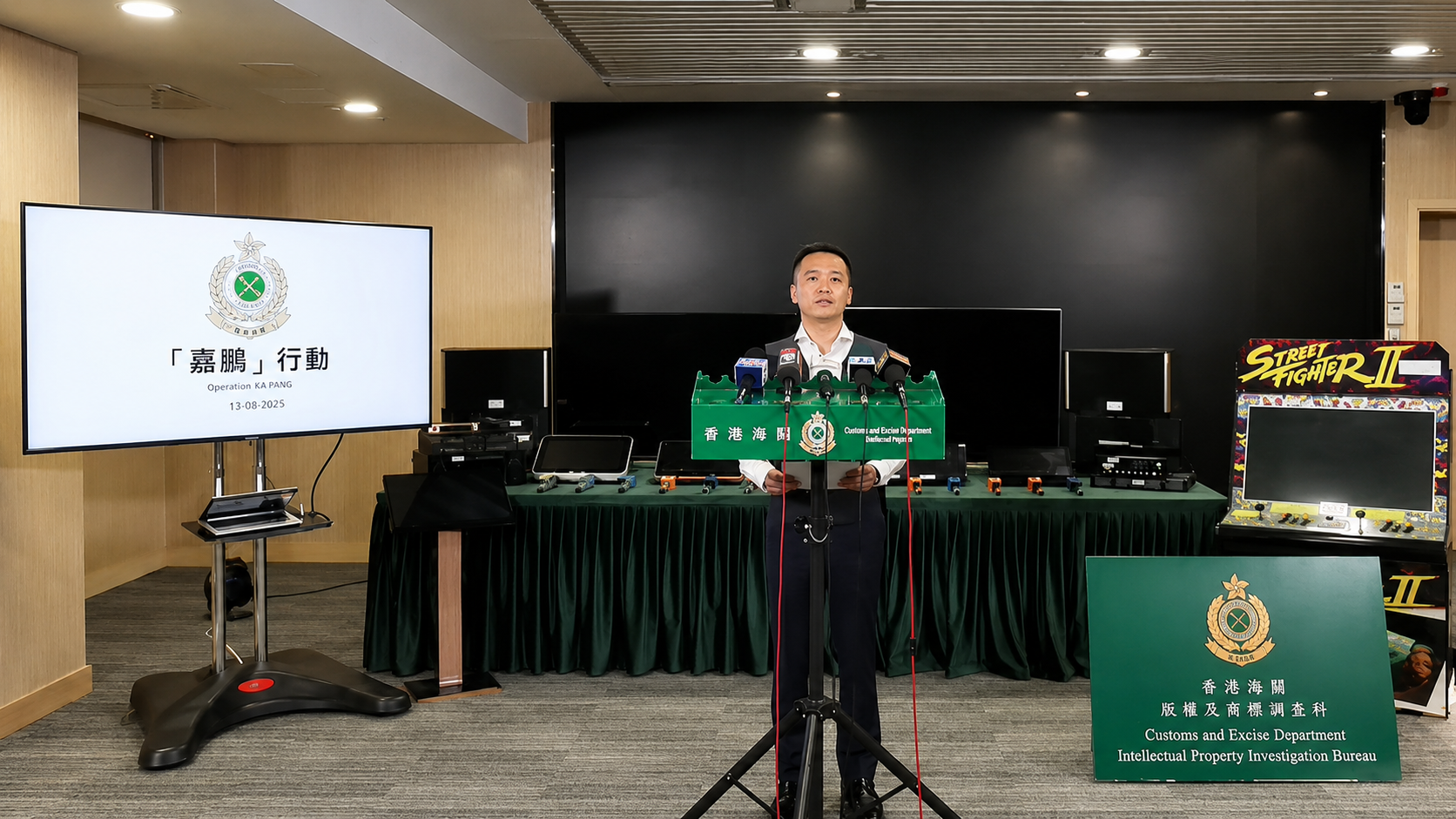
Hong Kong Customs has arrested five people and seized suspected pirated karaoke equipment worth about HK$600,000 after a territory wide crackdown on commercial party rooms allegedly offering unlicensed music and gaming services.
More than 100 customs officers took part in the operation between late July and early September, targeting 21 party rooms across Hong Kong Island, Kowloon and the New Territories.
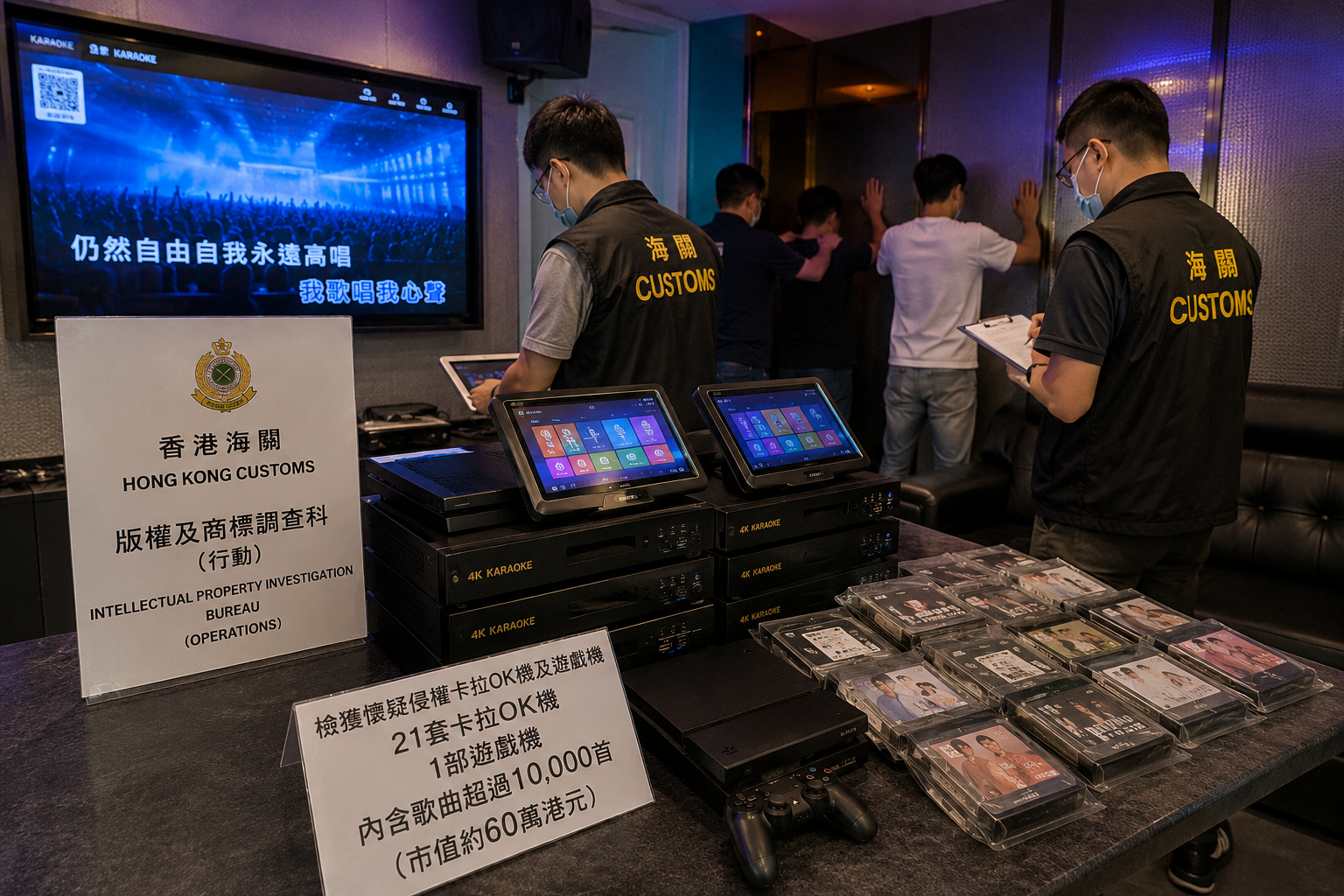
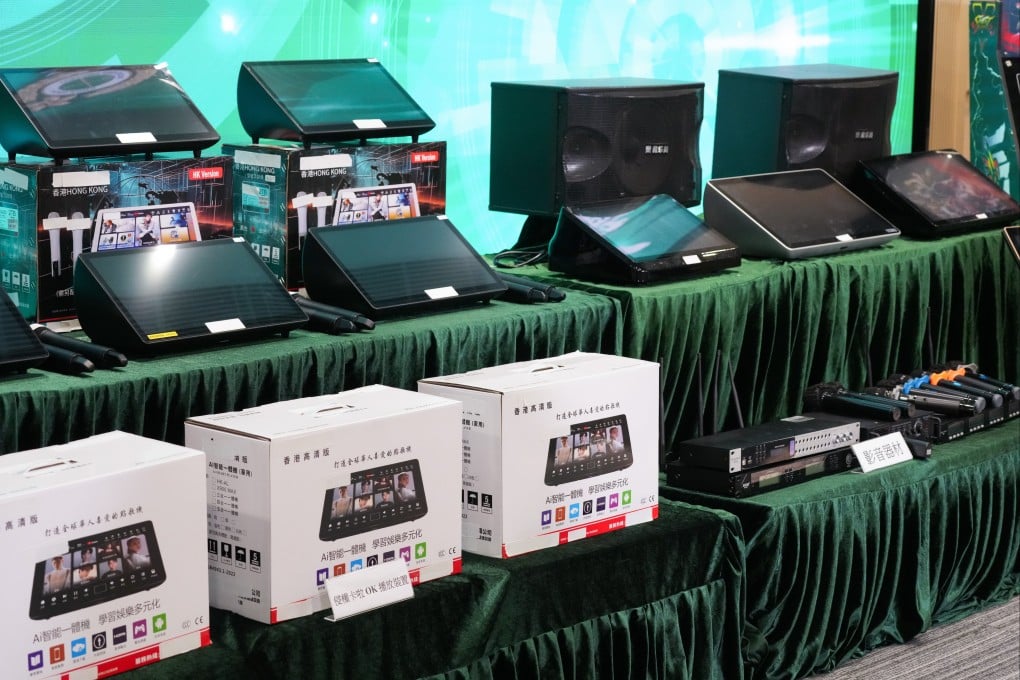
Investigators seized 21 suspected infringing karaoke player sets and one gaming console during the raids. The karaoke devices contained more than 10,000 preloaded local pop songs, including older favourites as well as tracks released this year through major online music platforms and radio stations.
Customs said the investigation also uncovered a growing business model that allows party room operators to run venues with little or no staff presence. Some businesses promoted their rooms through social media, accepted electronic payments and used automated booking systems, making it harder for enforcement officers to identify the people running the premises.
Authorities said those arrangements do not shield operators from prosecution. Businesses remain responsible for ensuring that music, games and other copyrighted material made available to customers have the required licences.
Five people arrested during coordinated raids
The investigation began after Customs used big data analysis to identify party rooms suspected of operating karaoke systems and gaming equipment without the necessary copyright permissions.
Officers then gathered intelligence and worked with copyright owners before identifying premises for enforcement action.
The resulting operation covered locations throughout the city rather than focusing on a single district. Officers entered 21 party rooms during coordinated raids and arrested three men and two women aged between 28 and 44.
Those arrested included people believed to be involved in operating or working at the venues.
All five were released on bail while the investigation continues. Customs has also indicated that additional arrests remain possible as officers examine the seized equipment and gather further evidence.
The investigation is centred on suspected offences under Hong Kong’s Copyright Ordinance.
The scale of the seizures gives investigators a substantial amount of material to examine. Each karaoke machine may contain thousands of individual music files, while the presence of recently released songs can provide evidence about how frequently the systems were updated.
More than 10,000 songs found on seized devices
The karaoke equipment seized during the operation contained extensive libraries of local music.
Customs said operators appeared to use large collections of songs as a way to attract customers. A party room offering a broad selection of music, including current chart hits, can make its service more appealing to groups looking for private entertainment.
The problem, according to authorities, is that the size or freshness of a music library does not establish that the material has been legally licensed.
A business may have thousands of songs stored on a machine, but that does not mean it has permission to reproduce or provide those recordings to customers.
A spokesman for the Intellectual Property Investigation Operations Group under the Intellectual Property Investigation Bureau said operators had loaded extensive music catalogues onto their equipment to attract patrons.
Customs reminded businesses that they must check the copyright status of material provided at their premises. That responsibility applies to music and other audio visual content used as part of a commercial service.
For customers, an apparently sophisticated karaoke system can therefore create a misleading impression. A machine with current releases, older classics and a large selection of songs may look professionally operated, but customers cannot assume that every track has been properly licensed.
Automated booking systems raise new enforcement concerns
One of the more recent trends identified by Customs involves party rooms operating through self service booking systems.
Instead of maintaining a reception desk or having employees present throughout the day, some operators advertise rooms online and allow customers to complete reservations electronically.
Authorities said these businesses often publish prices and general location information on social media without immediately revealing the exact address.
Customers may receive the precise location and door access code only after completing payment on the day of the booking.
That arrangement can make traditional enforcement more difficult because there may be no obvious business counter, receptionist or employee available when officers visit.
Customs said the use of automated reservations does not change the legal responsibilities of the operator.
Electronic payment systems do not provide an exemption either. Neither does remote management.
If a business provides copyrighted music or games to customers without the required authorisation, the operator can still face criminal liability even when no employee is physically present at the venue.
The warning comes as Hong Kong’s party room industry increasingly relies on digital tools to manage reservations and customer access. Automated systems can reduce staffing requirements, but they do not remove obligations under copyright law.
Businesses remain responsible for licensing
Customs said business owners should take responsibility for checking whether the material offered to customers is legally licensed.
That includes music stored on karaoke machines as well as games and other copyrighted content available on entertainment systems.
The issue can be particularly complicated for businesses that rely on third party suppliers to install or update their equipment. Operators cannot simply assume that a supplier has obtained all necessary permissions.
They need to establish what licences are required and whether those licences cover commercial use at their premises.
The presence of newly released songs can also be a selling point for party rooms, particularly among customers looking for a current selection. Customs said operators in the latest investigation had used extensive and frequently updated catalogues to attract patrons.
The enforcement action therefore focuses not only on the physical machines but also on the commercial use of the copyrighted works stored on them.
Penalties can reach HK$50,000 per infringing item
Hong Kong’s Copyright Ordinance provides significant penalties for people convicted of possessing infringing copies of copyright works for commercial or trade purposes.
Customs said offenders can face a maximum fine of HK$50,000 for each infringing item and up to four years in prison upon conviction.
The potential penalty is calculated on an individual infringing item basis, meaning a case involving a large quantity of unauthorised material can carry serious financial consequences.
The arrests also show that enforcement authorities are paying attention to the way entertainment businesses operate rather than limiting investigations to traditional retail outlets or physical sales of pirated material.
Party rooms can provide customers with access to music, games and other copyrighted content as part of a paid service. That commercial setting places legal responsibilities on the operators.
Customers urged to check venues before booking
Customs also issued advice to members of the public who use party rooms.
Customers should not choose a venue simply because it advertises unlimited songs, the latest music or a large entertainment library.
Authorities encouraged consumers to use reputable venues that provide identifiable business details, contact information and clear pricing.
Customers should also keep records of bookings and payments. Such records can be useful if a dispute arises or if authorities need information about a particular venue.
The advice reflects the changing way party rooms are marketed. A customer may discover a venue through a social media advertisement, communicate through an online messaging service, pay electronically and receive an access code without ever meeting the operator in person.
That convenience can make it difficult for customers to know who actually runs the premises.
Keeping booking confirmations and payment records gives customers a clear record of the transaction and the service they purchased.
Investigation remains open
The five people arrested in the operation have been released on bail pending further investigation. Customs has not closed the case and further arrests have not been ruled out.
Officers will continue examining the equipment seized from the 21 premises and assessing evidence gathered during the raids.
The operation also sends a broader warning to party room operators across Hong Kong. A business does not avoid copyright obligations by removing staff from the premises, using online bookings or managing the venue remotely.
The same principle applies whether customers book a room through social media, an automated reservation system or another electronic platform.
For operators, the immediate responsibility is to verify that every copyrighted song, game and other entertainment product offered commercially has the necessary authorisation. For customers, checking a venue’s business details and keeping booking records can help avoid problems.
Anyone who suspects intellectual property infringement can report the matter to Hong Kong Customs through its 24 hour hotline, dedicated email service or online reporting channels.
The latest raids show that Hong Kong Customs is using data analysis and coordinated enforcement to identify businesses that may be operating outside copyright rules, including party rooms designed to function without a visible on site operator.