

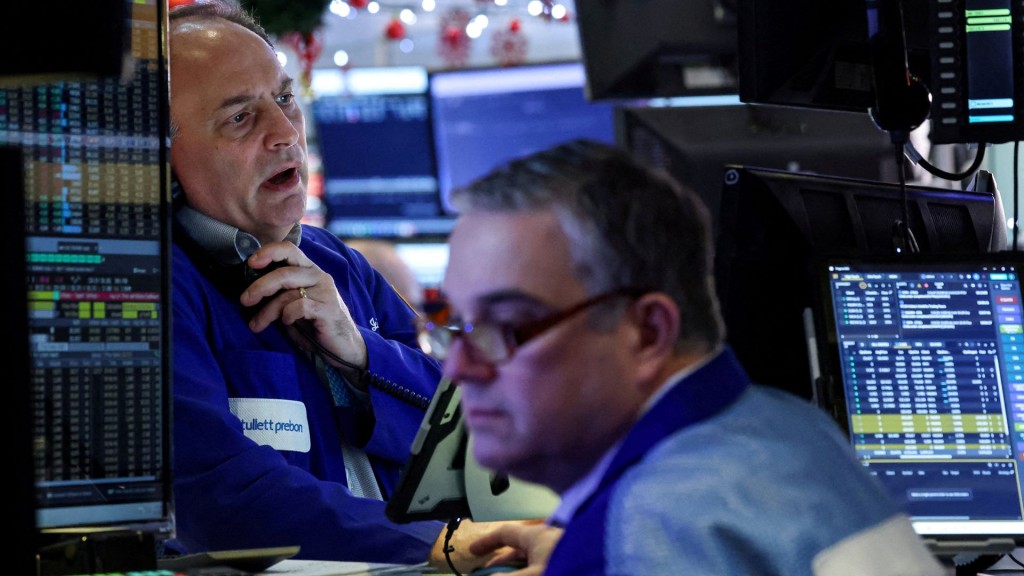
Wall Street regained ground on Wednesday as investors stepped back into parts of the stock market that had suffered during a three day selloff, helping all three major US indexes finish higher. Smaller companies led the advance, with the Russell 2000 rising 1.1 percent as traders looked for opportunities in shares that appeared to have been oversold during the recent retreat from riskier assets.
The rebound was broad, although it was far from uniform. Airlines, gold and silver miners and regional banks posted some of the strongest gains among market groups. Software and services stocks, meanwhile, lagged as investors continued to question how artificial intelligence could affect businesses whose products and services face increasing competition from AI based tools.
The Philadelphia Semiconductor Index also recovered some ground after suffering a sharp decline since late June. The index, which has been one of the main engines of the stock market's gains this year, has lost almost one quarter of its value since then. Attention remained firmly on the chip industry as Broadcom was due to report its second quarter results after the closing bell.
Chip stocks regain ground
Nvidia, one of the companies most closely associated with the artificial intelligence boom, gained 3.2 percent. Micron rose 2.4 percent, while Qualcomm advanced 2 percent.
The moves suggested that some investors were willing to buy technology shares after the recent declines, even as questions surrounding valuations and the future impact of AI continued to influence trading.
Lauren Cassidy, chief investment officer at Founders 100 ETF in Dallas, said investors were balancing concerns about geopolitical risks and inflation against strong corporate earnings and continued spending on artificial intelligence.
"The war is continuing longer than anyone hoped, and when it ends, energy will cool and inflation won't be as much of an issue," Cassidy said. "At the same time, we just had a record earnings season, with wonderful fundamentals being driven by the accelerating adoption of AI."
Cassidy said the adoption of AI remained at an early stage and argued that increasing use of the technology could support further growth.
"AI adoption is still in the very early innings and it's just now accelerating," she said. "We could see exponential growth from here."
Her comments reflected one of the central debates facing investors. Technology companies have delivered strong earnings and enormous investment in AI infrastructure has created demand for chips, data centres and related equipment. At the same time, the scale of spending has raised questions about how quickly those investments will translate into sustained profits across the wider economy.
For now, investors appeared prepared to look beyond some of those concerns, at least for a session.
Major indexes close higher
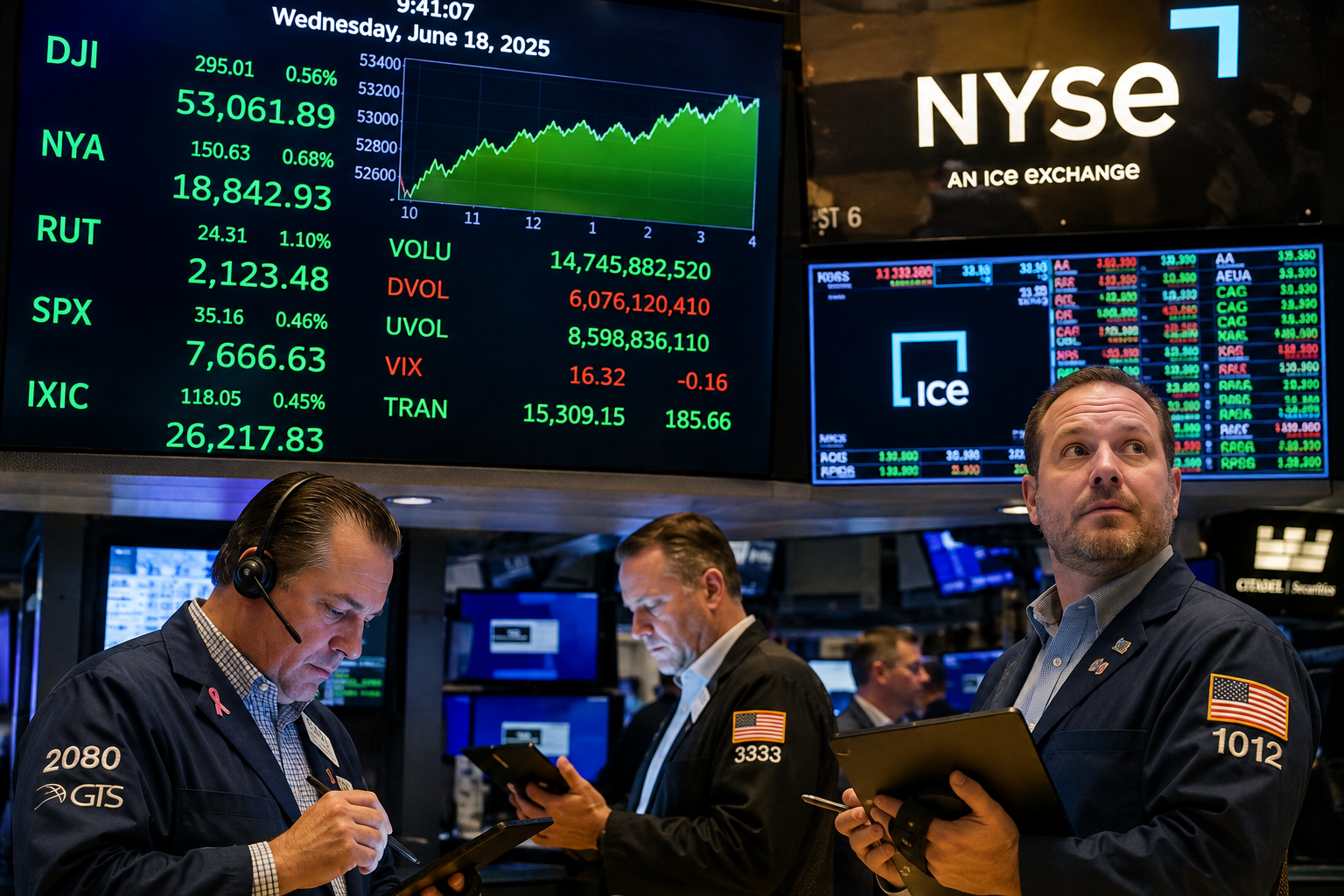
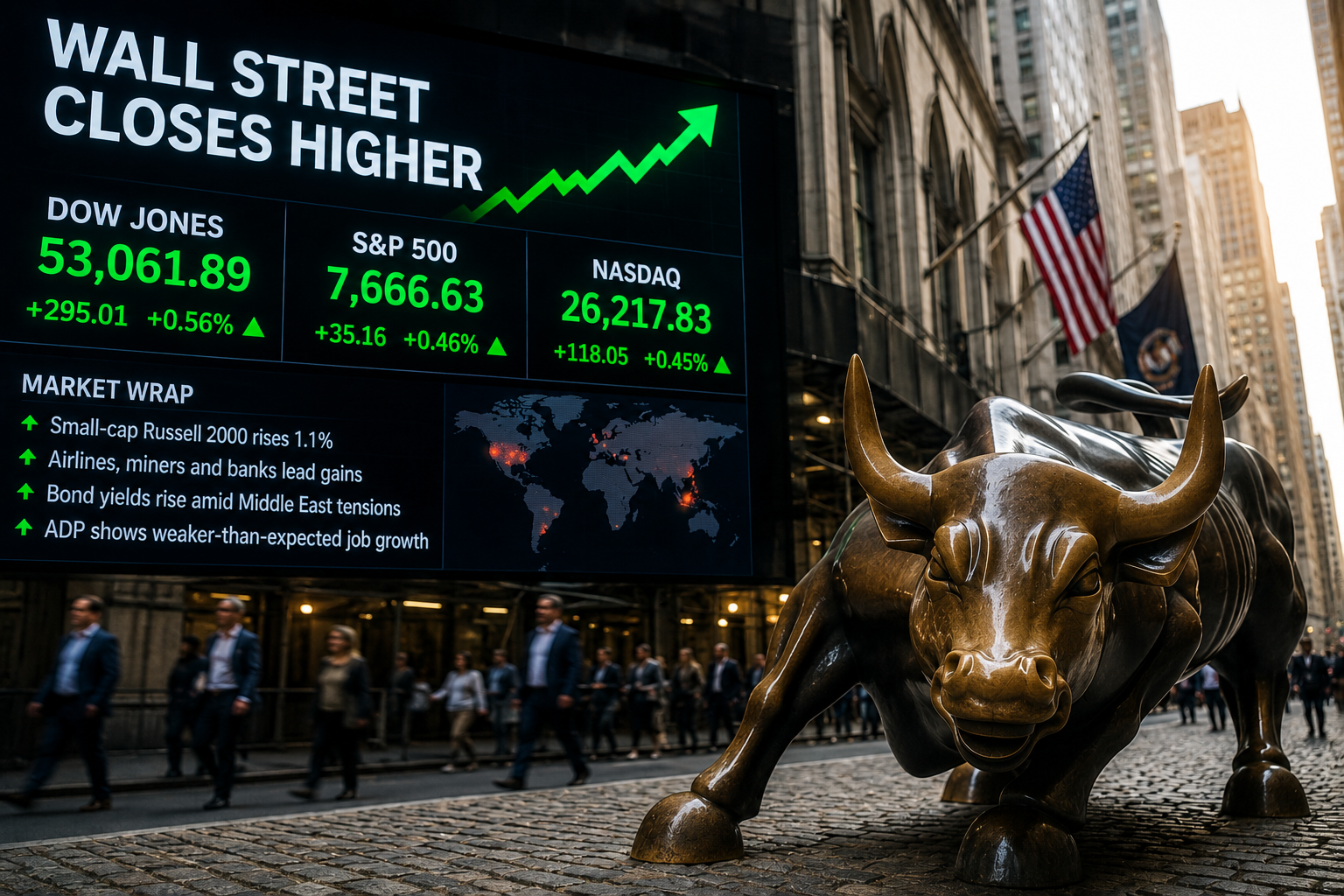
The Dow Jones Industrial Average rose 295.01 points, or 0.56 percent, to finish at 53,061.89.
The S&P 500 added 35.16 points, or 0.46 percent, closing at 7,666.63. The Nasdaq Composite gained 118.05 points, or 0.45 percent, to end at 26,217.83.
The Russell 2000 performed better than the three larger indexes, gaining 1.1 percent. The stronger performance from smaller companies suggested that investors were willing to move into areas of the market that had been under pressure, rather than concentrating exclusively on the biggest technology names.
Within the S&P 500's 11 major sectors, materials recorded the largest percentage gain. Real estate was the only sector to finish lower.
Individual corporate moves also contributed to the session's gains.
Dell Technologies jumped 15.8 percent after the hardware company raised its annual profit and revenue forecasts. The revised outlook gave investors another indication that demand for technology equipment remained firm despite broader concerns about the economy and the direction of corporate spending.
Brown Forman, the maker of Jack Daniel's, gained 3.9 percent after reporting quarterly profit above expectations.
Uber Technologies rose 1.6 percent after the ride sharing company announced plans to cut about 10 percent of its workforce. The job reductions came as the company continued to adjust its operations and cost structure.
The day's trading therefore included both evidence of corporate strength and signs that companies were taking steps to control expenses. Investors were weighing those developments against a much wider set of economic and geopolitical risks.
Bond market selloff remains a concern
The stock market's recovery did not remove the pressure building elsewhere in financial markets.
Global government bonds remained under heavy selling pressure, with investors worried about inflation and the growing level of government debt in several major economies. Higher bond yields can make stocks less attractive by increasing borrowing costs for companies and offering investors greater returns from relatively lower risk assets.
The bond market's weakness has become an important source of uncertainty for equities. Investors have been watching whether rising yields could eventually put further pressure on corporate valuations, particularly among companies whose share prices already reflect expectations for strong future growth.
Geopolitical developments added another layer of concern.
The United States and Iran stepped up attacks in what was described as their largest exchange of airstrikes since July. The escalation reduced expectations of a quick return to negotiations and raised concerns that a prolonged conflict could push energy prices higher.
Higher energy costs can feed directly into inflation by increasing the cost of transportation, manufacturing and other business activities. If inflation remains elevated for longer, central banks could face pressure to keep interest rates higher or delay cuts in borrowing costs.
That prospect has become particularly important for financial markets because investors have been closely watching economic data for signs of whether price pressures are easing without causing a sharp deterioration in employment and business activity.
US economic data sends mixed signals
Wednesday's economic figures provided some evidence that the US economy may be losing momentum.
Payroll processor ADP reported fewer private sector job additions than economists had expected for August. The report did not point to a collapse in employment, but the weaker than expected figure added to questions about the strength of hiring.
Separate data showed that new orders for core capital goods had been revised lower. The figures are watched because business investment in equipment and other long lasting goods can provide an indication of how companies view future demand.
A weaker investment outlook could suggest that some businesses are becoming more cautious about expansion plans. It also adds another variable for investors trying to determine whether the economy is heading towards a gradual slowdown or something more severe.
More economic information is due on Thursday, including data on international trade, second quarter labour costs and productivity, and the services purchasing managers' index.
Those reports will give investors additional evidence about the health of the US economy and could influence expectations for monetary policy.
Market breadth improves despite lingering weakness
The advance was supported by a larger number of rising stocks than falling stocks across both major US exchanges.
On the New York Stock Exchange, advancing issues outnumbered decliners by a ratio of 1.78 to 1. The exchange recorded 150 new highs and 290 new lows.
The Nasdaq showed a similar pattern. A total of 3,102 stocks rose while 1,679 declined, producing an advance to decline ratio of 1.85 to 1.
Yet the number of new lows showed that Wednesday's recovery did not erase the damage caused by the recent selloff.
The S&P 500 recorded 12 new 52 week highs and 10 new lows. On the Nasdaq, 58 stocks reached new 52 week highs while 135 touched new lows.
Those figures pointed to a market in which investors were buying selected shares but had not completely returned to broad based optimism. Some companies remained well below their recent peaks even as the major indexes recovered.
Trading activity was also slightly lighter than the recent average. US exchanges recorded 14.75 billion shares in volume, compared with an average of 15.19 billion shares over the previous 20 trading sessions.
The combination of stronger indexes, improved market breadth and relatively moderate trading volume suggested that Wednesday's move was more consistent with selective bargain hunting than a decisive change in investor sentiment.
Investors now face a test from several directions at once. Corporate earnings remain strong in important parts of the economy, particularly among companies benefiting from spending on artificial intelligence. Smaller companies are attracting buyers after recent declines. But rising bond yields, uncertainty over inflation, weaker employment data and renewed military escalation between the United States and Iran continue to threaten the recovery.
Thursday's economic releases will provide the next set of evidence. For investors, the immediate question is whether Wednesday's gains mark the beginning of a broader recovery or simply a pause in the selling that pushed stocks lower over the previous three sessions.