

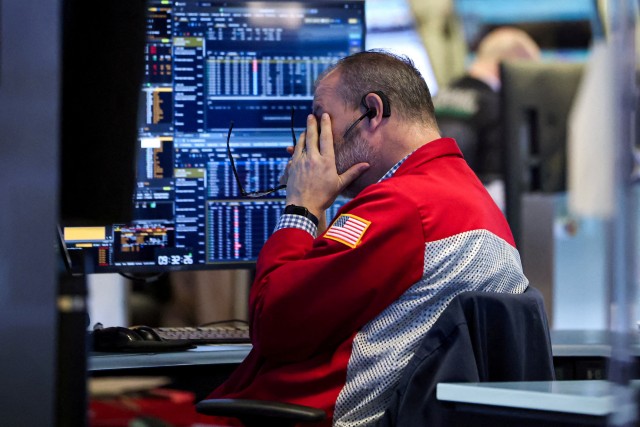
Wall Street stocks opened with little movement on Friday as investors weighed a stronger than expected US jobs report that prompted a fresh reassessment of Federal Reserve policy. The employment figures gave markets another reason to consider the possibility of an interest rate increase this month, putting pressure on investors who had been positioning for a more accommodative policy outlook.
The Dow Jones Industrial Average fell 101.2 points, or 0.19 percent, shortly after the opening bell to 53,584.89. The S&P 500 edged up 2.5 points, or 0.03 percent, to 7,750.19, while the Nasdaq Composite added 3.8 points, or 0.01 percent, to 26,587.896.
The narrow moves reflected a market caught between two competing signals. Strong employment data generally supports the view that the US economy continues to withstand tighter financial conditions, but it can also make the Federal Reserve less willing to reduce borrowing costs and more prepared to consider another increase if inflation remains a concern.
Jobs report changes rate expectations
The latest employment figures became the main focus for investors as trading began. A stronger jobs reading than economists had expected suggested that demand for workers remains firm, challenging assumptions that economic activity may be weakening enough to give the Federal Reserve room to ease policy.
Interest rate expectations play a major role in stock market pricing because changes in borrowing costs affect corporate financing, consumer spending and the value investors place on future company earnings. When markets anticipate higher rates, investors often reassess companies whose valuations depend heavily on expectations of stronger profits in the years ahead.
Friday's subdued opening indicated that investors were not making a wholesale retreat from equities, but they were also reluctant to push the major indexes sharply higher after the employment data.
The Dow's decline stood in contrast to the modest gains in the S&P 500 and Nasdaq. The difference was small, however, with all three indexes moving by only fractions of a percent during the opening minutes.
Investors watch the Federal Reserve
The Federal Reserve's next policy decision has taken on greater importance following the employment report. Investors had been assessing whether economic conditions would support a more cautious approach from US policymakers, particularly as markets attempt to determine the direction of interest rates for the remainder of the year.
A stronger labor market can complicate that calculation. If businesses continue hiring and workers remain in demand, policymakers may have fewer reasons to worry about a sharp slowdown in economic activity. At the same time, persistent strength in employment can keep pressure on wages and consumer spending, factors that may influence the path of inflation.
For Wall Street, the question is not simply whether the economy is growing. Investors are also trying to determine how much economic strength the Federal Reserve can tolerate before deciding that monetary policy needs to become tighter.
That uncertainty was visible in Friday's opening numbers. Rather than triggering a broad selloff, the jobs report produced a cautious response as investors considered what it could mean for interest rates and corporate earnings.

S&P 500 remains near elevated levels
The S&P 500 opened at 7,750.19 after gaining 2.5 points, or 0.03 percent. The index's limited movement suggested that investors were waiting for more evidence before making significant changes to their positions.
The S&P 500 is closely watched because it represents a broad section of the US equity market and includes companies across major industries. Its performance is also an important indicator of overall investor sentiment.
A move of just 0.03 percent at the open is effectively a holding pattern. Investors were absorbing the latest economic information without committing the market to a clear direction.
That caution can be especially pronounced when economic data directly affects monetary policy expectations. A jobs report can alter forecasts for interest rates almost immediately, but investors still need to assess whether the change will persist as additional economic figures arrive.
Nasdaq gives up little ground to rate concerns
The technology heavy Nasdaq Composite was also almost flat, rising 3.8 points, or 0.01 percent, to 26,587.896.
Technology stocks are often closely watched during periods of changing interest rate expectations because investors place significant value on future earnings and growth prospects. Higher interest rates can make those future cash flows less attractive when compared with investments offering higher returns through interest income.
Despite the stronger jobs data and renewed rate hike bets, the Nasdaq's opening move showed no immediate rush to exit technology shares.
The near flat performance also indicated that investors were balancing rate concerns against continued confidence in large US companies and the broader economy. The response remained measured rather than disorderly.
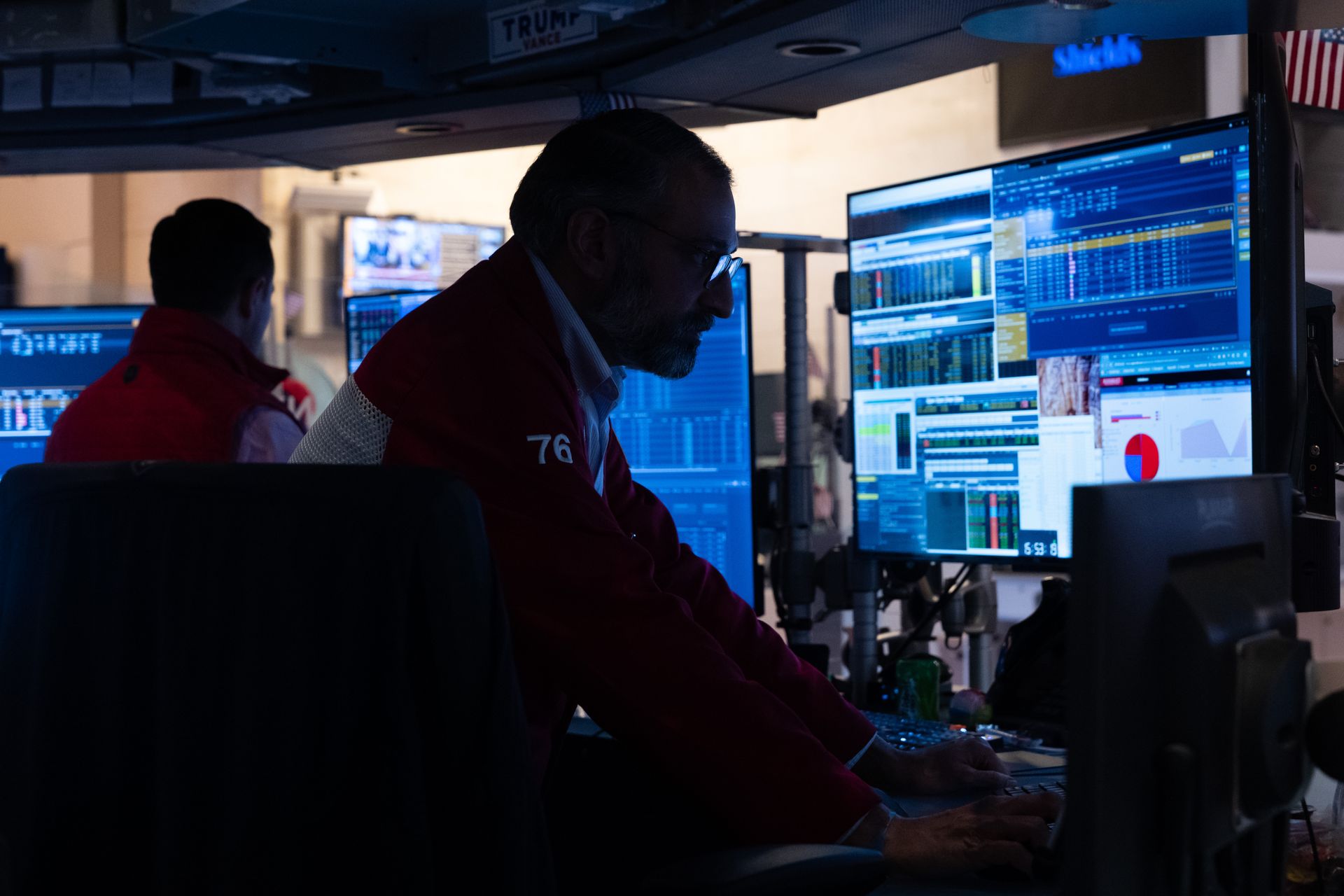
Dow slips as markets reassess economic strength
The Dow was the weakest of the three major indexes at the open, falling 101.2 points to 53,584.89.
The 0.19 percent decline was modest in percentage terms, but it marked a clearer move lower than the S&P 500 and Nasdaq. The Dow includes many large established companies whose share prices can respond to expectations for economic growth, borrowing costs and consumer demand.
The divergence among the three indexes was limited, however. None of the major benchmarks showed a dramatic reaction in the opening minutes, reinforcing the impression that investors were still weighing the implications of the employment data.
Economic strength creates a complicated market picture
For investors, strong employment figures are not necessarily bad news. A healthy labor market can support household income, consumer spending and company revenues. Businesses that maintain solid demand can continue investing, hiring and expanding.
The complication comes when that economic strength influences monetary policy.
If the Federal Reserve believes the economy can absorb higher borrowing costs, stronger data could give policymakers more room to raise rates. For financial markets, that can mean higher yields on bonds and greater financing costs for companies and consumers.
Investors therefore have to assess two separate questions at the same time: how strong the economy is and what that strength means for Federal Reserve policy.
Friday's opening provided no definitive answer. The three major indexes remained close to their previous levels, suggesting that traders were reluctant to make large bets based on a single set of employment figures.
Markets await further signals
The reaction also showed how sensitive Wall Street has become to economic reports that can influence interest rate expectations. Employment figures are among the most closely followed indicators because they provide insight into the health of the economy and the strength of consumer demand.
The latest numbers have now added another factor for investors to consider as they assess the Federal Reserve's next move. Expectations for a possible rate increase this month have gained attention following the stronger jobs reading, forcing traders to reconsider positions built around a less aggressive policy outlook.
For now, the market's response remains restrained. The Dow slipped, while the S&P 500 and Nasdaq barely moved. Those figures point to a Wall Street waiting for additional evidence before choosing a firm direction.
The immediate focus for investors is therefore clear: determine whether the latest jobs strength represents a sustained trend that could keep the Federal Reserve on a tighter policy path, or simply another strong economic reading that does not materially change the broader outlook. Until that picture becomes clearer, every new inflation, employment and economic growth figure is likely to receive close attention from traders.
With the Dow at 53,584.89, the S&P 500 at 7,750.19 and the Nasdaq at 26,587.896 at the open, Wall Street began Friday in a holding pattern, with interest rate expectations once again at the centre of the trading day.