

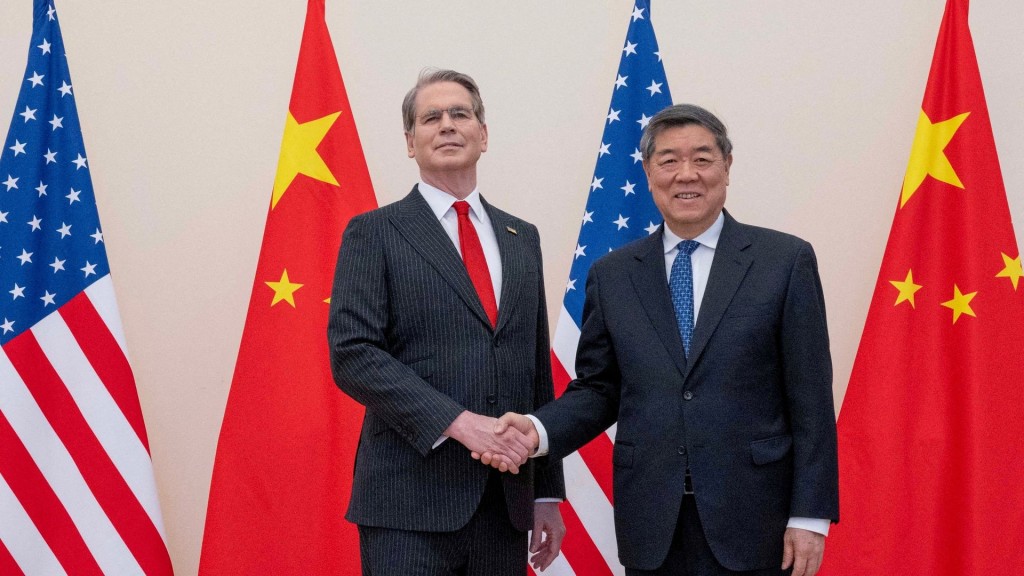
The United States is prepared either to extend its trade truce with China beyond its Nov 10 expiration date or consider a broader agreement, Treasury Secretary Scott Bessent said Wednesday after meeting Chinese Vice Premier He Lifeng in Washington.
Bessent's comments came as officials from both countries worked to settle outstanding issues before President Donald Trump meets Chinese President Xi Jinping at the White House on Thursday. The talks are expected to cover trade, critical minerals, artificial intelligence and other areas of a relationship that has been marked by repeated tariff disputes and negotiations.
The Treasury secretary did not provide details about what a larger trade agreement might contain. He said the Chinese side had raised the idea during talks on Sunday and that Washington was willing to examine both options.
"The Chinese on Sunday came up with the idea of a bigger deal," Bessent told reporters after the meeting. He said the United States was open to continuing the existing Busan arrangement or examining a broader agreement.
The immediate question is whether negotiators can preserve the trade arrangements already reached before the current truce expires.
Trade Truce Faces November Deadline
The existing agreement has lowered tariffs between the world's two largest economies after duties had climbed sharply during an earlier escalation in trade tensions.
The truce also included commitments involving China's exports of rare earth magnets and other critical minerals. Those materials are important to industries that depend on specialized components and supply chains.
US officials have said Chinese deliveries of rare earth materials have not fully met Washington's expectations. Bessent and US Trade Representative Jamieson Greer have therefore continued pressing Beijing on implementation while discussing the future of the broader agreement.
Greer said Monday that discussions over extending the truce would continue because there was still time before the November deadline.
"My expectation is we'll continue talking and I think both sides want it," Greer said in an interview with Bloomberg TV.
The administration has also linked continued negotiations to China's compliance with commitments concerning critical minerals. US officials have said the flow of rare earth materials to American companies has not reached the level Washington expected.
The issue adds another layer to negotiations that already cover tariffs, industrial goods, agricultural purchases, aircraft sales and technology.
Bessent and He Meet Again
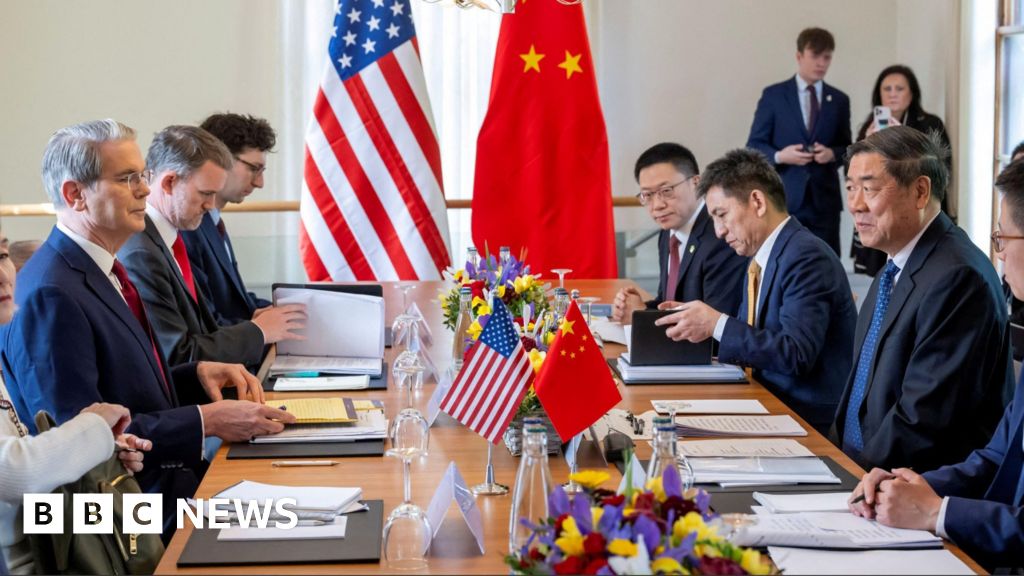
Wednesday's meeting at the World Bank headquarters was the second meeting between Bessent and He in four days.
Their earlier discussions took place in New York on Sunday and involved Greer and other officials. The talks were intended to prepare possible agreements for Trump and Xi to consider during their meeting.
Bessent described the Washington meeting as an effort to resolve unfinished issues before the presidential summit. He said the administration was seeking a more stable economic relationship based on what he described as reciprocity and fairness.
The discussions have produced some areas for further cooperation, although several major questions remain unresolved.
Among them is the future of the trade truce itself.
At the Sunday meeting, the two sides also discussed an artificial intelligence communication mechanism. Bessent said the countries had agreed to establish a communications hotline for notifying each other about significant AI safety incidents. Reuters reported that the proposal focuses on national security concerns and possible emergency communication protocols.
China's state news agency Xinhua confirmed that AI had been discussed but did not provide the same level of detail about the proposed hotline.
AI Cooperation Remains Limited
Artificial intelligence has emerged as another difficult issue in US China relations.
Washington and Beijing are competing over advanced AI systems, computing capacity and access to sophisticated semiconductor technology. Both governments have also raised concerns about security risks associated with increasingly capable AI systems.
Bessent has argued that greater communication could reduce the risk of misunderstandings involving serious AI incidents. The two sides are expected to continue discussions on the issue, including the types of incidents that could require direct communication between governments.
At the same time, neither government has indicated that it intends to slow the broader development of AI.
Trump has said he does not want to restrict the growth of the US AI sector and has repeatedly emphasized maintaining American leadership in advanced AI. China, meanwhile, continues to invest heavily in its own AI industry.
The differences make cooperation on safety and emergency communication more limited than cooperation in areas where the two countries have clearer economic incentives.
Possible Tariff Cuts on Selected Goods
The talks also returned to an arrangement discussed during the leaders' previous meeting in May.
US officials said the two sides agreed to operationalize a process known as the "Board of Trade" for identifying possible tariff reductions on non strategic goods.
The proposed approach could cover selected Chinese exports such as consumer products and low technology goods. US products considered for possible tariff treatment could include energy, agricultural goods and medical devices.
The arrangement would not represent a broad removal of tariffs. Instead, it would create a framework for discussing reductions on specific categories of goods.
That distinction matters because many of the broader disagreements between Washington and Beijing remain unresolved.
The two countries continue to negotiate over market access, industrial policy, technology restrictions and the supply of critical minerals. American officials are also seeking greater Chinese purchases of US products.
Boeing and Agricultural Purchases Remain on Agenda
Trade discussions have also included potential Chinese purchases of Boeing aircraft and American agricultural products.
These issues were discussed during the leaders' May meeting, when China made commitments involving increased purchases of US farm goods and at least 200 Boeing aircraft. Reuters reported earlier this week that the status of those commitments remains an unresolved issue.
For Washington, increased exports to China would provide a concrete economic component to any broader agreement. For Beijing, trade concessions could be weighed against other US demands involving technology restrictions, tariffs and industrial policy.
Neither side has announced a final agreement on those purchases ahead of Thursday's summit.
Critical Minerals Remain a Major Dispute
Rare earths and other critical minerals remain one of the most sensitive parts of the negotiations.
China has significant influence over global processing and supply chains for several rare earth materials. Restrictions imposed during earlier trade tensions created concern among American manufacturers and other users dependent on Chinese supplies.
Under the existing truce, China agreed to restore flows of rare earth magnets and other critical minerals. US officials have continued to monitor whether those commitments are being fully implemented.
Bessent and Greer have both indicated that Washington wants continued pressure on Beijing over the issue. The disagreement could become part of any discussion about extending the current truce.
The two sides therefore face a choice between maintaining an arrangement that has reduced some trade tensions and attempting to negotiate a broader package that could address several issues at once.
Trump and Xi Prepare for White House Meeting
Trump and Xi are scheduled to meet at the White House on Thursday, with trade expected to be one of the central subjects. Reuters reported that the summit is also expected to cover Taiwan, Iran and artificial intelligence, reflecting the wider scope of the US China relationship.
The meeting follows months of negotiations aimed at preventing another sharp escalation in tariffs.
Bessent's latest comments leave both options open. Washington could continue the existing Busan arrangement and preserve the current framework beyond Nov 10, or it could explore a larger agreement covering more areas of the bilateral relationship.
For now, neither option has been finalized.
The immediate test for negotiators is whether Trump and Xi can establish enough common ground to keep the trade truce in place while addressing disputes over tariffs, critical minerals, technology and purchases.
Will Thursday's Trump Xi meeting produce an extension of the existing trade truce, or open the way to a broader US China agreement?