

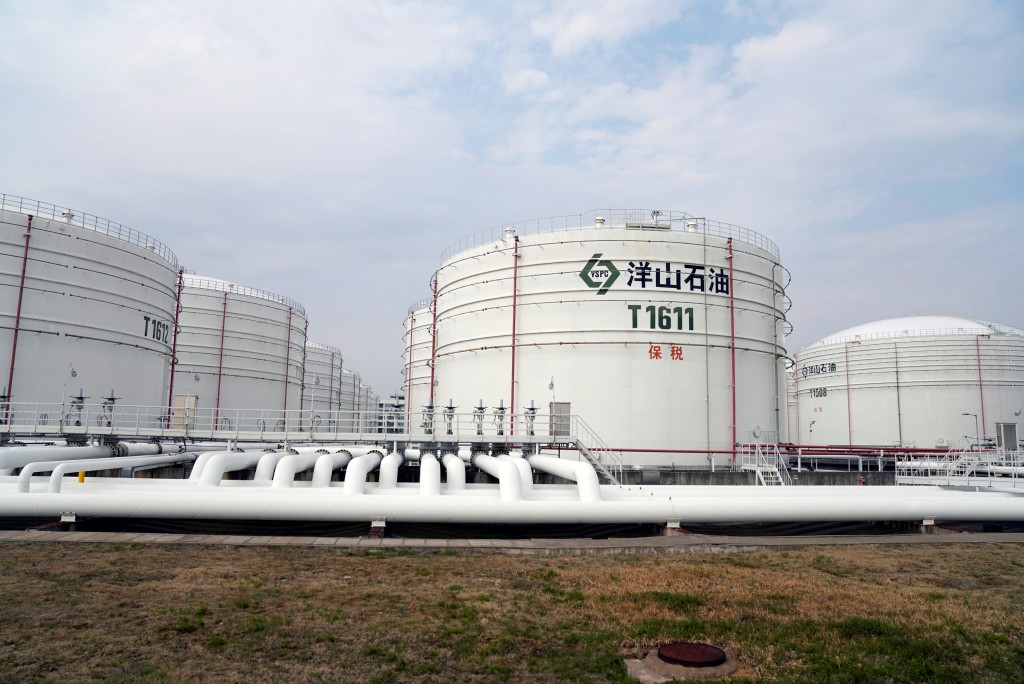
Oil prices recovered from their session lows on Friday as traders weighed the risk of prolonged disruptions to Saudi crude supplies against signs that some regional oil flows could begin to recover.
Brent crude futures were down 33 cents, or 0.31 percent, at US$104.49 a barrel by 1411 GMT, while US West Texas Intermediate futures rose 88 cents, or 0.86 percent, to US$102.79. Both benchmarks had fallen sharply earlier in the session, with Brent touching US$101.92 and WTI reaching US$99.39 before recovering.
The market remains highly sensitive to developments across the Middle East, where attacks on energy infrastructure and shipping have raised questions about how much crude can continue moving through key export routes.
"Oil prices are being supported by ongoing tensions in the Middle East, with tankers being targeted in the Strait," said Giovanni Staunovo, an energy analyst at UBS.
The immediate focus is Saudi Arabia. Three pumping stations serving the country's East West Pipeline were damaged in an attack last week, according to satellite imagery and three industry sources. That is one more damaged station than previously assessed.
The pipeline is a major route for moving Saudi crude from production areas in the east towards export facilities on the Red Sea, allowing shipments to avoid the Strait of Hormuz. The extent of the damage and the time required for repairs remain uncertain.
Saudi Pipeline Damage Raises Supply Questions
The latest assessment of damage has added another layer of uncertainty to the oil market.
Saudi Arabia has been trying to restore part of the East West Pipeline's capacity following last week's attack. Sources who spoke to Reuters have provided different estimates of how long repairs will take and when crude flows could return to normal.
That uncertainty has made it difficult for traders to establish how much Saudi supply could remain unavailable and for how long.
Oil prices rose close to four month highs earlier this week after reports that crude loadings at Yanbu, Saudi Arabia's main Red Sea export hub, had been suspended. Riyadh also cancelled some deliveries to European customers after the pipeline was damaged.
The developments prompted traders to reassess the amount of Saudi crude that could reach international markets through alternative routes.
Yanbu has particular importance because the port provides Saudi Arabia with an outlet on the Red Sea. If pipeline capacity is reduced, the ability to move crude from the country's eastern oil producing areas towards the Red Sea can also be restricted.
Saudi Aramco has reportedly told at least two European refining customers that they will receive no crude next month following the pipeline attack, Bloomberg News reported on Friday, citing people familiar with the matter.
The reported cancellations provide a more direct indication of how the infrastructure damage could affect physical oil deliveries. They also show why the market is watching repair efforts closely.

Riyadh and Houthis Exchange Strikes
The supply concerns come alongside renewed military activity between Saudi Arabia and Yemen's Iran backed Houthis.
Saudi Arabia and the Houthis exchanged fresh strikes across their border on Thursday. At the same time, Yemeni civilians used boats to leave parts of the Red Sea area as fighting spread.
The conflict has raised concerns well beyond the immediate areas affected by the attacks because the region contains some of the world's most important routes for energy shipments.
The Strait of Hormuz remains particularly important. Large volumes of crude oil and other energy products normally pass through the narrow waterway, linking the Gulf with global markets.
Any prolonged reduction in tanker traffic can therefore affect both the physical availability of energy products and the prices traders are willing to pay for future supplies.
Hormuz Traffic Remains Below Normal
Shipping activity through the Strait of Hormuz remains well below its recent average.
Four commodities vessels passed through the waterway on Thursday, according to preliminary shipping data available on Friday. The figure compares with a 10 day average of about 16 vessels.
Three liquefied natural gas vessels also reappeared outside the Strait on Thursday, according to data from Kpler.
The figures provide an indication of the disruption affecting commercial shipping, although they should not be treated as a complete picture of vessel movements.
Some ships switch off their transponders while travelling through conflict zones. They may do so to reduce the risk of being detected, meaning shipping databases can temporarily lose visibility of vessels and later update their positions.
That makes the pace of any recovery in traffic particularly important for oil traders.
Priyanka Sachdeva, head of market insights at Phillip Nova, said the central issue for markets was whether physical oil flows could return to normal and how quickly that could happen.
"If we see a sustained improvement in Hormuz traffic, some of the geopolitical premium can unwind further," she said.
That premium refers to the additional price investors may pay because of the possibility of supply disruption. If ships resume regular passage and oil deliveries become more predictable, some of that extra pricing pressure could disappear.
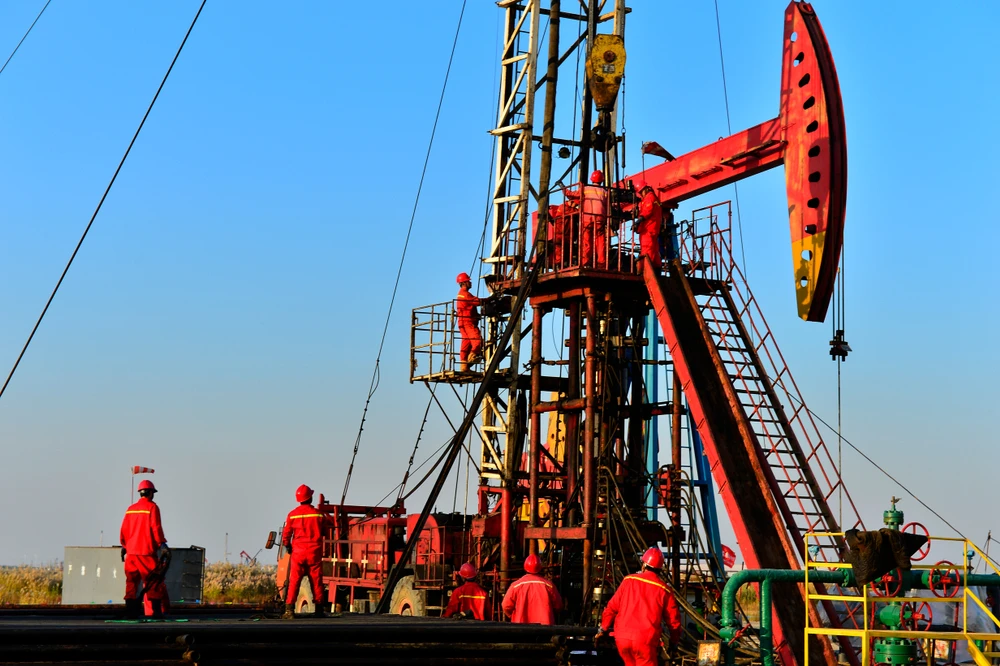
Chinese Fuel Exports Add Another Supply Signal
While Middle East supply risks remain at the centre of the market, developments in China are providing another factor for traders to consider.
Chinese exports of refined oil products increased 12.7 percent from a year earlier in August, according to customs data released on Friday. Jet fuel exports reached a record level during the month.
China is also expected to continue easing export controls in September. If refiners can send more products overseas while international margins remain attractive, additional supplies could reach the global market.
Higher exports could influence the balance between supply and demand for refined fuels at a time when disruptions in the Middle East are creating uncertainty around energy transportation.
The increase in Chinese exports also comes as inventories of refined products have been rising.
Refined product stocks increased by 3.7 million barrels last week, according to figures cited in a Morgan Stanley note. The increase was driven by stock builds in Western markets and Singapore.
For oil traders, rising product inventories can provide some relief because they indicate that refiners and distributors have more fuel available to meet demand. But the effect depends on whether those stocks remain accessible and whether transportation routes continue operating normally.
Markets Watch for Signs of Physical Recovery
The competing signals have left oil prices moving sharply in response to each new development.
On one side, damage to Saudi infrastructure, cancelled deliveries and reduced tanker traffic are creating concerns about physical supply. On the other, reports that Saudi Arabia could restore around half of the East West Pipeline's capacity within days have helped push prices down from their weekly highs.
The conflicting estimates over repairs make the situation particularly difficult for traders.
If Saudi Arabia restores pipeline operations faster than expected and shipping through the Strait of Hormuz continues to improve, some of the supply risk priced into crude could fade.
If repairs take longer, however, the loss of pipeline capacity could put additional pressure on available supplies and keep prices elevated.
The physical movement of oil will therefore matter as much as headlines about military activity. Traders need to know not only where attacks occur but also whether crude can still reach refineries and export terminals.
That distinction has become increasingly important as shipping companies assess risks and vessels adjust their movements through the region.
Diplomatic Uncertainty Adds to Market Risk
The conflict also remains tied to a wider diplomatic dispute involving the United States and Iran.
Washington and Tehran have not held peace talks since an interim agreement reached in June collapsed. The conflict is expected to be discussed at the United Nations General Assembly next week.
An Iranian delegation will be able to attend the gathering, according to the US State Department.
The absence of active peace talks leaves markets with limited visibility over the diplomatic path ahead. Any movement towards negotiations could reduce some concerns about prolonged disruption, while further escalation could place additional pressure on shipping and energy infrastructure.
For now, traders are watching several indicators at once: the repair of Saudi Arabia's East West Pipeline, crude deliveries from Yanbu, tanker movements through Hormuz, refined product inventories and Chinese exports.
Brent's move back from US$101.92 and WTI's recovery from US$99.39 showed how quickly sentiment can change as new information reaches the market. With physical oil flows still disrupted and military activity continuing, the next concrete signal will come from the movement of ships and the restoration of Saudi pipeline capacity.
Will oil supply routes across the Middle East begin returning to normal, or will further disruption keep crude prices above US$100 a barrel?