

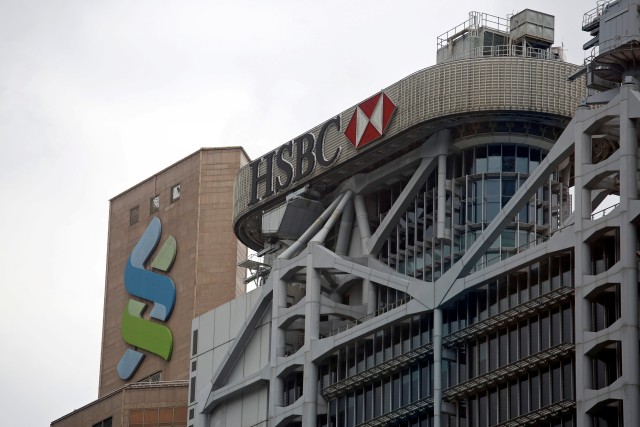
HSBC has kept its Hong Kong prime lending rate at 5 percent, choosing not to pass on the latest US Federal Reserve interest rate increase to borrowers immediately despite a 25 basis point hike in the US.
The decision came on Thursday after the Federal Reserve raised its target federal funds rate by 0.25 percentage point to a range of 3.75 percent to 4 percent. The move was the US central bank's first rate increase in three years and reflected continued concern about inflation.
HSBC said its best lending rate in Hong Kong would remain at 5 percent, while its Hong Kong dollar savings deposit rate would also be unchanged. The decision means borrowers with loans linked directly to the bank's prime rate will not face an immediate increase in their borrowing costs.
Other major Hong Kong banks are expected to follow HSBC's decision and keep their prime rates unchanged for now.
Fed Raises Rates for First Time in Three Years
The US Federal Reserve raised its benchmark interest rate by 25 basis points on Wednesday, bringing the target range to 3.75 percent to 4 percent.
The Federal Open Market Committee approved the decision unanimously. The Fed said economic activity in the United States was continuing to expand at a solid pace, while inflation remained elevated and needed to move closer to its 2 percent target.
The rate increase had been widely anticipated by financial markets. Earlier expectations had shifted towards another period of monetary tightening as inflation remained above the Federal Reserve's target and economic activity continued to show resilience.
The decision also carries significance for Hong Kong because of the city's linked exchange rate system. The Hong Kong dollar is maintained within a narrow trading band against the US dollar, meaning Hong Kong's monetary authorities generally adjust interest rates in response to changes in US rates to help maintain monetary stability.
The Hong Kong Monetary Authority raised its base rate by 25 basis points to 4.25 percent shortly after the Federal Reserve's decision. It was the HKMA's first increase since July 2023.
Yet the increase in the HKMA's base rate has not resulted in an immediate increase in HSBC's prime lending rate.
HSBC Keeps Borrowing Costs Unchanged
HSBC's decision leaves its best lending rate at 5 percent, providing some immediate relief for borrowers who might otherwise have expected a rise following the Federal Reserve's move.
Prime rates in Hong Kong are set by individual commercial banks rather than directly by the HKMA. Banks consider several factors when deciding whether to change their lending rates, including funding conditions, liquidity, market competition and the direction of interest rates.
That means a move by the HKMA does not automatically translate into an identical adjustment in the rates offered to customers.
The latest decision follows a similar pattern seen earlier in 2026. HSBC and Bank of China Hong Kong have previously kept their prime rates at 5 percent even when the HKMA maintained or adjusted its base rate, while Standard Chartered has operated with a higher prime rate.
The difference between the official base rate and commercial banks' prime lending rates gives lenders room to assess their own funding conditions before making changes to customers.
For mortgage borrowers, the immediate decision is particularly significant because many Hong Kong home loans are priced with reference to the prime rate or interbank rates.
Mortgage Borrowers Watch Hibor
While HSBC kept its prime rate unchanged, the one month Hong Kong Interbank Offered Rate, or Hibor, moved lower on Thursday.
The mortgage linked one month Hibor fell by 5 basis points to 2.9 percent.
The decline provides another reference point for borrowers whose mortgage packages are linked to Hibor rather than directly to the prime rate. Depending on the terms of individual mortgage contracts, changes in Hibor can affect the interest paid by homeowners even when a bank's prime rate remains unchanged.
Hong Kong's mortgage market has therefore been closely watching both Hibor and the decisions of major banks.
A lower interbank rate can reduce financing costs for some borrowers, although the actual impact depends on the spread added by the lender and the specific terms of the mortgage.
The latest Hibor movement also shows why the relationship between US rates, the HKMA base rate, commercial bank prime rates and mortgage rates is not always immediate or one to one.
Analysts Had Expected a Possible Cut
Before HSBC announced its decision, some analysts had considered the possibility that the bank could cut its prime rate by 0.125 percentage point.
That expectation reflected the decline in Hong Kong's borrowing costs in parts of the market and the possibility that local banks could choose to preserve or increase lending activity despite the change in the US interest rate environment.
Instead, HSBC opted to maintain the existing rate.
The decision keeps the bank's prime rate at a level that has been in place through much of 2026. It also means that the latest US increase has not yet translated into a higher headline lending rate for HSBC customers.
For households with mortgages, that distinction matters.
A quarter point change in an interest rate can have a noticeable effect on monthly repayments when applied to a large home loan. Keeping the prime rate unchanged prevents that additional cost from being passed directly to borrowers through the bank's prime linked mortgage products.
The effect is different for customers whose loans are linked to Hibor. Their borrowing costs can move with the interbank market even when commercial banks leave their prime rates unchanged.
Banks Have More Than One Rate to Consider
Hong Kong's interest rate system can appear complicated because several rates influence borrowing costs at different stages.
The HKMA base rate is used in determining the discount rate applicable to transactions through the central bank's discount window. Commercial banks then set their own prime lending rates based on their funding conditions and broader market considerations.
The interbank market provides another important benchmark.
Hibor reflects the cost at which banks lend Hong Kong dollars to one another. Mortgage products linked to Hibor usually add a predetermined margin to the benchmark, meaning changes in Hibor can influence mortgage payments without requiring a bank to change its prime rate.
This creates different effects for different borrowers.
A homeowner on a prime linked mortgage may see no immediate change after HSBC's Thursday announcement. Someone whose loan tracks Hibor could experience a different outcome if interbank rates continue moving.
The same applies to depositors. HSBC has also kept its Hong Kong dollar savings deposit rate unchanged, meaning customers holding ordinary savings balances will not see an immediate adjustment in the advertised rate.
Hong Kong Follows the US Closely
The latest developments once again show how closely Hong Kong's monetary conditions are tied to US interest rate policy.
The Hong Kong dollar's exchange rate is maintained within a linked exchange rate system, with the currency allowed to trade within a band of HK$7.75 to HK$7.85 against the US dollar. The system means changes in US interest rates can have a direct influence on Hong Kong's financial conditions.
HKMA Chief Executive Eddie Yue said the latest US rate increase could widen the interest rate difference between the Hong Kong and US dollars and potentially influence currency related trading activity. He also said future US rate decisions would continue to affect Hong Kong's interest rate environment.
The HKMA has advised the public to manage interest rate risks carefully when making decisions involving property purchases, investments or borrowing.
For banks, the question is how quickly and how fully changes in official rates should be reflected in customer lending rates.
HSBC's Thursday decision suggests that commercial lenders are not automatically passing the latest increase through to their prime rates.
What Borrowers Should Watch Next
The immediate focus for Hong Kong borrowers will now shift to other major commercial banks and the direction of Hibor.
If other major lenders follow HSBC and leave their prime rates unchanged, the latest US rate increase would have a limited immediate effect on borrowers whose mortgages are tied to prime rates.
However, the situation could change if US rates rise again or if Hong Kong's interbank funding conditions shift significantly.
The Federal Reserve has indicated that inflation remains above its 2 percent target and that further monetary policy decisions will depend on economic developments. Its latest projections also point to the possibility of another increase later this year, although the timing remains dependent on incoming data.
For Hong Kong homeowners, businesses and savers, the next moves by local banks may therefore matter as much as the Federal Reserve's decision itself.
For now, HSBC customers have one clear figure to work with: the bank's prime lending rate remains at 5 percent, while the one month Hibor has slipped to 2.9 percent. The next question for borrowers is whether those rates remain stable if US monetary tightening continues.