

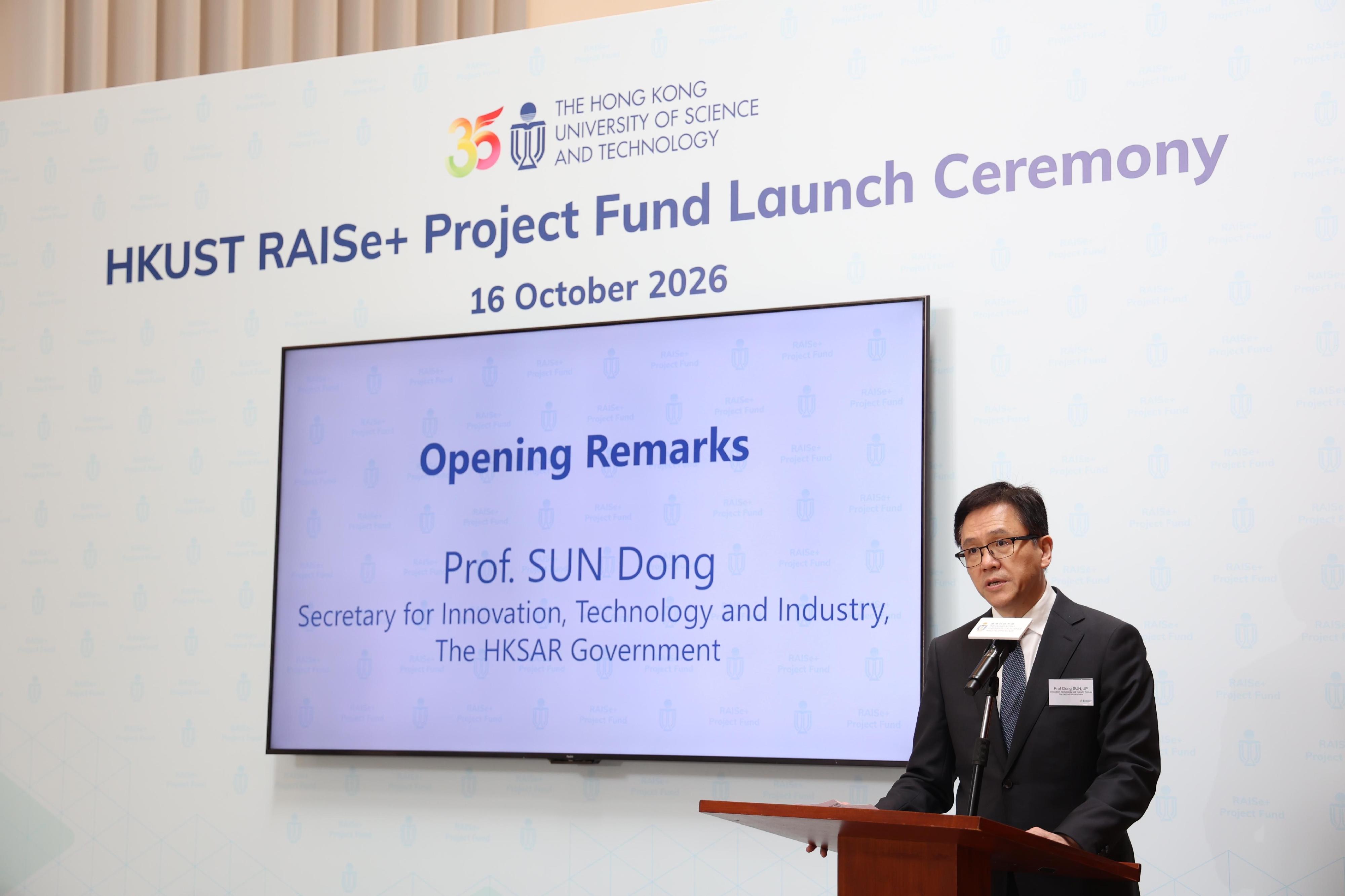
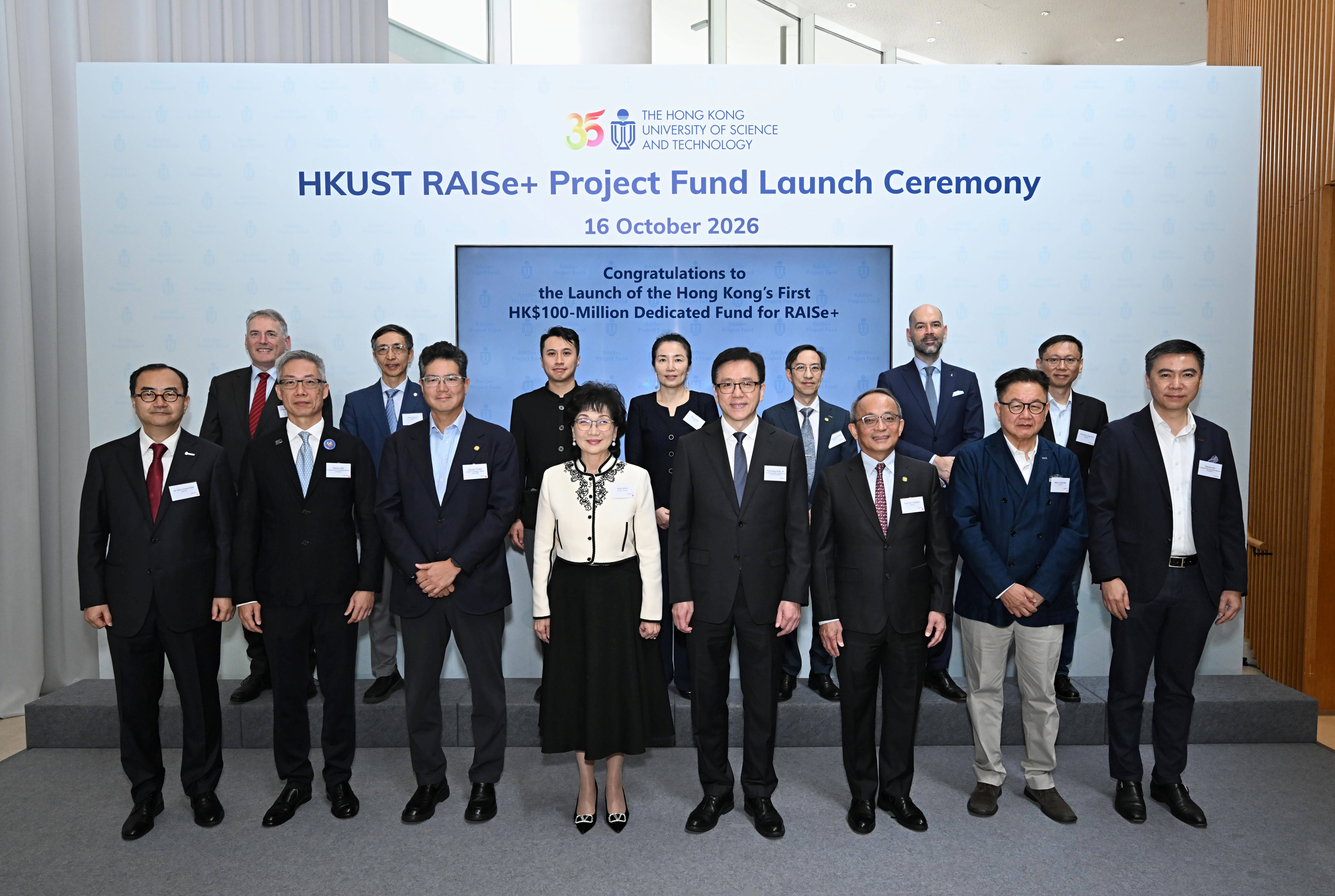
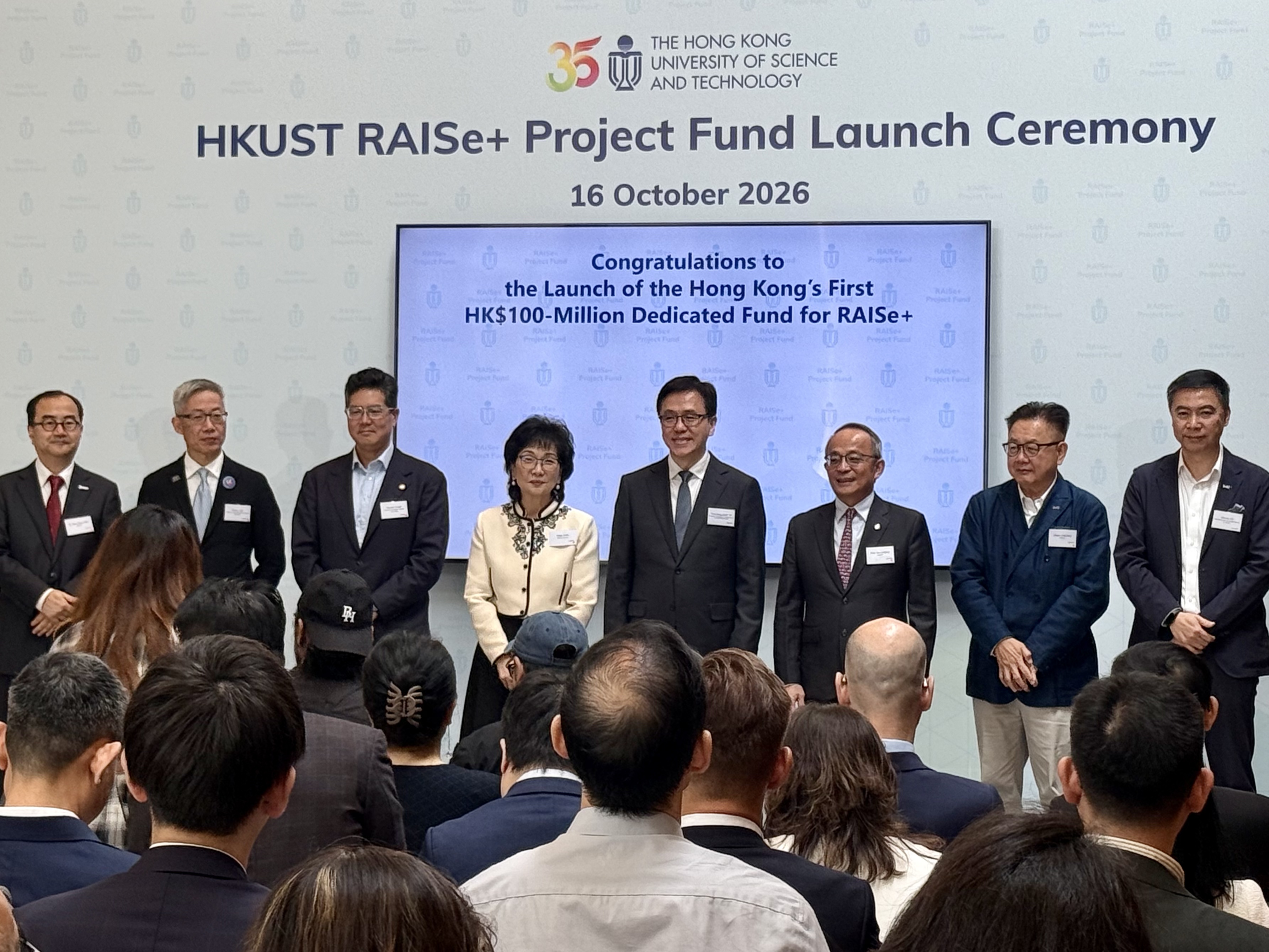
The Hong Kong University of Science and Technology (HKUST) has launched a HK$100 million fund to help researchers turn scientific discoveries into marketable products, adding university investment to a government backed programme supporting technology startups. Announced on October 16, 2026, the initiative will provide research teams with additional capital and tailored commercialisation support as they move promising technologies closer to the market.
The new RAISe+ Project Fund (RPF) is designed to support projects participating in the government's Research, Academic and Industry Sectors One plus Scheme, known as RAISe+. HKUST said the fund would draw entirely on returns from its existing stakes in companies developed through earlier university spin offs, rather than relying on its reserves.
The approach gives the university a direct financial role in the commercialisation of research. Instead of limiting its involvement to supporting academics and connecting them with potential business partners, HKUST intends to invest alongside other participants in the innovation process.
Seven HKUST projects received funding in the latest round of RAISe+ earlier this year, bringing the university's total number of supported projects under the programme to 19, the highest among participating institutions in Hong Kong.
At the fund's launch ceremony on Friday, Secretary for Innovation, Technology and Industry Sun Dong welcomed the initiative, describing it as an example of how universities could complement government efforts to connect research with commercial demand.
University aims to close the gap between research and business
Scientific research does not automatically translate into a successful business. A laboratory breakthrough may need further testing, product development, engineering work, market validation and investment before customers can use it.
Sun said promising research needed to be tested against market requirements before it could become a tangible product. Achieving that transition, he added, required cooperation among government, industry, academic researchers and investors.
The new fund is intended to address some of the financial and commercial obstacles that researchers encounter when trying to establish companies or bring new technologies to market.
Universities can generate original discoveries, but researchers often need resources beyond conventional academic funding to develop prototypes, demonstrate reliability, assess customer demand and prepare for commercial production. Early stage companies may also struggle to persuade investors to commit money before their technology has been adequately tested.
By putting its own investment resources behind selected projects, HKUST aims to strengthen the route from university research to commercial application.
Sun said the initiative complemented RAISe+, which the government launched in October 2023 with HK$10 billion in allocated funding. The scheme has supported 73 projects, with total funding commitments exceeding HK$3 billion, according to figures he provided at the ceremony.
He welcomed HKUST's decision to establish a further funding mechanism for research teams, saying it represented additional institutional support for the government's efforts to develop technology businesses.
The fund also aligns with the strategic direction outlined in Hong Kong's first local five year plan. Announced in September 2026, the blueprint identifies the city's basic research capabilities as a source of original innovation and stresses the role of local universities in attracting and developing talent in innovation and technology.
HKUST moves from research facilitator to investor
Tim Cheng Kwang ting, HKUST's vice president for research and development, said RAISe+ had helped address barriers that frequently prevent strong research results from becoming successful products.
He said the university supported the programme's objectives and intended to advance its work through the new fund, alongside government agencies and industry partners.
Cheng described the launch as a change in HKUST's approach to research commercialisation. The university had previously acted mainly as a facilitator, helping research teams move towards commercial opportunities. Under the new arrangement, it would also become a co investor in selected ventures.
That distinction could affect how university backed technologies progress. In addition to providing institutional support, the university will have a direct financial interest in the companies it helps develop through its investment activities.
Cheng said the RPF was funded entirely through returns from HKUST's stakes in companies it had incubated in the past. The arrangement creates a potential cycle in which successful earlier ventures generate resources for the next generation of research based businesses.
Rather than depending solely on new allocations from institutional reserves, the programme seeks to recycle financial returns from earlier commercial successes into future innovation projects.
Cheng described this as a model of continuity for the university's innovation ecosystem, arguing that it could help the institution maintain support for research commercialisation over time.
The long term effectiveness of the model will depend on the financial performance of those investments and the fund's ability to direct money towards projects with credible commercial prospects. However, its structure gives HKUST a way to connect the outcomes of earlier spin offs with the development of new companies.
Researchers say funding improves credibility
Scientists involved in HKUST projects supported by RAISe+ attended the launch ceremony to explain how government and university backing had affected their work.
Among them was Sun Qingping, a chair professor in HKUST's Department of Mechanical and Aerospace Engineering and co founder of green technology company CoolStar.
Sun said funding initiatives such as RAISe+ and RPF were changing attitudes towards commercial activity within universities. He recalled that academics had often been encouraged to concentrate on writing research papers and working in libraries rather than developing businesses around their discoveries.
He said government and university efforts had helped create a technology innovation environment in Hong Kong and across the country that differed considerably from the situation two decades ago.
His comments point to a broader change in the expectations placed on academic research. Publishing findings remains a central part of university work, but researchers are also increasingly being encouraged to consider whether their discoveries can address practical problems and reach users outside academic institutions.
For scientists developing green technologies, this can mean moving beyond laboratory results to demonstrate that a product can operate reliably and meet the needs of businesses or consumers. Commercial development may require additional testing, manufacturing partnerships and funding that traditional research grants do not always cover.
The RPF is intended to provide another source of support as teams pursue those steps.
AI weather startup gains exposure through RAISe+
Su Hui, a chair professor in HKUST's Department of Civil and Environmental Engineering and co founder of artificial intelligence weather technology company Stellerus, said RAISe+ support had improved her project's credibility and public exposure.
She said official backing played an important role in attracting two scientists with doctoral degrees from the United States and Germany to join her team.
For a technology startup, recruiting specialist researchers can be difficult when the business is still establishing its reputation and commercial prospects. Experienced scientists may want evidence that a project has institutional support, access to funding and a realistic path towards further development.
Government backed funding can provide that reassurance, although it does not guarantee commercial success.
Stellerus operates in the AI weather technology field, where research must be developed into tools that can deliver useful information to potential customers. Turning scientific methods into a commercial service can require technical refinement, testing and a clear understanding of the problems users are willing to pay to solve.
Su's experience illustrates how institutional support can contribute beyond the immediate funding itself. Recognition through a competitive programme can help a research team attract attention, recruit talent and build relationships with potential partners.
The new university fund is intended to extend that support by providing additional investment and commercialisation assistance to research teams already progressing through RAISe+.
Optical imaging company sees renewed investor interest
Terence Wong Tsz wai, associate head of HKUST's Department of Chemical and Biological Engineering and founder of PhoMedics, also attended the ceremony.
PhoMedics specialises in optical imaging, a field that uses light based techniques to capture or analyse information about objects and biological systems. Such technologies can have applications in medical research and other areas where detailed imaging is needed.
Wong said RAISe+ backing signalled confidence in university research from both the government and industry. He added that the support had encouraged investors who had previously been reluctant to participate to reconsider opportunities.
Investor confidence can be especially important for companies working on specialised scientific technologies. These ventures may need substantial development work before their products are ready for widespread adoption, while potential investors must assess technical performance, commercial demand and the time required to generate revenue.
Public funding can reduce some of the early financial pressure and provide an external signal that a project has undergone a degree of assessment. However, startups must still demonstrate that their technologies work as intended and that customers have a reason to adopt them.
Wong's comments reflect the importance of building connections between academic researchers and private capital. A promising discovery needs more than scientific merit to become a viable business. It also needs a development plan, a route to customers and access to funding at the stages when commercial risks remain high.
HK$100 million fund adds another route to commercialisation
The RPF expands the financial support available to HKUST research teams already participating in RAISe+. Its use of returns from earlier university investments also links the new programme to the commercial performance of previous spin offs.
For the university, the model offers an opportunity to support later projects while developing a more direct role in the companies emerging from its research community. For researchers, the additional funding could help address the gap between a successful research result and a product ready for commercial use.
The fund's launch comes as Hong Kong seeks to strengthen links between universities, technology companies, government programmes and private investors. The government has committed substantial resources to RAISe+, while HKUST is adding its own investment mechanism to help selected projects progress.
The next test will be how effectively the new fund helps research teams develop products, attract further investment and establish sustainable businesses. The number of supported projects is one measure of activity, but commercial outcomes will ultimately depend on whether the technologies meet real market needs.
Which university developed technologies should receive priority as HKUST begins using its HK$100 million fund to help research teams turn discoveries into commercial products?