

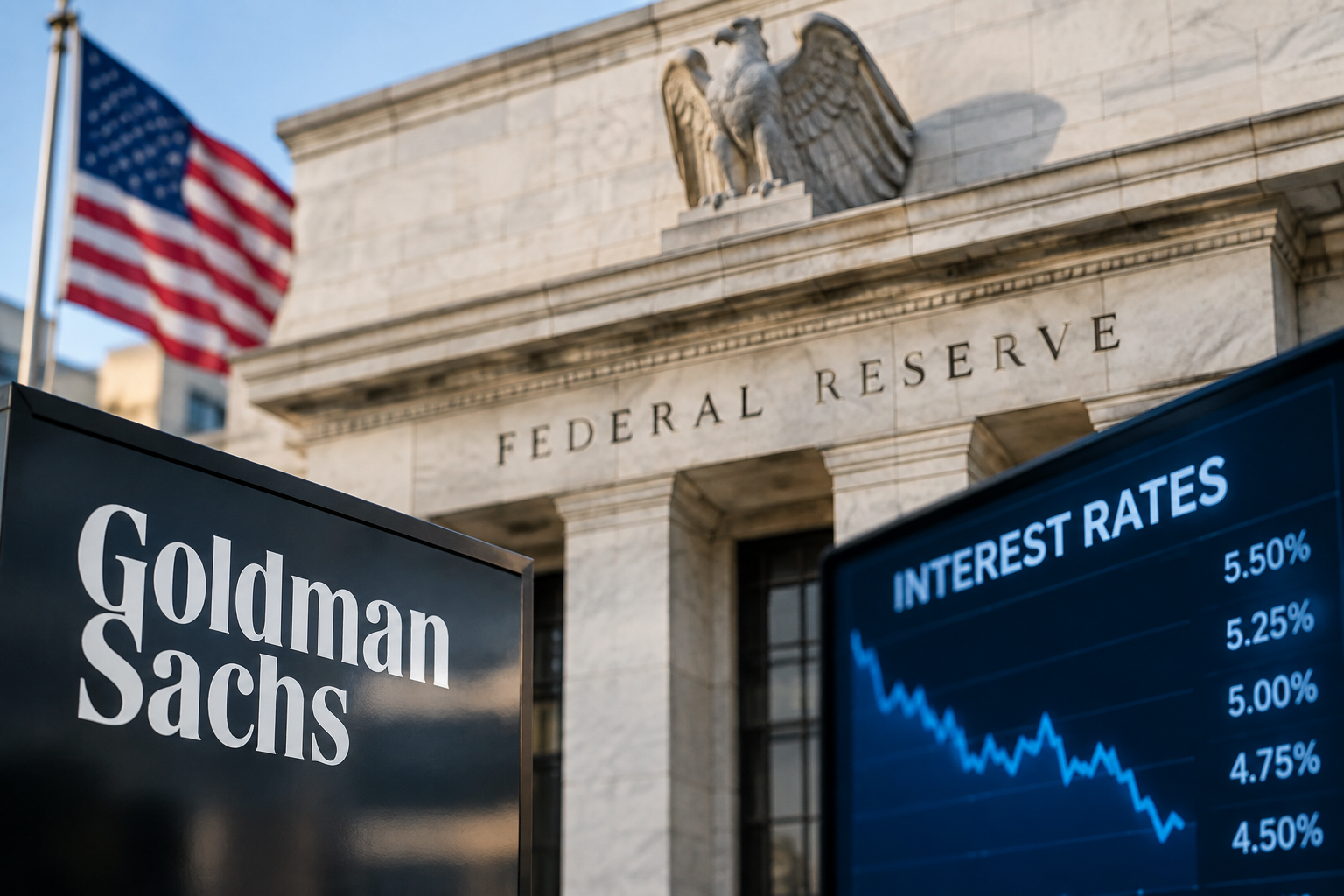
Goldman Sachs has pushed back its forecast for the next US interest rate increase to December after softer than expected inflation data reduced market expectations for another Federal Reserve hike in October.
The investment bank had previously expected the Federal Open Market Committee to raise its benchmark rate by 25 basis points this month. It now expects that move to come in December, while also warning that the Fed may ultimately decide it does not need to raise rates again at all.
The change follows the release of August inflation data showing that the Personal Consumption Expenditures price index, the Federal Reserve’s preferred measure of consumer inflation, rose 3.4 percent from a year earlier. Economists surveyed by Reuters had expected an annual increase of 3.7 percent.
Goldman Sachs said in a Wednesday note that it was moving its second expected rate increase to December and saw a strong possibility that the FOMC could eventually conclude that no further increases were necessary.
Softer inflation changes the October outlook
The latest inflation figures have altered expectations around the Fed’s immediate policy path.
The central bank raised its benchmark federal funds rate by a quarter of a percentage point at its September meeting, taking the target range to 3.75 percent to 4 percent. The Federal Reserve said inflation remained elevated and that the move would support a return toward its 2 percent inflation goal.
That September increase was the first Fed rate hike in three years and the first policy move under Chair Kevin Warsh. The decision reflected continued concern about inflation despite evidence that price pressures had eased from their earlier highs.
The August PCE figures provided a more encouraging inflation reading than economists had anticipated. The headline index increased 3.4 percent over the year, matching the July annual rate and remaining above the Fed’s 2 percent target.
The report therefore did not eliminate inflation concerns. Instead, it reduced the immediate pressure for another increase, particularly as Fed officials continue to assess employment, economic growth and incoming price data.
Goldman Sachs’ revised forecast reflects that change in the balance of expectations.

Markets sharply reduce October hike odds
Interest rate futures have also moved away from an October increase.
The market was pricing in roughly a 38 percent probability of a quarter percentage point hike at the Fed’s October meeting, according to CME Group’s FedWatch Tool. That compared with about 51 percent in the previous session and nearly 71 percent one week earlier.
The rapid shift shows how quickly expectations can change when new inflation figures arrive or Federal Reserve officials offer fresh guidance.
For investors, an October decision is no longer being treated as the clear next step. The market is instead weighing whether the Fed will wait until December, keep rates unchanged for longer, or determine that the September increase was sufficient.
Goldman Sachs has gone further by saying there is a strong chance the central bank may eventually decide that another increase is unnecessary. That does not amount to a prediction that the Fed will stop tightening, but it reflects the greater uncertainty surrounding the next move.
Fed officials have time to assess the data
John Williams, president of the Federal Reserve Bank of New York and vice chair of the FOMC, said on Tuesday that policymakers had time to evaluate incoming economic information before deciding when another rate increase might be appropriate.
His comments came shortly before the latest inflation figures were released and added to the sense that officials did not need to rush into another move.
The Federal Reserve’s September statement said economic activity was expanding at a solid pace, while domestic spending remained resilient. It also said job gains had kept pace with the workforce and that unemployment had changed little.
Those conditions give policymakers room to wait for additional evidence.
At the same time, inflation remains above the central bank’s 2 percent objective. The headline PCE index rose 3.4 percent in August, while other measures of underlying inflation also remained above the Fed’s target. The latest figures therefore offer some relief without settling the policy debate.
September jobs report becomes the next major test
Investors are now turning their attention to the US nonfarm payrolls report for September, scheduled for Friday.
The employment report could provide another important signal for the Fed because policymakers are balancing inflation control against the condition of the labour market.
A strong employment reading could reinforce concerns that economic demand remains firm enough to keep inflation elevated. A weaker report could add to arguments for waiting before raising borrowing costs again.
The jobs data will therefore be watched alongside future inflation figures as markets reassess the timing of any further rate increase.
The Fed has repeatedly stressed that monetary policy decisions depend on incoming economic information rather than a predetermined timetable. Its September decision placed the federal funds target range at 3.75 percent to 4 percent, but the path beyond that meeting remains dependent on inflation and economic conditions.
Investors weigh a longer pause
The change in Goldman Sachs’ forecast has broader implications for financial markets because expectations about US interest rates affect borrowing costs, bond yields, currencies and equity valuations.
A delayed rate increase can reduce immediate pressure on borrowers and may influence investor expectations about the cost of money over the coming months. However, longer term Treasury yields can also respond to other factors, including government borrowing, inflation expectations and economic growth.
Recent market movements show that investors are not responding to inflation data in isolation. Treasury yields remain elevated despite the softer August inflation reading, while economic growth and consumer spending have continued to provide signs of resilience.
That leaves the Fed with competing signals. Inflation has cooled from earlier levels, but it remains above target. Economic activity remains firm, while policymakers still need to assess whether price pressures will continue easing.
Goldman Sachs’ shift to a December forecast reflects that uncertainty. The bank is no longer expecting an October hike as its base case and has acknowledged that the next increase may not happen at all.
For markets, the next major piece of evidence will arrive with Friday’s US employment report. Will the jobs data strengthen the case for another Fed rate hike, or give policymakers more reason to wait until December?