

The Federal Reserve raised its benchmark interest rate on Wednesday and signalled that another increase could come before the end of 2026 as policymakers confront inflation that has proved harder to contain than previously expected.
The US central bank lifted its federal funds target range by a quarter of a percentage point to 3.75% to 4%, marking its first rate increase since 2023. Its latest projections show the median policymaker expects the rate to reach about 4.1% by the end of this year, remain around that level through 2027 and then begin moving lower in subsequent years.
The decision came with a clear shift in the inflation outlook. Officials now expect the Personal Consumption Expenditures price index, the Fed's preferred inflation measure, to rise 3.7% in 2026, up from the 3.6% forecast issued in June. Inflation is projected to ease to 2.3% in 2027, 2.1% in 2028 and 2% in 2029.
Another Increase Remains on the Table
The Fed's new projections point to another rate increase this year, although the forecasts are not promises about future policy.
The federal funds rate is currently set between 3.75% and 4%. The median projection places it at 4.1% at the end of 2026, implying another quarter point of tightening if the central bank follows the median path. The projection then remains at 4.1% at the end of 2027 before declining to 3.9% in 2028 and 3.6% in 2029.
The distribution of forecasts also shows disagreement among officials over the path ahead. The projections are individual assessments rather than a collective commitment, and the Fed has repeatedly stressed that future decisions will depend on incoming economic information.
That distinction matters at a time when inflation, energy prices and economic growth are moving in different directions.
The central bank is trying to prevent inflation from becoming entrenched while avoiding unnecessary damage to employment and economic activity. Raising rates can put pressure on consumer borrowing, business investment and housing demand, while leaving policy too loose for too long can allow price pressures to persist.
Inflation Forecast Raised
The Fed's inflation forecast moved higher for 2026, reflecting the latest concerns about price pressures.
Officials now expect headline PCE inflation to reach 3.7% this year, compared with 3.6% in the June projections. The forecast for 2027 remains at 2.3%, while the estimate for 2028 increased to 2.1% from 2% previously. The central bank now expects inflation to reach its 2% target in 2029.
Core PCE inflation, which excludes food and energy prices, is projected at 3.4% in 2026, followed by 2.5% in 2027, 2.2% in 2028 and 2% in 2029.
The figures indicate that policymakers expect price growth to slow, but more gradually than they had previously anticipated.
Energy prices have added another source of uncertainty. The recent rise in energy costs linked to conflict in the Middle East has complicated the Fed's efforts to judge whether higher inflation will fade or feed into broader prices.
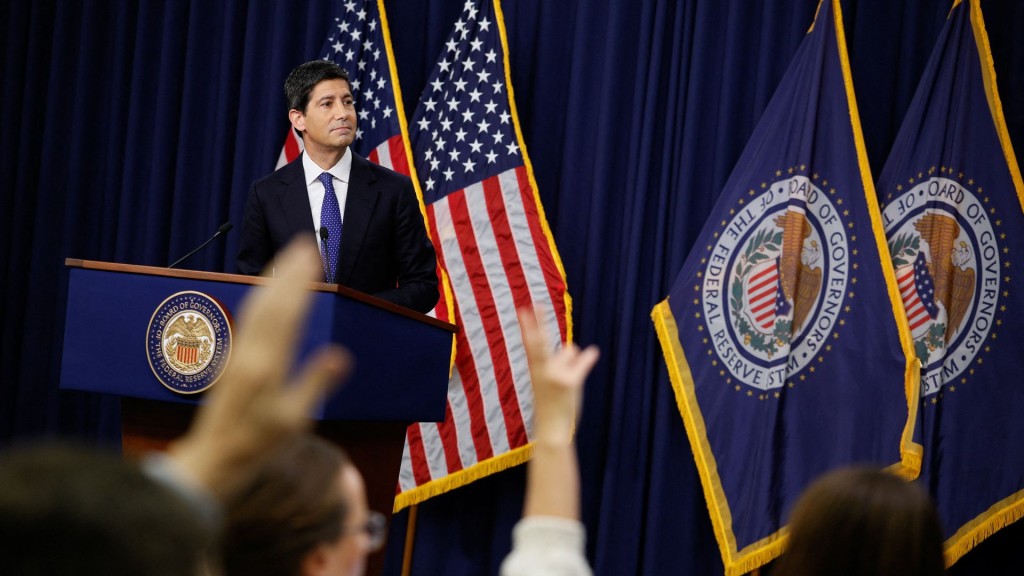
Federal Reserve Chair Kevin Warsh said inflation risks were tilted higher during his post meeting press conference, reinforcing the concern reflected in the new projections.
The central bank's challenge is that an energy driven increase can initially appear temporary, but persistent increases in transportation, production and household costs can spread more widely through the economy.
Growth Forecast Remains Firm
Despite the inflation concerns, Fed officials did not substantially weaken their economic growth outlook.
The median projection for US real GDP growth in 2026 is 2.3%, while growth is expected to reach 2.4% in 2027.
The labour market outlook also remains relatively steady.
The Fed projects the unemployment rate at 4.1% at the end of 2026 and 2027, with the same rate projected for 2028 and 2029. The official projections put the longer run unemployment rate at 4.2%.
That combination of steady growth and relatively low unemployment gives policymakers more room to focus on inflation than they would have if the labour market were deteriorating rapidly.
At the same time, interest rate decisions can take months to work through the economy. Higher borrowing costs can affect mortgages, business loans, credit cards and investment decisions long after the Fed announces a change.
Fed's Longer Run Rate Estimate Moves Higher
The latest projections also raised the Fed's longer run estimate for the federal funds rate.
Officials now see the longer run rate at 3.2%, compared with 3.1% in the June projections.
That estimate does not represent a promise about where rates will settle at a particular future date. Instead, it reflects policymakers' assessment of where the policy rate could converge over time under appropriate monetary policy and in the absence of additional economic shocks.
The change nevertheless provides another indication that officials are no longer working from the same low rate assumptions that dominated much of the period following the financial crisis.
The new projections suggest that borrowing costs could remain structurally higher than investors and consumers became accustomed to during the years of exceptionally low interest rates.
Policymakers Show Less Appetite for Rate Cuts
The latest projections also mark a change from the outlook presented in June.
At that meeting, Fed officials had projected a quarter point rate increase in 2026 followed by a quarter point reduction in 2027. The September projections instead show the median federal funds rate remaining around 4.1% through 2027.
That shift reflects the persistence of inflation.
Officials are now projecting that the economy can tolerate a higher interest rate for longer while inflation continues to move towards the central bank's 2% goal.
Analysts at Evercore ISI described the change in the Fed's rate projections as a "disappearance of the doves", arguing that officials who had previously favoured a softer approach were now supporting a more limited tightening path.
The assessment is an interpretation of the projections rather than an official description from the Federal Reserve.
Warsh Distances Himself From Forward Guidance
Warsh also took care to separate himself from the individual rate projections published alongside the policy decision.
The projections represent the views of Fed policymakers rather than a formal commitment by the central bank. Warsh has also signalled that he does not intend to provide detailed forward guidance about the precise path of interest rates.
That approach places greater emphasis on economic data as it arrives.
Inflation readings, employment figures, consumer spending, energy prices and financial conditions will all influence future decisions. A further rate increase is therefore possible, but the projections do not guarantee that the Fed will deliver one.
The distinction is especially important because the central bank's projections can change when economic conditions change.
Markets Face a More Complicated Rate Outlook
The decision creates a more complicated outlook for investors and borrowers.
A higher federal funds rate generally raises short term borrowing costs, although the effect on longer term rates depends on expectations for inflation, economic growth and future monetary policy.
Treasury yields can respond to the Fed's projections, while mortgage rates and corporate borrowing costs can also move as financial markets reassess the expected path of interest rates.
The Fed's latest forecasts suggest that officials expect rates to remain elevated through 2027 before gradually declining.
For households, that means the cost of borrowing may remain an important consideration when taking out mortgages, refinancing debt or financing major purchases.
For companies, higher financing costs can affect investment decisions and expansion plans.
The central bank, meanwhile, must balance those effects against the need to prevent inflation from remaining above target for an extended period.
What Comes Next
The next stages of the Fed's policy debate will depend heavily on incoming economic data.
Officials will be watching whether inflation begins moving lower at a faster pace, whether higher energy costs spread into broader prices and whether employment remains stable as interest rates rise.
The September projections provide a clear indication of the direction policymakers currently expect. The median forecast points to one additional increase in 2026, no further increase in 2027 and gradual reductions beginning in 2028.
But the projections are not a fixed timetable.
Warsh has emphasised that he does not intend to offer forward guidance, leaving investors and businesses to assess each new inflation, employment and growth report as it arrives.
For now, the message from the Federal Reserve is straightforward: inflation remains too high for policymakers to assume that the tightening cycle is finished, and another rate increase remains part of the path laid out by the majority of officials.
How will another potential US rate increase affect borrowing costs, businesses and financial markets in the months ahead?