

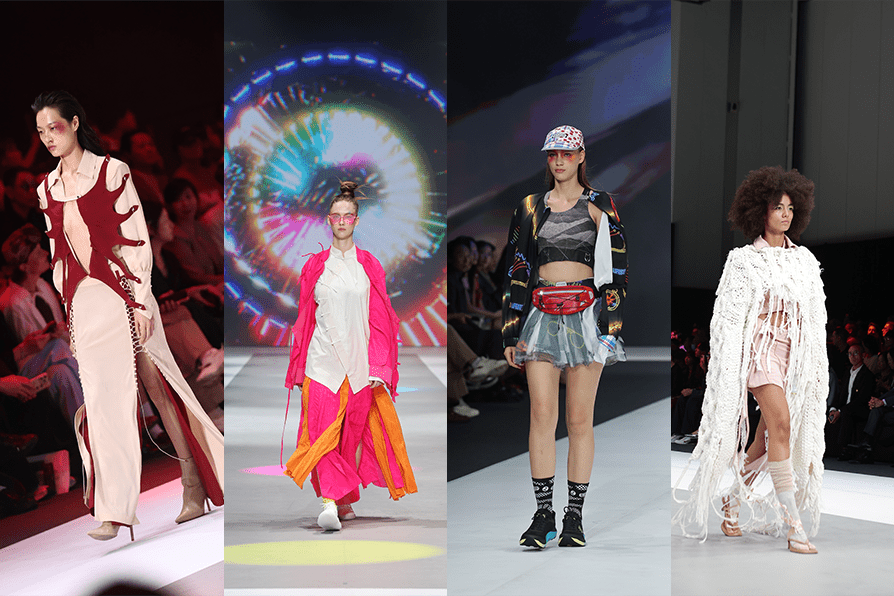
Hong Kong’s crowded streets, neon lit nights, sporting culture and cinematic history took centre stage on Thursday night as four local fashion labels presented their Spring/Summer 2027 collections at the Fashion Hong Kong Runway Show during CENTRESTAGE.
The show brought together 112 mountainyam, ANGUS TSUI, ARTY:ACTIVE and Z I D I under the theme “Hong Kong Dopamine”, with each designer drawing on a different part of the city’s character. Their collections ranged from performance focused training wear and distorted neon imagery to references inspired by Hong Kong horror cinema.
Rather than presenting one fixed image of Hong Kong, the designers offered four different interpretations of a city where old and new, sport and street culture, Chinese and Western influences, and excitement and fear often exist side by side.
Sportswear built for movement
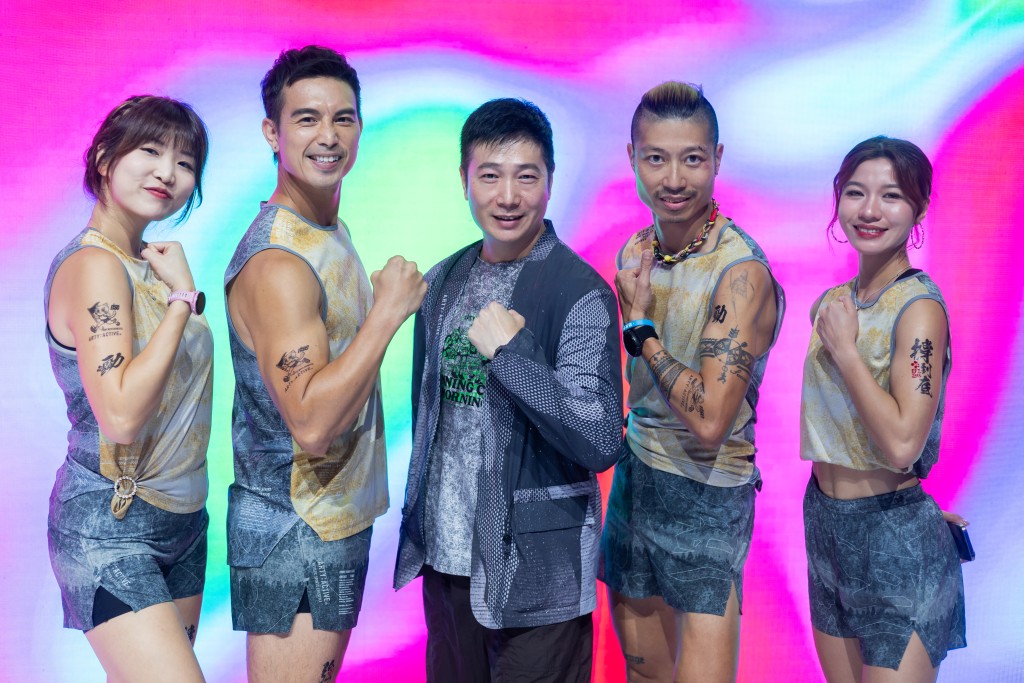
For ARTY:ACTIVE designer Gary Tsang, the runway was not simply a place to display clothes. Professional athletes joined the presentation, putting the brand’s latest training wear through its paces and giving the audience a direct sense of how the garments are designed to function during physical activity.
Tsang told The Standard that the increasing popularity of hybrid sports, including HYROX, has influenced the way he thinks about sportswear. The discipline combines endurance running with functional exercises, requiring athletes to move repeatedly between different types of physical activity.
That demand for versatility is reflected in Tsang’s approach to design.
Having competed as an athlete himself, he said he places the wearer’s needs ahead of appearance when developing sportswear. Fabric choice, construction, comfort and performance all form part of the design process.
For Tsang, a training garment cannot succeed simply because it looks good on the runway. It has to work when someone is running, lifting, stretching or pushing through a demanding workout.
That practical approach informed ARTY:ACTIVE’s SS27 collection, “Messy Symphonic”, although the inspiration behind the visual direction came from a very different part of the city.
Neon Hong Kong reworked
Tsang looked to Hong Kong’s nightscape and neon lights for “Messy Symphonic”, but he avoided making straightforward copies of the signs that have long been associated with the city.
Instead, he distorted and reconstructed their shapes, giving familiar forms a more fragmented appearance. The collection also draws from cyberpunk influences associated with the 1980s and 1990s, merging those references with contemporary sportswear.
The result reflects a city that has changed rapidly while retaining visual memories that remain deeply associated with Hong Kong. Neon signs once dominated many of the city’s streets, creating dense layers of colour and advertising above shops and restaurants. Tsang takes that familiar visual language and moves it into a sportswear setting.
The collection also reflects his view that Hong Kong designers have an advantage when working between different cultural influences.
Tsang said the city’s combination of Chinese and Western influences gives its designers a distinctive point of view. He hopes to push that identity further in future collections, incorporating more elements associated with Hong Kong while keeping the brand aligned with international standards and audiences.
From neon lights to horror
ANGUS TSUI took a far darker route.
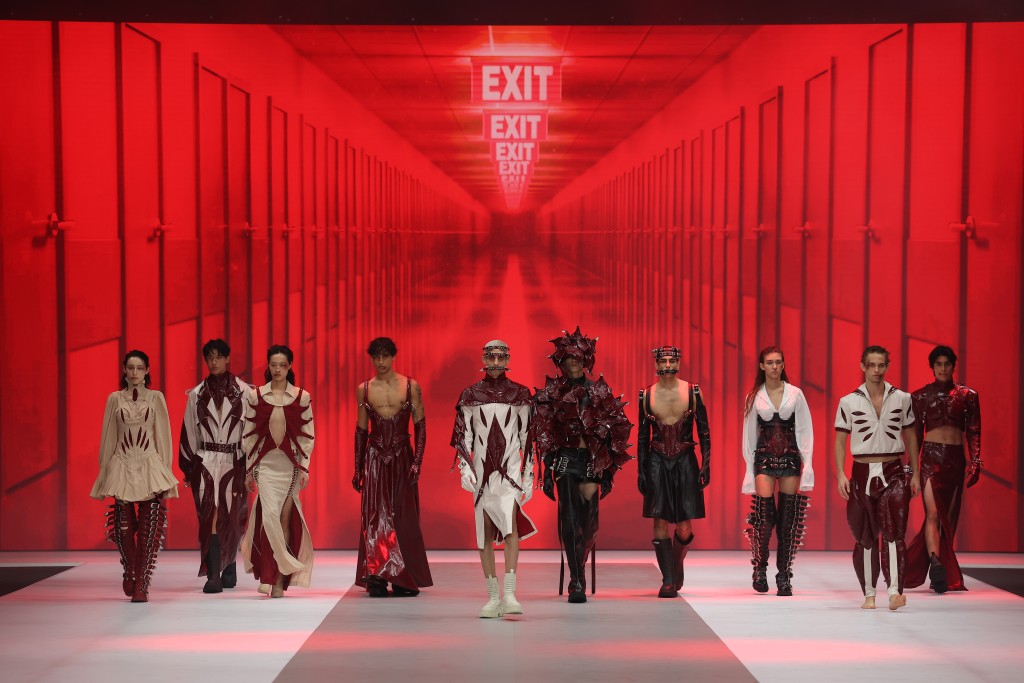
While Tsang looked to the glow of Hong Kong after dark, Tsui drew on fear, horror and the psychological consequences of avoiding difficult problems for his SS27 collection, “404: Ha Ha Haunting”.
Tsui told The Standard that the collection examines what happens when people attempt to escape their fears instead of confronting them. The idea is reflected through visual references to horror and unsettling physical details.
His starting point was Hong Kong’s horror cinema of the 1980s, a period when filmmakers frequently relied on practical effects, physical props and make up rather than the computer generated imagery that dominates much contemporary screen production.
That older approach appealed to Tsui because tangible effects can create a different kind of unease. Instead of allowing a computer to construct a frightening image, practical effects place something physical in front of the viewer.
Tsui translated that aesthetic into fashion through details resembling torn skin, exposed organs and restraints.
The designs are deliberately unsettling, but the collection is not intended simply to frighten its audience. Tsui sees horror as fitting naturally into the idea of “Hong Kong Dopamine” because people can experience fear in a controlled environment.
A horror film can make someone tense, uncomfortable or even frightened while they remain physically safe. Once the experience ends, that fear can become excitement.
For Tsui, that tension between fear and enjoyment provides another way of understanding the emotional intensity associated with the city.
A flower as a symbol of connection
Not every reference in “404: Ha Ha Haunting” carries a threatening meaning.
One of the collection’s flower covered looks introduces a softer image. Tsui explained that the flower is not the bauhinia, Hong Kong’s familiar floral emblem, but instead has its own meaning within his creative world.
For him, it represents human connection.
The flower reflects ideas of warmth, communication and reconciliation, offering a contrast to the darker imagery elsewhere in the collection. That contrast is important to Tsui’s interpretation of Hong Kong, where uncomfortable and welcoming experiences can sit close together.
The collection therefore moves between horror and human connection rather than remaining confined to one mood. Its darker references address fear and avoidance, while the floral imagery points towards communication and the possibility of resolving conflict.
Hong Kong fashion reaches a wider audience
ANGUS TSUI’s work has also begun attracting attention outside Hong Kong.
Stray Kids members Felix and Bang Chan have worn pieces from the label, giving the designer an opportunity to introduce his work to audiences who may have had little previous exposure to Hong Kong fashion.
Tsui described the appearances as a significant moment for the brand. The attention was followed by increased interest from international audiences, including people in the United States and Germany.
For an independent Hong Kong label, that kind of exposure can change the scale of its potential audience. A garment worn by a globally recognised performer can travel through social media and fan communities far beyond the physical audience of a local runway show.
Yet Tsui sees international reach as compatible with, rather than separate from, the identity of Hong Kong fashion.
He argued that local designers should not be restricted to one particular aesthetic or expected to produce a single version of what Hong Kong fashion looks like.
“We are very versatile, and we are very good at doing different styles,” Tsui said.
That versatility was visible across the Fashion Hong Kong Runway Show itself. ARTY:ACTIVE approached the city through sport, performance and its neon nightscape, while ANGUS TSUI drew from horror films, psychological themes and symbols of human connection.
The collections show how designers can use familiar elements of Hong Kong without simply reproducing them. Neon signs can become distorted patterns. Old horror film techniques can become garment details. A flower can represent communication rather than serve as a conventional city emblem.
Together, the four labels presented “Hong Kong Dopamine” as a broad creative idea rather than a single visual formula. The runway reflected a city that can be athletic and fashionable, nostalgic and experimental, unsettling and warm, often within the same street or neighbourhood.
At CENTRESTAGE, Hong Kong’s designers did not simply put the city on clothing. They took pieces of its visual history and everyday life and rebuilt them for a new generation of fashion audiences.