
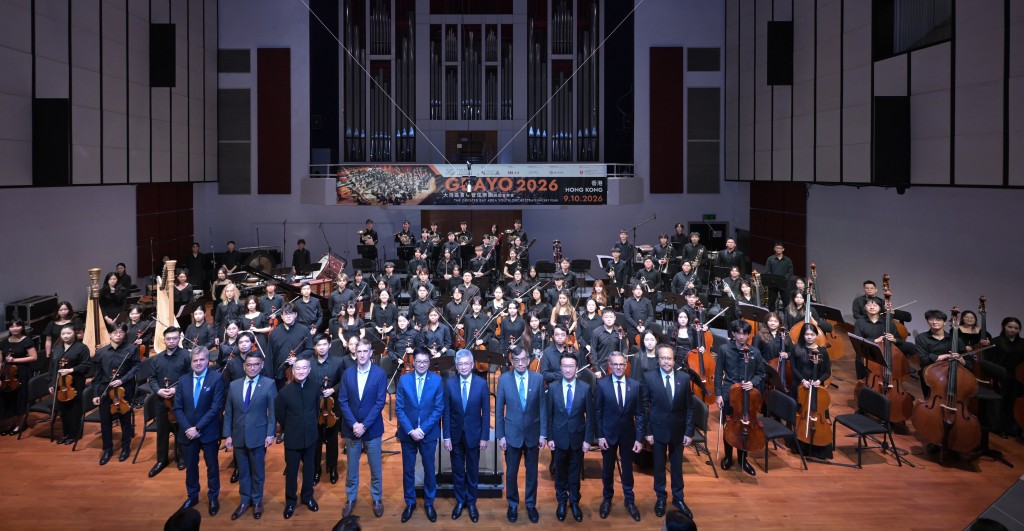
The Greater Bay Area Youth Orchestra has completed a three city concert tour spanning Hong Kong, Shenzhen and Guangzhou, bringing 103 young musicians together for performances celebrating National Day and strengthening musical collaboration across southern China. Held from October 9 to 11, 2026, the tour marked the conclusion of the ensemble’s fourth season and its largest programme since the initiative began in 2022.
Organised by the Hong Kong Academy for Performing Arts (HKAPA), the season continued with the support of the Swire Group as founding patron. The programme also received backing from the Hong Kong government’s Culture, Sports and Tourism Bureau, the Culture, Media, Tourism and Sports Bureau of Shenzhen Municipality, and the Xinghai Conservatory of Music.
The expanded ensemble brought together young instrumentalists from cities across the Greater Bay Area, giving them opportunities to rehearse with experienced musicians, develop their performance skills and present a shared programme to audiences in three major cultural centres.
Record participation marks fourth orchestra season
This year’s cohort of 103 musicians represents the largest group assembled by the Greater Bay Area Youth Orchestra since its establishment. The increased participation reflects the programme’s continuing work to provide young instrumentalists with structured musical training and opportunities to perform beyond their home cities.
The orchestra draws participants from different parts of the Greater Bay Area, a region that connects Hong Kong and Macao with nine mainland Chinese cities in Guangdong province. Bringing students together from these communities creates opportunities for them to work with musicians they might not otherwise encounter through their regular education or local performance activities.
For the young performers, the programme combines intensive preparation with the demands of presenting music to live audiences. Rehearsing as part of a large ensemble requires musicians to listen closely to one another, follow the conductor’s direction and maintain consistent timing and expression across different sections of the orchestra.
These skills become particularly important when performing works that demand a wide range of instrumental techniques and musical interpretation. The season’s repertoire, which included major European orchestral compositions alongside a work by Chinese composer Chen Yi, required participants to move between different musical traditions.
The three city tour gave the orchestra an opportunity to demonstrate the results of its preparation while bringing its performances to audiences across the region.
Week long training camp prepares young musicians
Before the public concerts, the 103 participants gathered at the Hong Kong Academy for Performing Arts campus for an intensive orchestral training camp held from October 2 to 9.
The residency provided a dedicated period for rehearsals and individual musical development ahead of the tour. During the week, the young instrumentalists worked with 13 mentors representing leading music conservatories and professional orchestras around the world.
The coaching programme concentrated on technical accuracy, musical interpretation and the practical expectations associated with professional orchestral performance. Participants could work on the precision required for demanding passages while developing a stronger understanding of how individual parts contribute to the sound of a full ensemble.
Playing in an orchestra involves more than mastering an instrument. Musicians must respond to changes in tempo, balance their volume against other sections and adjust their phrasing to support the conductor’s interpretation. Rehearsals also require concentration and cooperation, particularly when an ensemble includes performers with different levels of experience.
The presence of international mentors gave participants access to professional perspectives on these demands. Their guidance formed part of a training structure that linked classroom learning and instrumental practice with the experience of preparing for public concerts.
The schedule also required the musicians to bring their preparation together within a limited period. With the tour beginning on October 9, the training camp served as the final stage of collective rehearsal before the orchestra performed in front of audiences in Hong Kong, Shenzhen and Guangzhou.
Programme combines European classics with Chinese composition
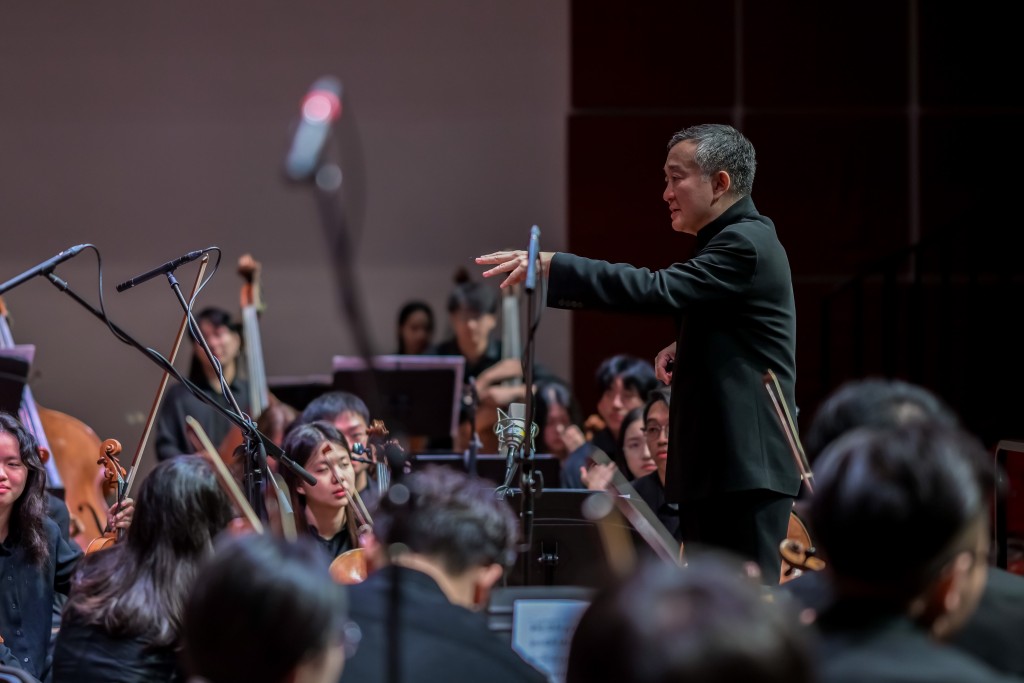
Hong Kong born conductor Ken Lam served as guest conductor for the fourth season. Lam holds several musical leadership positions, including director of orchestral studies and resident conductor of the Tianjin Juilliard Orchestra, resident conductor of the Brevard Music Center in North Carolina, and artistic director of Hong Kong Voices.
His involvement brought experience from orchestral education and professional performance to the regional youth ensemble. Lam said returning to work with young musicians from the Greater Bay Area, alongside their international coaches, offered an opportunity to support artistic cooperation across the region.
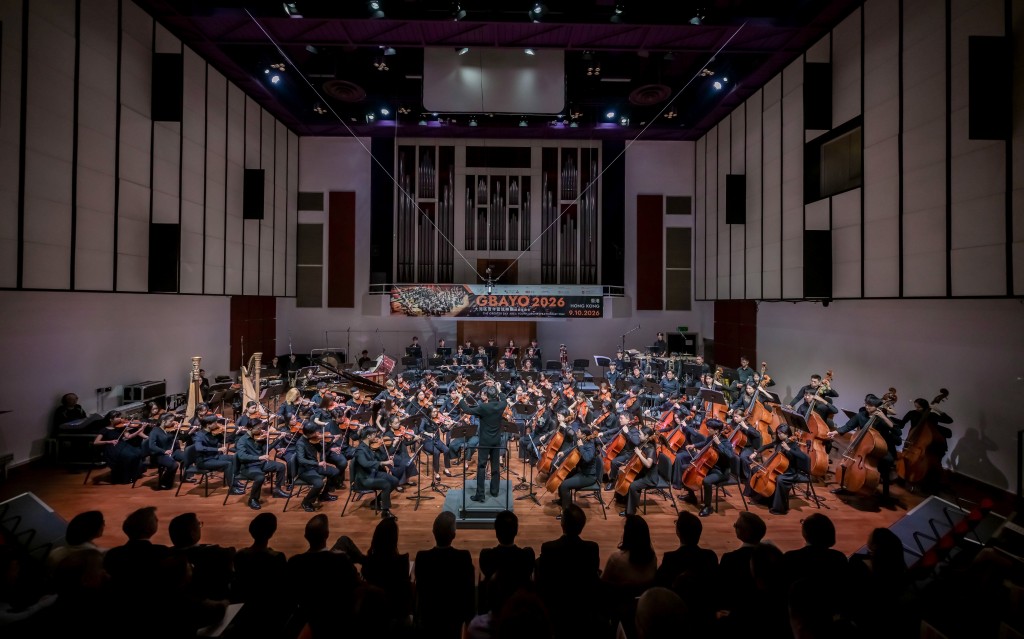
Under his direction, the orchestra presented a programme spanning European orchestral classics and Chinese music.
The repertoire included Hector Berlioz’s Roman Carnival Overture, selected movements from Sergei Prokofiev’s Romeo and Juliet suites, Chen Yi’s Duo Ye No. 2, and the 1919 edition of Igor Stravinsky’s Firebird Suite.
Each work presented different demands for the young performers. Berlioz’s Roman Carnival Overture is known for its energetic orchestral writing and contrasting musical passages. Prokofiev’s music from Romeo and Juliet draws on dramatic contrasts and expressive melodies, requiring musicians to convey changes in mood through phrasing, rhythm and orchestral colour.
Chen Yi’s Duo Ye No. 2 introduced a Chinese composition into the programme, placing it alongside works from the European orchestral tradition. The inclusion of the piece broadened the musical range of the concerts and gave the ensemble an opportunity to approach contrasting compositional styles within a single programme.
Stravinsky’s 1919 Firebird Suite added another demanding work to the selection. Its shifting textures, rhythmic changes and varied instrumental colours call for close coordination between sections. Performing such repertoire requires musicians to maintain accuracy while responding to the broader shape of the music.
Together, the four selections offered the orchestra a varied programme through which to demonstrate its technical preparation and developing musical expression. They also reflected the season’s emphasis on bringing different musical traditions into a shared performance setting.
Swire support and institutional partnerships sustain programme
The Greater Bay Area Youth Orchestra continues to receive foundational support from John Swire and Sons, through the Swire Group’s role as founding patron.
Representatives of the organisation have emphasised the value of bringing emerging musicians together from different civic and artistic backgrounds. Working in a shared ensemble gives participants opportunities to exchange ideas, develop teamwork and build relationships through a common interest in music.
The programme’s growth also points to the role that cooperation between cultural institutions can play in providing young people with access to musical training and performance opportunities. Its activities depend on coordination among educational organisations, government bodies, professional mentors and supporters.
The Hong Kong Academy for Performing Arts has linked the initiative to its wider mission of developing performing arts talent across Asia. The academy has stressed the importance of combining professional mentorship, demanding rehearsals and stage experience so that students can strengthen their abilities in a collaborative environment.
Its continued cooperation with government and academic partners in mainland China remains part of the programme’s longer term approach. Support from institutions in Hong Kong and Guangdong helps create opportunities for students to work across geographical and institutional boundaries.
The initiative also offers a practical setting in which young musicians can experience the shared responsibilities of ensemble performance. They must prepare individually while contributing to a collective result, adapting to the conductor and working with instrumentalists whose training and musical experiences may differ from their own.
Such collaboration forms part of the educational value of the orchestra, alongside the opportunity to perform established works before live audiences.
Four seasons deliver 14 concerts across the region
Since its launch in 2022, the Greater Bay Area Youth Orchestra programme has provided training and performance opportunities to more than 400 young musicians. Across its four seasons, the initiative has staged 14 concerts and reached a combined audience of more than 8,000 concertgoers.
The figures reflect the programme’s development from its initial season into a regional initiative involving a growing number of young performers. This year’s record cohort of 103 musicians represents its largest gathering to date.
The programme combines several elements that can be difficult for young instrumentalists to access through ordinary lessons alone: concentrated ensemble rehearsal, guidance from experienced professionals and the experience of performing in multiple cities. Its regional structure also allows students to build musical connections outside their immediate educational communities.
The conclusion of the October 9 to 11 tour closes the orchestra’s fourth season, while the programme’s accumulated record provides a basis for assessing its reach and educational activities since 2022. Its future development will depend on continued institutional cooperation, support for training and opportunities for young musicians to perform.
For audiences, the three city tour offered a chance to hear a youth ensemble interpret works by Berlioz, Prokofiev, Chen Yi and Stravinsky. For participants, it brought a week of intensive preparation to the concert stage, requiring them to translate individual practice into coordinated performances across three cities.
As the Greater Bay Area Youth Orchestra completes its largest season so far, would you attend a future concert to support emerging musicians and experience a programme combining Chinese and Western orchestral music?