

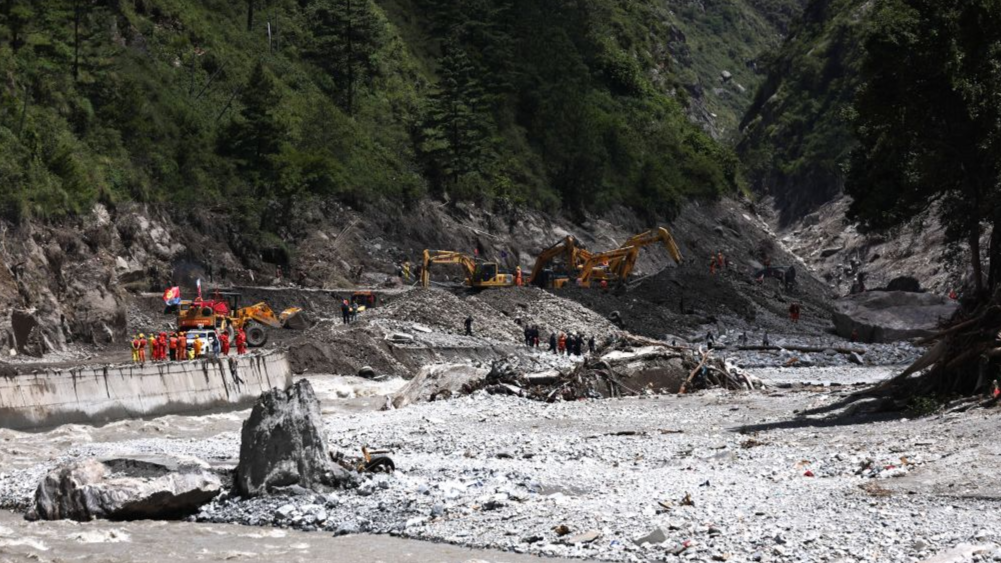
BEIJING — Chinese President Xi Jinping has chaired a high level Communist Party meeting to review rescue and relief operations following a devastating mudslide near the China Nepal border that caused heavy casualties and left a number of people missing.
The meeting of the Political Bureau of the Communist Party of China Central Committee on Friday focused on the ongoing emergency response in Gyirong county in southwest China's Xizang autonomous region, as authorities confront difficult terrain, unstable geological conditions and the risk of further disasters.
Xi, who is also general secretary of the CPC Central Committee and chairman of the Central Military Commission, stressed the need for an intensive and coordinated search and rescue operation and called for all missing Chinese and foreign nationals to be located.
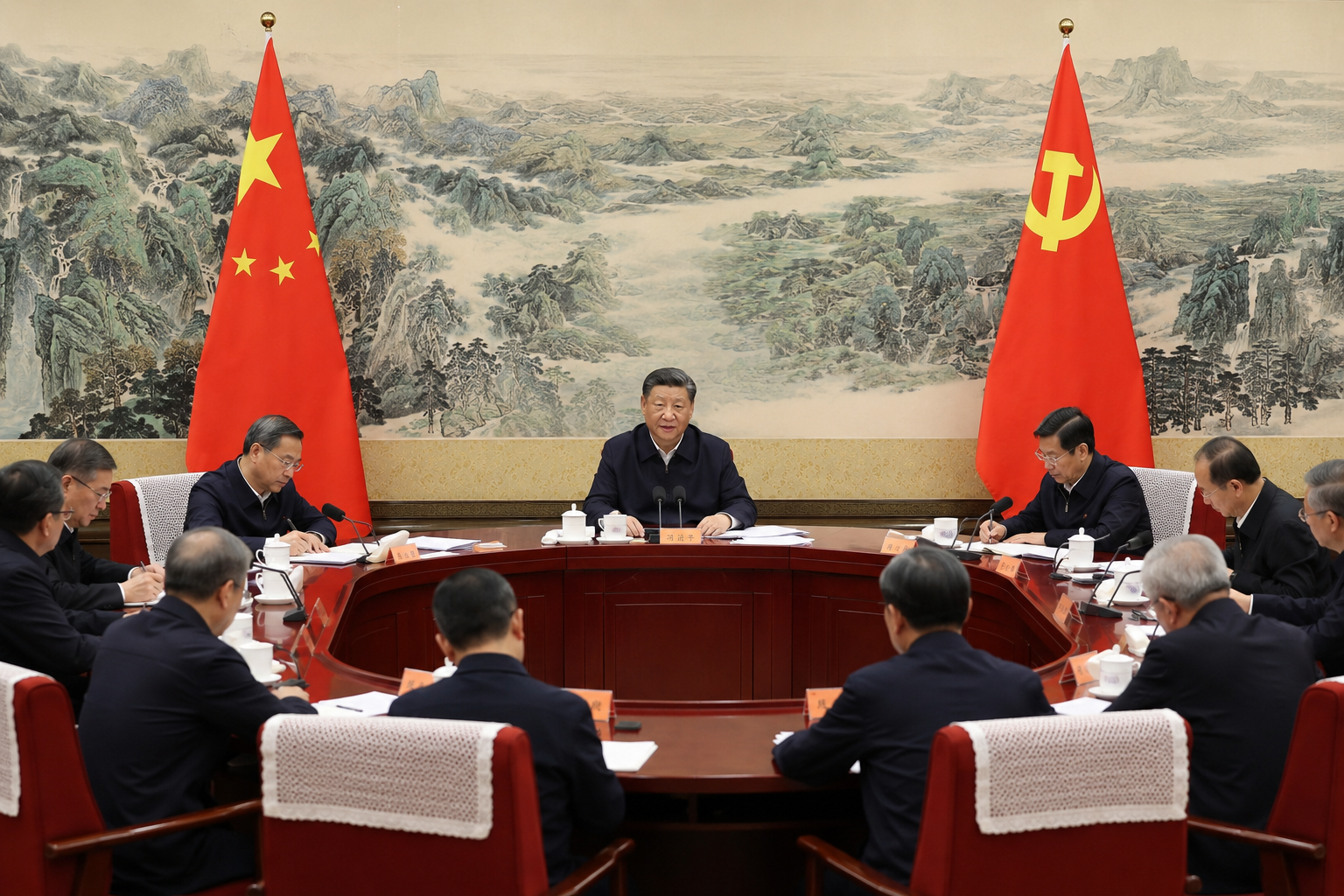
At the start of the meeting, Xi and other senior Party leaders, including Premier Li Qiang, Zhao Leji, Wang Huning, Cai Qi, Ding Xuexiang and Li Xi, observed a moment of silence for those killed in the disaster.
The mudslide struck the border area on Wednesday after severe geological activity affected the region around Nepal and the Gyirong border port. The disaster caused significant damage and resulted in heavy casualties, while rescue teams continued efforts to determine the whereabouts of missing people.
The incident has prompted a major emergency response involving central and local authorities, with senior Chinese officials dispatched to the affected area.
Following the disaster, the CPC Central Committee placed a high priority on rescue and emergency response work. Xi issued instructions calling for immediate action to save lives and limit the impact of the disaster.
Premier Li, acting on Xi's instructions, traveled to the affected area to visit residents affected by the mudslide and personnel involved in rescue and relief operations. He also supervised emergency response efforts at the site.
Vice Premier Zhang Guoqing, who is also a member of the Political Bureau of the CPC Central Committee, was sent to the area to guide rescue and emergency response work.
Rescue operations face difficult conditions
The meeting said emergency rescue operations had been launched rapidly and were being conducted in an orderly and coordinated manner under the leadership of the Party Central Committee.
Authorities are also working to resettle people affected by the disaster and manage the aftermath, while rescue personnel continue to search areas where people may be trapped or missing.
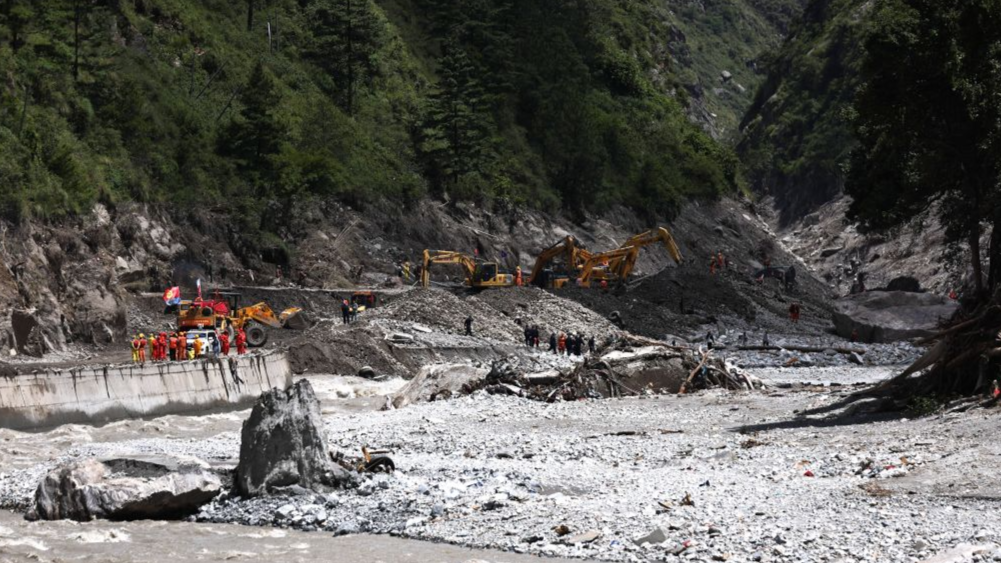
The geographical conditions in the region present major challenges.
The disaster struck a high altitude plateau area characterised by severely cold weather, steep valleys and rapidly changing conditions. The surrounding area also contains glaciers and glacial lakes, while the risk of additional geological hazards remains a concern.
Such conditions can complicate the movement of rescue personnel and equipment and make it difficult to assess whether damaged areas are safe to enter.
The meeting therefore called on relevant authorities and departments to take decisive and effective measures throughout the rescue operation.
It stressed that search and rescue plans must be developed on a scientific basis and adjusted according to changing conditions on the ground. Every effort should be made to find and rescue missing Chinese and foreign nationals, it said.
Authorities were also instructed to strengthen coordination between different departments involved in the response.
Warning issued over secondary disasters
The leadership meeting placed particular emphasis on the danger of secondary disasters, including possible instability around a barrier lake and surrounding mountain areas.
Officials were urged to strengthen joint consultation between departments, improve monitoring and early warning systems, and closely track the stability of any barrier lakes and nearby slopes.
The measures are intended to reduce the risk that further landslides, flooding or other geological events could endanger rescue teams and people living in affected areas.
The meeting also called for tighter management of personnel at rescue sites to ensure that emergency workers are not exposed unnecessarily to dangerous conditions.
The emphasis on secondary risks reflects the complexity of conducting rescue operations in a mountainous region where unstable slopes, glaciers, glacial lakes and rapidly changing weather can create additional hazards after an initial disaster.
Authorities were told to maintain close monitoring and respond quickly to any new signs of instability.
China pledges aid and international cooperation
The meeting also addressed the cross border dimension of the disaster.
China said it would provide emergency assistance to the disaster hit area in Nepal and participate in international rescue cooperation.
The mudslide occurred in an area connected to the important China Nepal border route, making coordination between the two countries significant as authorities respond to the disaster and assess its wider effects.
The meeting called for stronger international cooperation on disaster management in border areas, with the aim of improving joint emergency response, disaster prevention, mitigation and relief.
The approach reflects the need for authorities on both sides of the border to share information and coordinate their responses when disasters affect areas close to national boundaries.
Broader disaster preparedness ordered
Beyond the immediate rescue operation, the leadership meeting called for a broader assessment of potential risks in vulnerable areas.
Authorities were instructed to conduct comprehensive inspections to identify hazards and strengthen real time monitoring and early warning systems.
The meeting also called for greater capacity to identify risks associated with disaster chains, in which an initial geological event can trigger additional emergencies.
Officials were urged to improve emergency response mechanisms and reinforce key rescue capabilities. More emergency and rescue forces should be deployed to remote and disaster prone areas, according to the meeting.
The measures are intended not only to improve the response to the current mudslide but also to strengthen preparedness for future emergencies in difficult terrain.
The leadership also stressed the importance of preparing for worst case and extreme scenarios while maintaining a strong sense of responsibility and constant vigilance.
Focus on safety and stability
The meeting concluded with a broader call for authorities to better coordinate development and security and to take practical measures to safeguard safety and stability.
For rescue teams working in the affected region, the immediate priority remains the search for missing people, assistance for survivors and prevention of further casualties.
The difficult terrain means that the emergency response is likely to remain challenging as authorities continue assessing damage and monitoring possible secondary hazards.
The central government has signalled that rescue operations should remain comprehensive and coordinated, with local authorities, emergency personnel and other relevant departments working together to manage the crisis.
China's pledge to provide emergency assistance to Nepal also adds an international dimension to the response, particularly given the disaster's location near a major border crossing.
As rescue and relief operations continue, authorities are expected to maintain heightened monitoring of mountain slopes, glaciers and glacial lakes while assessing risks that could threaten affected communities and emergency personnel.
The CPC leadership's instructions underline the government's focus on saving lives, preventing additional disasters and strengthening emergency preparedness in remote and geographically challenging parts of the country.
The response will now centre on the continuing search and rescue effort, the safe management of affected areas and the longer term assessment of risks exposed by the disaster.